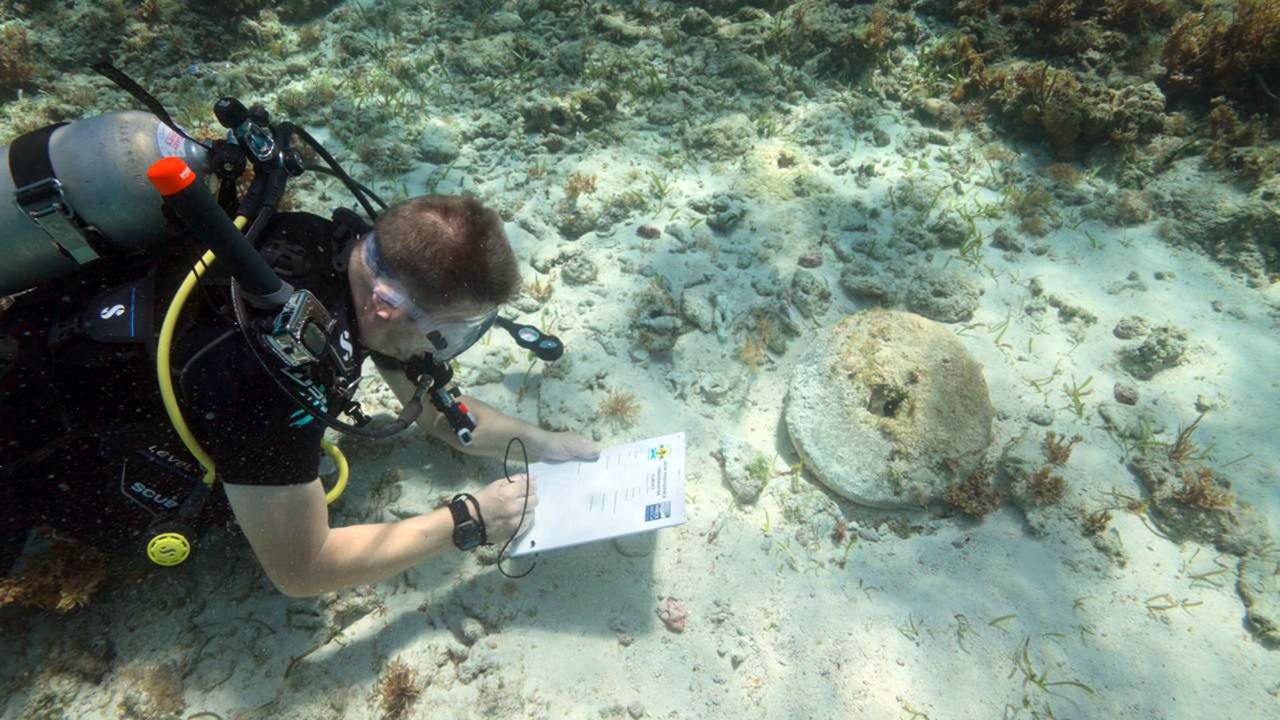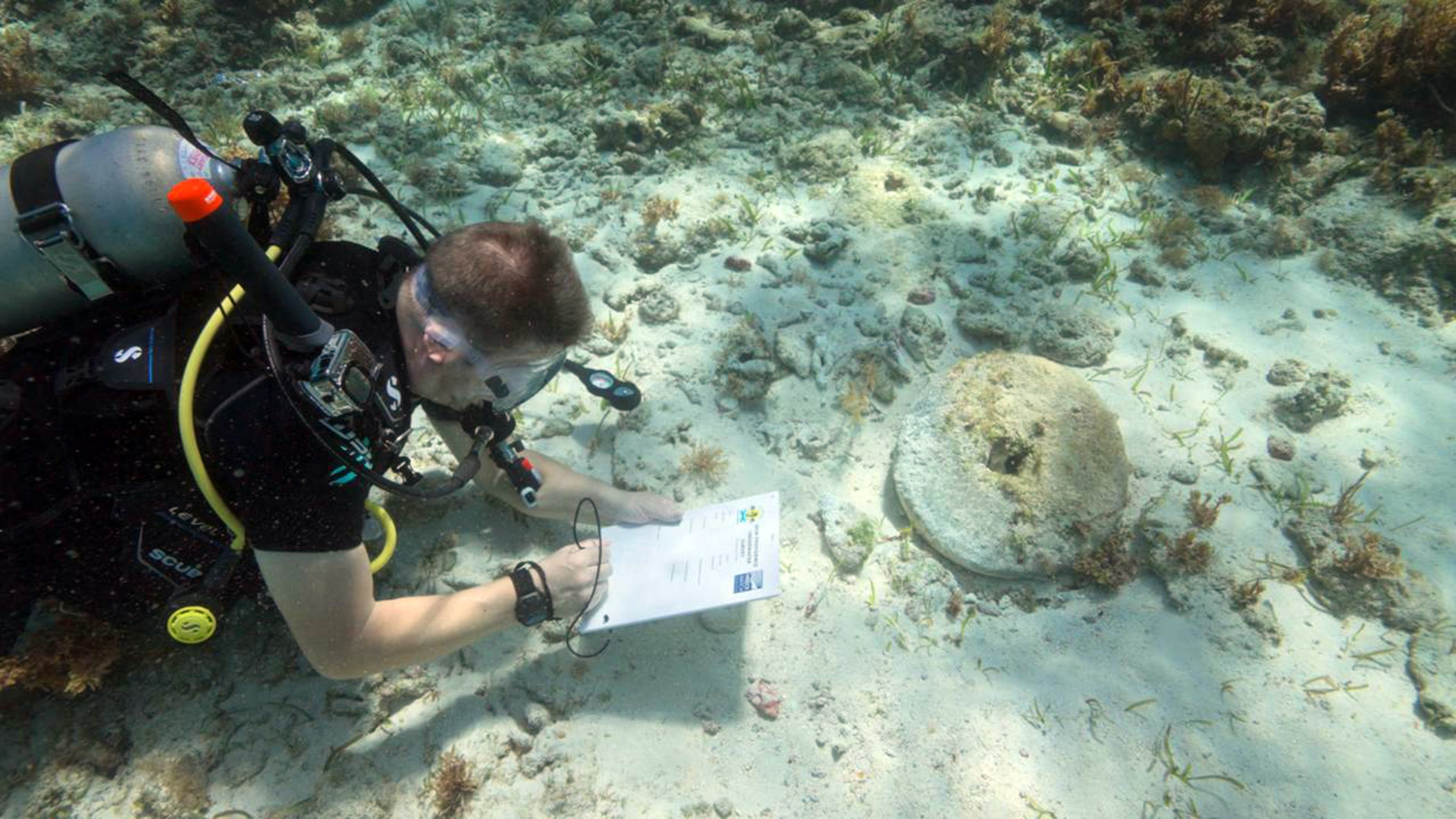
The diving team discovered a grinding stone, which was used to sharpen swords. Marine archaeologist Sean Kingsley documents the finding. (Image credit: Chris Atkins, © Wreckwatch TV)
Share this article Join the conversation
Follow us Add us as a preferred source on Google Newsletter Subscribe to our newsletter
For the first time, shipwrecks associated with the real pirates of the Caribbean have been discovered in the Bahamas.
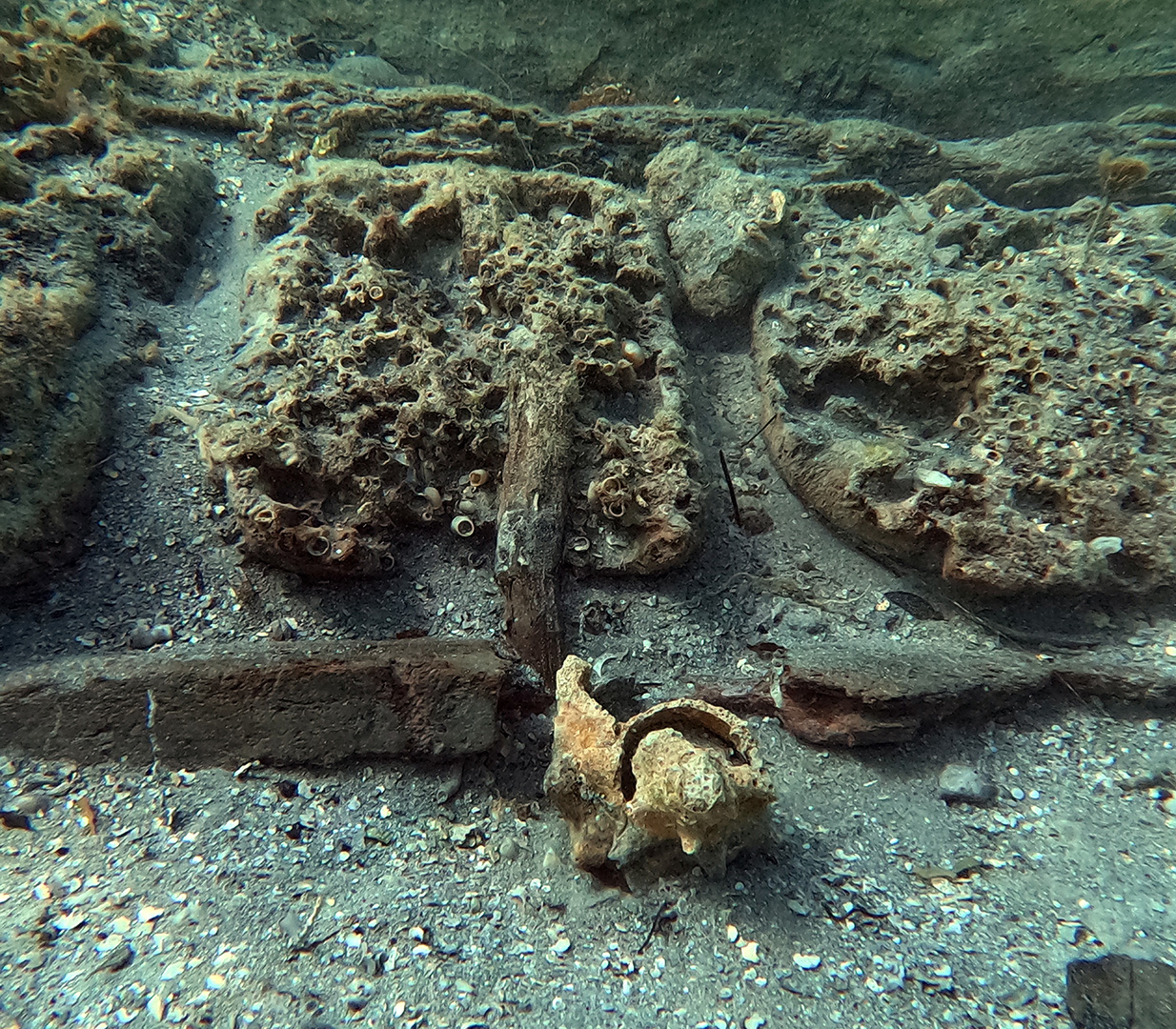
A team of archaeologists and filmmakers found six shipwrecks in and near Nassau, the capital of the island of New Providence. Three of the wrecks are linked to the "Golden Age of Piracy," according to a statement emailed to Live Science. One of them, found in Nassau's harbor, mostly consists of ballast stones, according to the team's report for the Bahamian antiquities authority. These stones were used to stabilize the ship, and they were found on top of the submerged remains of the ship's burnt wooden hull.
Attacking a vessel and pillaging its goods wasn't all these pirates did to their victims.
"After seizing a ship and taking its cargo, cannon and fittings, pirates had to get rid of all signs of their crime," Michael Pateman, director of the Bahamas Maritime Museum in Grand Bahama, said in the statement. "Burning ships to the waterline was an infamous tactic to hide felony from authorities. The Nassau hull shows all the signs of pirate mischief." The remains also include the ship's planks, frames and wooden treenails. The use of treenails, essentially wooden nails, indicate that the ship was built in the 1700s.
The Golden Age of Piracy was a brief but iconic time period from the 1680s to the 1720s marked by increased pirate activity in the Atlantic, as well as the Indian and Pacific oceans. It starred a significant number of notorious sea raiders. The port town of Nassau became the headquarters for the likes of Blackbeard, Calico Jack Rackham, Henry Avery, Benjamin Hornigold and Anne Bonny, among others.
At the height of the golden age in 1718, 40 shipwrecks burnt and sunk by pirates off Nassau’s shore were seen by Woodes Rogers, the governor of New Providence. But until now, none of these ships have been excavated. That changed when the crew received permission from the Antiquities, Monuments and Museum Corporation of the Bahamas to dive around Nassau, which they did in September and October 2025.
Image 1 of 3
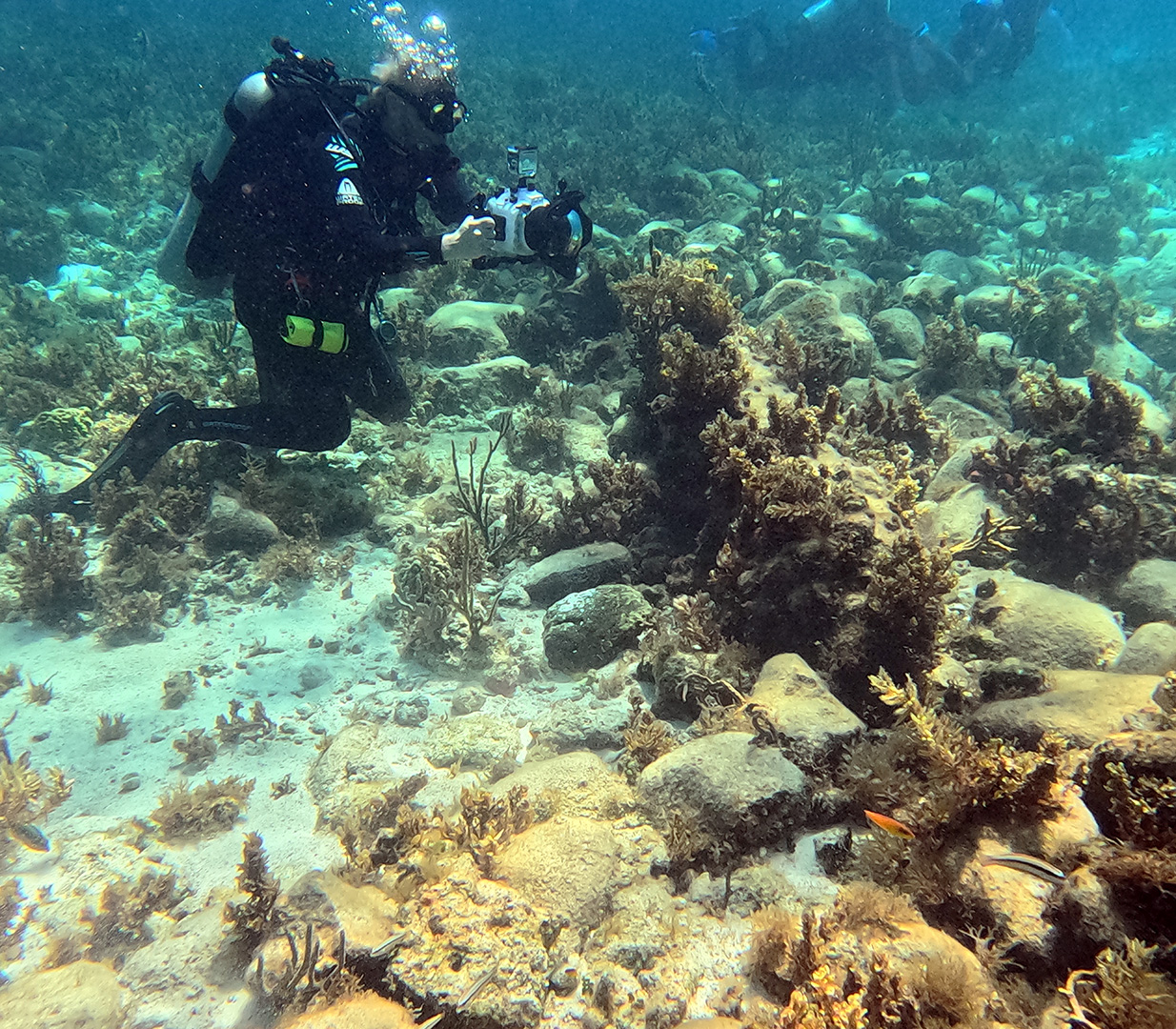
(Image credit: Sean Kingsley, © Wreckwatch TV)
East of Nassau harbor, the team found a shipwreck with a swivel gun, an iron cannon and a stone ballast.
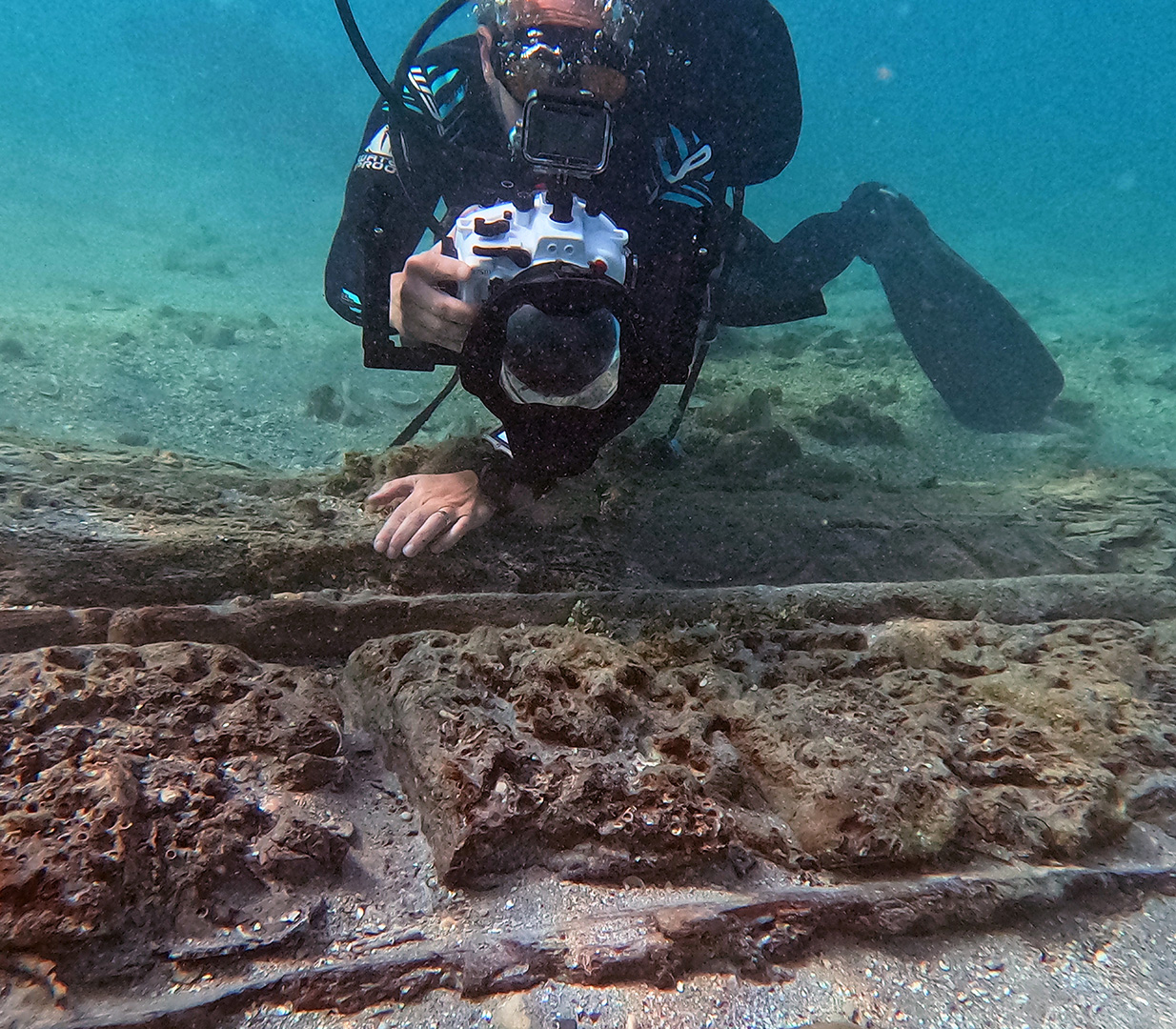
(Image credit: Sean Kingsley, © Wreckwatch TV)
Diver Chris Atkins films the hull of an 18th-century ship.
(Image credit: Sean Kingsley, © Wreckwatch TV)
What's left of an 18th-century ship hull in Nassau harbor.
"Nassau harbour is huge," explorer and project filmmaker Chris Atkins said in the statement. "Tides flush dangerous currents through its waters twice a day. It's home to notorious packs of sharks. This was a risky expedition with high chances of finding nothing." But the team, aided by knowledge from local divers, were able to find six wrecks in all.
Sign up for the Live Science daily newsletter now
Get the world’s most fascinating discoveries delivered straight to your inbox.
Contact me with news and offers from other Future brandsReceive email from us on behalf of our trusted partners or sponsors
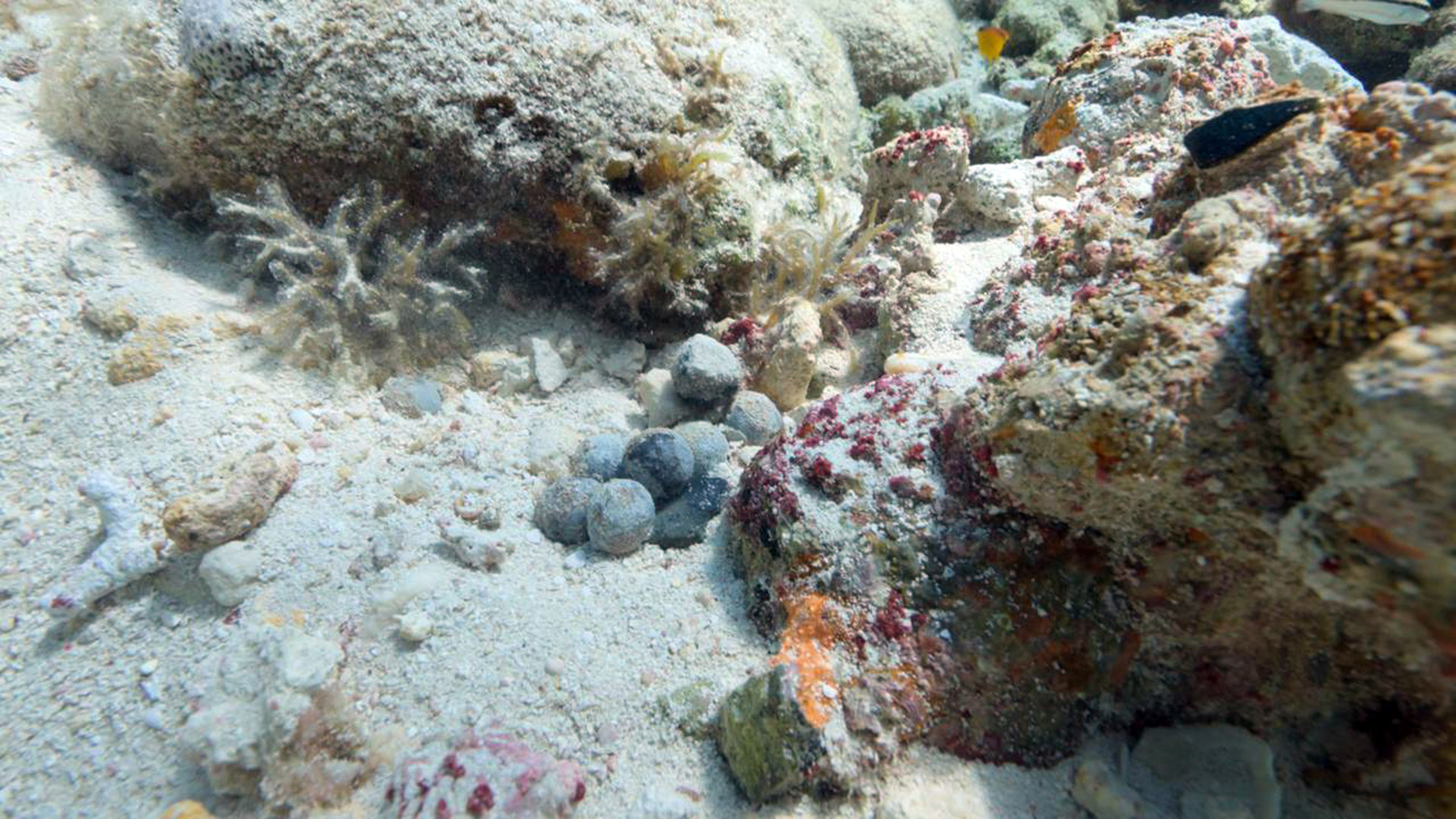
Another newfound golden age shipwreck — probably an early 18th-century armed sailboat with a single mast known as a sloop — is roughly 22 miles (35 kilometers) east of Nassau, and features a ballast pile, a large deck cannon and an iron swivel gun. The team also found a grinding stone for sharpening swords, lead musket balls and three cannonballs.
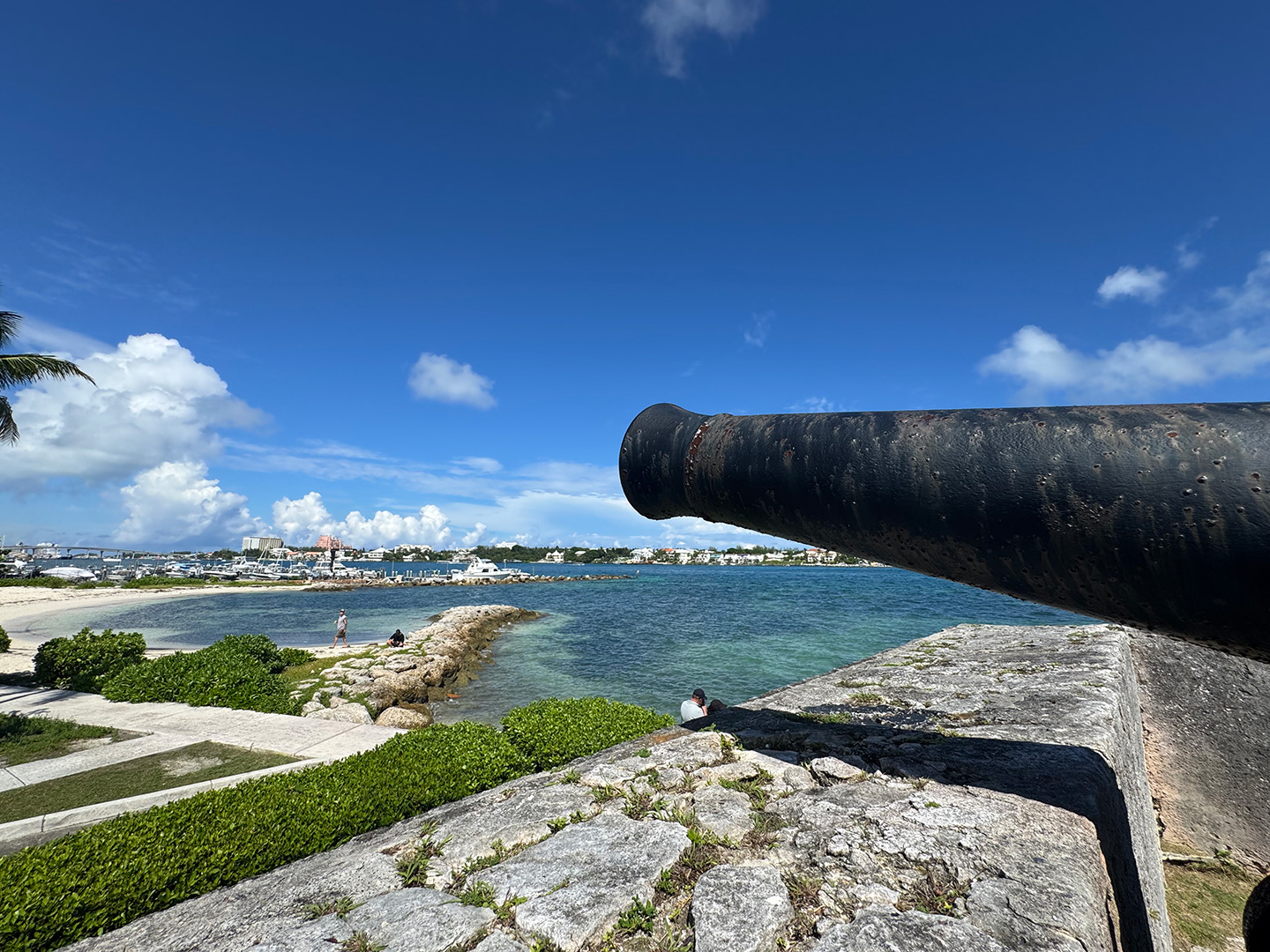
A cannon in Fort Montagu protects the entrance to Nassau's pirate harbor at New Providence Island in the Bahamas.
(Image credit: Sean Kingsley, © Wreckwatch TV)
The presence war-related objects and the style of the swivel gun suggest that it was either a golden age pirate ship, or a sea vessel from that same time period with defenses against piracy, Sean Kingsley, marine archaeologist, co-director of the New Providence Pirates Expedition, and founder of the magazine Wreckwatch, confirmed to Live Science. The absence of cargo remains might make the pirate ship scenario more likely, however, he added.
The third shipwreck, which they spotted thanks to a tip, is beneath Nassau's old bridge, "where a very grumpy bull shark lives," according to the report. The site includes two poorly preserved hulls, one of which is pierced by a modern pipeline. Nonetheless, the team identified rigging, glass bottles, hull planks and cooking galley bricks, Kingsley said in the statement. The ship probably sank after striking an underwater sandbank in a storm, he told Live Science in an email.
Image 1 of 2
(Image credit: Sean Kingsley, © Wreckwatch TV)
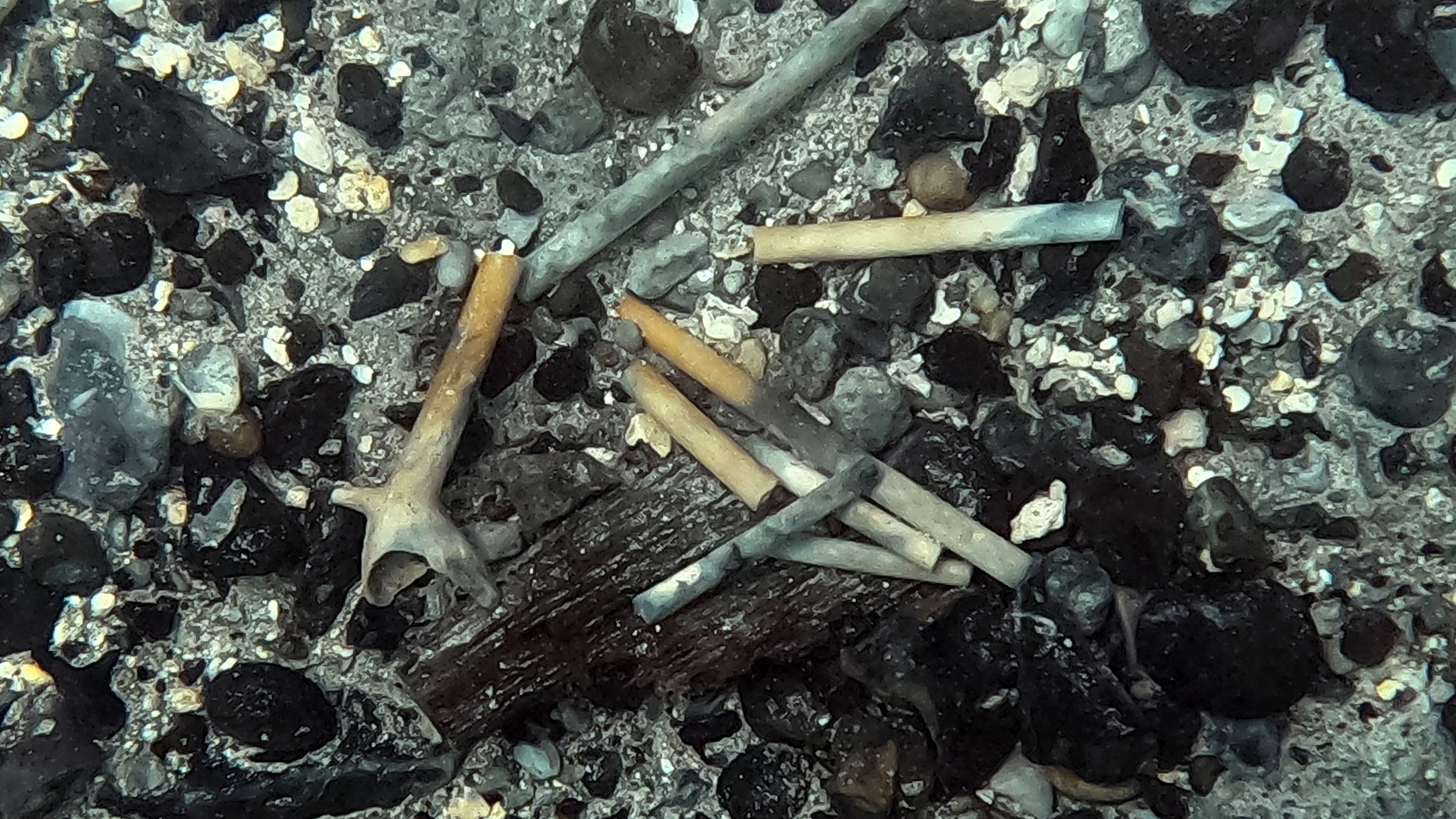
The team found decorated tobacco pipes in a 1740s shipwreck in the Bahamas.
(Image credit: Chris Atkins, © Wreckwatch TV)
Lead musket balls were found at the site of the shipwreck.
Furthermore, the diving team found the remains of shipping containers and dozens of clay tobacco pipes bearing the British coat of arms. They were probably made in London in the 1740s or 1750s. The ship was likely also English and traveled to New Providence shortly after the pirates were no longer a threat, when Nassau was transitioning to a pirate-free life.
Related stories
In addition to hunting for shipwrecks, the team wanted to understand life in this pirate capital. When they weren't diving, they were studying old maps and 300-year-old documents and investigating pirate caves, a plantation with enslaved people, and a lookout tower where it's rumored Blackbeard once lived. Unsurprisingly, Nassau in the Golden Age of Piracy was "nothing like the Hollywood fantasy," Kingsley said. "Nassau's Piratetown was more like a combination of a cowboy frontier town meets an 18th-century holiday camp."
The team's members come from the New Providence Pirates Expedition and Wreckwatch TV, and they are the first to have ever received diving permission in the closed zone of Nassau harbor. Kingsley and Chris Atkins, Wreckwatch TV co-founder, have produced a Wreckwatch TV documentary series about the findings. Wreckwatch Magazine will also share the New Providence Pirates Expedition's preliminary outcomes.
"It might have been a short life, but for a brief period of mayhem, sailors found freedom and wealth unmatched anywhere on earth," Pateman said. "That escape was the pirate dream."
TOPICS
 Margherita Bassi
Live Science Contributor
Margherita is a trilingual freelance writer specializing in science and history writing with a particular interest in archaeology, palaeontology, astronomy and human behavior. She earned her BA from Boston College in English literature, ancient history and French, and her journalism MA from L'École Du Journalisme de Nice in International New Media Journalism. In addition to Live Science, her bylines include Smithsonian Magazine, Discovery Magazine, BBC Travel, Atlas Obscura and more.
View More
You must confirm your public display name before commenting
Please logout and then login again, you will then be prompted to enter your display name.
Logout