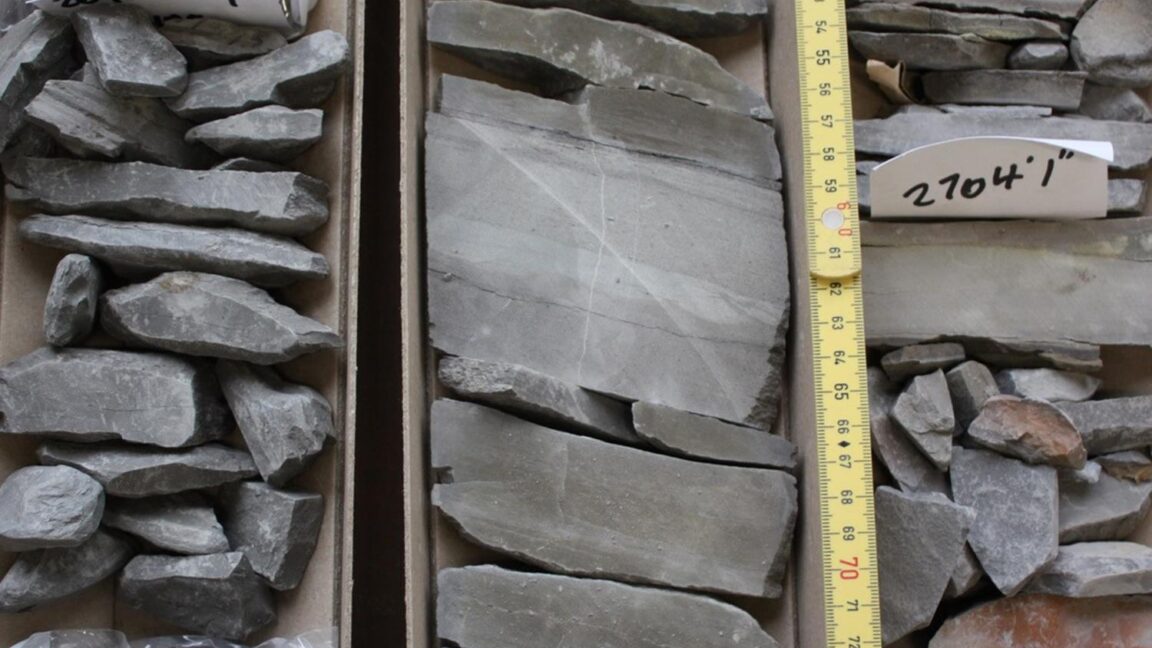
Since the early 1980s, Earth scientists have understood that erosion and weathering of rock slowly removes CO2 from the atmosphere, regulating Earth’s climate on geological timescales. But recent studies have shown that erosion can also emit CO2 by oxidizing organic carbon contained in eroding sediments. It hasn’t been clear how this competition between removal by rock weathering and emission by organic carbon weathering ends up affecting Earth’s climate.
A new study in the journal Nature Communications uses the geological past to test how these competing effects added up. Doctor Madeleine Stow of the University of Oxford, with colleagues from across the UK and France, examined a volcanically triggered episode of global warming that happened in the early part of the Jurassic period, 183 million years ago, known as the “Toarcian Ocean Anoxic Event.”
They found that eroding organic carbon amplified climate warming at the time, suggesting that the same process may apply to modern climate change. But the extent to which the past is prologue is uncertain.