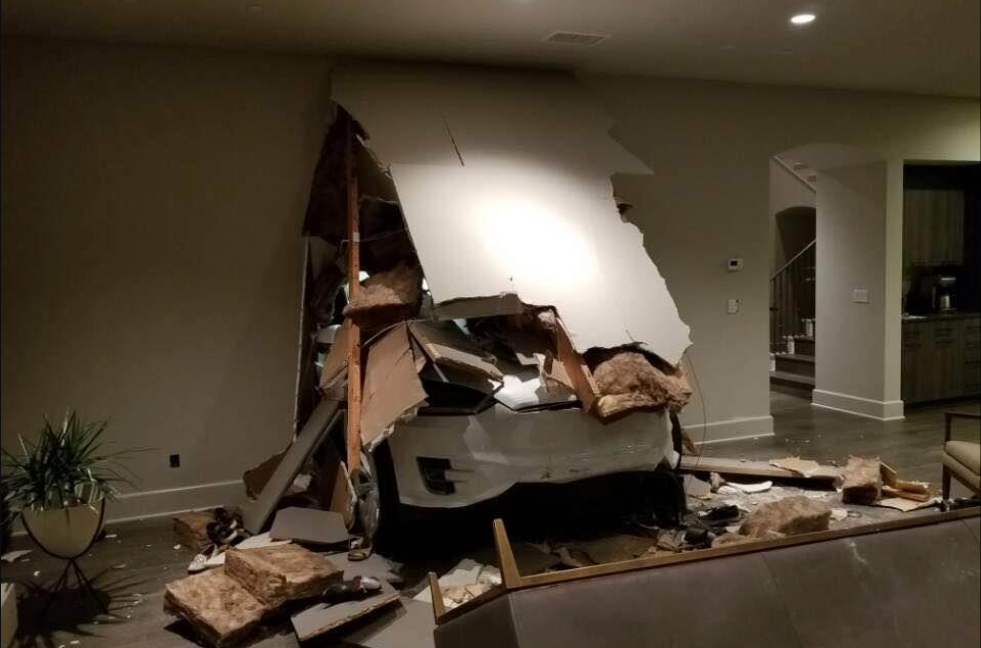
One-pedal driving is not causing Tesla electric vehicles to suddenly accelerate when parked, according to federal regulators. For almost as long as Tesla has been selling cars, it has been hit with sporadic accusations of parked cars accelerating when they shouldn't. Known to the industry as "sudden unintended acceleration," the question for regulators is whether the problem is a human one or an engineering one, and over the years, engineers who think they've found the culprit have petitioned the National Highway Traffic Safety Administration to force a recall. These efforts usually fail, as was the case today, when NHTSA said it would not tell Tesla to recall every EV it built since 2013.
Because electric motors are also generators, EVs use regenerative braking to recover energy when they slow down rather than wasting that kinetic energy as heat (and maybe a bit of sound) via the friction brakes. In many battery EVs and just about any hybrid I can think of, a brake-by-wire system blends the two together—the driver uses the left pedal as normal, and the car slows down. Some automakers (I'm looking at you, Porsche) think this is the only way a driver should slow their EV. But an electric motor can also be programmed to regeneratively brake when the driver lifts their foot from the throttle, and in Tesla's EVs (as well as Rivian's and Lucid's), this is the only way to regen, as there is no brake-by-wire system, only traditional hydraulic friction brakes.
Technically, I just described lift-off regen, but if the car has been programmed to come to a complete stop when you take your foot from the accelerator, that's one-pedal driving. Some EV drivers absolutely love one-pedal driving; others don't. I like one-pedal for low-speed driving or when I want something similar to engine braking. But according to the petition sent to NHTSA in 2023 by a Greek engineer, this causes a "short-circuit" in Tesla drivers' brains.


