Economy
Fed's Kevin Warsh warns inflation is too high, sparking bets rate hikes are coming August 28, 202612:05 PM ET
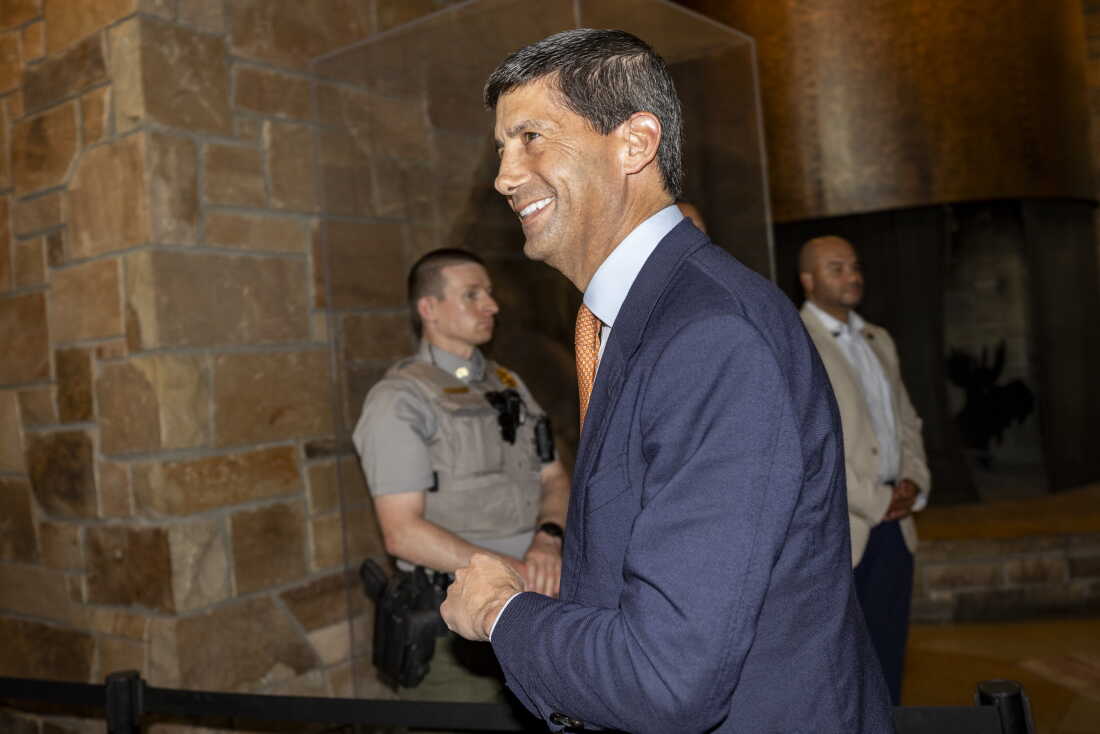
Federal Reserve chairman Kevin Warsh spoke to a gathering of economists and central bankers at the Jackson Lake Lodge in Wyoming Friday. Natalie Behring/Getty Images North America hide caption
toggle caption Natalie Behring/Getty Images North AmericaFederal Reserve chairman Kevin Warsh remains tight-lipped about where he thinks interest rates are heading — but investors took his tough talk about inflation at a closely-watched speech on Friday as a signal that rates are likely to go higher.
Economy
A divided Federal Reserve holds interest rates steady despite high inflation
Speaking from Jackson Hole, Wyo., Warsh argued that the labor market is stable, investment is strong and consumer spending is resilient. But he also noted that prices are still climbing faster than the central bank — and most people — would like.
The consumer price index shows prices have risen 3.4% over the twelve months ending in July, while the Fed's preferred measure puts inflation at 3.7% during that period.
"None of these measures are perfect," Warsh said. "But they all tell a similar story: Inflation is running above our 2% target. So the Fed's predominant focus right now should be on prices."
Markets took that as a signal that the central bank may need to raise its benchmark interest rate as early as next month. Before Warsh spoke, investors put the odds of a September rate hike at about one in three. After his speech, that likelihood rose above 50/50.
Warsh promises 'quieter Fed'
Investors were disappointed last month when Warsh promised to restore price stability but refused to offer a detailed roadmap. He remains reluctant to provide detailed guidance on where interest rates might be going in the near future. Warsh says such commentary can tie the central bank's hands and also distort market signals about where the economy is going.
Business
The bond market is signaling trouble ahead. This is why you should pay attention
"A quieter Fed, more purposeful in its communications, is better able to meet its objectives," Warsh told the annual gathering of economist and central bankers at the Jackson Lake Lodge. "And we can be held accountable for delivering on our remit—the only true test of our credibility. To borrow a line from General Chuck Yeager, 'At the moment of truth, there are either reasons or results.'"
Warsh also touches on AI
Warsh devoted part of his speech to the economic potential of artificial intelligence, calling this a "hinge point in history." He is optimistic that the rapid developments of the technology will boost production and lower costs, although he acknowledged there are questions about who will profit from that and what it might mean for workers.
In the short run, the massive investment in AI data centers is contributing to higher inflation, driving up the cost of construction and memory chips.
Artificial intelligence is the focus of one of the task forces Warsh has appointed to advise the Fed. Warsh, though, cautioned that work will not color his thinking about interest rates in the short-term.
"Their recommendations will come later and have no bearing on decisions we make in the current policy conjuncture," he said. "But I believe that for future policy challenges, this intellectual investment today will leave us far better prepared."
NPR does not offer or accept money for coverage or interviews. Anyone who makes such an offer or request is not an NPR employee and does not represent NPR.


