Economy
Fed holds interest rates steady even as inflation remains stubborn October 28, 20262:04 PM ET
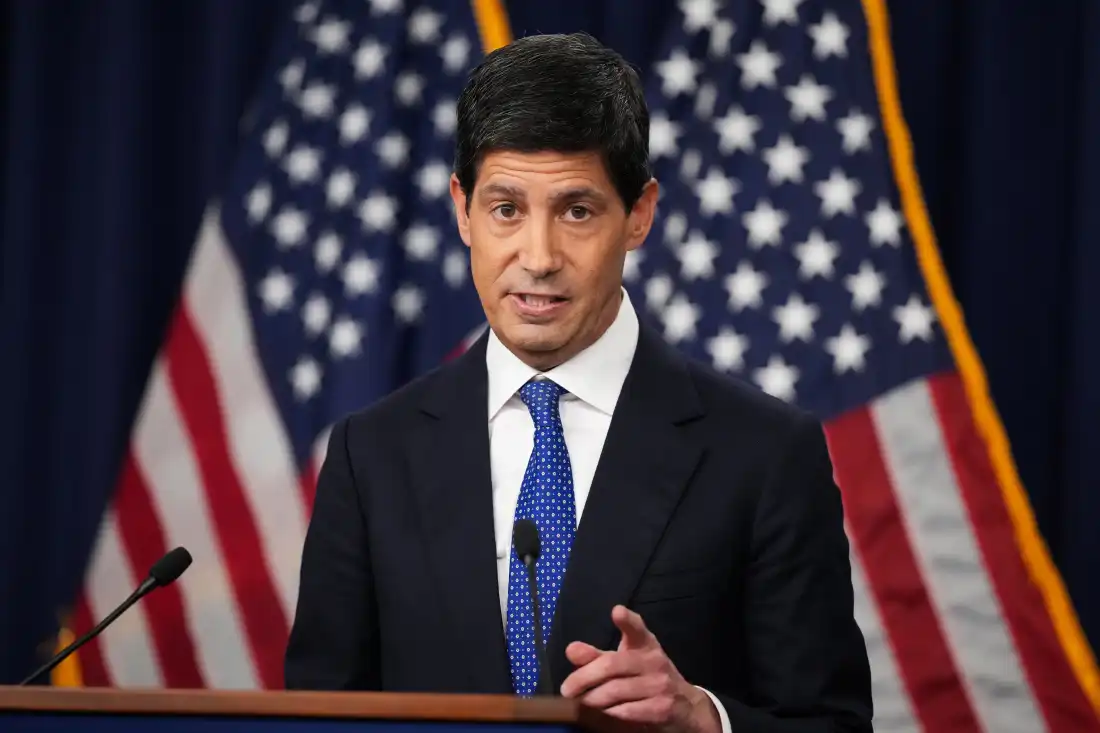
Federal Reserve Chairman Kevin Warsh and his colleagues voted to hold their benchmark interest rate steady Wednesday. The central bank had raised rates in September, in an effort to curb persistent inflation. Andrew Harnik/Getty Images North America hide caption
toggle caption i Andrew Harnik/Getty Images North AmericaThe Federal Reserve opted not to raise interest rates Wednesday, but signaled that it's not retreating from the fight against stubborn inflation.
Only on NPR
Democrats still poised to make gains, but poll shows warning signs for just how many
The central bank renewed its pledge to deliver price stability, a goal that's been made more difficult by a spike in energy prices tied to the U.S. war with Iran.
"Inflation remains elevated," the Fed's rate-setting committee acknowledged in a statement.
At its last policy meeting in September, the Fed raised rates for the first time in more than three years. Since then, data has shown inflation has continued to accelerate, with consumer prices in September up 3.7% from a year ago — a bigger annual increase than the previous month.
"It's 'wrong way," says Dan North, a senior economist at the insurance company Allianz Trade. "That inflation line is going up, not down."
The decision not to adjust interest rates comes less than a week before votes are tallied in the midterm election, which may have contributed to the Fed's caution.
"It would be suspicious if there were a hike before the midterm," North said.
Loading...
A December hike is looking likely
After a pause at this week's meeting, Fed policymakers are widely expected to raise their benchmark interest rate at their next meeting in December, in an effort to tamp down demand and bring prices under control.

Affordability
How long does it take to save up for a starter home? Twice as long as it did in 2019
Two members of the rate-setting committee wanted to move more quickly. Fed governor Lisa Cook and Beth Hammack of the Cleveland Federal Reserve Bank voted to raise rates by a quarter percentage point on Wednesday, while a majority of Fed policymakers opted to stand pat.
The Federal Reserve's benchmark rate — currently 3.75 to 4% — helps to establish the cost of other short-term lending for things like credit cards.
Longer-term interest rates are set by the bond market but can also be influenced by Fed decisions. Mortgage rates climbed to a three-year high of 7.4% earlier this month, before easing slightly. The high cost of home loans has been a drag on the housing market, which has been in a slump for the last four years.
AI helps prop up the economy
Other parts of the economy are less sensitive to rising interest rates. The booming investment in artificial intelligence, for example, shows no sign of slowing down, no matter how much the Fed tries to tap on the brakes.
"The A.I. companies don't care what interest rate they have to pay," North says.
The frenzied push to build A.I. data centers is pushing up prices for construction materials and electronic equipment.

Business
AI giant Anthropic files for an IPO that could break records
Consumer spending has also remained resilient, fueled in part by upper-income shoppers who benefit from the rising stock market.
That's not the case for less wealthy families, whose wages are not keeping pace with the rising cost of living. Average wages rose just 3% for the 12 months ending in September.
"Lower and middle-income Americans are having a real struggle," says Mark Zandi, chief economist at Moody's Analytics. " Their purchasing power is actually declining. And that's a pretty uncomfortable place to be. And that likely goes to explain to a large degree why people don't feel very good about the economy."
NPR does not offer or accept money for coverage or interviews. Anyone who makes such an offer or request is not an NPR employee and does not represent NPR.