Chris Towers breaks down how to navigate growing uncertainty across Fantasy pitching options
 By Chris Towers May 13, 2026 at 9:19 am ET • 15 min read
  Imagn Images
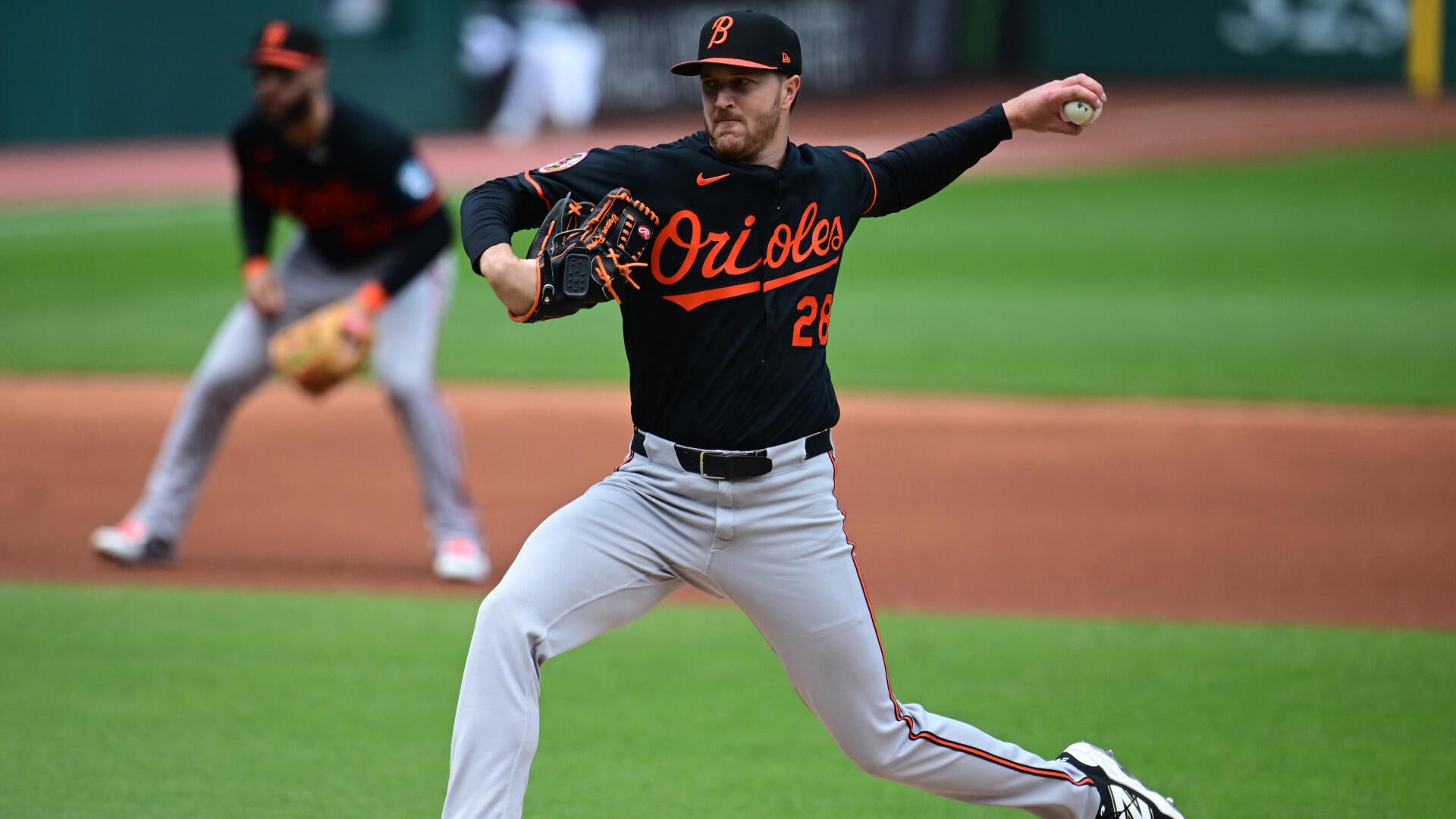
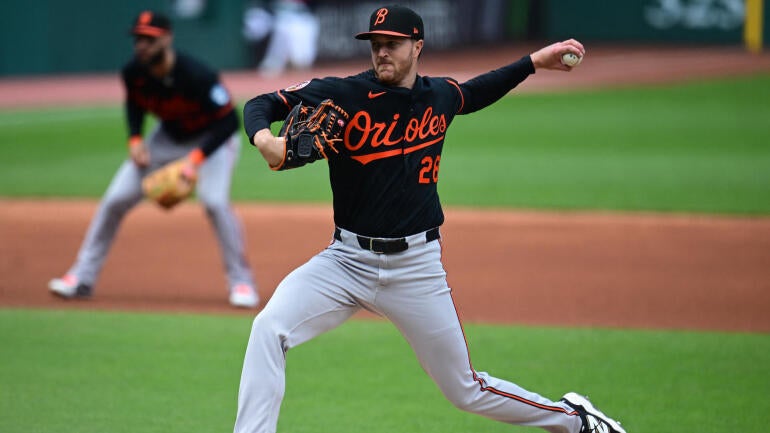
 Whenever I fall for a player like Trevor Rogers, I always think back to that cinematic classic, Star Wars, Episode III: Revenge of the Sith.
*extremely Obi-Wan Kenobi voice*: "Wait a minute, how did this happen? I'm smarter than this."
Usually, I'm the one preaching patience, ala Anakin Skywalker (in this scene and literally only this scene). But after watching yet another dreadful performance from Trevor Rogers, I think I'm pretty much ready to throw in the towel on this guy getting back to being an impact pitcher. And I really should have known better.
All of the warning signs were there. Rogers had been awful for three straight seasons between his breakout in 2021 and his bounce back in 2025, and that bounceback really did come out of nowhere – eight starts at Triple-A, he had a 5.51 ERA and showed so little that even after he tossed 6.1 shutout innings in a spot start in May, the Orioles still sent him back to Triple-A. And this was at a point in the season where they were absolutely desperate to get anything from their pitching staff.
He wouldn't come back up until mid-June, and while he was one of the best pitchers in baseball from that point on, it's not like it was the kind of success I typically buy into. Sure, there was an uptick in velocity and decent swinging strike and strikeout numbers, but Rogers was mostly thriving through improved control and by limiting hard contact. You can find sustainable success with merely decent strikeout numbers and elite command and contact suppression, but it's a narrow path to walk, and it's a skill set that takes a lot longer to buy into than someone who is just mowing down 30% of opposing hitters. Rogers' 1.80 ERA was never going to be sustainable, obviously, but even his 3.41 expected ERA should have been taken with a grain of salt, given how dependent it was on outlier results on balls in play despite a pretty massive 48.4% hard-hit rate.
If you aren't striking out at least a quarter of the opposing hitters you face, it puts your fate in the hands of the defense, and the Orioles don't exactly have a great one. And Rogers himself has taken a bit of a step back even in the stuff he can control, with his strikeout rate dipping to 19.5% and his walk rate back up to 8.4%. Those skills indicators still look better than they did during the deepest depths of his Marlins-era struggles, but they don't look great! And that's how you get to a 4.49 FIP through his first seven starts.
Am I saying Rogers is a drop everywhere? No, probably not – attrition has hit hard enough at the position that I'm not going to give up on a guy who showed real skills last season after just seven starts. For whatever it's worth, he is still limiting damage on contact, which is why his xERA entering this start was a still-respectable 3.65. Rogers has not rediscovered the form that made him so useful last season, but I don't think he's totally hopeless; it's also worth noting that his start Tuesday came after he was activated from the IL with an illness, so he may not have been 100% for this one. That's a reasonable excuse as far as it goes.
But I am regretting the decision to draft Rogers where I did. He wasn't terribly expensive – SP45 on average in drafts before the season – but he's just not the type of player I ever want to make a priority in drafts. He was a "well, if nobody else wants him …" pick for me, and hey, it's not like Bubba Chandler (SP46) would be doing a lot more for me right now. But Rogers was going ahead of guys like Shota Imanaga and Drew Rasmussen, pitchers with similar skill sets but longer track records of success, and in retrospect, that looks like a mistake.
Rogers could still pull out of this. In fact, I would still bet on him finishing with an ERA under 4.00 the rest of the way. He isn't as bad as he has looked over the past four starts. But he's probably not going to be an impact arm for your Fantasy team, either. It was probably a mistake to ever think he could have been.
Before we get to the rest of what you need to know from Tuesday's action, a quick thought on a pitcher you can definitely drop: Tatsuya Imai. I wanted to hang on to him after his return from the IL just to see if he could get on track after the poor start to his career, but he looked just as lost. Despite simplifying his arsenal and literally only throwing his slider and sinker, Imai still just didn't look like a viable MLB starter. He gave up six runs over four innings on five hits, walking three and striking out three.
I thought Imai's weird arsenal would give hitters fits, I'll be honest. He didn't always dominate in Japan, but he was usually pretty good and seemed to solve his control issues in recent seasons. With a slider that moves the wrong way and a five-pitch arsenal overall, I thought he would at least thrive for a while before the league caught up to him.
But Imai just hasn't looked comfortable, and he's said as much. He has struggled with the transition to life in America and to the MLB game, and he just hasn't given us any reason to think this is going to work, dating back to the spring. I still think there's enough talent here that I wouldn't be shocked if Imai figures it out eventually. But I will note this: I originally typed "before long" there before erasing it for "eventually," because based on what we've seen from him so far, Imai is a long way from figuring it out. I'm fine with dropping him in basically all leagues at this point.
Here's what else you need to know about from Tuesday's action around MLB:
Wednesday's top waiver-wire targets
Here's who we're looking to add coming out of Tuesday's action:
Daylen Lile, OF, Nationals (72%) – Lile is a good hitter, and we're starting to see signs of it after a cold April. He went 3 for 5 with a couple of homers Tuesday, and he's now hitting .286/.366/.571 since the calendar flipped over to May. He hasn't been quite as good overall as he was last season, though the underlying numbers are closer than you might think – he had a .348 xwOBA in 2025 compared to a .333 mark before his two-homer game. The strikeout rate is up a couple of ticks, but so is the walk rate. His quality of contact is a bit worse so far, but it mostly seems like he's just been a bit off – he's a few percentage points down on his hard-hit rate, line drive rate, and pulled-air rate, but is generally in the right neighborhood. This still looks like a good source of batting average (I would take the over on .275, at least) with 20-ish homers – and I still have hope for him as a base stealer despite his inefficiency.
A.J. Ewing, OF, Mets (31%) – Well, that's about as well as a debut can go when you're a sparkplug type of hitter. Ewing hit eight for the Mets Tuesday, but he sure looked like a future leadoff hitter, going 1 for 2 with three walks, two runs scored, a couple of RBI, and his first career stolen base. Ewing probably won't hit for much power early in his MLB career, but the hope is he'll put the ball in play, get on base, and make things happen when he gets there – think maybe a less extreme version of Chandler Simpson as a best-case scenario. A more likely outcome might be something like what Justin Crawford is doing for the Phillies, though the fact that Ewing stole his first base in his first game is a sign that hopefully he'll be a bit more active on the bases than Crawford. It all adds up to make him worth adding in pretty much all Roto leagues.
Anthony Volpe, SS, Yankees (22%) – Well, he's getting another chance. At this point, it's not clear if he's actually a player worth getting excited about anymore, of course, especially coming off shoulder surgery – he's hitting just .221/.276/.294 in 18 games in the minors so far, so I would bet against Volpe coming up and making an immediate impact again. But with Jose Caballero dealing with a finger injury, Volpe is going to get the chance, and he's not that far removed from a 20-20 season in 2023, and he only fell a few short in each category from doing it again in 2025. The batting average skills have been terrible, and I don't think it's at all likely Volpe will matter in 12-team points leagues. But in leagues where you use a middle infield spot, it's at least possible he could be viable again. I'm not counting on it, though.
Walbert Urena, SP, Angels (9%) – Urena is interesting. He has legit elite velocity, with his sinker averaging 98.1 mph in Tuesday's start, and he has a very good changeup that has shown the ability to miss bats. He also has shown really, really poor control early in his MLB career, which is what is the primary thing holding him back from being much more than just interesting. He only walked one hitter Tuesday, so let's hope that's something he can build on, because he's already doing a lot else well, allowing just four runs in his past 16 innings over three starts.
Tuesday's standouts
Bailey Ober, Twins vs. MIA: 9 IP, 2 H, 0 ER, 0 BB, 7 K – Great start! Ober is pitching well right now! I don't intend for these exclamation points to be sarcastic! Ober is executing what he is capable of at a super high level right now, and I don't think his current 3.46 ERA is totally a fluke. I just don't think it's especially sustainable. He's one of the softest-tossing starting pitchers in baseball at this point, and he predictably misses bats worse than just about any pitcher in baseball at this point. He has good control, but hardly elite – his 7.2% walk rate even after this zero-walk effort would still be the worst mark of Ober's career, believe it or not. Ober has been a very good pitcher in the past, and clearly, he's still capable of good runs in the present. But I have very little confidence that this is going to prove to be something he can pull off for months on end, let alone for the rest of the season, and I'm still keeping him firmly in the streamer category of pitchers. And he gets the Brewers later this week and then the Red Sox and White Sox in his three starts after that, so I think Ober could be useful for the next few weeks. I just don't expect it to last long.
Zack Wheeler, Phillies @BOS: 7.1 IP, 6 H, 1 ER, 0 BB, 4 K – 2.55 ERA through four starts! He's back! 2.71 FIP! Poke holes in that, nerds! Look, Wheeler isn't as good as his pre-injury self. I think you could even make the case that there are legitimate red flags in his profile – he had just seven swinging strikes on 87 pitches Tuesday and gave up 11 hard-hit balls. His 16.8% strikeout-minus-walk rate is still decent, but it would also be his worst mark since 2020 and would rank 31st out of 74 qualifiers on the season. Wheeler is succeeding with outrageous results on balls in play right now, and everything else looks more "good, not great." Good, not great, would still be a pretty outstanding result for a guy coming back from a serious shoulder issue, but I still think Wheeler looks more like a top-30 SP for Fantasy than a top-20 one, let alone the ace he used to be. If someone sees the pretty ERA next to Wheeler's name and wants to value him like an ace, I think there's an opportunity to sell here. But I also think we've likely avoided the worst-case scenario for his return from injury, so it's not like you have to trade him.
Paul Skenes, Pirates vs. COL: 8 IP, 2 H, 0 ER, 0 BB, 10 K – Opening Day feels like so long ago. With Tarik Skubal and Garrett Crochet on the IL and facing uncertain futures, Skenes is the obvious No. 1 pitcher in Fantasy and would be in my first round if we were drafting today. When Scott White re-ranked the first two rounds for that exact exercise yesterday, he had Skenes ninth. I think that's right.
Yoshinobu Yamamoto, Dodgers vs. SF: 6.1 IP, 6 H, 5 ER, 0 BB, 8 K – What's funny here is that, if you had to identify one weakness in Yamamoto's game through his first six starts, it was unquestionably the weirdly low strikeout rate. Well, that's not two starts in a row with eight strikeouts, and they've probably been two of his three worst starts of the season by results! Nothing really looked out of whack in this start for Yamamoto, so I'm not inclined to be too concerned about it, but I will note that his xERA was up to 4.23 before he gave up three homers Tuesday, so it's not like he's been perfect. I have enough faith in Yamamoto to write this one off as a bad night, but I'd like to see some sustained excellence in his next few starts to wash the taste of this one out.
Freddy Peralta, Mets vs. DET: 6 IP, 7 H, 2 ER, 2 BB, 7 K – Every few days, doing this newsletter, I'll realize there is some relatively high-end pitcher I haven't written about in a while, and I'm not sure Peralta has shown up in the newsletter yet this season. That's because he's just doing exactly what we expected him to do this season. The WHIP is a bit higher than you'd like (1.20), but that's also because last season's 1.08 mark was more of an outlier for his career. His strikeout rate is a bit lower than expected, though I think that's mostly because he only had one strikeout in his start prior to this one; his per-pitch whiff rates remain very strong, and going out and getting seven strikeouts Tuesday is a sign that the previous start was nothing more than a fluke. Peralta is just a rock-solid SP2/3.
Eury Perez, Marlins @MIN: 6 IP, 3 H, 3 ER, 3 BB, 8 K – We're still waiting for legitimately great starts from Perez, but I'm not going to turn my nose up at a good one. The control still isn't where it needs to be, but he does still generate more chases than your average pitcher while also missing more bats in the zone than average. Nothing about Perez's profile is elite, and I think the fact that he tends to have so many uncompetitive misses is probably the explanation there. One wrinkle in this start to note: Perez threw a sinker that came in about 1 mph slower than his four-seamer with four fewer inches of induced vertical break and about five more inches of arm-side run. It's a different look and a sign that Perez is open to experimenting to get things right, though with just one swinging strike and zero called strikes with the pitch in this one, it certainly isn't a game-changer for him yet. Perez has been frustrating so far, but I'm still not giving up hope in a pitcher this obviously talented.
Shane McClanahan, Rays @TOR: 5 IP, 1 H, 0 ER, 1 BB, 7 K – McClanahan continues to pitch exceptionally well, even if his stuff isn't quite where it was a few years ago. After some early control issues, he's really locked in lately and is missing plenty of bats, including 11 whiffs on 89 pitches in this one. And that's where the one downside really comes: 80 pitches in five innings? That's it? The Rays have shown a bit more willingness to let Drew Rasmussen pitch deep into games this season (three starts of 90-plus pitches, after he had just two all of last season), and maybe they'll follow suit with McClanahan. But the early hooks have been consistent enough so far that I do think you have to expect it to remain the limiting factor in McClanahan's profile. I mean, it's better than giving up a bunch of runs, you know?
Will Warren, Yankees @BAL: 5.2 IP, 4 H, 2 ER, 1 BB, 6 K – I think Warren is probably going to settle in as more of a good strikeout pitcher than the elite one he has looked like so far this season, and that might lead to a bit of a spike in his ERA. But don't take that as a sign that I'm not buying into Warren, because a mid-3.00s ERA and 26% strikeout rate is a plenty useful pitcher, especially on a good team. I think he's certainly improved from last season and will remain someone you're happy to have on your team.
Mackenzie Gore, Rangers vs. ARI: 8 IP, 3 H, 1 ER, 1 BB, 5 K – Look, who am I to turn my nose up at a great start from Gore at this point? But … this isn't the way – hey, two Star Wars references in one newsletter! Gore has never had the kind of command or control to limit hard contact or walks, so it's awfully hard to envision a world where he succeeds without missing a lot of bats. Kudos to him for making it work in this one, but I'm inclined to view this as more of a one-off than something Gore is likely to build on.
Brandon Sproat, Brewers vs. SD: 5.1 IP, 6 H, 3 ER, 2 BB, 6 K – Sproat had some interesting tweaks in this one, upping his cutter usage to make it his true No. 1 pitch, and it was fantastic. Nine of his 15 whiffs came on the pitch, and only one of the four batted balls he allowed with it was hard-hit. That's a very interesting wrinkle for a couple of reasons: First, because Sproat has never had particularly good fastballs; and second, because the cutter is a new pitch for him. That it's already emerging as a viable weapon and alternative to his fastballs is a pretty big sign for Sproat's development. It's not enough to make me view him as a must-add pitcher, but it's definitely something worth keeping an eye on moving forward.
Zac Gallen, Diamondbacks vs. TEX: 4.2 IP, 7 H, 7 ER, 2 BB, 4 K – Gallen tweaked his slider during his start before this one, generating more drop with the pitch and helping him miss more bats. I filed that one under "something to watch for his next start," and then he went out and did this. The slider still looked like his best pitch, but it clearly wasn't enough. At this point, I think it's pretty reasonable to just write Gallen off as a potential difference maker, and I would say he's droppable in all leagues if not for an upcoming two-start week where he's set to face the Giants and Rockies (away from Coors Field). At least in points leagues, I still think he might be worth the risk for next week with those matchups.
Join the Conversation comments