Chris Towers examines whether early struggles signal real decline or just small-sample troubles for top bats
 By Chris Towers Apr 17, 2026 at 9:36 am ET • 9 min read
  Imagen Images
 The tough thing about April is that we know some of what we're seeing in the early going of the season will end up being real. Last season, around the middle of April, we saw breakouts from the likes of Tyler Soderstrom and Geraldo Perdomo that ended up setting the stage for what turned out to be legitimate leaps up at least one tier in the Fantasy rankings.
The problem? Folks also got excited about Jung Hoo Lee's hot start, too. Heck, I know I was doing some chest-beating about Kristian Campbell's early success after other analysts bailed on him during a cold spring. As it turned out, neither of those were real.
You can do the same thing on the other end of the spectrum. Vinnie Pasquantino and Brandon Lowe's struggles in April ended up being meaningless, while Jake Burger and Luis Robert's struggles did, in fact, presage disappointing seasons in both cases.
My reaction to all of this is typically to stay level-headed. There's a reason most projections systems incorporate multiple seasons of data and tend to hold steady in the face of small-sample outliers. History didn't start 20 days ago, and your opinion on most players shouldn't be much different than it was before the season. A good three weeks in April doesn't actually matter more than a good three weeks in August, and a good three weeks in August almost never fundamentally changes how anyone views any given player. It should be the same in April.
But … what if we treated April as if it did matter? For the sake of argument, that's what I'm aiming to do here. I'm looking at the six biggest underperforming hitters so far this season among the top 100 in ADP and looking at what it might mean if their slow starts were for real. To be clear, I'm not actually changing how I view any of these players; this piece is all about laying out what it would look like if I did.
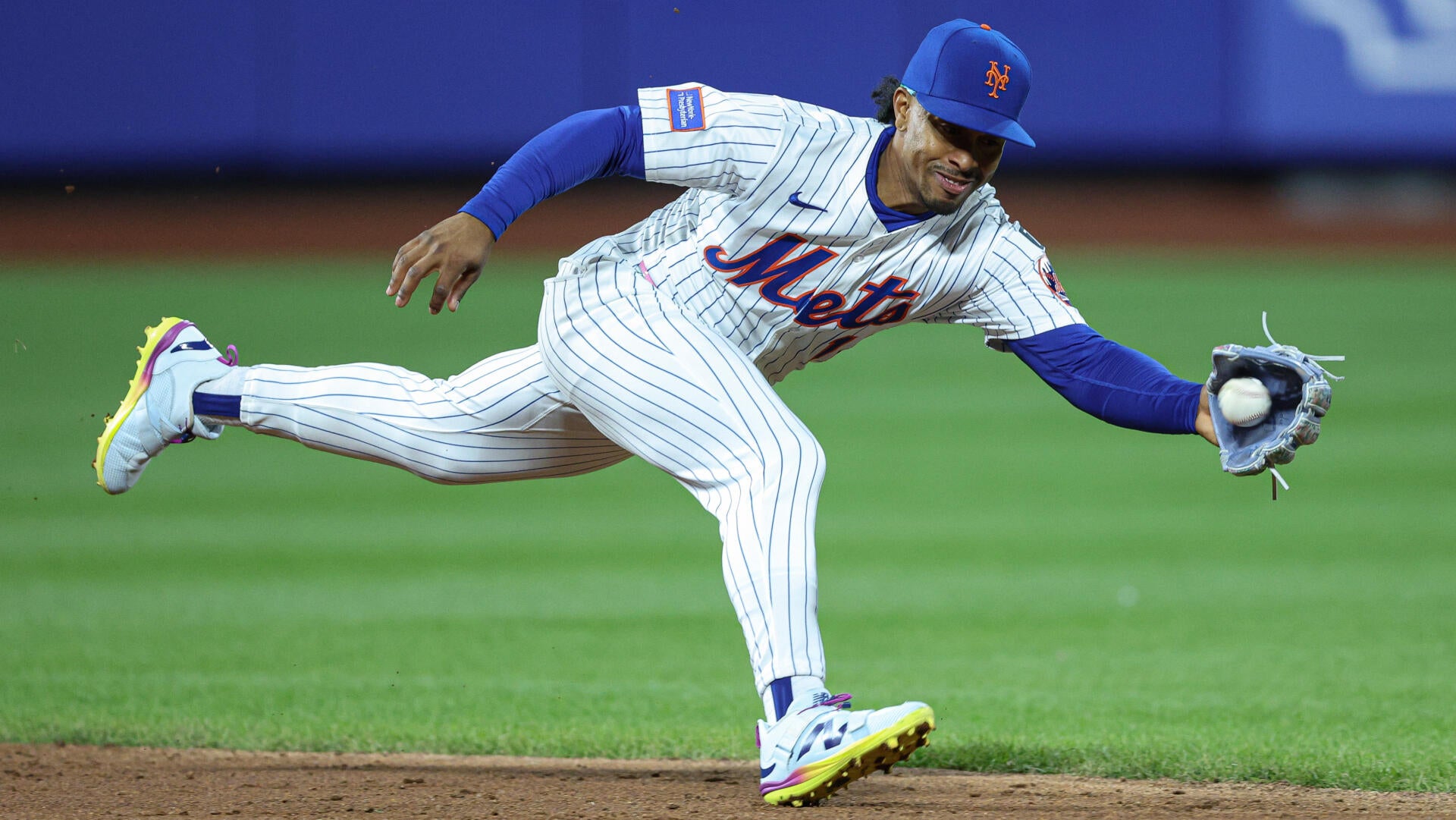
Francisco Lindor, SS, Mets
What was expected? The same old, same old. Sure, this would be Lindor's age-32 season, and anyone on the wrong side of 30 has a bit of added decline risk. But Hall of Famers don't tend to have the same aging curves as everyone else, and there had been no signs of decline so far.
What's happened so far? Lindor has been a disaster, hitting .184/.287/.289 and failing to record his first RBI until the 18th game of the season. And it's not just the struggles with the bat that stand out, as Lindor has made a number of blunders in the field and on the bases that have drawn headlines and criticism. In a way that suggests this might be something more than just his usual slow start with the bat.
Why could it be real? Lindor came back from his hamate bone surgery quicker than most hitters, and while Corbin Carroll is crushing it on a nearly identical timeline, Jackson Holliday was recently pulled off his rehab assignment after having surgery on nearly the same day this spring. Which is just to say, everyone heals differently. And while the hamate bone surgery's impacts on offensive production have perhaps been overstated in the past, again, the impact is not going to be the same for everyone. Carroll might be on one end of the spectrum, while Lindor might be on the other. It isn't necessarily showing up in the underlying numbers – his average exit velocity is down a tick, but his expected wOBA of .331 is close enough to his .345 mark of last season as to not really raise an eyebrow. But the quality of contact here is worse, and it could be a sign that Lindor isn't quite right yet. And there's always some risk when a player's Spring Training is disrupted this way that they just never really get back on track.
Michael Busch, 1B, Cubs
What was expected? Coming off a 34-homer season that saw a massive jump in quality of contact, Busch was going to consolidate those gains while taking on a bigger role against lefties, giving him room to grow in his counting stats and precipitating another, even bigger breakout.
What's happened so far? Well, the playing time bump everyone wanted was there, as Busch has started five of six games against lefties, along with every game against righties. The problem is, well, everything else. Busch has lost nearly 10 mph in average exit velocity from 2025, dropping from a borderline elite 92.2 mph mark to 82.6, a mark somehow south of noted slap hitter Chandler Simpson. It has come along with a marked improvement in plate discipline, but clearly, that's not the kind of trade-off we're looking for from a guy who was supposed to be a centerpiece power hitter.
Why could it be real? Beyond the "contact for power" tradeoff we're seemingly seeing, Busch's bat speed has also collapsed. He's gone from an average of 69.6 mph – which was already just a 16th percentile mark – to 67.0 mph. He's swinging like a slap hitter right now, and while bat speed isn't everything, it does tend to correlate with damage on contact. But the bigger concern here is just that 2025 was a relatively huge outlier for Busch, who was a decent part-timer but not a whole lot more than that in 2024. What if we're just seeing a combination of a worse approach, combined with regression to the mean?
Vinnie Pasquantino, 1B, Royals
What was expected? The case here is similar to the one for Busch, except with a different bonus variable on top. Coming off his big breakout, Pasquantino was expected to be even better in 2026 thanks to the Royals' new, more hitter-friendly dimensions at Kauffman Stadium.
What's happened so far? Well, the Royals haven't benefited from those new dimensions yet – as MLB.com's Mike Petriello noted a few days ago, there has only been one homer so far at Kauffman Stadium that wouldn't have been a homer last season. Of course, the way Pasquantino is hitting the ball right now, I'm not sure it would matter, as he doesn't have a single batted ball so far that should have been a home run, according to BaseballSavant.com.
Why could it be real? Like with Bush, we've seen a big drop in bat speed from Pasquantino to date, going from 72.5 mph to 69.7 mph on average. His fast swing rate has dropped from 26.4% to 3.8%, and it's not like it's coincided with a big improvement in plate discipline in his case. Pasquantino is still hitting the ball in the air to the pull side, but he's doing it with much less authority while striking out more than ever. It's a bad combination, and a distressing one for a guy who has only ever really been an impact bat for one full season to date.
Josh Naylor, 1B, Mariners
What was expected? Naylor has always been a solid hitter, but what really leveled him up as a Fantasy player in 2025 was his emergence, unexpectedly and completely out of nowhere, as a base stealer. Skepticism was warranted, but after he re-signed with the Mariners, why wouldn't he keep running – he stole 19 of his 30 bases in 2025 in just 54 games with the Mariners.
What's happened so far? Nothing. Quite literally on the bases, as Naylor has attempted zero steals, but also almost literally with the bat, where he holds a .125/.203/208 line through his first 18 games. Naylor has seen some mild declines in quality and quantity of contact, but nothing quite as extreme as what we've seen from Pasquantino and Busch. In this case, the lack of steals looks like a much bigger issue.
Why could it be real? The steals never actually made much sense for Naylor. Kudos to him for taking advantage of inattentive pitchers and unmotivated catchers, but we're talking about a guy who ranked in the third percentile in sprint speed, making him one of the biggest stolen base outliers in the Statcast era. And here's my concern: If stolen bases are largely about intent, Naylor doesn't have the incentives to run like he did last year. Quite literally, as he was playing for a free agent contract last season. I'm not accusing him of sandbagging or anything, but if you knew of One Weird Trick to boost your value ahead of a potential $90 million payday, wouldn't you hit that button as many times as you could? In fairness, Naylor's been so poor as a hitter that he hasn't really had many opportunities to run to date. But even that doesn't explain it. With the Mariners in 2025, he attempted a steal on 19 of 69 stolen base opportunities as tracked by Baseball-Reference.com, or one every 3.6 chances; he hasn't attempted one on 13 attempts so far.
Salvador Perez, C, Royals
What was expected? More of the same from one of the position's true ageless wonders. Yes, he'd turn 36 during the first quarter of the season, but with no signs of aging so far, it figured to be smooth sailing yet again for Perez, especially with those aforementioned more generous dimensions in the Royals home park.
What's happened so far? Perez is another bat speed and quality of contact decliner, but without any real positive trade-offs to point to. Typically, a slower swing is made up for with a more direct swing, but Perez's swing length is just as long as last season's, while he has lost a tick on his average bat speed. He's also lost about 1 mph on his average exit velocity without any real improvement in his contact skills. It just looks like the bat is slower here without anything to help make up for it.
Why could it be real? He turns 36 during the first quarter of the season. Father Time is undefeated. Some players, like David Ortiz, manage to outrun him long enough to get to retirement before the bottom falls out, but most great players have at least a few years at the end of their career where they look like a shell of themselves. That might be what's happening here.
Wyatt Langford, OF, Rangers
What was expected? Another step forward. Langford struggled with multiple oblique injuries last season starting in Spring Training, so the consensus view was more or less like this: If he's capable of 22 homers and 22 steals in 134 games while playing through what is notoriously one of the trickiest types of injuries for hitters, what could he be capable of with another year of development, hopefully with fewer injuries slowing him down.
What's happened so far? Well, he got hurt again. This time it's a quad injury, though that only cost him a few days before he returned to the lineup, so we can't blame the slow start on that. The problem is Langford is just off to another ice-cold start. Even after a two-hit effort Wednesday, Langford has been hitting just .183/.210/.333 on the season, and he doesn't even have the underlying metrics to suggest he's been the victim of bad luck. His expected wOBA has collapsed to .266, an 80-point drop from last season, as his pop-up rate has nearly doubled and his line drive rate has collapsed from 27% to 20%.
Why could it be real?
In this case, I really don't think it is, and it's harder to find underlying reasons why it might be. There's been another drop in his sprint speed, which is weird for a 24-year-old, but not necessarily concerning, especially when most of the other physical indicators here look good. Langford's swing decisions have moved in the wrong direction – he's going out of the zone to chase a bit more often and swinging in the strike zone a bit less often – but not alarmingly so. The best explanation for Langford's struggles so far is just that his swing isn't dialed in, and maybe it'll never get there. But the red flags here are significantly less worrisome here.
Join the Conversation comments