Get to know these impressive rookies who could make an impact now
 By Chris Towers Mar 24, 2026 at 6:23 pm ET • 7 min read
Konnor Griffin didn't end up making the Pirates Opening Day roster. It was always a long shot — he won't even turn 20 until nearly a month after Opening Day, after all — but it was still disappointing to see the Pirates make the decision to start his season at Triple-A.
Griffin still has a very good chance to make his MLB debut early in the season, possibly still making it as a teenager, so don't go dropping him if you drafted him. But keep him stashed on your bench wherever you have him and hope it's more of an April debut than a June debut.
But while everyone was focusing on Griffin's rise up draft boards this spring, you might have missed the other top prospects set to make their MLB debuts on Opening Day. With rosters coming into shape in the days before the season starts, we have a pretty good sense of which top prospects will be debuting Thursday, and it's worth taking some time to get to know them.
That's what we're doing here, focusing on prospects in Scott White's top 100 who are set to make their MLB debuts this week — so not counting guys like Connelly Early or Nolan McLean who already debuted last season but retained their rookie eligibility.
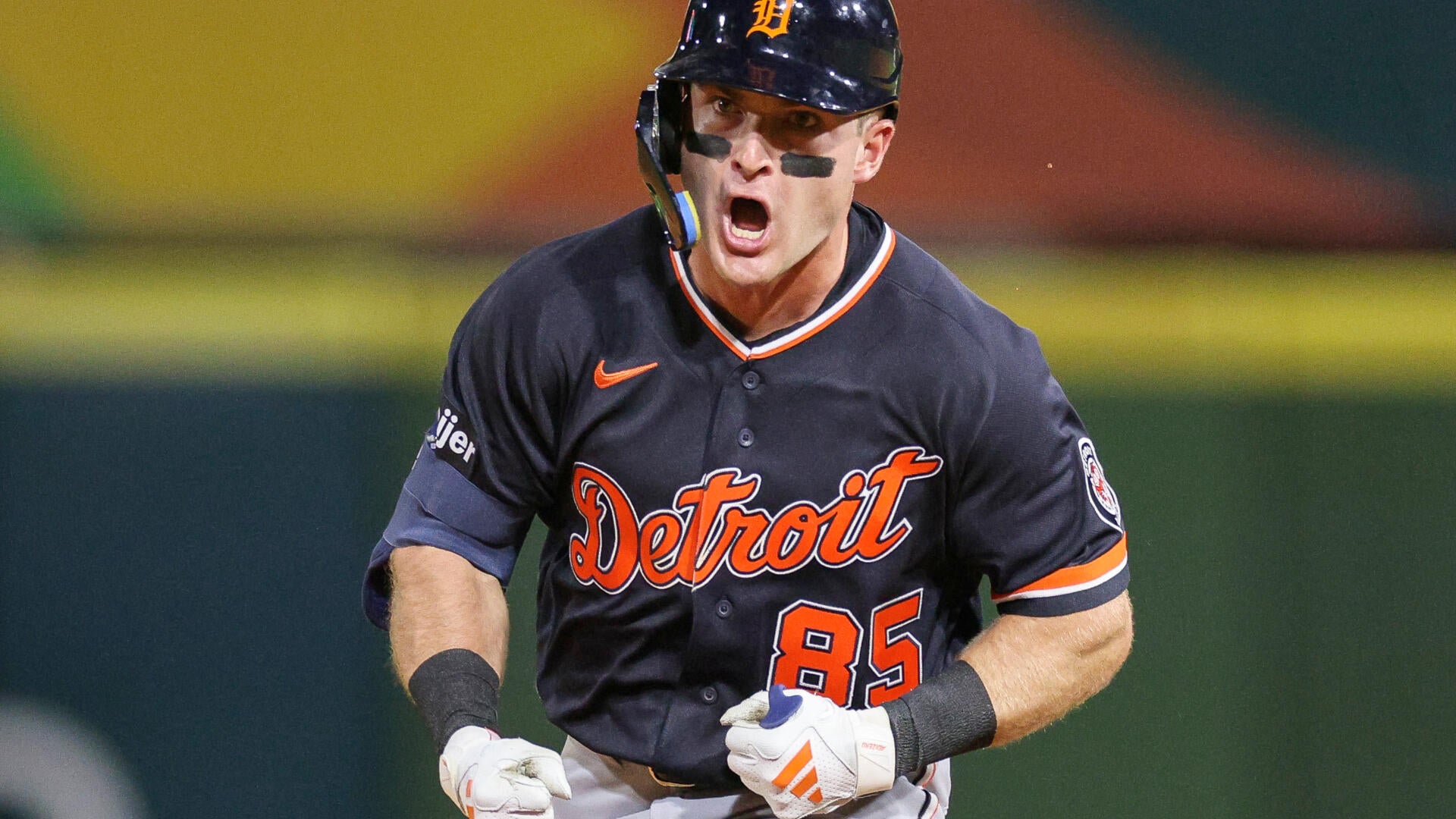
Kevin McGonigle, SS, Tigers (No. 2)
If it wasn't for how Griffin closed out his season, McGonigle probably would have entered 2026 as the consensus top prospect in baseball. He finished last season with more walks than strikeouts while hitting 19 homers in just 88 games. And he looked like pretty much the same guy this spring, walking 11 times and striking out just nine times in his 56 trips to the plate while hitting a couple of homers.
As for the skills, well, the plate discipline is obviously elite. He combines phenomenal swing decisions with strong contact skills and he has done it now in Double-A and against at least some MLB competition this spring. The physical tools aren't overwhelming — he's built more like a slot receiver than Griffin's tight end build — but he maximizes what he has. You won't see outrageous high-end exit velocities from McGonigle (his hardest hit ball of the spring was 108 mph), but you'll see a lot of 100 mph hard-hit balls, and his overall exit velocity this spring was 90.2 mph. He also hits the ball in the air to the pull side well, which pairs with his strong bat control and contact skills. If we're talking about something like 50-55 raw power on the 20-80 scouting grade, it might be something more like 60 (above average) game power because of how optimized he is.
McGonigle will be landing in a tough home park for hitting for power, and he might be more like a 15-steal up, so the hit tool will really have to translate. I think something like the good Xander Bogaerts seasons would be a reasonable expectation for McGonigle, making him a viable middle infield option for Fantasy, with upside beyond there. At the very least, he should be rostered in all formats, even if he isn't necessarily a starting-caliber shortstop in points leagues immediately. But one thing that might help is if the Tigers opt to play him at third base, something they've experimented with both in the minors and this spring. It's a lot easier to break into that top 12 than at shortstop, so we'll pull for that.
JJ Wetherholt, SS, Cardinals. (No. 4)
Wetherholt has been the better pick for Fantasy than McGonigle for most of the spring even though he isn't the better prospect. That's because his role on the Cardinals always felt much more assured, and also because his role on the Cardinals should matter more for Fantasy — he'll be started at second base next to Mason Winn, giving him more immediate multi-eligibility.
But the skill set actually has a lot of overlap with McGonigle's. It's a strong hit tool and a good approach at the plate, though not quite on McGonigle's level in either regard. But he stole 23 bases last season and has put up a 92.1 mph average exit velocity this spring after he was at 91.4 in a larger sample size last year at Triple-A. We're probably not talking about 30-homer upside here, but I could see a 20-20 season from Wetherholt with a useful betting average, making him a borderline starting option at second base as soon as he gains eligibility there. Which should be by Week 2 of the Fantasy season.
Carson Benge, OF, Mets (No. 9)
The comp I've defaulted to with Benge is Brandon Nimmo. Like the guy he'll be replacing in the Mets outfield, Benge brings a solid all-around skill set to the table. There probably aren't any elite tools here, but he'll draw a walk, makes plenty of contact, and hits the ball hard enough to be a power threat. It's actually a pretty similar skill set to Wetherholt and McGonigle, perhaps with a bit more raw power and a bit less contact skills. But the end result could look very similar — 20-20 upside, but perhaps with a bit less counting stat upside because he's less likely to hit near the top of the lineup for the Mets. But all in all, he should be rostered in all formats and could end up being a solid No. 3 outfielder type.
Andrew Painter, SP, Phillies (No. 26)
Painter looks like less of a sure thing than he once did, as his mechanics have changed since his Tommy John surgery, impacting the effectiveness of his fastball. He still generates above-average velocity, but not elite velo, and the shape of the pitch is a bit too normal to be able to project it as a plus pitch anymore.
But there's probably been a bit too much focus on that aspect of his game this spring, to the point where we might be missing the forest for the trees. Okay, it isn't an elite fastball, but it probably isn't a bad one, and it comes packaged with a deep arsenal of potential swing-and-miss pitches. And he'll be backed up by a very good supporting cast and even a (hopefully) improved defense. At the very least, Painter should be rostered in all leagues to open the season, just in case things click for him in a big way once the games count.
Chase DeLauter, OF, Guardians (No. 59)
DeLauter is a strange prospect these days. He's played less than 140 games since being drafted in 2022 thanks to a slew of injuries, which makes it tough to know exactly what kind of prospect he is. But I have a hunch: He's still an extremely good hitting prospect.
The fact that he remains a top-50 prospect despite all the lost development time supports that thesis, as does the spring production he just put up. DeLauter struck out just four times in 43 trips to the plate while hitting three homers and finishing with an OPS near 1.400. He put up a max exit velo of 115.3 with an average of 94.2 mph, and he did that while making plenty of contact. There probably isn't much speed to speak of here, and there's a chance his unorthodox swing gets exposed against the best pitching in the world. But the biggest risk here is on the injury side, given his track record. But seeing as he went undrafted in most leagues and will only cost either a late-round pick in remaining drafts or some FAB, this is another guy I think should be rostered in all formats to open the season. Just in case that uncommon combination of contact skills and power carries over. He could be the Guardians' second-best hitter this season.
Justin Crawford, OF, Phillies (No. 53)
Crawford is a weird real-life prospect, though if he proves capable of at least an average center field, it'll make everything look a lot better. But his lack of in-game power (despite decent raw pop) and overly aggressive approach at the plate make it tough to see too much upside here as a real-life hitter.
But for Fantasy? There's plenty of upside with a guy who might hit for a very high batting average while stealing a bunch of bases. He hit .334 last season in Triple-A, and while the .407 BABIP is unsustainable, he does profile as a guy who should run an unusually high success rate on balls in play — he hits the ball hard on the ground or with low line drives, he sprays the ball all over the field, and he has excellent foot speed. He might hit .280 even without much over-the-fence power to help, and he might steal 30-plus bases, too. There's risk of an early demotion if he proves overmatched defensively, but I think the upside and downside case here is very similar to Chandler Simpson's, and Crawford has been a favored No. 5 outfielder target for me all spring. The high-end scenarios will make him relevant in points leagues, too, but with the shallower rosters, he doesn't need to be rostered in those formats yet until we see him do it in the majors.
Join the Conversation comments