 Image source, Getty ImagesImage caption,
 The return of the 4-4-2, false nines, and set-pieces – the World Cup has already thrown up both familiar and new tactical ideas.
ByUmir IrfanFootball tactics correspondent- Published29 minutes ago
The beauty of the World Cup is the variety of unique styles and players competing against each other on the biggest stage.
Sometimes this poses unusual tactical challenges that require on-the-fly solutions.
Alternatively, with the popularity and influence of the Premier League and Champions League, we also see nations borrow ideas from club football when the World Cup comes around every four years.
Twelve games in and common patterns, trends and match-ups are already emerging. Here are five that have stood out so far.
World Cup hydration breaks - who are the winners and losers?
- Published5 hours ago
Wirtz, Isak & Diomande shine at World Cup as Iraola plots Liverpool revival
- Published9 hours ago
1. The return of 4-4-2
Football tactics are continually being developed and analysed in an increasingly detailed manner so it is interesting, and fun, to see the 4-4-2 become so commonly used at this World Cup.
Premier League football of the early 2000s was typified by the 4-4-2 formation. Spaces between players were bigger with fewer low blocks and less drilled high presses seen.
This led to more time and space for attackers to express themselves.
Teams, perhaps due to conditions and lack of coaching time, have reverted to using a 4-4-2 that looks similar, in part explaining why games feel more open.
Many teams are opting for such a shape out of possession including Ecuador, Ivory Coast, Morocco, Brazil, Haiti, Scotland and Japan, at times.
In their 4-4-2, teams are picking moments in which to step up and press but for large parts of the game are choosing instead to defend in a mid-block – rather than defending deep or pressing high consistently.
If international sides opt to simply sit in and defend deep, they are ultimately conceding a level of control on the game.
Especially against bigger nations, allowing them long spells of attacking possession around your box essentially gives them the sort of game they would want to play.
Pressing intensely all game becomes less effective given the gruelling heat and humidity but in moments has provided fruitful for teams such as Mexico, Morocco and Germany, who have all scored soon after forcing an opposition turnover.
This then leaves teams defending in the middle of the pitch in a 4-4-2 shape.
The formation provides cover in a wide and balanced manner but it does leave spaces between the lines that teams have managed to exploit well via our next trend.
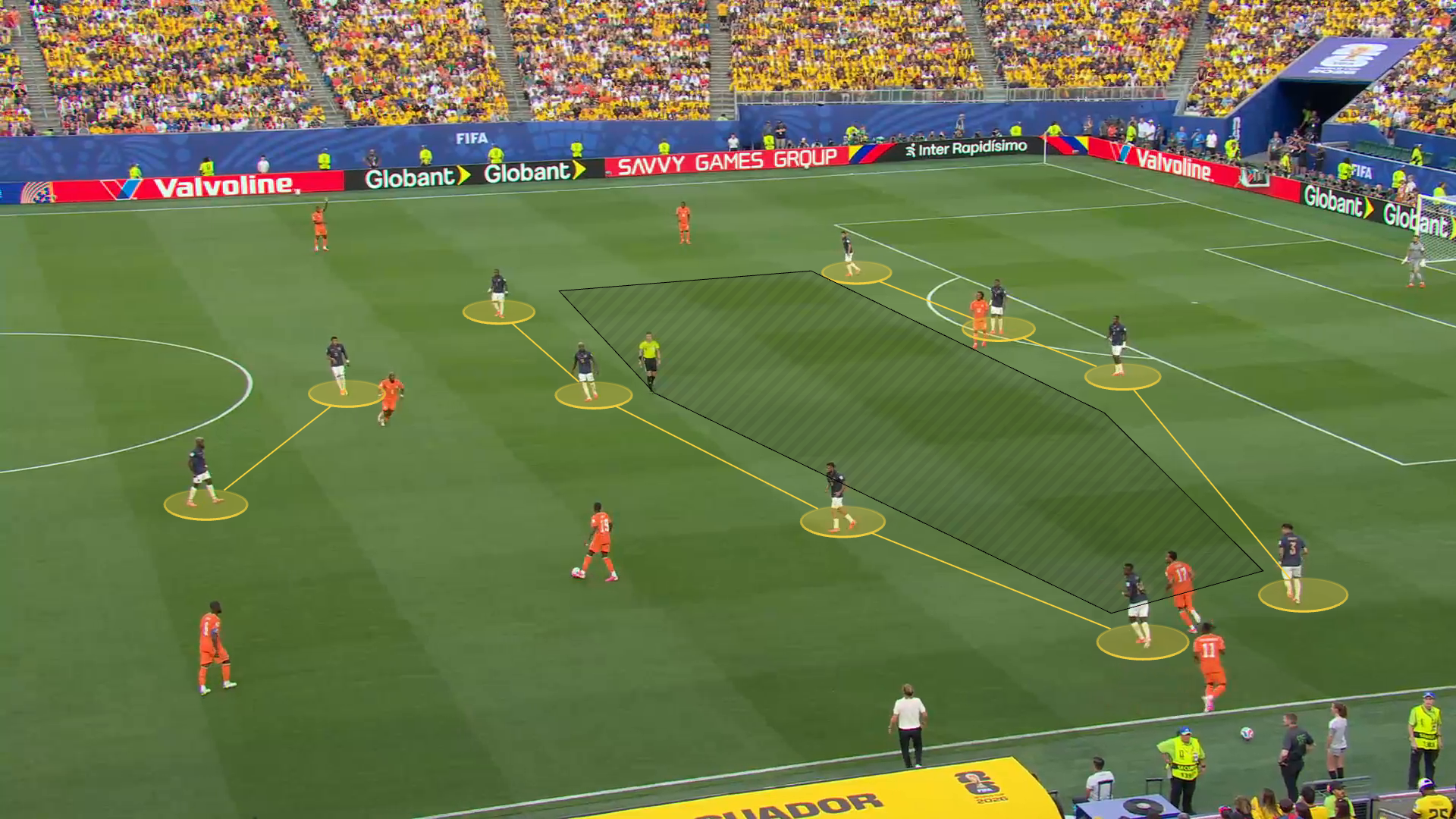 Image caption,
 Ecuador's 4-4-2 mid-low block against Ivory Coast. It provides broad cover across the pitch but there are spaces between the midfield and defensive lines
2. A focus on diagonal play
In a 4-4-2 shape, the defending side are well placed to stop forward and sideways movements because of their two flat lines of four.
As a result, attacking diagonally is a trend we have seen more of this tournament.
Playing at these angles has helped teams move from wide positions into more dangerous central positions playing behind the midfield.
For teams orientated in a flat line, covering these angles is more difficult.
Let's take Morocco's goal against Brazil as an example. Noussair Mazraoui was able to find his attacking midfielder with a diagonal pass from out to in – from a wide area into more central area - something he had done well numerous times before the goal.
Brazil, who spent most of the game in a 4-2-4 shape, fielded a midfield duo of Casemiro and Bruno Guimaraes in the first half who were often pulled towards the ball as their side looked to press Morocco.
This opened up space on the far-side. Brazil's two-man midfield lacked the horizontal coverage a midfield three might have.
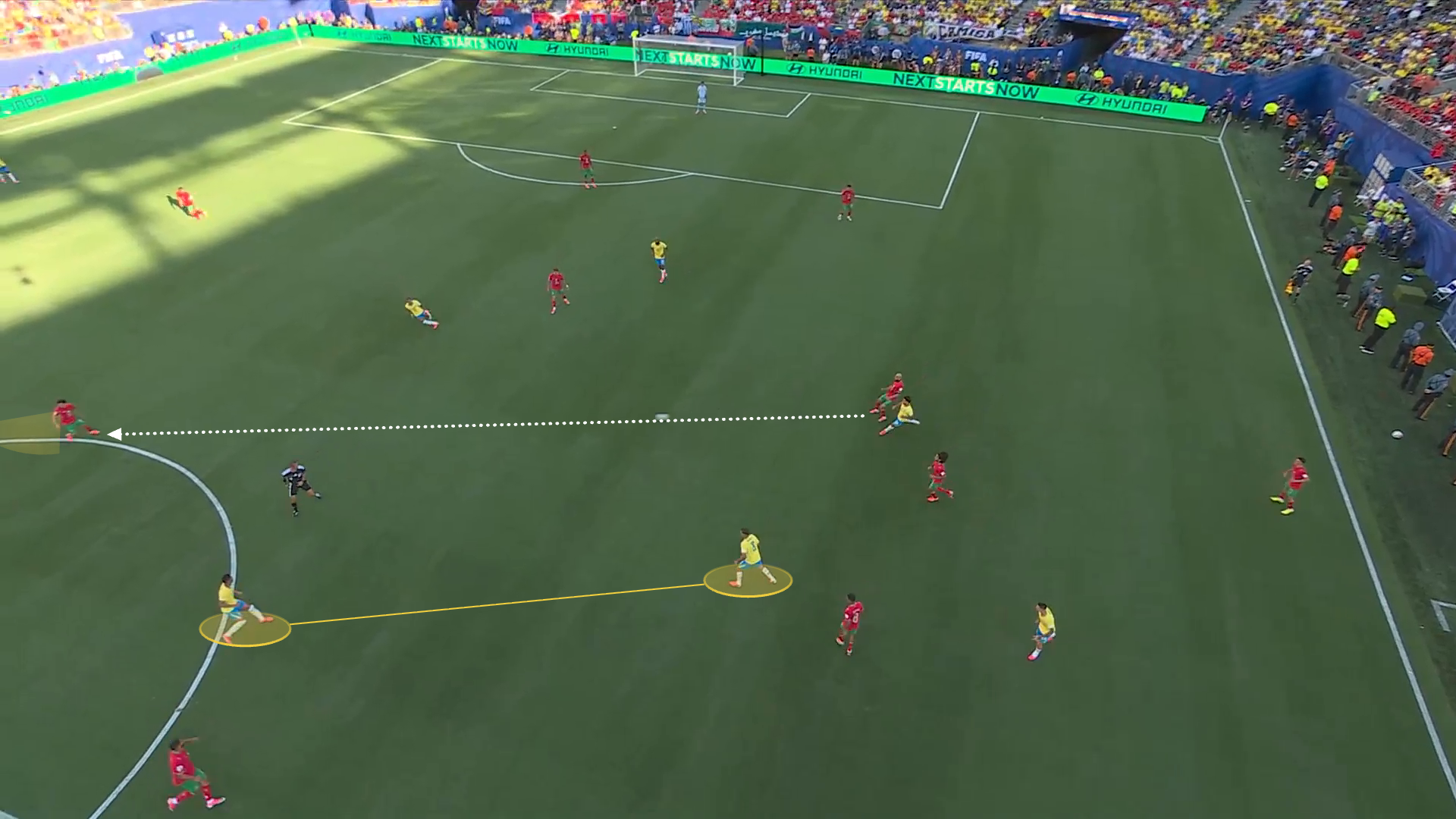 Image caption,
 In the build-up to Morocco's goal, Brazil's midfield two highlighted here were drawn to the ball-side of the pitch as they attempted to press. The movement of striker Ismael Saibari also pulled Casemiro out of position and the far-side of midfield was exposed. Mazraoui found this space well throughout the game
A different method of using diagonal play to attack was witnessed in Ecuador's loss to Ivory Coast.
Ecuador created good chances against Ivory Coast's 4-4-2 by attacking diagonally from in-to-out - movement of a player from the central areas into wide areas. Piero Hincapie shifted into midfield as a holding midfielder with Pedro Vite rotated into left back.
One of Ivory Coast's central midfielders now picked up Hincapie, who kept making runs from central midfield to the left wing. This dragged Ivory Coast's central players wide and opened up space for crosses and cut-backs.
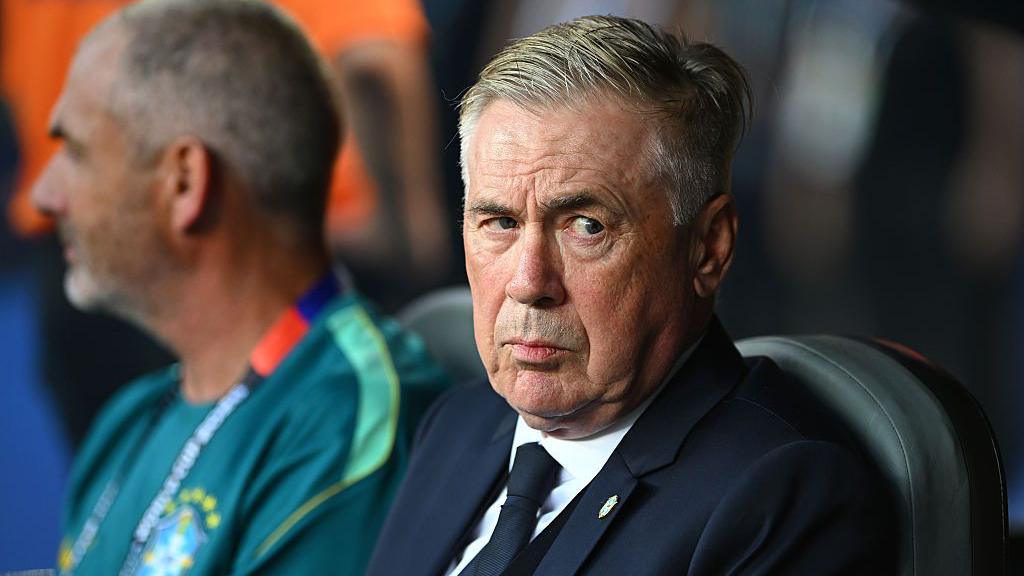
Ancelotti was seen encouraging the same pattern down Brazil's left with Vinicius Jr out wide and Matheus Cunha making the in-to-out run.
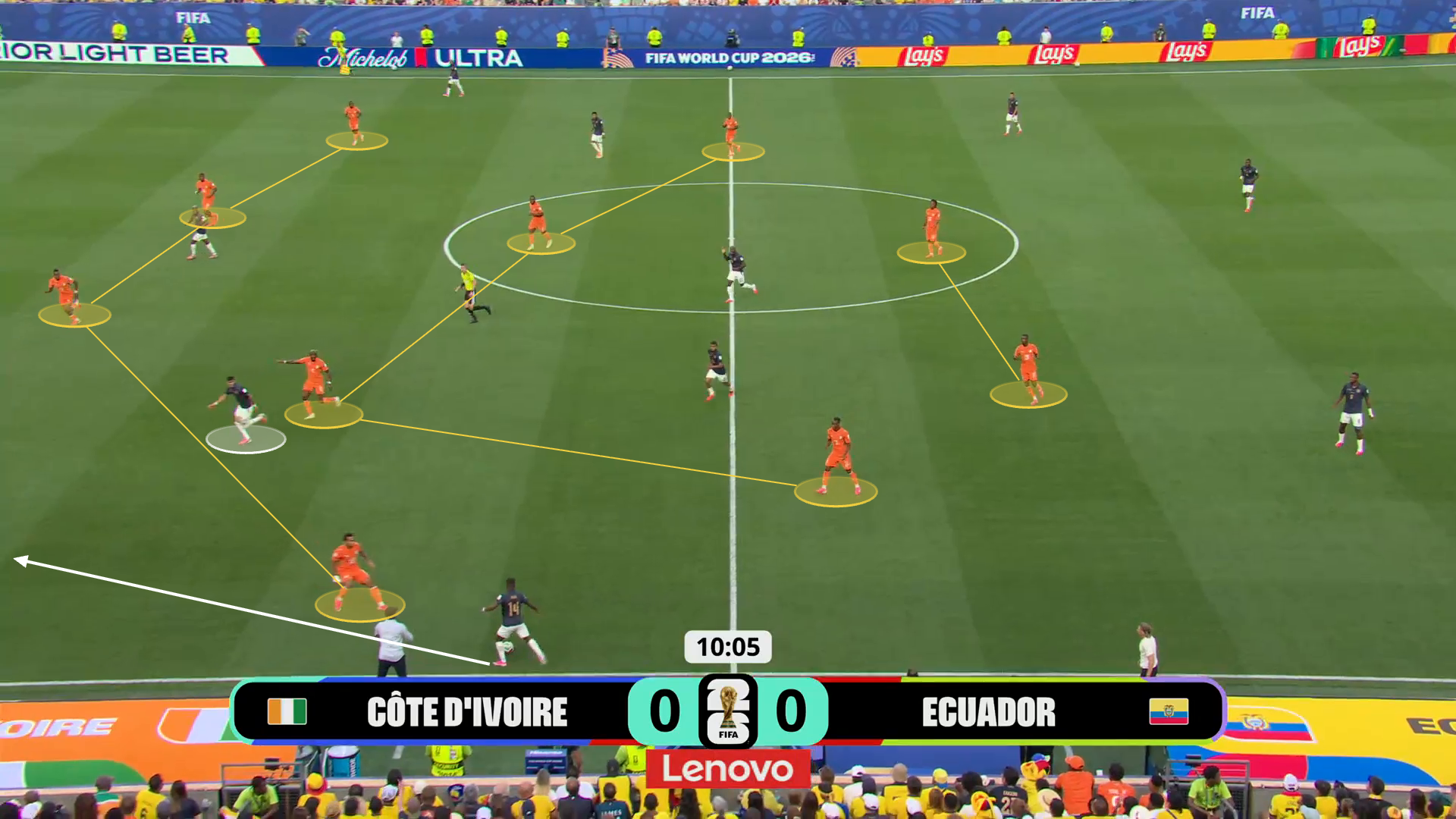 Image caption,
 Ivory Coast hold their 4-4-2 shape. Ecuador left-back Piero Hincapie inverts into central midfield. Ivory Coast right-back Guela Doue is pulled out of position by winger Alan Minda dropping deep. Minda then plays a pass down the line to find Hincapie's diagonal run. The central midfield of Ivory Coast ends up tracking him but is slower to react and Ecuador almost score from the resulting Hincapie cross
Stones goes from brink of retirement to World Cup 'pure joy'
- Published2 hours ago
From last-chance saloon to World Cup redemption for Potter
- Published8 hours ago
3. The effectiveness of false nines
A trend we saw for the most successful club sides this season was the use of roaming strikers. Harry Kane and Ousmane Dembele helped Bayern Munich and Paris St-Germain get much joy in possession by leaving natural striker positions.
On the international stage, Spain have historically found joy using midfielders as false nines rather than traditional strikers.
By flooding their team with technical midfielders, teams struggled to get the ball off them.
With teams increasingly adopting man-to-man marking as a defensive approach at club level and in the World Cup, allowing a striker to move into unusually deep and wide positions poses a difficult dilemma for the defensive team.
If centre-backs follow them into deep midfield or to the wing, space opens up in the middle of their defence.
If centre-backs leave them, uncomfortable to be pulled too far away from their back line, the technical strikers give their side an overload in an area of the pitch - helping their side keep the ball and create dangerous attacks.
Saibari of Morocco, Kai Havertz of Germany, and Raul Jimenez of Mexico all did this to a certain extent. Kane and Dembele are likely to do similar jobs for the nation as they did so effectively at club level.
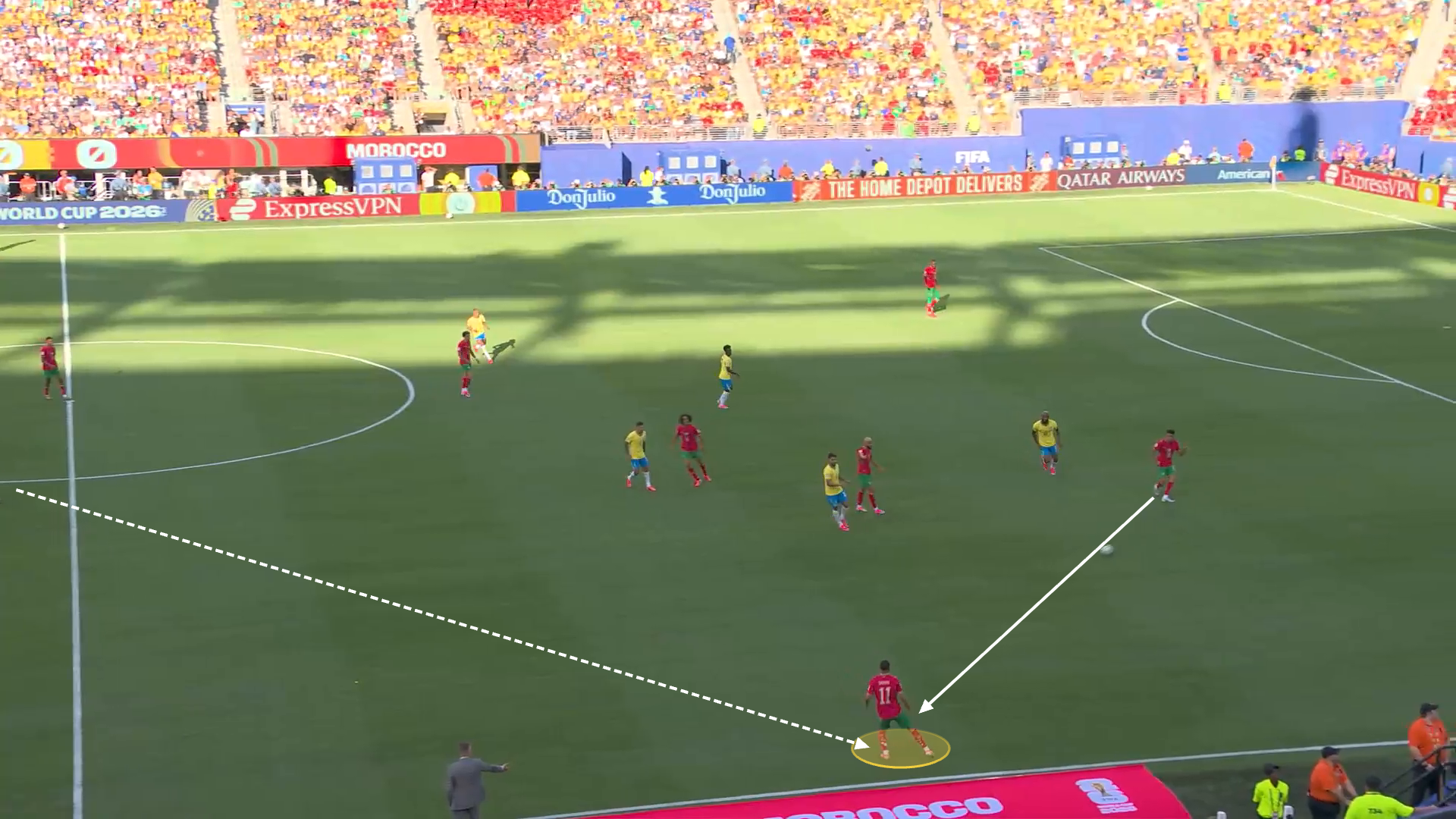 Image caption,
 Ismael Saibari, Morocco's centre-forward on paper, dropped into what looks like a left-back position in this move. No Brazil defender tracks him this deep and when he gets on the ball, he can get his side up the pitch with ease.
4. Increasingly fluid midfields to entice pressure
USA's win against Paraguay has arguably been the best display of attacking football at the tournament so far.
This was in part aided by Paraguay's poor defensive approach but Mauricio Pochettino's men provided the best example of how nations are opting to use more fluid midfields.
USA in possession played a back three, with Antonee Robinson wide on the left and Sergino Dest wide on the right. Folarin Balogun played up top.
These roles were fairly fixed but the four remaining players – Tyler Adams, Malik Tillman, Christian Pulisic, and Weston McKennie moved more freely in the central areas, encouraged to play closer to each other.
We are all familiar with the 3-box-3 shape many clubs sides use in possession but instead of maintaining the midfield box in a rigid manner, the attacking midfielder from the far side would come towards the ball.
With the Paraguay midfielders unsure if they should follow, USA often found themselves with overloads in midfield.
The many players in close proximity drew in opposition players and when this happened, USA looked to play direct passers for runners in-behind where fewer defenders were.
It is exactly what South Korea did against Bosnia too. With a fluid midfield box, they often dropped deep with many players around the ball, drew pressure before releasing attackers higher up the pitch.
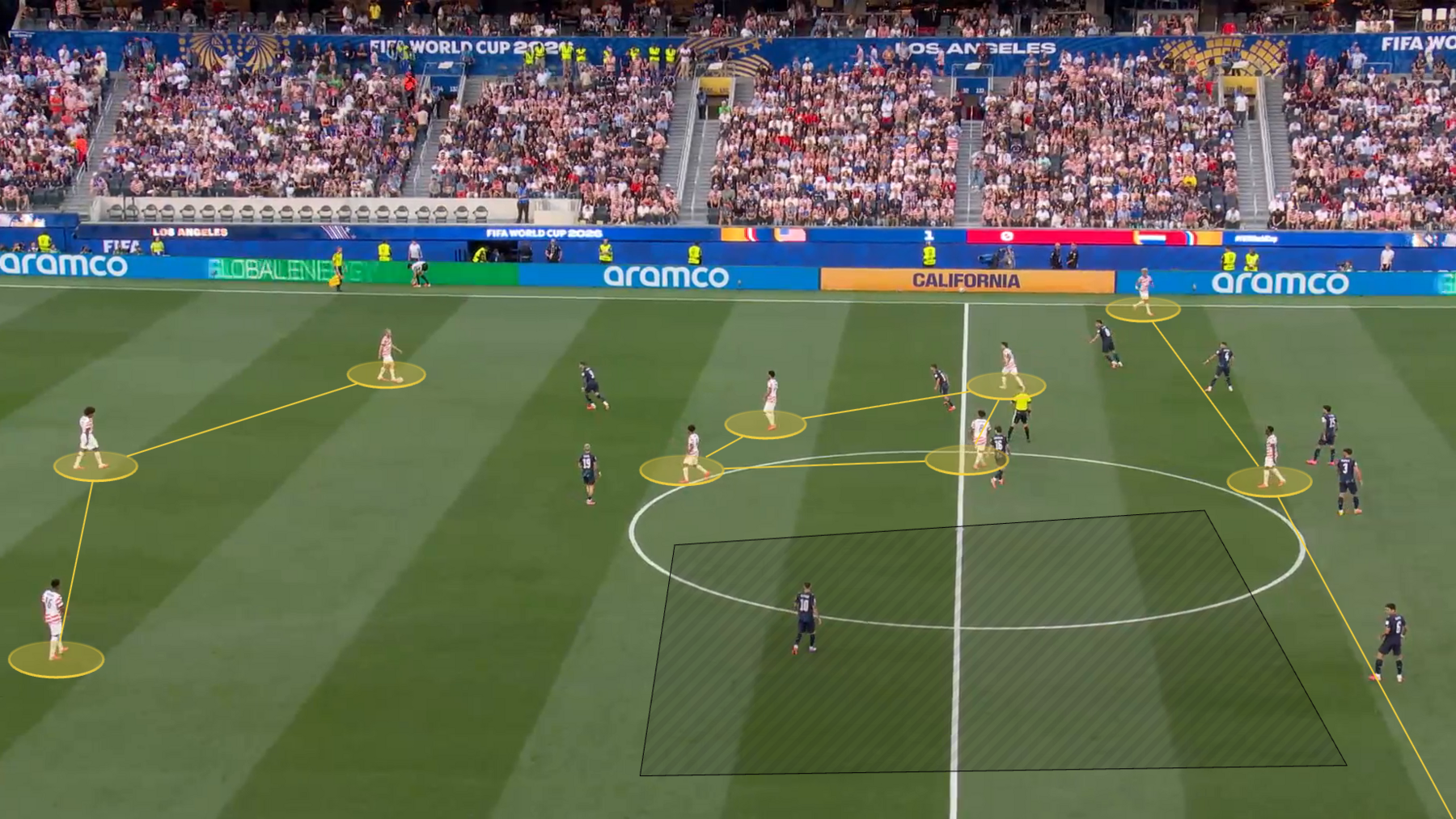 Image caption,
 Weston McKennie (number eight just on halfway) moves towards the ball-side to form a compact and fluid midfield four for USA. The small-space combinations between these four players helped the US attract pressure before releasing attackers in space
Taking a leaf from Arsenal's playbook - Tuchel's set-piece plan
- Published3 hours ago
Criticism of Bellingham is hard to read - Henderson
- Published11 hours ago
5. Premier League style set-pieces (but with less grabbing)
Lastly, it would not make sense to talk about tactical trends without mentioning set-plays.
Premier League football was defined by the upturn in goals from set-pieces and it is a tactic teams have used successful in the opening few games.
Czech Republic scored from a long throw, Bosnia scored from a corner as did Germany, while the Netherlands and Tunisia scored with follow-up crosses soon after set-plays.
Some of the tactics used have been borrowed from club football.
South Korea largely defended the long throw in a zonal manner. Czech Republic placed three players deeper who could make runs into more attacking positions to win headers with momentum while leaving players positioned closer to goal who were man-marked.
These man-marked players were able to impair the movement of the South Korean defenders but given the stricter refereeing on grappling in the box, we have not seen teams crowd the six-yard box much.
This more subtle blocking is best seen at the near-post.
The forward movement of the Czech Republic player prevents the defender from getting back towards where the ball lands.
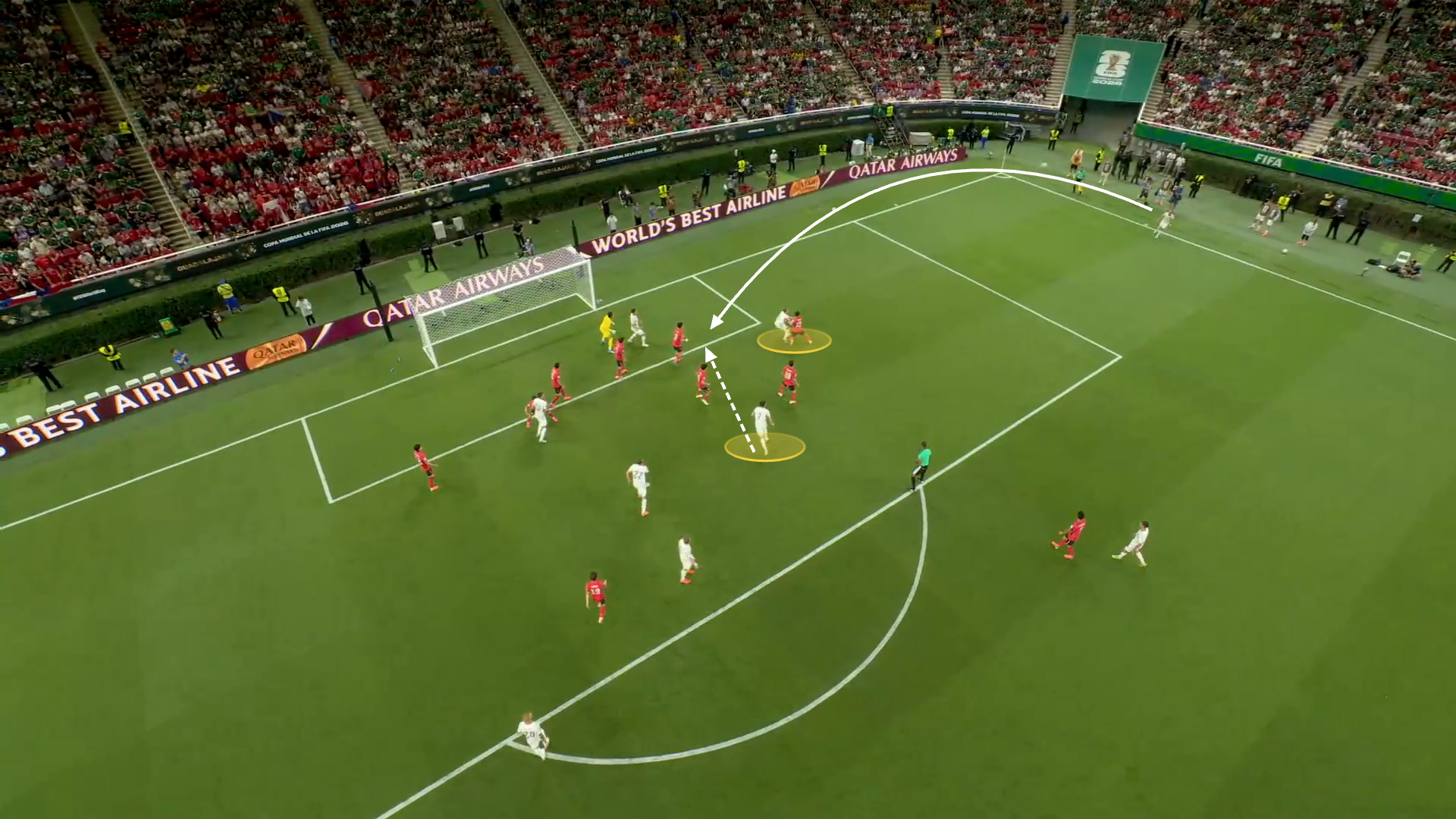 Image caption,
 Here we can see a long throw into a zone, targeting tall players who arrive with momentum. Meanwhile, individual duels result in defenders unable to move towards where the ball ends up
Interestingly, Bosnia and Tunisia's headed goals came from near post flick-ons – something we will likely see more of.
Attackers found themselves free as the opponent's front-post defenders moved closer to the ball and the defender behind them failed to step up closely.