Image source, Getty ImagesImage caption,
Plants and trees from hotter parts of the world are being brought into Sussex
ByJoshua AskewSouth East- Published47 minutes ago
Gardeners in one of the most drought-hit parts of the UK have said they are adapting their planting strategies amid increasingly extreme weather.
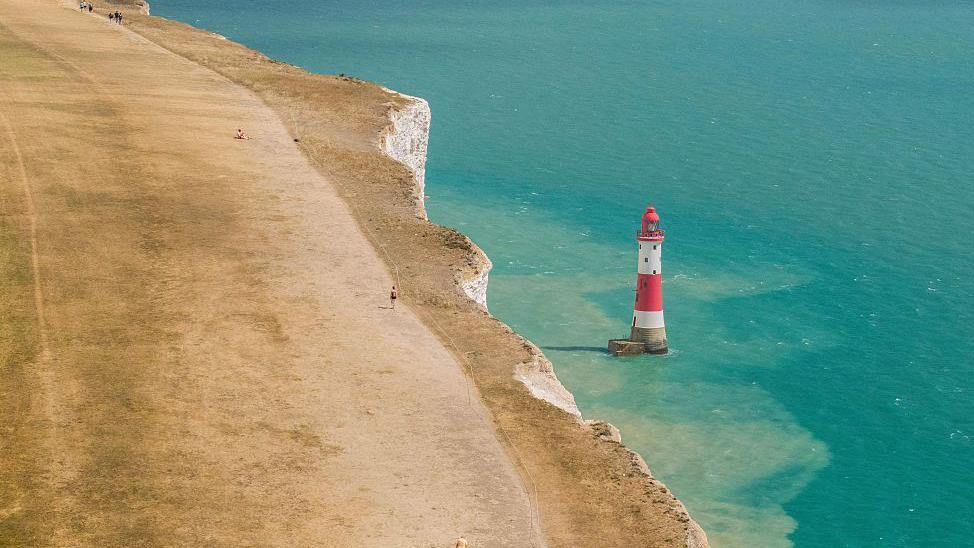
West Sussex - like most of the country - experienced an unprecedented summer marked by record-breaking heatwaves and severe drought.
The conditions have put immense stress on many traditional plant species, with some seriously struggling or dying completely.
Iain Parkinson, head of landscape and horticulture at Kew Wakehurst near Ardingly, said he had seen a "big change" in climate over the some 40 years he has worked there.
"We've had trees die," he added.
Meanwhile, senior gardener at High Beeches near Haywards Heath, Elliot Chandler, said some rhododendrons had died off this year.
"That's probably going to continue," he said.
"We'll do what we can for the plants...but if they're not surviving, then we need to plant different things.
"That's the only way we can really maintain the garden and keep it full of interest and flowers."
 Image source, Press AssociationImage caption,
This year's heat and lack of rainfall were unprecedented
Joe Whelan, head gardener at Nymans in Handcross, warned another year of drought could be "quite detrimental" on larger, more mature trees.
The gardeners said planting a greater diversity of species will be key to climate resilience, with plants from North America, southeastern Europe, central Asia, South Korea and Japan potentially faring better in future.
Chandler added it will not be a case of ripping out old plants and planting new species "in one go" but rather a gradual change over time with a "really diverse mix of things".
Whelan said it will be difficult to predict what will do well in the future.
It will be about "experimenting and accepting that some things probably aren't going to make it", he continued.
Follow BBC Sussex on Facebook, external, X, external, and Instagram, external and listen to BBC Radio Sussex on Sounds. Send your story ideas to [email protected] , external or WhatsApp us on 08081 002250.
Related topics
Satellite images show dry weather impact on region
- Published9 August
Wildfire breaks out in ancient woodland
- Published20 July

How is the dry weather affecting the wider countryside?
- Published25 July