
 Image source, Getty ImagesByPaul Kirby, Europe digital editor, Laura Gozzi and Bethany Bell, In Leipzig
- Published25 June 2026, 13:22 BST
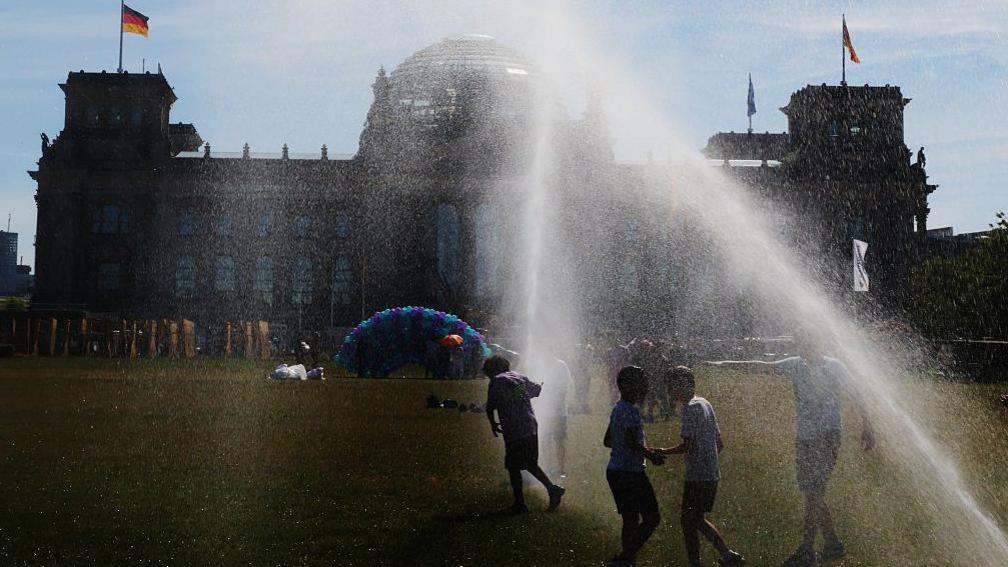
Heatwave conditions that have left Spain, France and the UK sweltering for days are set to shift to the east, with forecasters in Germany and the Czech Republic warning of extreme conditions.
Temperatures in Germany could hit 40C in some western and south-western areas on Thursday, and across the country on Friday. An extreme weather warning is now in place in much of the Czech Republic.
In France, Prime Minister Sébastien Lecornu has announced that the health alert level is being raised to its highest, to boost hospital staffing and protect the vulnerable.
Health Minister Stéphanie Rist said they were now seeing deaths among young people linked to the extreme temperatures, as well as the elderly.
United Nations climate change chief Simon Stiell has said "Europe's savage heatwave has the fingerprints of the climate crisis all over it", and he has called for "a faster shift to renewables, protecting forests and boosting climate resilience".
After France recorded its hottest day on Wednesday for the second day in a row, records continue to be broken. Météo-France said the average minimum temperature reached 22C on Wednesday night. Nantes saw 27.2C in the north-west.
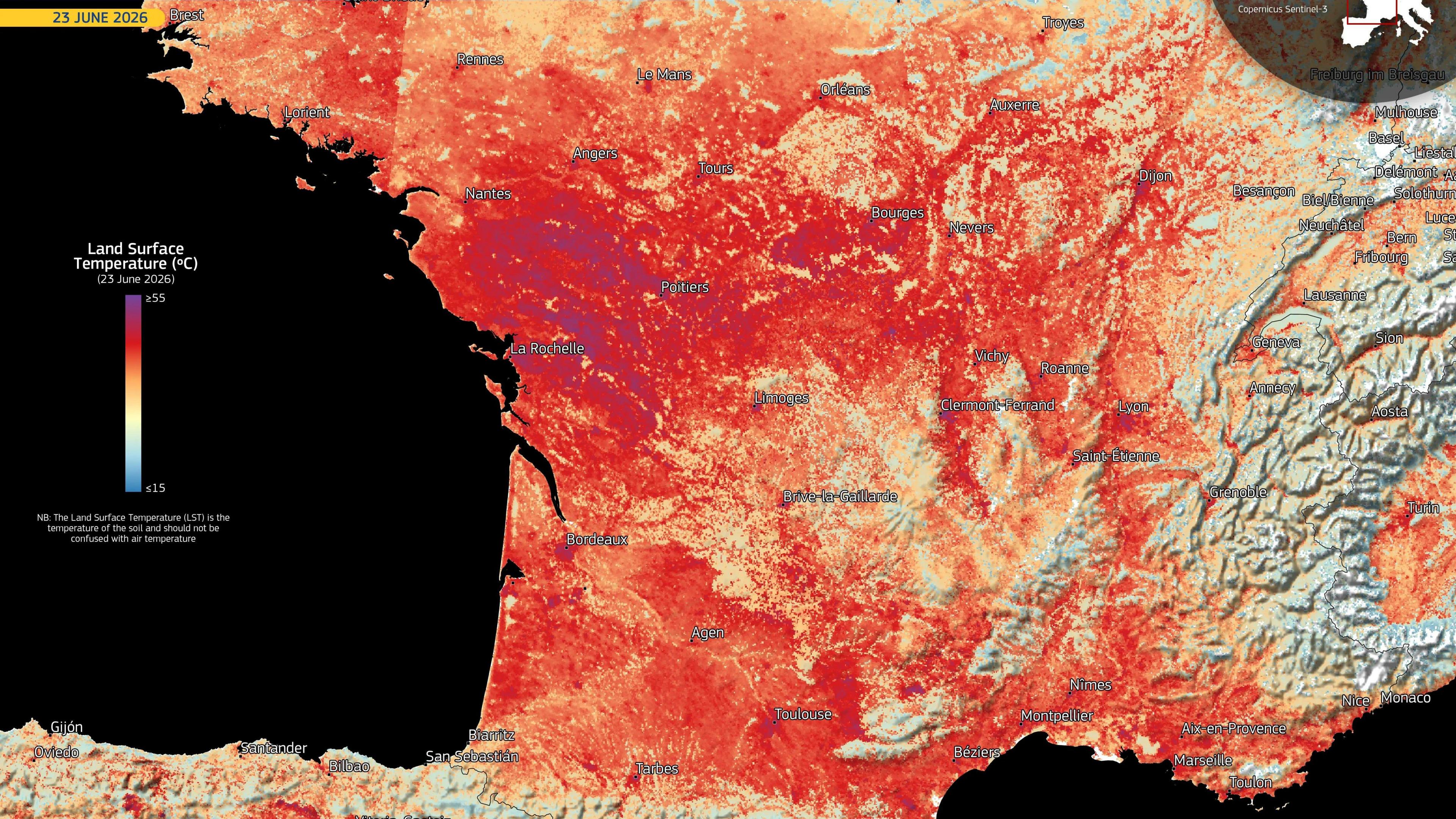 Image source, European Union, Copernicus Sentinel-3 imageryImage caption,
 This Sentinel-3 satellite image shows land surface temperatures across France on Tuesday
Paris mayor Emmanuel Grégoire said the mortality rate was on the rise in Paris, where temperatures have been high for several days.
"We must not believe ourselves to be invulnerable," he told French TV. "I am thinking especially about the youth... At about 19:30 last night... I saw 100 or so joggers on the street. Frankly, that's irresponsible."
"It's fine to take a couple of days off from exercising," he added.
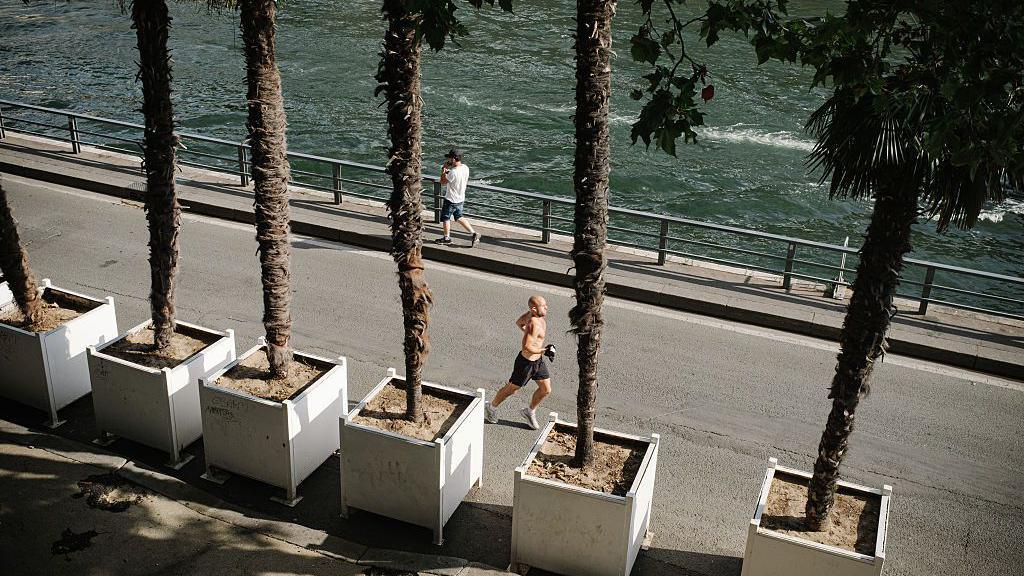 Image source, Getty ImagesImage caption,
 The mayor of Paris asked people to put off exercise for a few days while the city is under a red alert
Meanwhile, a three-year-old child has been found dead in a car in the Paris region, days after two young children were found dead in the family's car in the southern town of Carpentras.
In the north-western city of Rennes, the head of the Accident and Emergency department Professor Louis Soulas linked the deaths of five or six people in their homes in the region to the extreme temperatures.
Emergency services had gone to check in on them after they had failed to pick up their phones during welfare calls, said Soulas: "It's not just the very elderly; it's people aged 60 and up."
Live updates: Temperatures top 33C in UK and red extreme heat warning is extended
How to cope in a heatwave - according to you
- Published12 hours ago
Rennes saw a record 40.6C on Monday, only for that to be broken by 41C the following day. The previous record dated back to 2022.
The region's intensive care units were "saturated," he warned. "We are truly at a peak of activity."
Sébastien Lecornu said France's Orsan health emergency plan was now moving to level three so the health system could "withstand the strain over time and protect the most vulnerable".
Three nuclear plants in France have gone offline due to the heat.
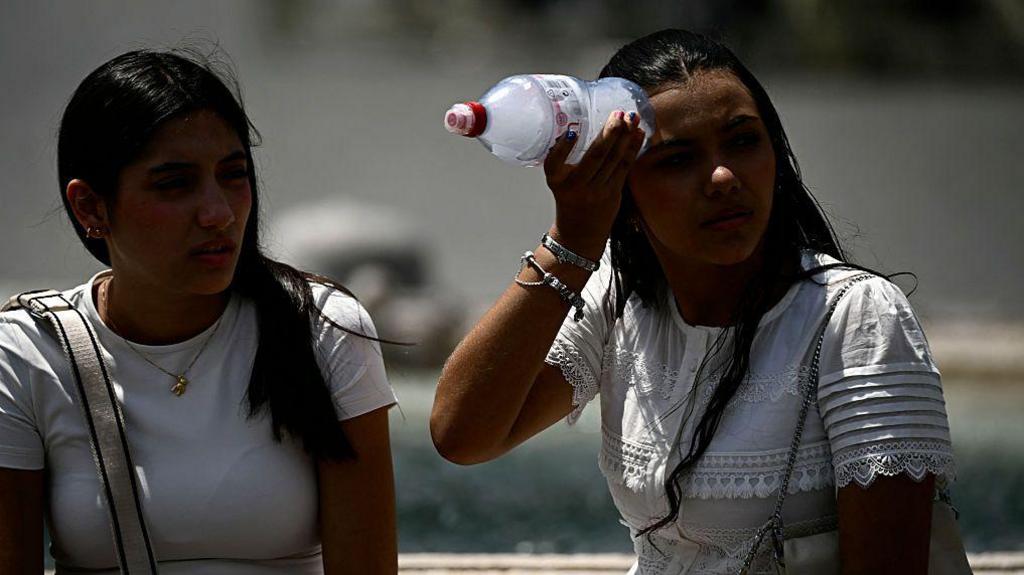 Image source, Getty ImagesImage caption,
 Temperatures in Italy are yet to peak, with over 40C expected on Monday
Some western regions in France are now bracing for huge thunderstorms from Thursday afternoon onwards.
Gusts of up to 110km/h (68mph) are expected on France's Atlantic coast, and the first day of the Garorock festival has been cancelled in the Lot-et-Garonne region - where temperatures could reach 42C.
Climate change is driving up temperatures around the world - but particularly in Europe. It is the fastest warming content, heating up twice as fast as the global average, according to the Copernicus climate service.
This is causing increased summer heatwaves, greater pressure on Europe's water supply, and more intense wildfires. Last year, more than 1 million hectares burnt across Europe - a record level - with Spain particularly affected.
Although temperatures in Spain are set to peak at 38-39C in some areas on Thursday, forecasters say a cooler mass of Atlantic air is coming in, after the highest June temperatures were recorded this week, with 45.1C in the southern town of Andújar on Monday.
In Germany, overnight temperatures in the southwestern town of Bad Bergzabern did not fall below 26.2C on Wednesday night, equalling a national heat record set in 2019.
Germany's DWD weather service said large areas of the country were experiencing "heat stress" and DWD meteorologist Oliver Reuter said it was "quite likely" the heatwave would ultimately be seen as historic.
Luxembourg recorded its highest June temperature of 38.3C in Wormeldingen on Wednesday. A red alert level for "extreme thermal stress" has been extended in the grand duchy until Saturday night.
In Germany, Hamburg's half marathon has been cancelled on Sunday and national train operator Deutsche Bahn is offering free ticket cancellations over the next few days for anyone not wishing to travel because of the extreme heat. Czech Railways have told passengers they should consider postponing their trips if they do not have to travel.
Temperatures across the Czech Republic were well into the 30s on Thursday and the ČHMÚ Hydrometeorological Institute said the heat would intensify on Friday with temperatures climbing up to 40C at the weekend.
Weekend temperatures could also hit 40C in the Austrian capital Vienna.
The UK's Met Office has extended its red extreme temperatures warning until Friday evening, for parts of London and south-eastern England.
In Italy, Florence's Uffizi museum has halted ticket sales until 28 June, and only those with a previous booking will be allowed in.
Management said the air conditioning system could not cope with the high flow of visitors and the extreme temperatures, which reached 32C inside the museum on Wednesday.
Italians have been experiencing high temperatures since the start of this week - but the peak of the heat is expected for Monday, when 40C are expected in various northern regions.
Night-time temperatures in those areas might not drop below 29C.
"Gone are last century's June days of 32C daytime temperatures and cool 17C nights," forecaster Lorenzo Tedici told Italian media.
"We have become so accustomed to excess that, paradoxically, today we welcome a forecast of 34C as good news."


