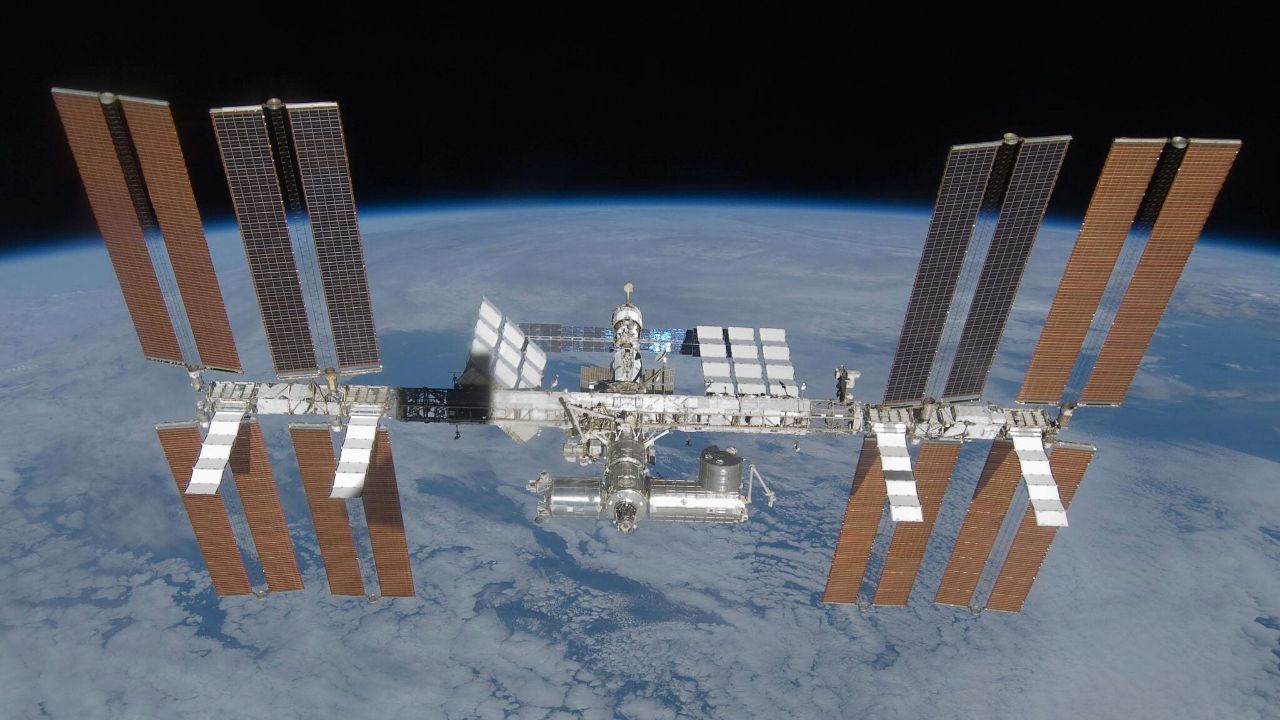
 The International Space Station in orbit. (Image credit: NASA) Share this article 0 Join the conversation Follow us Add us as a preferred source on Google Newsletter Get the Space.com Newsletter
 Breaking space news, the latest updates on rocket launches, skywatching events and more!
Contact me with news and offers from other Future brands Receive email from us on behalf of our trusted partners or sponsors By submitting your information you agree to the Terms & Conditions and Privacy Policy and are aged 16 or over.You are now subscribed
Your newsletter sign-up was successful
Want to add more newsletters?
An account already exists for this email address, please log in. Subscribe to our newsletterThe European Space Agency is planning to buy a dedicated SpaceX Crew Dragon mission to send its astronauts to the International Space Station to boost their time and experience in space.
European Space Agency (ESA) Director General Josef Aschbacher announced the plan to charter a SpaceX Crew Dragon spacecraft on March 19, following a decision at an ESA Council meeting in Interlaken, Switzerland. The ESA Provided Institutional Crew (EPIC) project is planned to launch in early 2028 with the aim of providing more opportunities for the agency's astronauts to get to space before the International Space Station is retired, SpaceNews reported.
Article continues belowThe move would create new opportunities for Europe's astronauts before the International Space Station (ISS) is retired. As European Spaceflight reported, ESA unveiled its latest group of five career astronauts in November 2022, but has only secured long-duration flights to the ISS for two of the five, including Sophie Adenot, who is currently aboard the space station as part of SpaceX's Crew-12 mission.
The mission will likely include international astronauts, not just those from ESA, however.
"ESA will buy launch capability for four professional astronauts," Aschbacher said. "We plan to implement this with international partners. That means ESA astronauts plus international partners." He added that ESA will work closely with NASA, but ESA will lead and fully operate the mission.
Daniel Neuenschwander, ESA's Director of Human and Robotic Exploration, stated that EPIC would not be similar to recent, short-term private missions to the ISS. The selected EPIC crew will be career astronauts who will spend around one month in orbit. They will conduct research and utilization activities aboard the ISS, but they will also participate in maintenance and repair and support logistics operations. Private astronauts typically focus on research activities and the missions have lasted around two weeks on average.
Get the Space.com NewsletterContact me with news and offers from other Future brandsReceive email from us on behalf of our trusted partners or sponsorsThe ISS is currently scheduled to be deorbited in 2030, by which time it will have been permanently occupied for 30 years. However, a number of U.S. senators are calling for the lifetime of the ISS to be extended two years to September 2032, aiming to avoid a gap in continuous U.S. human presence in low Earth orbit and thus "avoiding ceding leadership to China before commercial stations are ready."
 Andrew JonesContributing Writer
Andrew is a freelance space journalist with a focus on reporting on China's rapidly growing space sector. He began writing for Space.com in 2019 and writes for SpaceNews, IEEE Spectrum, National Geographic, Sky & Telescope, New Scientist and others. Andrew first caught the space bug when, as a youngster, he saw Voyager images of other worlds in our solar system for the first time. Away from space, Andrew enjoys trail running in the forests of Finland. You can follow him on Twitter @AJ_FI.
View MoreYou must confirm your public display name before commenting
Please logout and then login again, you will then be prompted to enter your display name.
Logout MORE FROM SPACE... 1Scientists finally solve century-old mystery of star with unexpected X-ray emissions
- 21 week away! NASA gearing up to launch Artemis 2 astronauts around the moon on April 1
- 3Amazon Spring Sale deals for stargazing 2026: Huge savings on telescopes, binoculars and cameras
- 4Scientists discover mirror of our solar system in 2 exoplanets forming around a star
- 5Watch Rocket Lab launch Europe's 1st 2 'Celeste' navigation satellites early March 25