
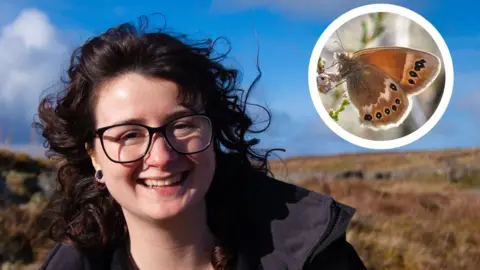
 Aaron HoughtonGeorgina Paul is leading a two-year project on large heath butterflies
A conservationist believes butterflies could act as a new "canary in the coal mine" for climate change, as she undertakes a two-year study in the wetlands of Wales.
Georgina Paul, of Butterfly Conservation, is now halfway through the project, which is investigating whether the endangered large heath butterfly can be used as an indicator of peatland health.
Peat bogs play a crucial role in storing carbon when they remain wet, but rising temperatures can dry them out, releasing greenhouse gases into the atmosphere.
Georgina, based near Blaenau Ffestiniog, Gwynedd, has been counting large heath populations across hundreds of square kilometres of peatland habitat since the project began last year.
The study, which will run until May 2027, covers all protected areas where the butterfly is found.
Habitats include: Cors Caron near Tregaron, Ceredigion; Afon Eden in Gwynedd; the Berwyn Range in north-east Wales; and the Fenn's, Whixall and Bettisfield Mosses National Nature Reserve, near the Wrexham-Shropshire border.
Georgina said: "Peat bogs are weird and wonderful places, with fantastic wildlife like carnivorous plants, large heath butterflies and emperor moths, but looking after them well will also help us tackle the global challenge of climate change by keeping carbon in the ground.
"If we can show that large heath is a reliable indicator of peat bog health then we can be confident that our volunteers don't need to be technical experts to make a big impact.
"Going out to count the butterfly each summer could provide us with invaluable data to monitor the condition of this environment and plan how to protect it."
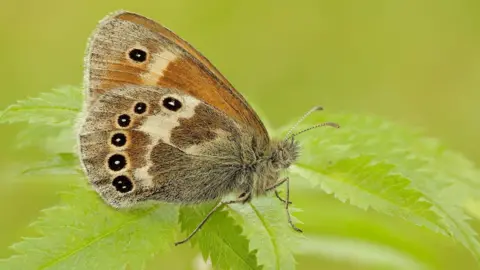 Iain H LeachThe caterpillars of large heath butterflies eat hare's-tail cottongrass (not pictured), which only grows in peat bogs
How do you spot a large heath?
The large heath is a chestnut-coloured butterfly with striking black spots on its wings restricted to wet habitats in northern Britain, Ireland and a few isolated areas of Wales and central England. Its caterpillars eat one plant - hare's-tail cottongrass - which only grows in peat bogs.
Numbers have declined significantly in England and Wales during the 20th Century due to habitat damage, and the species is now listed as endangered.
Volunteers are being trained to carry out monitoring, involving weekly walks along fixed routes to count butterflies.
Georgina is looking for indicators where peatland restoration is improving the habitat for the large heath - and hopes the project will give her the evidence and eventually help landowners manage peat bogs.
The study is focusing largely on sites where restoration work has already taken place. It is also trialling the use of drones to map peat bog habitats and identify key plant species more quickly.
The Welsh government has awarded £249,000 towards the project, supported by lottery money.
The project also involves the RSPB, the National Trust and Natural Resources Wales, although much of the land remains privately owned, adding to the challenges.
Georgina said: "We've got huge blanks on the map - for some of these sites we haven't had records for 25 years. If we get glorious summer weather and I can go out and visit sites five days a week then I will."
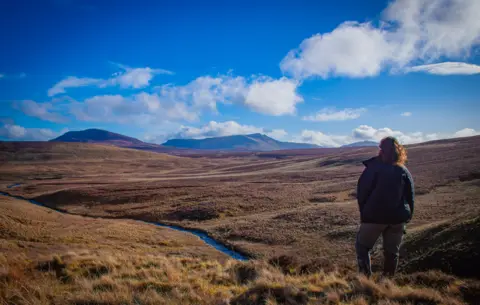 Aaron HoughtonGeorgina describes peat bogs as "weird and wonderful places"
What is peatland restoration?
Peatland restoration is the process of repairing damaged peat bogs and returning them to a healthy, waterlogged state.
Peatlands cover 4% of Wales' land area (approximately 90,000 hectares) but many have been drained or degraded over time, causing them to dry out and lose their ability to store carbon. Restoration work focuses on rewetting the land so the peat can begin to function naturally again.
Natural Resources Wales (NRW) delivered a National Peatland Action Programme which met its targets in 2025.
When peatlands are restored, they can lock away carbon and support rare plants and wildlife. They often sit at the tops of river catchments and play an important role in the condition and functioning of rivers, contributing to water quality, drinking water supplies and flood prevention.
Healthy peat bogs also help reduce flood risk and play a role in tackling climate change, making restoration a relatively simple and cost-effective way to protect both nature and the wider environment.
More top stories