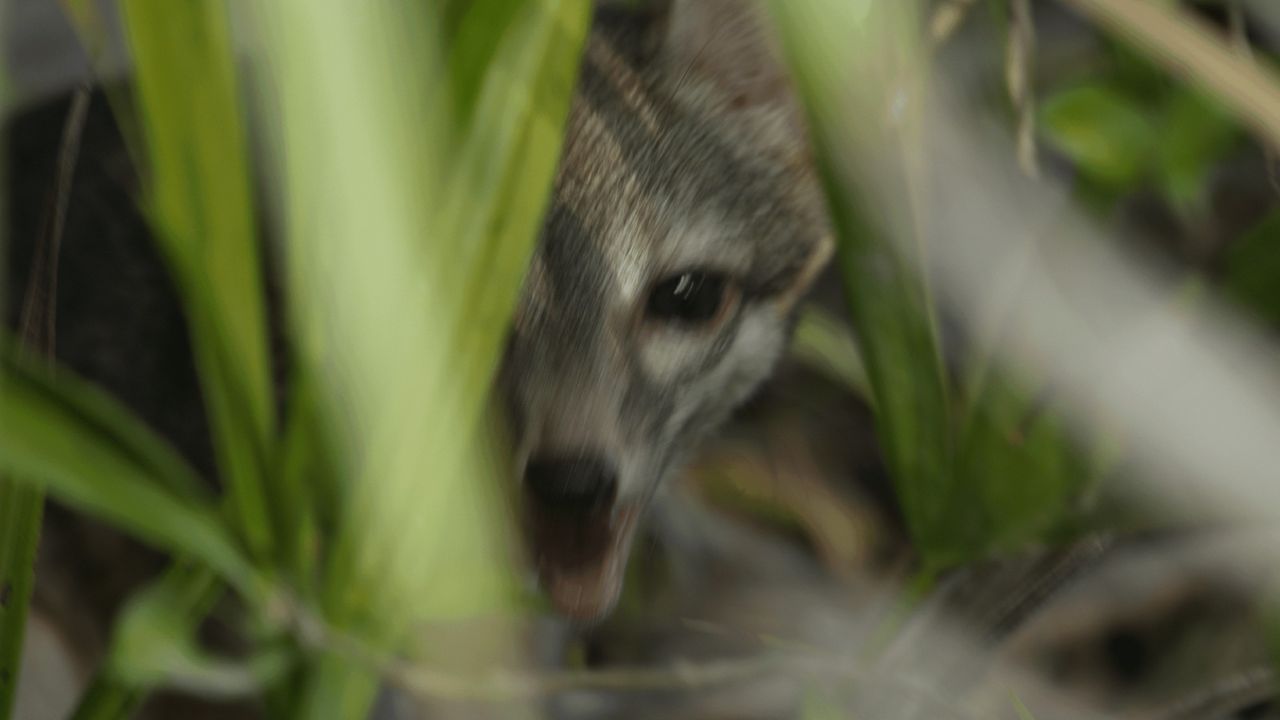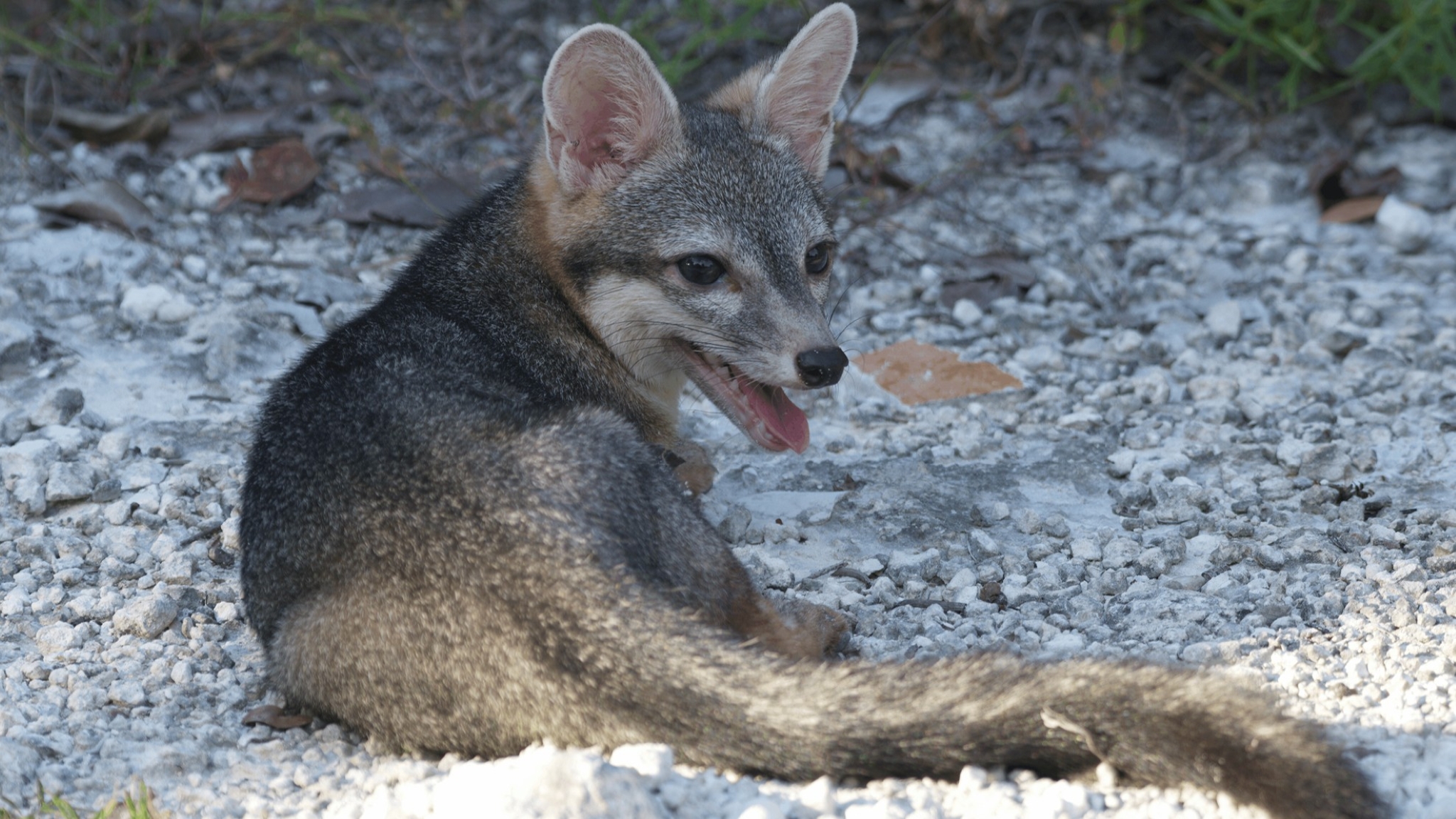
The Cozumel fox was captured by a highway and later released into the Laguna Colombia State Reserve. (Image credit: Rafael Chacón)
Share this article Join the conversation
Follow us Add us as a preferred source on Google Newsletter Subscribe to our newsletter
An elusive dwarf fox that was feared extinct has been photographed for the first time, after being spotted near a highway in Cozumel, Mexico.
The tiny animal was part of the mysterious Cozumel fox population, a potentially undescribed species that had not been officially sighted in more than 20 years.
Cozumel foxes live only on Cozumel, an island near Cancún. Researchers know very little about these mysterious predators, which are roughly 20% to 40% smaller than their gray fox (Urocyon cinereoargenteus) cousins that live on the mainland.
Park and museum officials spotted and captured the fox in 2023 and, after a health assessment, released it back into the wild. Researchers have now shared the photographs and documented the encounter in a new study published May 4 in the journal Neotropical Biology and Conservation.
Although the rediscovery confirms that Cozumel foxes are still alive, they are likely on the brink of extinction, the study authors noted; the photographs highlight the need for focused research and conservation efforts.
"The biggest challenge facing the Cozumel fox is that we still know almost nothing about it, including its remaining population size, distribution, or ecology," study first author Travis Bayer, executive director of the conservation organization Pathos Wildlife, said in a statement. "That uncertainty alone is dangerous, because it makes effective conservation extremely difficult."
Cozumel foxes are an example of insular dwarfism, an evolutionary process in which larger animals, including fox-sized mammals, evolve to be smaller after colonizing islands, where there are limited resources and less space than on the mainland. The foxes aren't the only mammals that have shrunk on Cozumel over time; other examples include the island's critically endangered pygmy raccoons (Procyon pygmaeus) and dwarf coatis.
Sign up for the Live Science daily newsletter now
Get the world’s most fascinating discoveries delivered straight to your inbox.
Contact me with news and offers from other Future brandsReceive email from us on behalf of our trusted partners or sponsors
Archaeological evidence suggests that Cozumel foxes have lived on the island for at least 5,000 years, likely since before the arrival of the Maya within the past few millennia, and potentially for tens of thousands of years before that. Prior to this rediscovery, the last confirmed sighting of a Cozumel fox was in 2001, according to the study.
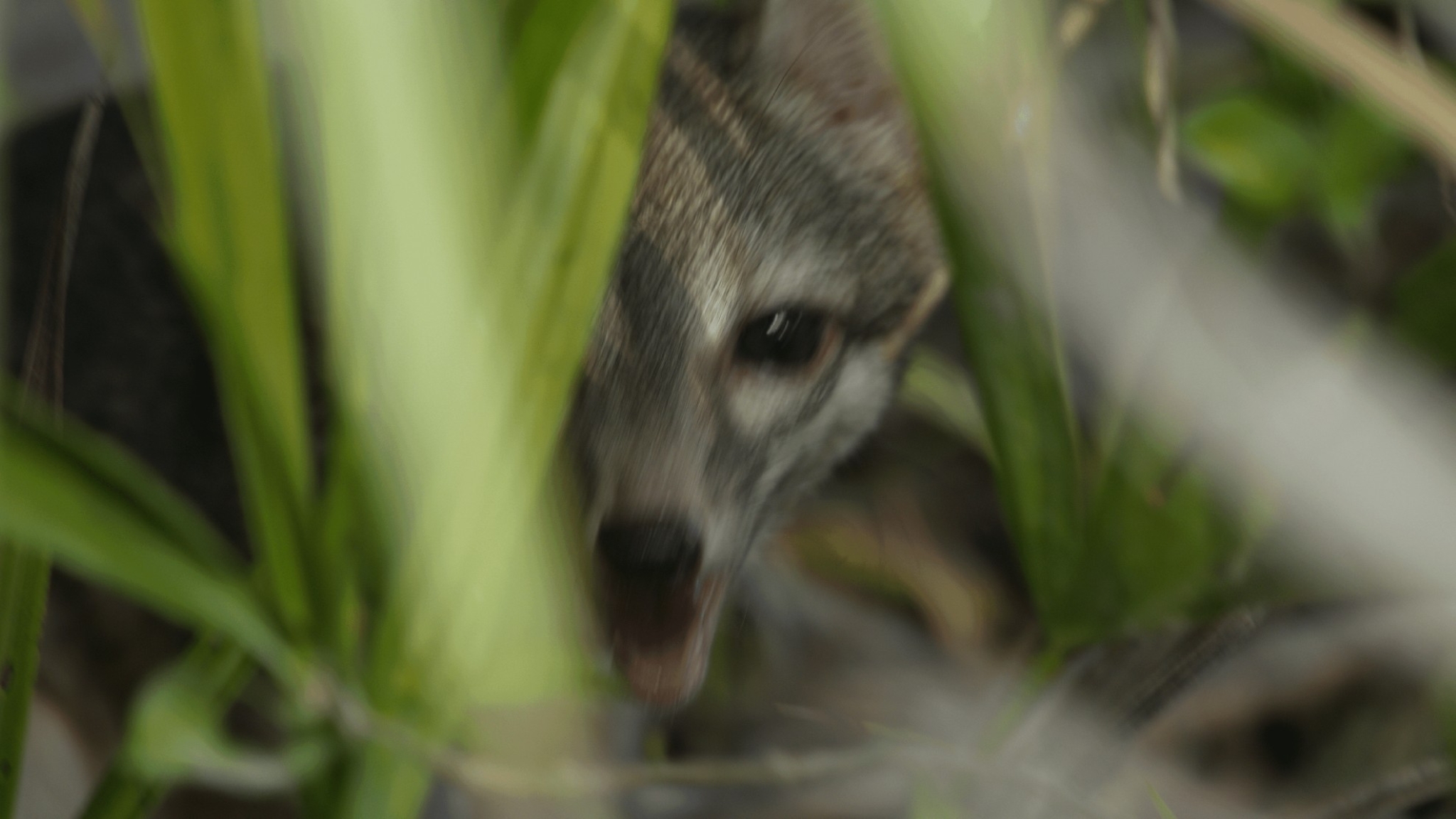
This photo, taken as the fox was partially obscured by foliage next to a highway, is the first known photograph of a Cozumel fox
(Image credit: Rafael Chacón)
The rediscovery began with reports of a disoriented animal wandering near the highway on the southeastern side of the island. Officials with the Parks and Museums Foundation of Cozumel located and captured the fox, an adult male, on Sep. 14, 2023. They checked its health and later released the fox in the Laguna Colombia State Reserve, a protected area just south of where it was captured.
Recent and historical sightings suggest that Cozumel foxes could have an extremely restricted range in the island's South, where nature is increasingly threatened by development, land-use change, invasive species and natural disasters, the study authors noted.
RELATED STORIES
The researchers recommended surveys to determine the current distribution and size of the Cozumel fox population, along with morphological and genetic assessments to establish its evolutionary status and conservation efforts to protect its assumed habitat in southern Cozumel and minimize human-wildlife conflict.
"Ultimately, we hope this work helps move the Cozumel fox from a little-known, uncertain presence on the island to a better-understood key part of Cozumel's ecosystems," Bayer said. "We also hope it demonstrates that conservation is often most urgent when certainty is lowest and that uncertainty itself can be a call to action."
TOPICS
 Patrick Pester
Trending News Writer
Patrick Pester is the trending news writer at Live Science. His work has appeared on other science websites, such as BBC Science Focus and Scientific American. Patrick retrained as a journalist after spending his early career working in zoos and wildlife conservation. He was awarded the Master's Excellence Scholarship to study at Cardiff University where he completed a master's degree in international journalism. He also has a second master's degree in biodiversity, evolution and conservation in action from Middlesex University London. When he isn't writing news, Patrick investigates the sale of human remains.
View More
You must confirm your public display name before commenting
Please logout and then login again, you will then be prompted to enter your display name.
Logout