
 Sahel Alerte / XJihadist fighters have been burning vehicles on major roads leading to the capital
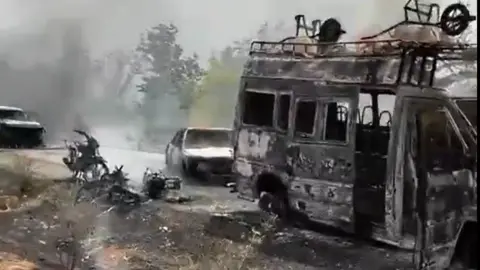
Dozens of vehicles, including fuel tankers, minibuses and trucks, have been set on fire near Mali's capital, Bamako, as jihadists step up a blockade of the city, the BBC has confirmed.
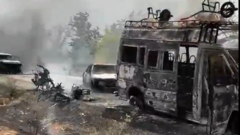
Videos filmed from passing vehicles and verified by the BBC show the charred remains of the vehicles from on a road about 45km (28 miles) west of Bamako. There are no reports of casualties - those on board were said to have been asked to get out before the vehicles were burnt.
Jama'at Nusrat al-Islam wal-Muslimin (JNIM), a jihadist group affiliated to al-Qaeda, imposed a fuel blockade on Bamako last year, which it tightened after attacking the city last month.
The BBC has contacted Mali's government for comment.
Mali is a landlocked country and depends heavily on fuel transported from neighbouring coastal countries like Senegal and Ivory Coast.
The militants have kidnapped drivers and burnt more than 100 fuel trucks on major highways in the country since last year, but some have made it to Bamako under military escort.
What next for Mali's military leaders after shock of rebel offensive?
In the latest attack, BBC Verify authenticated the videos through matching two distinctive buildings on the side of the road to satellite imagery and checking for AI manipulation.
Nasa's satellite-based platform Firms - which detects heat sources on Earth's surface – also detected a heat signature at the same location on Tuesday.
The fuel blockade is intended to suffocate Mali's economy and weaken the legitimacy of the military leaders in power, experts say.
Mali is currently led by Gen Assimi Goïta, who first seized power in a coup in 2020, promising to restore security and push back the armed groups.
In January, he appointed 47-year-old Brig Gen Famouké Camara to head a special operation to counter the fuel blockade, but attacks on fuel convoys have continued.
Before the latest attack, the fuel crisis resulting from the blockade had appeared to be easing.
The junta had popular support when it seized power five years ago, promising to deal with the long-running security crisis, prompted by a separatist rebellion in the north, which was then hijacked by Islamist militants like JNIM.
The junta has however struggled to contain the deadly insurgency despite the support of Russian mercenaries, making much of the north and east of the country ungovernable.
Last month, ethnic Tuareg separatists and JNIM launched coordinated attacks on major towns and cities across the country, leading to the death of Defence Minister Sadio Camara after an apparent suicide truck bombing on residence near the capital.
You may also be interested in:
Mali defence minister killed as country hit by wave of rebel attacks
'How are we going to get back home?' Islamist group tightens blockade on Mali capital
Russian paramilitary carried out air strikes in Mali as rebels advanced, footage shows
 Getty Images/BBC
Go to BBCAfrica.com for more news from the African continent.
Follow us on Twitter @BBCAfrica, on Facebook at BBC Africa or on Instagram at bbcafrica
BBC Africa podcasts