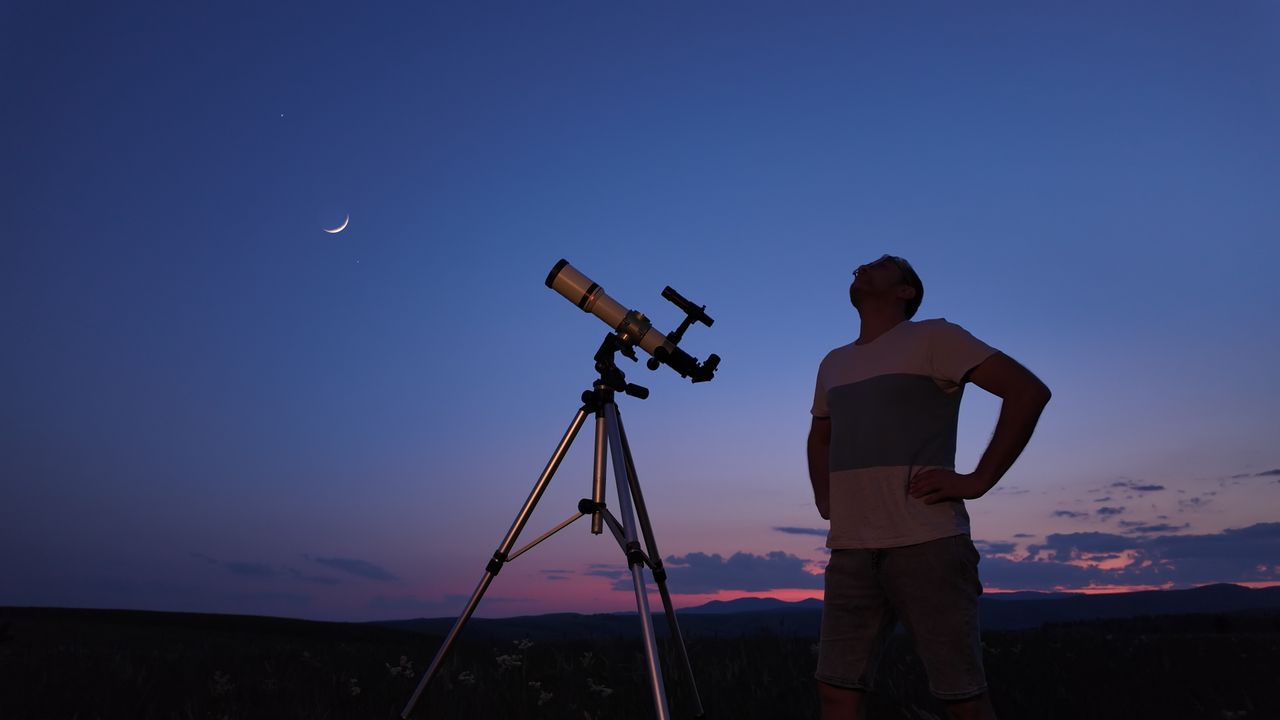
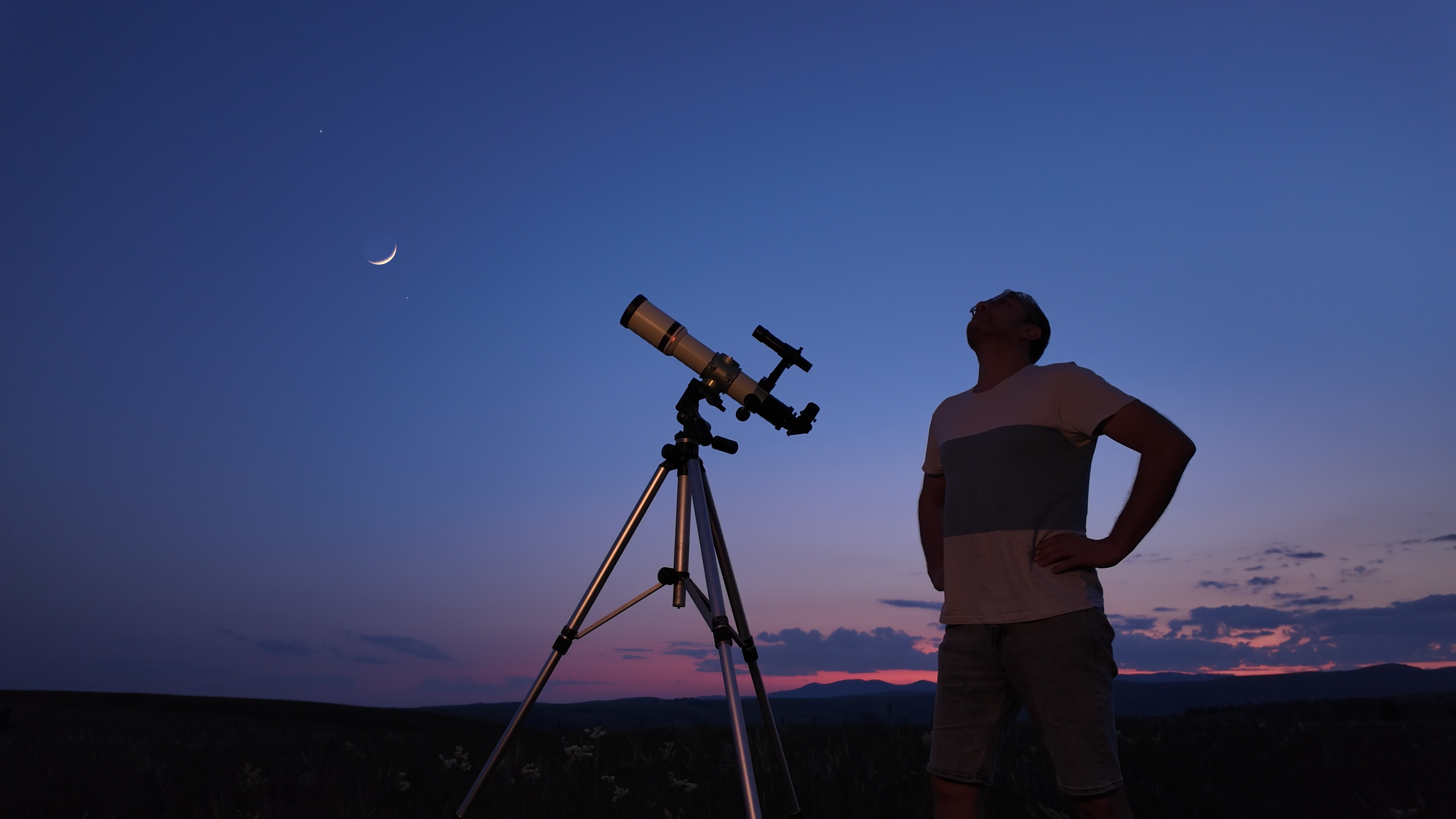
 Long before the full moon rises, shifting sunlight transforms the lunar surface into one of the sky's best telescope targets. (Image credit: m-gucci via Getty Images) Jump to: Share this article 0 Join the conversation Add us as a preferred source on Google Newsletter Subscribe to our newsletter
 If you're planning to point a telescope at the moon this week, don't wait for the full moon.
The best lunar views actually come when the moon is only half-lit or slightly gibbous, when long shadows carve dramatic detail across craters, mountains and vast lava plains along the lunar sunrise line.
Most beginner skywatchers naturally assume a full moon offers the best view. In reality, that's often when the moon appears at its brightest, flattest and most glaring through a telescope.
Amateur astronomer Leslie Peltier, often called "the world's greatest nonprofessional astronomer," never forgot his first telescopic views of the moon. In his autobiography "Starlight Nights — The Adventures of a Star-gazer," he described exploring the lunar surface through a tiny 2-inch spyglass:
"I never tired of looking at the moon and in those early nights of watching with my 2-inch glass I often thought of Galileo and his tiny telescope. I feel quite sure that I first viewed the moon in my small scope with just as much incredible delight as Galileo did in his. I spent many of those early nights wandering aimlessly about the moon. I followed the advancing sunlight all the way across her face. I had seen photographs of the moon and therefore had some vague idea of what its appearance would be like, but I was still wholly unprepared for all the wonders which I found as I explored the lunar surface. No photograph has yet been made which is not cold and flat and dead when compared with the scenes that meets one's eyes when the moon is viewed through even a small telescope."
Best times to look at the moon
So, when is the best time to observe the moon with a telescope?
Most astronomy neophytes might think it is when it's at full phase, but that's probably the worst time to look at it! When the moon is full, it tends to be dazzlingly bright. In contrast, the interval when the moon is at or just past first quarter phase, or at or just before last quarter phase, is when we get the best views of the lunar landscape right along the sunrise-sunset line or terminator. The terminator can also be defined as that variable line between the illuminated portion and the part of the moon in shadow.
Along with the fact that a half-moon offers more viewing comfort to the eye than a full moon, using a telescope with low optical power (magnifications of 20 to 40x), or even with good binoculars, we can see a wealth of detail on its surface.
"It takes a small telescope and low powers to do full justice to the moon; only when the entire moon fits comfortably within the field of view that she is at her dramatic best," wrote Peltier.
Around those times when the moon is half-lit or in the gibbous phase, those features lying close to the terminator stand out in sharp, clear relief. And if you examine the moon with a telescope on Monday, May 25, take note of the prominent crater situated just to the right of the terminator: Copernicus, nicknamed "Monarch of the moon" by 19th-century lunar cartographer Thomas Gwyn Elger (1836-1897). It is widely regarded as one of the most magnificent and detailed objects on the moon, featuring a 58-mile (93-kilometer) diameter, terraced walls, and a central peak complex.
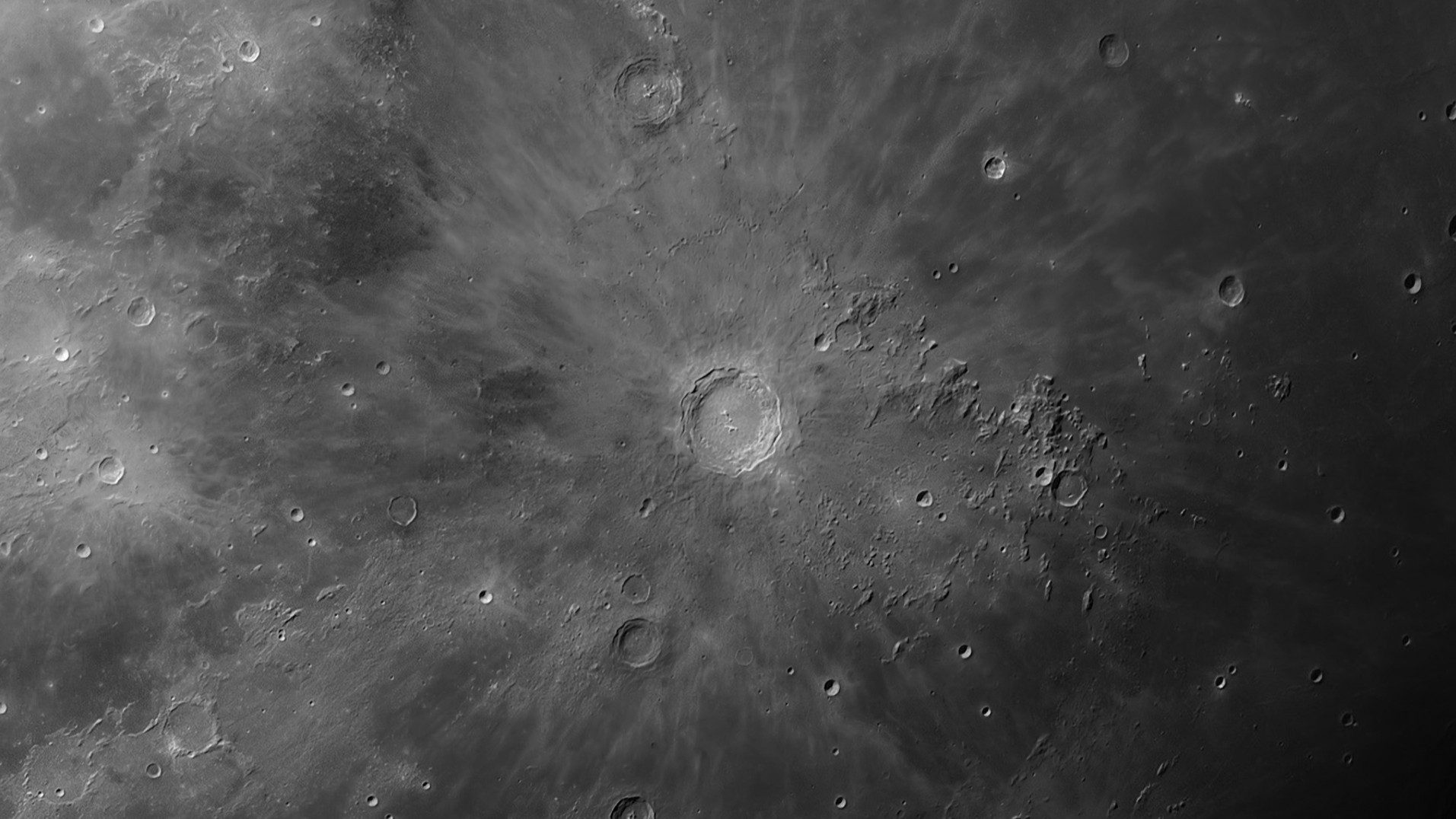
The moon arrives at first quarter phase on Saturday, May 23 at 7:11 a.m. EDT (1111 GMT). That will be the moment when its disk is exactly 50% illuminated. That evening, lunar mountains will be visible as the sun lights them from the right.
How does its brightness compare now with full? Most would probably think it's half as bright, but astronomers tell us that the first quarter moon is only 1/11th as bright as full. This is because a half-moon is heavily shadowed, even on its illuminated half. And believe it or not, it isn't until just 2.4 days before full that the moon becomes half as bright as full!
Overly bright and flat
In contrast to a half-moon, a full moon is almost completely illuminated, especially right around its center; the sun shines straight down even into all the microscopic crevices and except for perhaps around its immediate edges, you will find no visible shadows at all. In addition, through small telescopes, the full moon may appear "glary" or uncomfortably bright.
In contrast, during those times when it appears as a slender crescent, you can sometimes see that part of the moon not illuminated directly by sunlight but by indirect sunlight, which has been reflected from Earth and then directed toward the moon. This effect, known as Earthshine, provides a dimmer and more subtle illumination. When viewed, especially with binoculars or a low-power telescope, the moon appears as an eerily illuminated ball hanging in space.
But a full moon appears flat and one-dimensional.
The full moon makes for an interesting landscape photography target but up close in a telescope it can appear overly bright and flat. (Image credit: Cees Bol / 500px via Getty Images)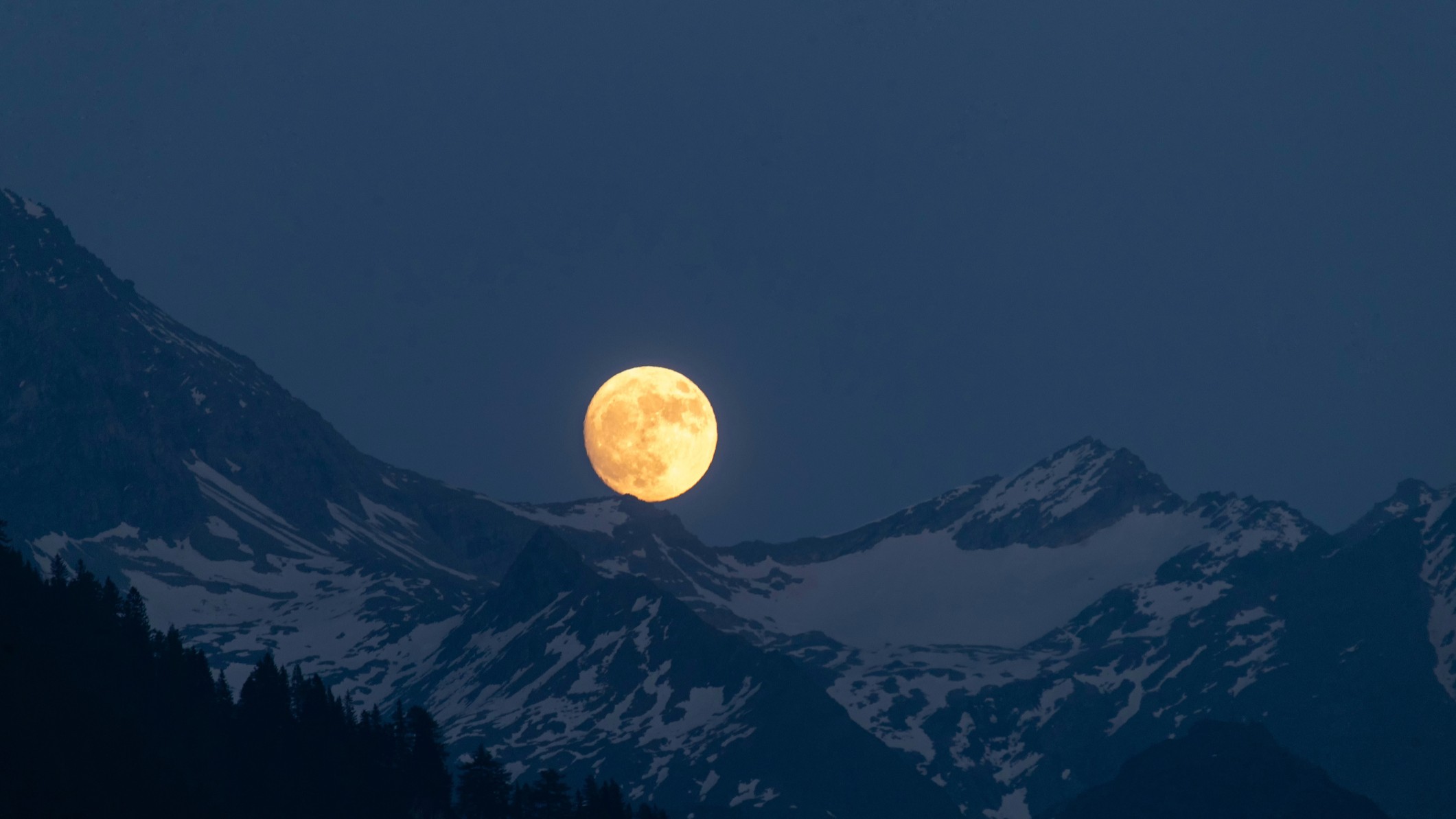
Gibbous moons are the most obvious
Have you ever noticed that when artists portray the moon, they invariably seem to show it as either a slender crescent or full? Half-moons are shown far less frequently, while gibbous moons are rarely depicted at all. The word gibbous is derived from the Latin word "gibbus," meaning "hump." An unusual word to be sure, but in describing the moon between half and full, it's the correct term.
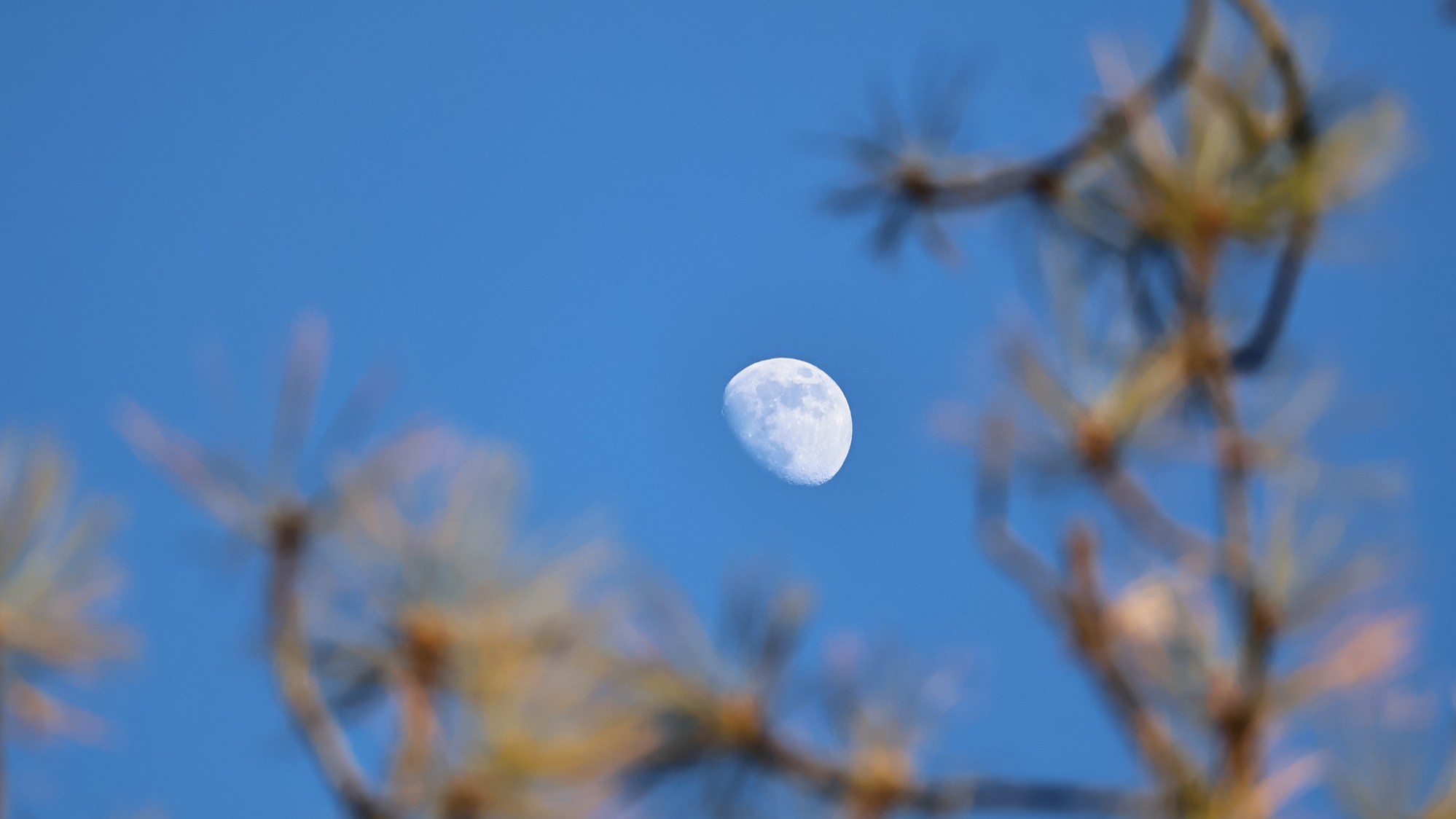
Yet interestingly, the gibbous moon is the most-seen phase, occurring for the half month between first and last quarter (although to many it looks full for two or even three nights around the time of full moon). Because it is in the sky for more than half the night, we're more apt to see the gibbous moon. In fact, it is even visible during the daytime hours, as will be the case during this upcoming week in the late afternoon. Look for it, for instance, on Tuesday, May 26, at around 5:30 p.m. local time, nearly three hours before sunset, low toward the east-southeast horizon.
In contrast, the oft-pictured crescent moon is visible only during the early evening or early morning hours, and sometimes only briefly.
Smallest moon of the year
Finally, early Sunday morning, May 31, brings us a full moon at 4:45 a.m. EDT (0845 GMT). As this is also the second full moon of May, it is colloquially designated as a "Blue Moon." This branding resulted from a 1946 misunderstanding of a completely different definition originally cited by the now long-defunct Maine Farmers' Almanac. The term "once in a blue moon" historically referred to something extremely unusual, such as rare atmospheric events where stratospheric dust or smoke made the moon appear blue, such as after major volcanic eruptions.
But because the synodic lunar cycle is 29.5 days and months are longer, this "extra" full moon occurs about every 32 months, or nearly four times per decade. So, although from a calendrical standpoint it is not very rare, a second full moon occurring during a specific month became embedded in popular culture folklore.
In addition, with apogee — that point in the moon's orbit placing it farthest from the Earth — occurring at 1:00 a.m. EDT (0500 GMT) on June 1, this is also the smallest full moon in terms of apparent angular size in 2026. The moon's distance will be 252,504 miles (406,366 km), making it appear about 14% smaller than when the full moon is at perigee (closest to Earth). The mainstream media has branded a perigee full moon as a "Supermoon." Conversely, an apogee full moon is referred to as a "Micro moon."
So, we will finish out this month of May with a "Micro Blue Moon."
Skywatchers looking to follow the moon's changing phases throughout the month can also consult the Moon Calendar from the Old Farmer's Almanac for lunar phase times and observing information tailored to your location.
Joe Rao serves as an instructor and guest lecturer at New York's Hayden Planetarium. He writes about astronomy for Natural History magazine, Sky and Telescope, The Old Farmer's Almanac and other publications.
View MoreYou must confirm your public display name before commenting
Please logout and then login again, you will then be prompted to enter your display name.
Logout Joe RaoSkywatching Columnist
Joe Rao is Space.com's skywatching columnist, as well as a veteran meteorologist and eclipse chaser who also serves as an instructor and guest lecturer at New York's Hayden Planetarium. He writes about astronomy for Natural History magazine, Sky & Telescope and other publications. Joe is an 8-time Emmy-nominated meteorologist who served the Putnam Valley region of New York for over 21 years. You can find him on Twitter and YouTube tracking lunar and solar eclipses, meteor showers and more. To find out Joe's latest project, visit him on Twitter.