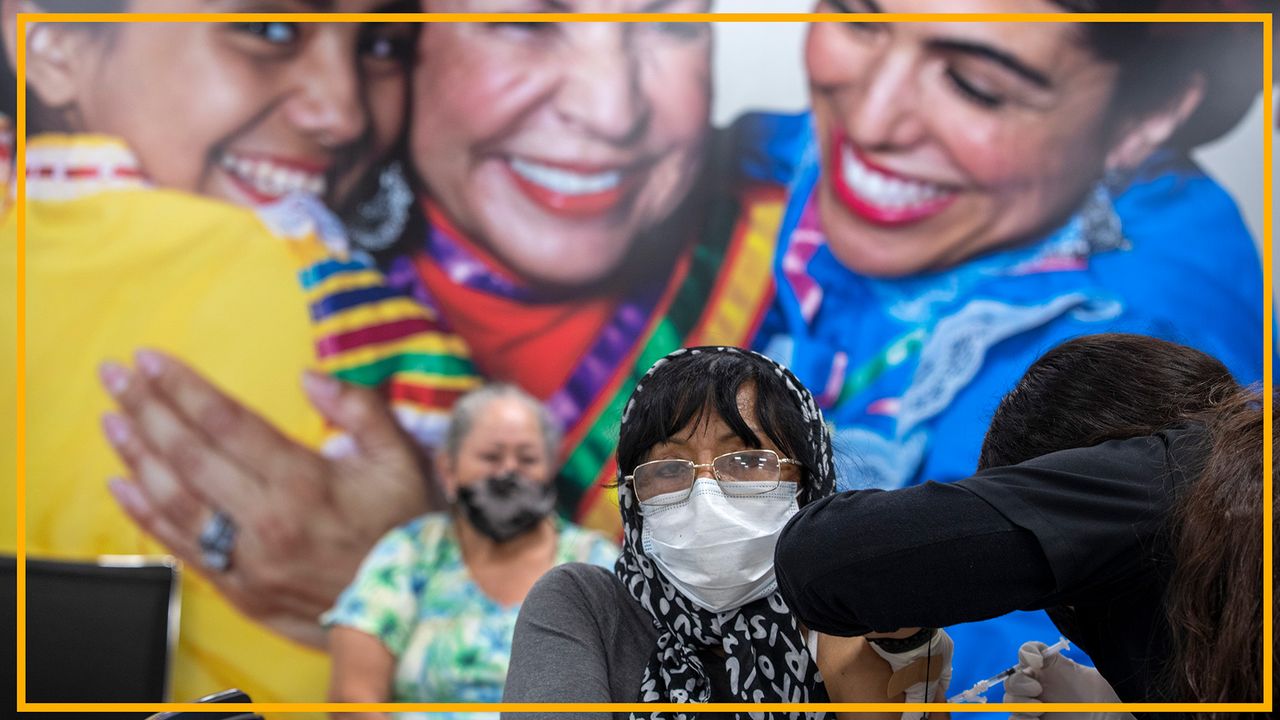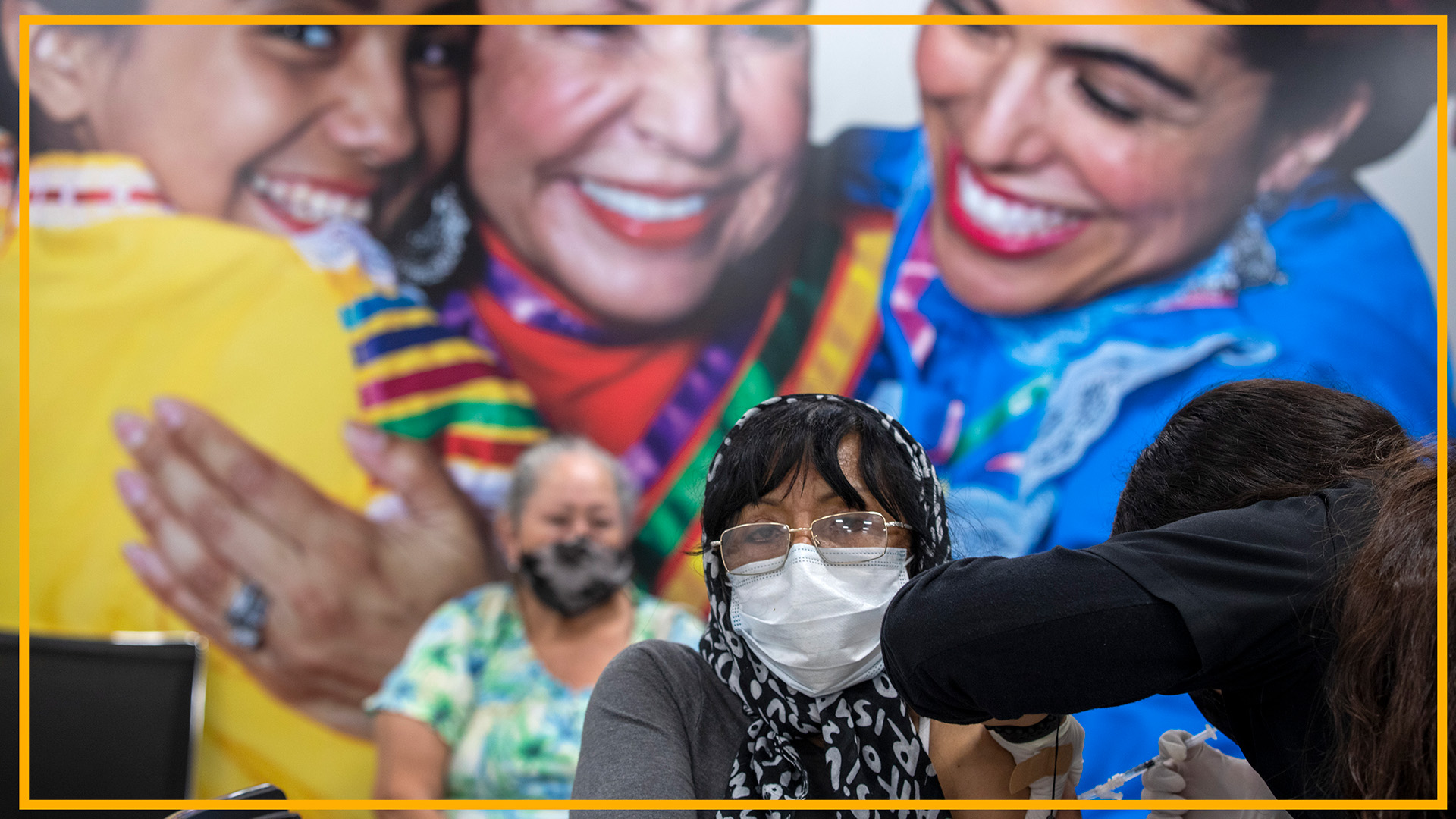
Irene Michel, right, gives Alma Chavez, 51, left, a COVID-19 vaccination booster at a community resource center in Los Angeles. Research shows that health outcomes vary with many structural factors, like income and ethnicity, but medical schools are poised to do away with the requirement that students learn how to address those disparities. (Image credit: Francine Orr via Getty Images)
Share this article Join the conversation
Follow us Add us as a preferred source on Google Newsletter Subscribe to our newsletter
Humans are not isolated, interchangeable biological machines. We seek medical care carrying complicated backstories, life experiences, and cultural perspectives that shape how we experience illness, communicate pain, and respond to treatment.
For decades, medicine ignored this fact and the cost fell heaviest on patients from marginalized groups. Study after study has documented the result: stark disparities in health outcomes that track closely with race, income, zip code, and immigration status.
Medicine has only recently begun to reckon with this blind spot. For the last few years, medical students across the country have been required to receive training in what are called "social determinants of health" to better understand how trauma, poverty, racism, and life experience shape what patients bring into the exam room and what they need from the people treating them.
But the board governing medical school accreditation no longer wants this training to be mandatory. This would be a big step back for medicine. Keeping these standards in place is essential for making a more effective medical workforce that can deliver the best care possible while doing no harm.
My experience with both sides of the medical system — as a second-year MD/PhD student and a patient — shows why this training is so necessary.

Naa Asheley Ashitey
Naa Asheley Ashitey is a Chicago-born writer and MD–PhD candidate at the University of Wisconsin–Madison.
Her creative work appears or is forthcoming in The Cincinnati Review, Hobart, Brittle Paper, Heavy Feather Review, BULL and editorials for The Xylom, MedPage Today and KevinMD. She has been nominated for multiple awards, including Best Small Fiction and a finalist for the Claire Keyes Poetry Award. More at NaaAshitey.com.
A few months after I turned 21, I went in for a routine checkup and was told by my physician that I needed my first Pap smear. I understood the importance of the test, but it wasn't something I had prepared for that day.
When the exam began, I flinched at the cold speculum. My physician noted my tension and said it was interfering with the exam. I tried to relax, but as a survivor of sexual violence, the sensation triggered memories I hadn't expected. I asked her to slow down and at some point, stop. Instead, one of the physician assistants held my legs open as the speculum moved further. As the exam wrapped up, the only sounds in the room were my occasional sniffles as I cried quietly.
Sign up for the Live Science daily newsletter now
Get the world’s most fascinating discoveries delivered straight to your inbox.
Contact me with news and offers from other Future brandsReceive email from us on behalf of our trusted partners or sponsors
My mother, too, has endured the experience of being unheard by physicians. An immigrant from Accra, Ghana, she had healthcare providers hear her accent and see her non-citizen status and make a quiet calculation: one that placed her judgment below theirs and created a lifetime of consequences she continues to deal with to this day.
At five years old, the phrases "structural violence" or "medical racism" were not yet a normal part of my vernacular, but I didn't need a college education to understand that my mother's immigrant identity shaped the care she received, or more accurately, the care that was withheld from her. Her experiences were the consequences of a system that delivers less attentive, less thorough, and less humane care to patients who are Black, low-income, or immigrant. It has done so for so long that the disparity reads as normal.
Structural competency enables physicians to see the full picture and ultimately treat patients with the dignity they deserve.
Naa Asheley Ashiety
We've finally started to see a shift in that system, however slight. A year after the first Pap smear, I needed an additional one. Despite knowing this screening was essential for my health, I was still very hesitant and expressed my fears to my physician. This time, however, my physician used trauma-informed care throughout the procedure. She checked on me before we got started, narrated each step, and moved slowly so I could stop and breathe when I needed to. She gave me back the control and autonomy I had lost. Once we were done, she checked on me before letting me get dressed.
When the door closed, I let myself sob, not from pain, but because she cared. I mourned the version of me that wished she could have been granted that care the first time, and I found myself mourning my mother too, feeling a connection to her in the most unfortunate way.
The difference in my two experiences was not incidental. It is the result of training. Medical education now teaches future physicians to recognize how trauma, lived experience, and social context shape patient care, which collectively is called structural competency.
Such training equips future doctors to ask better questions, communicate more effectively, and avoid causing harm, even during routine procedures. Since starting medical school, I have seen how this training shapes the way my peers and I understand patients. A patient with uncontrolled asthma is not simply "noncompliant" with their treatment regimen, but may be living in substandard housing with mold exposure. A patient with poorly controlled diabetes may not lack "motivation," but may face food insecurity or unstable income.
Structural competency enables physicians to see the full picture and ultimately treat patients with the dignity they deserve. Rather than simply adjusting a medication dose or repeating discharge instructions, a structurally competent physician might coordinate with a social worker, connect a patient to community resources, or advocate for systemic changes that no prescription can address.
Research supports that structural competency training improves both how physicians practice and how patients fare. A 2016 pilot study in California found that such training led to better patient satisfaction scores, and a more recent study found that it increased residents' sense of competency.
The training curriculum has only been required for a few years, but some early evidence hints that it could yield positive patient outcomes. Physicians trained to recognize these factors are also more likely to advocate for policy changes related to housing, education, and income equality: key determinants that influence chronic disease prevalence, infant mortality rates, and overall life expectancy.
The American College of Physicians has formalized this thinking, publishing recommendations urging physicians to ask about and address social factors as a core part of patient care, and real-world implementation backs this up. One Michigan physician network that began systematically screening patients for social needs in 2017 conducted over 20,000 screenings and used the results to connect patients to social services.
This is partly why the Liaison Committee on Medical Education (LCME) that accredits med schools currently mandates that structural competency be taught in every school — but that's about to change. In the wake of the second Trump administration's attack on diversity, equity and inclusion efforts, the committee is indicating that it will likely no longer require structural competency training as a part of medical education.
It would be reassuring to think that even in absence of this training, nothing would change; that good physicians will remain attentive, and empathy will fill the gap. My mother's story and my own suggest otherwise. Medicine does not become neutral in the absence of this education. It defaults, reverting to entrenched habits of thinking that ignore the nuances of how a patient's background informs their care.
Related stories
At a time when mistrust in medicine is already high, we cannot afford to strip away the training that helps rebuild it. So what can be done?
Medical students must advocate within their institutions to preserve and strengthen structural competency education. Faculty must keep such training in their medical curriculum, even if LCME doesn't require it. Most importantly, professional organizations from local institutions to national bodies like the American Medical Association, must speak out clearly and use their congressional lobbying powers to push for the LCME to reverse its decision.
I love medicine. I am training to become a physician-scientist because I want to help build a future where care is both innovative and just. But I will not stand by while medicine forgets its own history. We have made progress, inches in the right direction. So we must do all that we can to ensure that we don't fall back, because the consequences will ultimately be the trust, the support and the lives of our patients.
Opinion on Live Science gives you insight on the most important issues in science that affect you and the world around you today, written by experts and leading scientists in their field.
Naa Asheley AshiteyLive Science Contributor
Naa Asheley Ashitey is a Chicago-born writer and MD–PhD candidate at the University of Wisconsin–Madison. A first-generation, low-income Ghanaian-American and University of Chicago alumna, she writes at the intersection of race, medicine, and belonging.
Her creative and editorial writing examines how policy, media, and academia reproduce structural violence—and what it means to resist with truth.
Her creative work appears or is forthcoming in The Cincinnati Review, Hobart, Brittle Paper, Heavy Feather Review, BULL and editorials for The Xylom, MedPage Today and KevinMD. She has been nominated for multiple awards, including Best Small Fiction and a finalist for the Claire Keyes Poetry Award. More at NaaAshitey.com.
View More
You must confirm your public display name before commenting
Please logout and then login again, you will then be prompted to enter your display name.
Logout