
 A diver investigates the shipwrecked remains of the Mentor, a brig owned by Lord Elgin that was carrying the Parthenon Marbles when it sank in 1802. (Image credit: Copyright St. Kontos) Share this article 0 Join the conversation Follow us Add us as a preferred source on Google Newsletter Get the Live Science Newsletter
 Get the world’s most fascinating discoveries delivered straight to your inbox.
Become a Member in Seconds
Unlock instant access to exclusive member features.
Contact me with news and offers from other Future brands Receive email from us on behalf of our trusted partners or sponsors By submitting your information you agree to the Terms & Conditions and Privacy Policy and are aged 16 or over.You are now subscribed
Your newsletter sign-up was successful
Want to add more newsletters?
Join the club
Get full access to premium articles, exclusive features and a growing list of member rewards.
Explore An account already exists for this email address, please log in. Subscribe to our newsletterA marble fragment from the Acropolis of Athens has been found in the remains of a ship that sank in 1802, according to Greece's Ministry of Culture.
The ship is the Mentor, a brig that went down southeast of the island of Kythira (also spelled Cythera and Kythera) in the Aegean Sea. The ship was used by Thomas Bruce, the seventh Earl of Elgin, to move sculptures from the ruins of the Acropolis to the United Kingdom, Greece's Ministry of Culture said in a translated statement.
The Acropolis is a high-ground area in Athens that contains some of the city's most important buildings — most notably, the Parthenon, a temple dedicated to Athena, the patron goddess of the city. The sculptures that Lord Elgin was removing depict scenes from Greek mythology, especially the birth of Athena. It's not certain if the newly found fragment is from the Parthenon itself or from elsewhere on the Acropolis.
Article continues belowAfter the ship sank, Elgin had sponge divers dive down to the wreck. They salvaged many of the sculptures, which were sold to the British Museum in 1816, where they remain to the present day.
Modern-day archaeologists have been excavating the remains of the ship since 2009. The ship itself is mostly disintegrated, but remains from the 19th century, such as a chess set, have been found. The most recent excavations found remains of the ship's copper plating and of a clay hearth that would have been used by the ship's crewmembers.
Image 1 of 3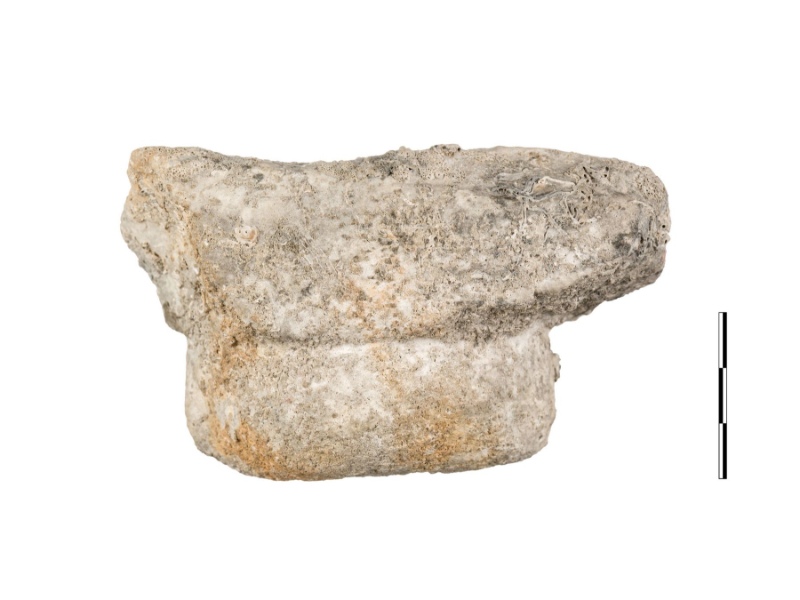 (Image credit: Nikos Stournaras)
The ancient sculptural remains from the shipwreck. It is triangular, and modern-day archaeologists describe a decoration like this as a "drop."
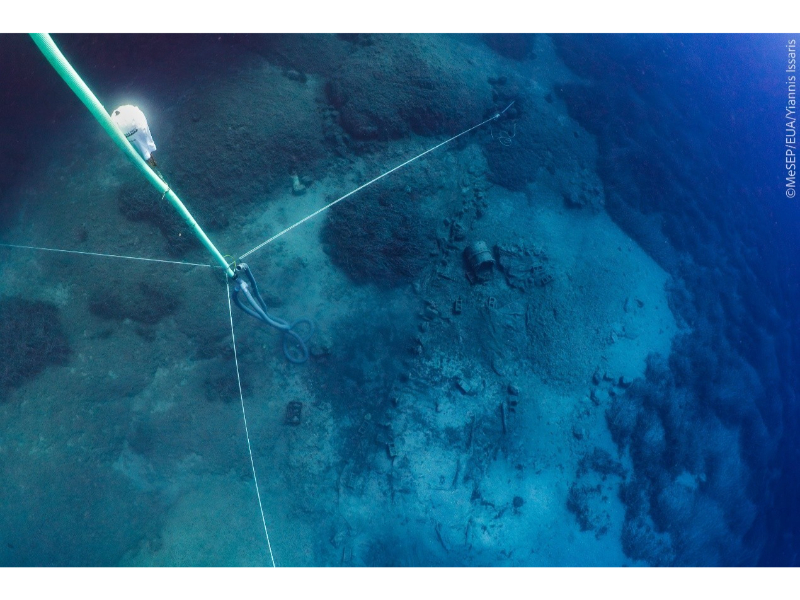 (Image credit: G. Issaris)
The remains of the shipwreck. While the hull has disintegrated, pieces of some artifacts, including some from the 19th century, remain.
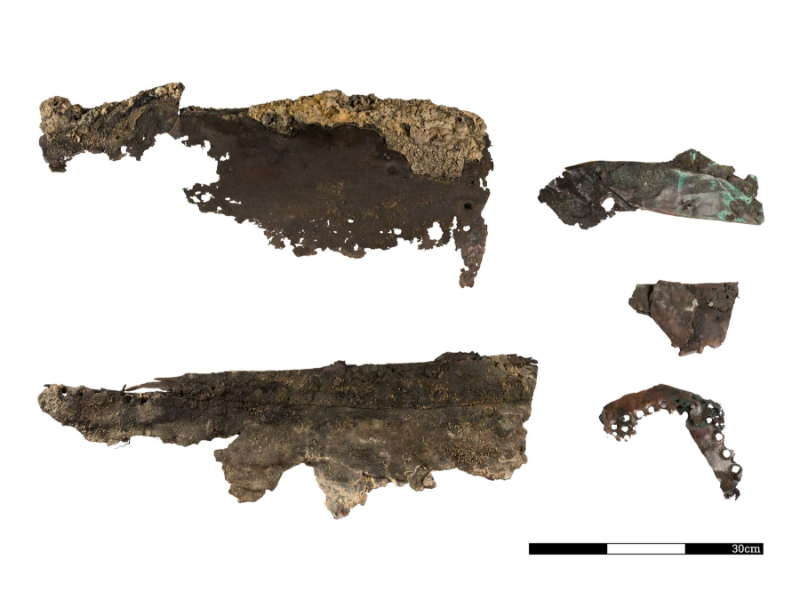 (Image credit: Nikos Stournaras)
Fragments of the ship's copper plating.
The ancient sculpture found in the ship is a triangular, marble block with what looks like a peg at the bottom. Modern-day scholars refer to pieces like this as a "drop," Greek Ministry of Culture representatives said in the statement. It's about 3.7 inches by 1.9 inches (9.3 by 4.7 cm) in size and would have been attached to other blocks somewhere in the Acropolis, possibly on the Parthenon itself.
RELATED STORIES—Dazzling 'Temple of Colored Marbles' honoring Roman god discovered in Italy
—Rare snow covers Acropolis of Athens in dazzling white blanket
At the time Lord Elgin was removing the sculptures, now known as the Elgin Marbles or the Parthenon Marbles, Greece was under the control of the Ottoman Empire. Elgin claimed that he was given proper authorization from Ottoman officials to move the sculptures. Greece has requested the return of the sculptures from the British Museum, claiming that Elgin did not have the required permission and noting that Greece was being occupied by the Ottoman Empire at the time.
Sign up for the Live Science daily newsletter nowContact me with news and offers from other Future brandsReceive email from us on behalf of our trusted partners or sponsorsThe museum has refused, but starting in 2021, the museum reportedly had talks about returning the Elgin Marbles to the Greek government. So far, an agreement has not been reached. One challenge is that the laws of the United Kingdom prevent the British Museum from deaccessioning any artifacts. This makes it more difficult to return them to Greece.
Conservation and analysis of the recently discovered remains from the shipwreck are ongoing.
TOPICS Owen JarusLive Science Contributor
Owen Jarus is a regular contributor to Live Science who writes about archaeology and humans' past. He has also written for The Independent (UK), The Canadian Press (CP) and The Associated Press (AP), among others. Owen has a bachelor of arts degree from the University of Toronto and a journalism degree from Ryerson University.
View MoreYou must confirm your public display name before commenting
Please logout and then login again, you will then be prompted to enter your display name.
Logout LATEST ARTICLES 1All 5 'letters' of DNA found on an asteroid speeding through our solar system. What do they tell us about the origins of life?
- 2Artemis II: NASA is preparing for a return to the moon, but why is it going back?
- 3Forget about the Big Spring Sale — these 9 early fitness deals leave Amazon far behind
- 4Iran war could push global food insecurity to record levels, leaving 363 million people hungry
- 5Dark message warning enemy to 'learn your lesson' found inscribed on 2,000-year-old sling bullet from ancient Holy Land