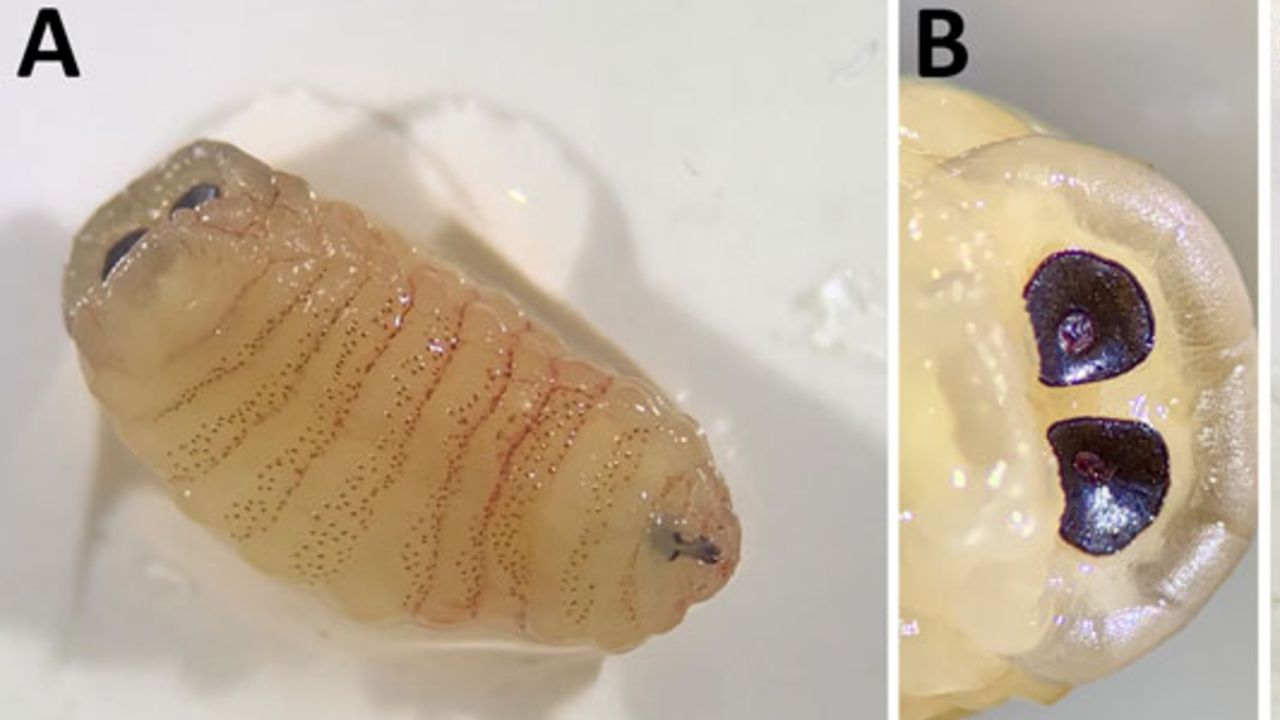
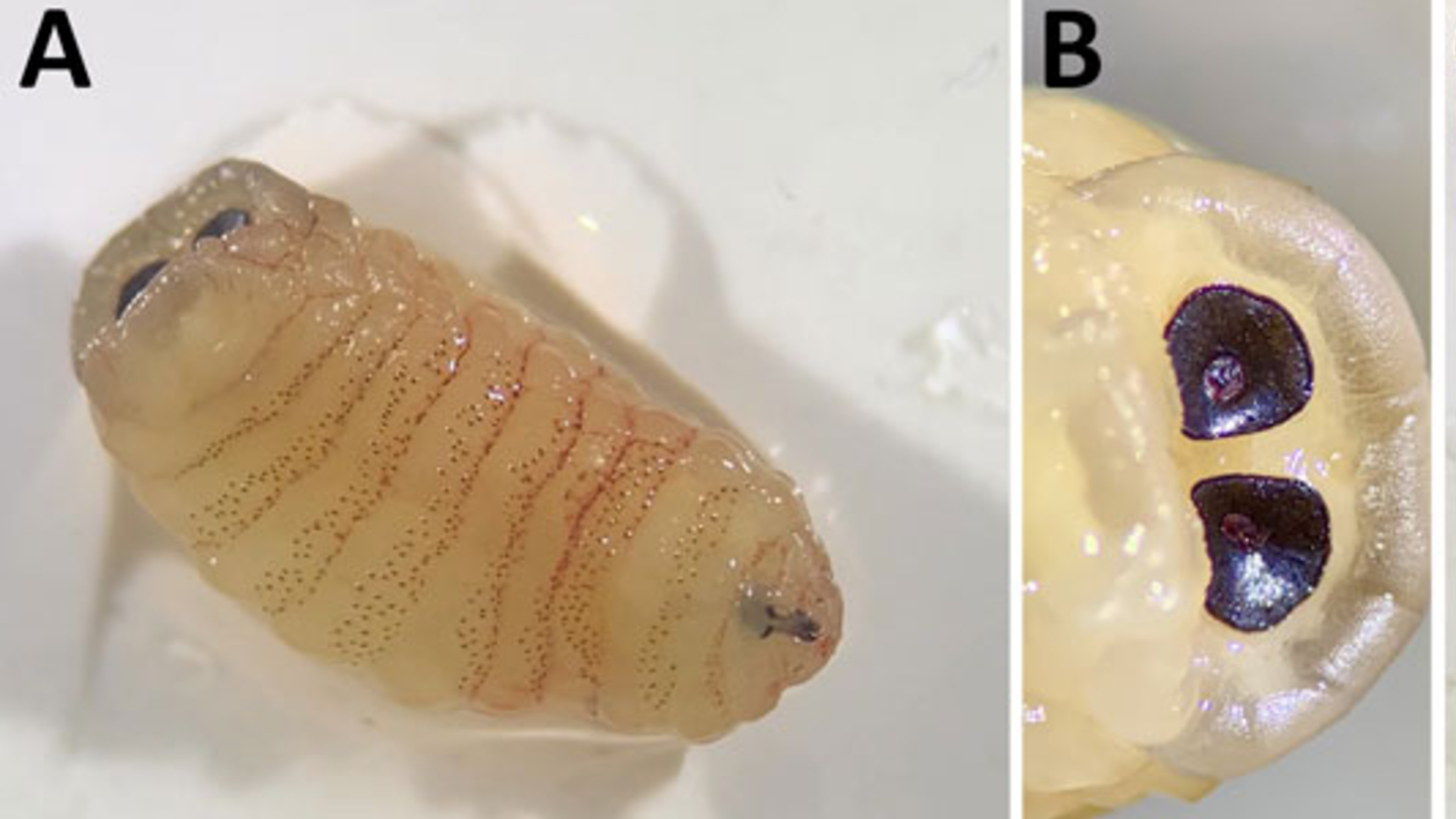
 A close up of the larvae of the sheep bot fly (Oestrus ovis). (Image credit: Ilias P. Kioulos, Emmanouil Kokkas, and Evangelia-Theophano Piperak) Share this article 0 Join the conversation Follow us Add us as a preferred source on Google Newsletter Sign up for the Live Science daily newsletter now
 Get the world’s most fascinating discoveries delivered straight to your inbox.
Become a Member in Seconds
Unlock instant access to exclusive member features.
Contact me with news and offers from other Future brands Receive email from us on behalf of our trusted partners or sponsors By submitting your information you agree to the Terms & Conditions and Privacy Policy and are aged 16 or over.You are now subscribed
Your newsletter sign-up was successful
Want to add more newsletters?
Join the club
Get full access to premium articles, exclusive features and a growing list of member rewards.
Explore An account already exists for this email address, please log in. Subscribe to our newsletterThe patient: A 58-year-old woman in Greece
The symptoms: The patient, who worked outdoors on a Greek island, developed pain around the center of her face that grew progressively worse. About two to three weeks after this pain began, she also developed a severe cough.
Following this extraction, experts closely examined two of the larvae and part of a puparium, the pupa's protective outer casing in which it matures into an adult. One larva was pale yellow and about 0.6 inches (15 millimeters) long, while the other was light brown and 0.8 inches (20 mm) long. The puparium was black and wrinkled, and it contained remnants of the pupa, they noted.
The team visually examined the larvae and extracted DNA for analysis.
The diagnosis: This examination revealed the wormlike creatures to be the larvae of the sheep bot fly (Oestrus ovis). This parasite is typically found in the nasal passages and sinuses of sheep and goats. Notably, the outdoor area where the woman works is located next to a field with grazing sheep, the report authors wrote.
Sign up for the Live Science daily newsletter nowContact me with news and offers from other Future brandsReceive email from us on behalf of our trusted partners or sponsorsParasitic fly infections are generally known as "myiasis," so the woman was diagnosed with "O. ovis nasal myiasis with pupation."
The treatment: In addition to having the larvae and pupa surgically removed from her sinuses, the woman was given nasal decongestants. With these two treatments, she made a "complete recovery," according to the report.
What makes the case unique: Human cases of O. ovis myiasis have been reported in the past, but these infections have typically affected the eyes, rather than the nasal passages.
"O. ovis bot flies infrequently affect humans, most often depositing larvae in the conjunctival sac," which is located between the eyelid and eyeball, the report authors noted. More rarely, the flies have been reported to deposit larvae into people's nostrils, mouths or ear canals, they added.
Historically, it was thought that O. ovis couldn't develop for very long in humans, making it to only the first larval stage, known as L1. But in recent cases, older larvae, including L2 and L3, have been identified, the report authors wrote. Pupation, the point at which larvae mature into "teenagers," follows the L3 stage.
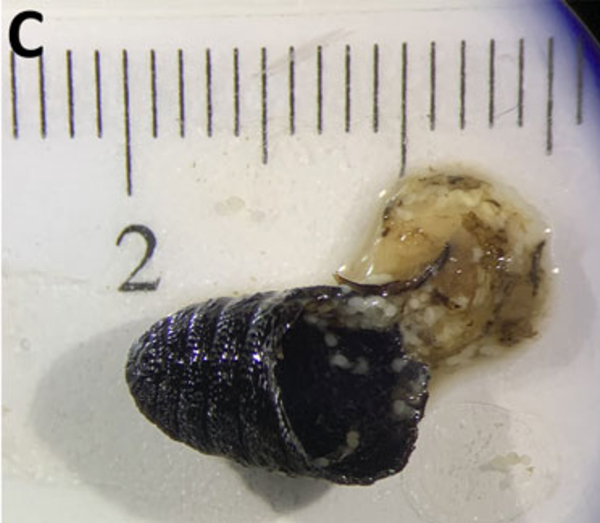
"The patient we report had a severely deviated nasal septum and appears to have been inoculated with a large larval burden," they noted. "From a purely anatomic perspective," the authors hypothesize that the high number of larvae combined with the woman's septum deviation prevented said larvae from exiting her nose. This permitted the larvae to progress to the L3 stage and, in one instance, pupation, they concluded.
When infecting sheep and goats, adult female O. ovis deposit larvae (also called maggots) in and around the host animals' nostrils. The larvae then travel into the nasal passages and sinuses, where they may mature for months before exiting the nostrils. Once out, they burrow into the ground and enter the pupa life stage for several weeks. Once mature, the adult fly breaks free of its puparium and emerges from the ground.
On occasion, L3 larvae can get stuck in the nasal passages of their host animals, but they don't typically pupate at that point. Instead, they usually dry up, liquefy or calcify, and their remains can sometimes trigger secondary bacterial infections.
The maggots die because the sinuses don't provide a favorable environment for them to enter the pupal stage. As such, "pupation of O. ovis larvae within any mammalian host is considered biologically implausible," the authors noted. Nonetheless, it happened in their patient.
OTHER DILEMMAS- A toddler accidently ate gonorrhea bacteria from a lab dish
- Man caught rabies from organ transplant after donor was scratched by skunk
- Rare semen allergy may have caused woman's infertility
The authors suggest that some "unidentified anatomic or physiologic factors" must have allowed pupation to occur in the woman's case. Alternatively, the strange occurrence may reflect an evolutionary adaptation that could enable the species to complete its life cycle in humans, they mused.
"In either scenario, additional cases and data are needed to understand this phenomenon, but clinicians should be aware of the potential for human bot fly infections in endemic areas," they concluded.
For more intriguing medical cases, check out our Diagnostic Dilemma archives.
DisclaimerThis article is for informational purposes only and is not meant to offer medical advice.
Article SourcesKioulos, I. P., Kokkas, E., & Piperaki, E. (2026). Oestrus ovis Nasal Myiasis with Pupation in Human Host, Greece, October 2025. Emerging Infectious Diseases, 32(3), 445-447. https://doi.org/10.3201/eid3203.251077.
TOPICS Nicoletta LaneseChannel Editor, Health
Nicoletta Lanese is the health channel editor at Live Science and was previously a news editor and staff writer at the site. She holds a graduate certificate in science communication from UC Santa Cruz and degrees in neuroscience and dance from the University of Florida. Her work has appeared in The Scientist, Science News, the Mercury News, Mongabay and Stanford Medicine Magazine, among other outlets. Based in NYC, she also remains heavily involved in dance and performs in local choreographers' work.
View MoreYou must confirm your public display name before commenting
Please logout and then login again, you will then be prompted to enter your display name.
Logout LATEST ARTICLES 1'They are literally everywhere': The shocking story of how forever chemicals polluted the world
- 2DNA reveals ancestry of man buried in Stone Age monument in Spain, but his religion remains a mystery
- 3'So much magic': Artemis II shares first images from the far side of the moon, including new 'Earthset' and total eclipse in space
- 4AI 'mirages' mean tools used to analyze medical scans could fabricate their findings
- 5World's fattest parrot — on the verge of extinction 30 years ago — has record-breaking breeding season