Health
Despite state bans and restrictions, the number of abortions in the U.S. holds steady March 24, 202612:01 AM ET
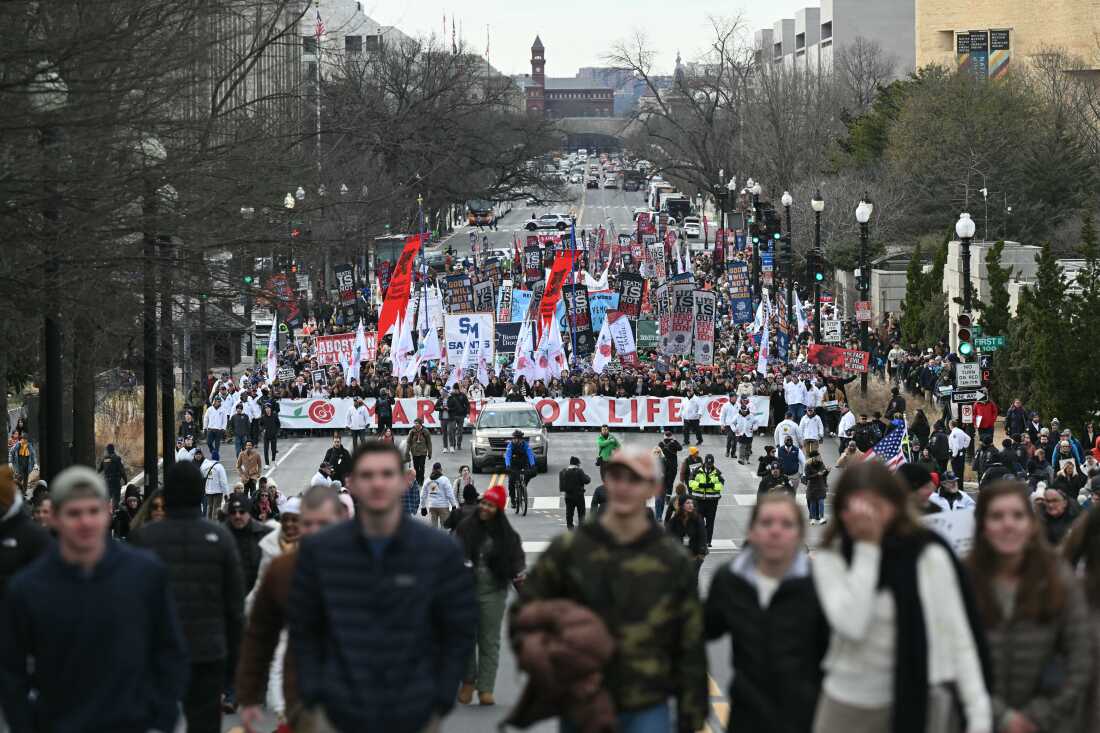
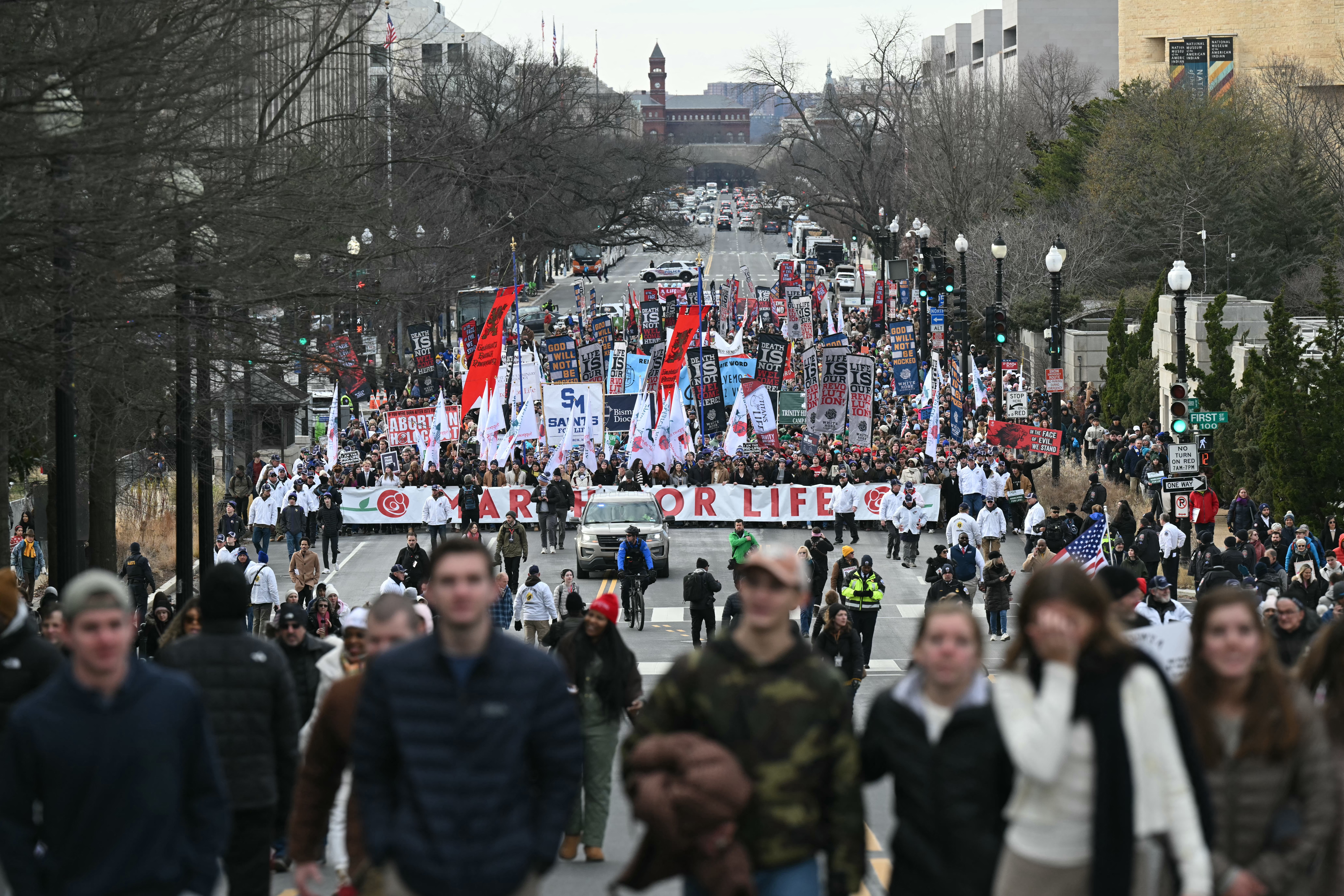
The 53rd annual March for Life rally was held in Washington, DC, on Jan. 23. There were about 1.1 million abortions in the U.S. both in 2024 and 2025, says a new report. Saul Loeb/AFP via Getty Images hide caption
toggle caption Saul Loeb/AFP via Getty ImagesSince the reversal of Roe v. Wade in 2022, anti-abortion rights advocates have continuously pursued laws and court cases to make access to abortion more difficult.
A report published Tuesday finds those efforts haven't worked in one basic way: the number of abortions in the country hasn't budged.
"There were an estimated 1,126,000 abortions provided by clinicians in the U.S. in 2025 — that's pretty much unchanged from 2024," says Isaac Maddow-Zimet, data scientist at the Guttmacher Institute, a nonprofit research organization that supports abortion access.

Policy-ish
Iowa doesn't have enough OB-GYNs. Is the state's abortion ban part of the problem?
A key way that abortions are now happening despite all of the state restrictions is through telemedicine. In 2023, the Food and Drug administration under President Biden allowed mifepristone — one of the medications used for abortion — to be prescribed without an in-person appointment.
At the same time, states that support abortion access have passed shield laws, which protect health care providers from legal risks when they prescribe to patients in states with bans.
What that meant last year is that more people in states with restrictions had abortions through telemedicine, and fewer people traveled across state lines for abortion, according to the Guttmacher report.
"It makes sense that we'd see a decline in travel because people accessing abortion care through telehealth in general then no longer need to travel for care," Maddow-Zimet says.
Medication by mail
When Viv found out she was pregnant last January, she was three days past Georgia's ban on abortion after six weeks of pregnancy.
Viv is 27 years old and lives in Atlanta. NPR agreed not to use her last name because she fears repercussions for talking about her experience. She went online and looked through posts on Reddit, trying to figure out what to do.
"I found out that I could get an abortion pill shipped to my house," she says. "I didn't want to travel. I didn't want to take time off of work. I am pretty knowledgeable about women's health, and I know that the abortion pill is a safe and effective way to have an abortion."
She ended up reaching out to a group called The MAP in Massachusetts, and she says the process was very easy.
"You basically go on their website, you answer questions, and then you pay whatever fee you can afford, which I thought was really, really cool," she says.

National
Inside a medical practice sending abortion pills to states where they're banned
About a week later, she received the two medications in the mail: mifepristone and misoprostol. She says the instructions that came with the medication were very thorough.
"People contact you after to make sure everything's good," she says. "They even have people contact you like a month after to make sure that you're not pregnant anymore."
Viv says she's grateful she was able to have an abortion without having to leave Atlanta. She also notes that Georgia has one of the highest maternal mortality rates in the country.
"If a woman doesn't want to be pregnant she should be able to have that right and I think that should be the end of the story," she says.
Frustration for ban supporters
Abortion-rights opponents view all of this as a huge problem. There are several legal challenges and a recent Congressional bill that all aim to force the FDA to stop allowing mifepristone to be mailed to patients. (Misoprostol is a medication that has been on the market longer and is also used to prevent ulcers; it is harder to restrict.)
One of the court challenges was brought by Louisiana Attorney General Liz Murrill, who told a U.S. Senate committee in January that the FDA rules must be changed.
"Until then, Louisiana's efforts to protect mothers and their unborn children and to hold out-of-state abortion pill traffickers accountable for the harm they inflict will be all but futile," she said.

Shots - Health News
Louisiana may reclassify drugs used in abortion as controlled dangerous substances
According to Guttmacher's latest report, there were about 2,500 abortions in Louisiana in 2023, and last year there were more than 9,000. Overall, 91,000 patients in states with bans received telehealth abortions in 2025.
A federal judge is expected to rule in Louisiana v. FDA soon.