To play this video you need to enable JavaScript in your browser.
This video can not be played
Media caption,'I would've been a miserable world champion'
ByCoral BarryCombat Sports Senior Journalist- Published1 hour ago
"I fear that I would have ended up being a world champion but a very depressed, sad and miserable world champion."
Delicious Orie had the world at his feet when he made his professional debut a year ago.
After the Paris Olympics there was a bidding war for him despite the heavyweight failing to win a medal.
Frank Warren's Queensberry eventually saw off Eddie Hearn's Matchroom as well as interest from the WWE to sign him.
He was the next big thing in heavyweight boxing. And then a month later, Orie announced his shock decision to walk away from boxing altogether.
"I wanted to pull out before the boxing exposed me," he tells BBC Sport.
"I turned pro for the money, I needed the money, only to realise that money gives you a little bit of happiness, it really does, but it gives you zero fulfilment. Nothing. You feel nothing."
Orie was a standout fighter in the amateur ranks despite only taking up the sport aged 18. Originally from Russia, he moved to the UK as a child with his family.
He set high standards for himself, even as a seven-year-old realising the opportunities available to him in the UK.
Orie worked for years to become part of Team GB and secure a regular income from boxing. His goal, over a near-decade journey, was to be Olympic champion. When that did not happen, Orie felt a shift inside him, even if it was subtle.
"There was no plan B, there was no other thing, it was just tunnel vision to win that medal," he says.
"So the fact that I didn't magnified the feeling even more when my hand wasn't raised.
"I gave everything to the sport, I missed everything - happiness, birthdays, weddings, funerals, everything," he adds.
"Knowing that I could never achieve that again when I didn't have my hand raised, that was very sobering."
Money not a good enough reason to box
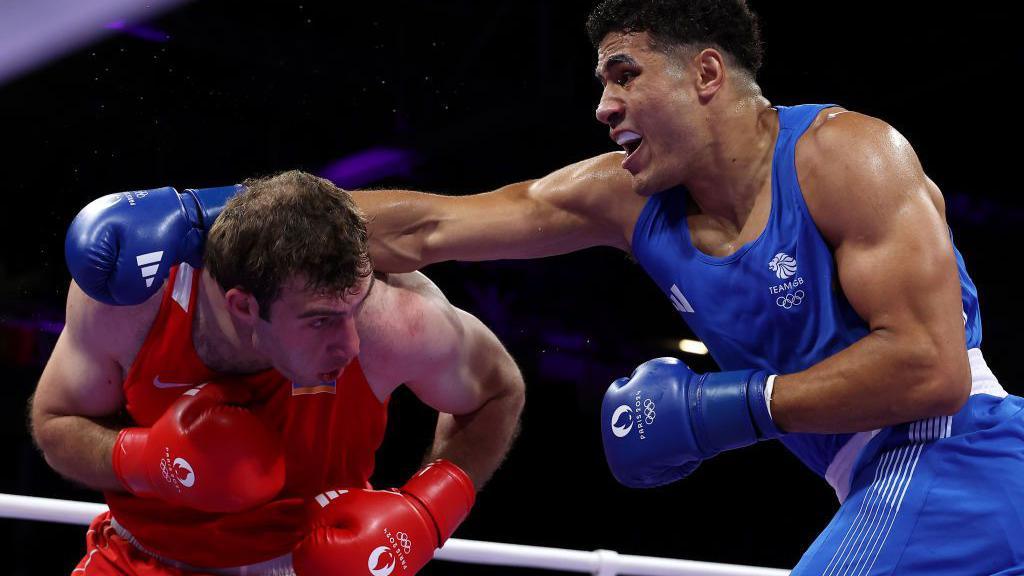 Image source, Getty ImagesImage caption,
 Orie bowed out of the Paris Olympics in the round of 16 against Armenia's Davit Chaloyan
Orie forged on with plans for a professional career. Having dreamed of being a millionaire as a 19-year-old kid, turning pro changed his life financially.
"I thought money [would] make me happy. I genuinely thought money is the answer to my emptiness," he says.
"I worked eight years to get that money and I got that money. I got a lot of it and I was predicted to earn a lot more of it in the future, only to realise that I felt emptier."
Orie was at a crossroads. His pro debut win over Milos Veletic was designed to be an easy opening night for him. Instead, he laboured through it and failed to get the knockout most expected.
He would spar, get hit and wonder why he was doing this.
"I had to make a choice. I either stepped away when it was more or less too late - when in my third or fourth year I get knocked out by some up-and-coming guy who purely just wants it more than me," he says.
"Or I have the power in my hands to step away and walk away from the things that I could have got."
As well as the safety aspect of continuing without his full focus, Orie feared how his own mental health would decline.
"You start to find other things that could be destructive instead of constructive. I've seen it countless times in boxing, the likes of Tyson Fury and the rest," he says.
"I'll be honest, I genuinely feel like that was the road I was going down.
"So I had to make a decision. I feel like I would have been really stupid to know that and still keep going for the money."
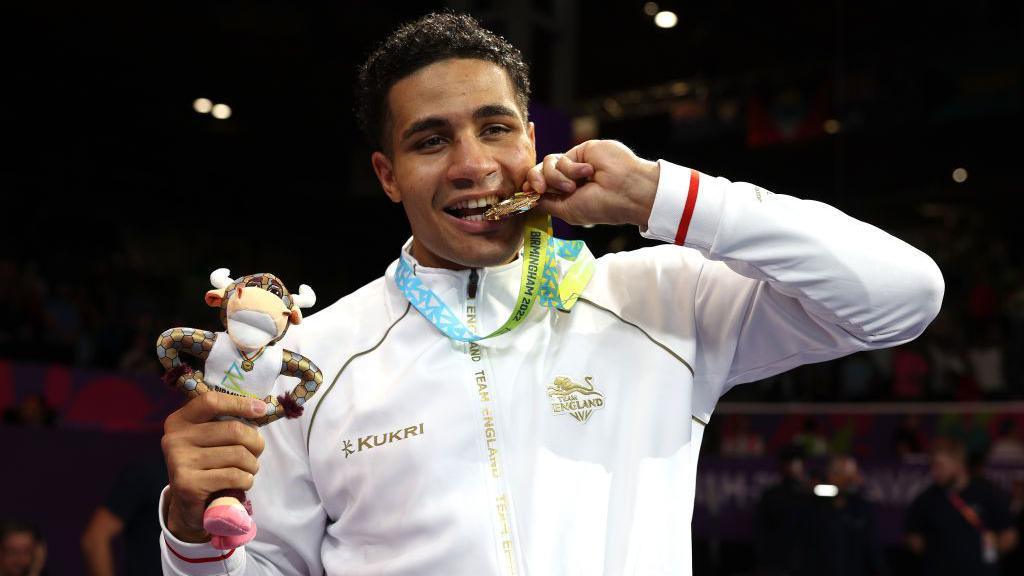 Image source, Getty ImagesImage caption,
 Orie wants to be a role model to young men who are considering what to do with their lives
Orie is now a financial advisor. He has spoken openly about his decision to walk away from boxing in a bid to help other young people, particularly men, pursue fulfilment as opposed to money.
He says he came to the decision to retire from boxing without consulting those close to him.
They were as shocked as the wider world and Orie now thinks that was a mistake and he should have been more open with how he was feeling.
"Being strong mentally doesn't necessarily mean completely cutting off your emotions," he says.
"The negative side of mental health comes when it's been ignored and just put to the side. Then before you know it, it's too late. I feel like education is key."
For Orie, it came down to fulfilment. He wants to be a role model, as Anthony Joshua at the London 2012 Olympics once was to him.
"Pushing on any more would just be me seeking validation from others externally and it wouldn't give me the fulfilment that my soul yearned and needed," he adds.
"I'm not special, I'm just the person who likes a target and a goal and wants to achieve that and gets a real sense of fulfilment.
"It took me to step away from millions of pounds to realise that that's it. The whole point of life is to chase."
Related topics
More Boxing stories
'Kicked to the kerb' - is boxing failing its heroes?
- Published25 March
Privilege, criticism & VAR - life as a boxing referee
- Published21 March
The Uber-driving English champion & his 30-year fight for a passport
- Published21 February
Watch every Born to Brawl episode
- Published28 April 2024

More boxing from the BBC
Notifications, social media and more with BBC Sport
- Published16 August 2025