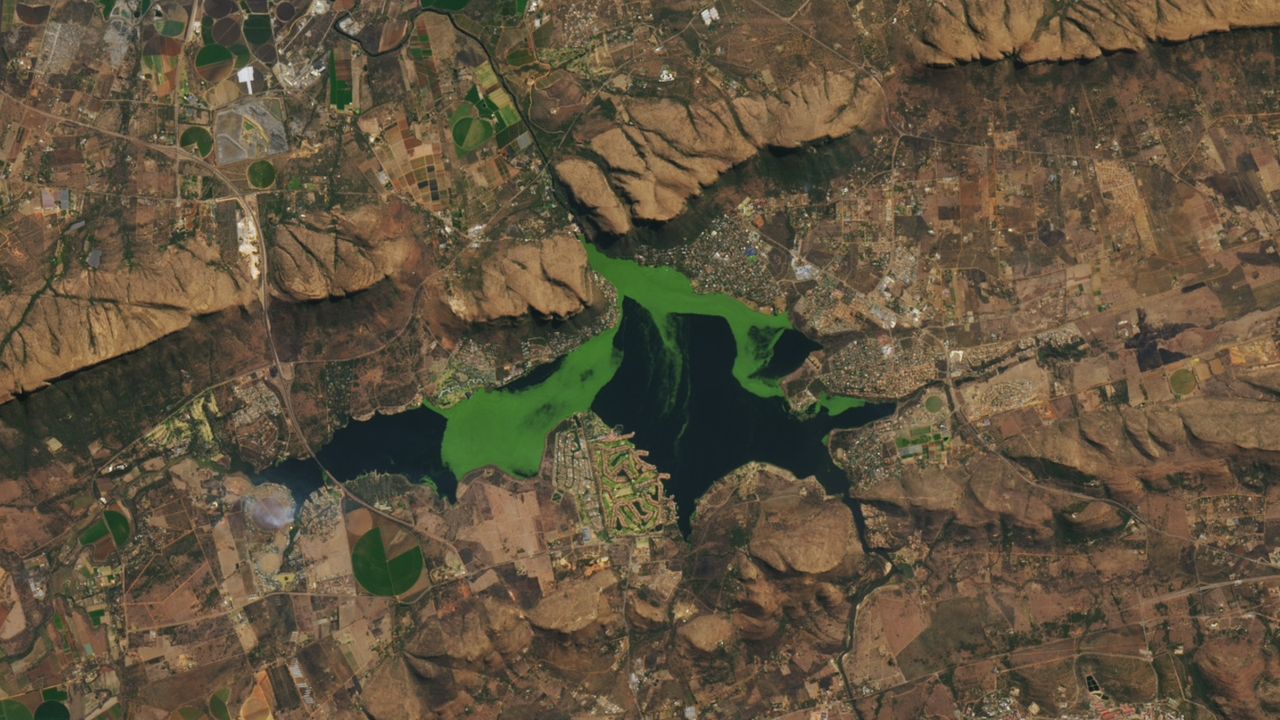
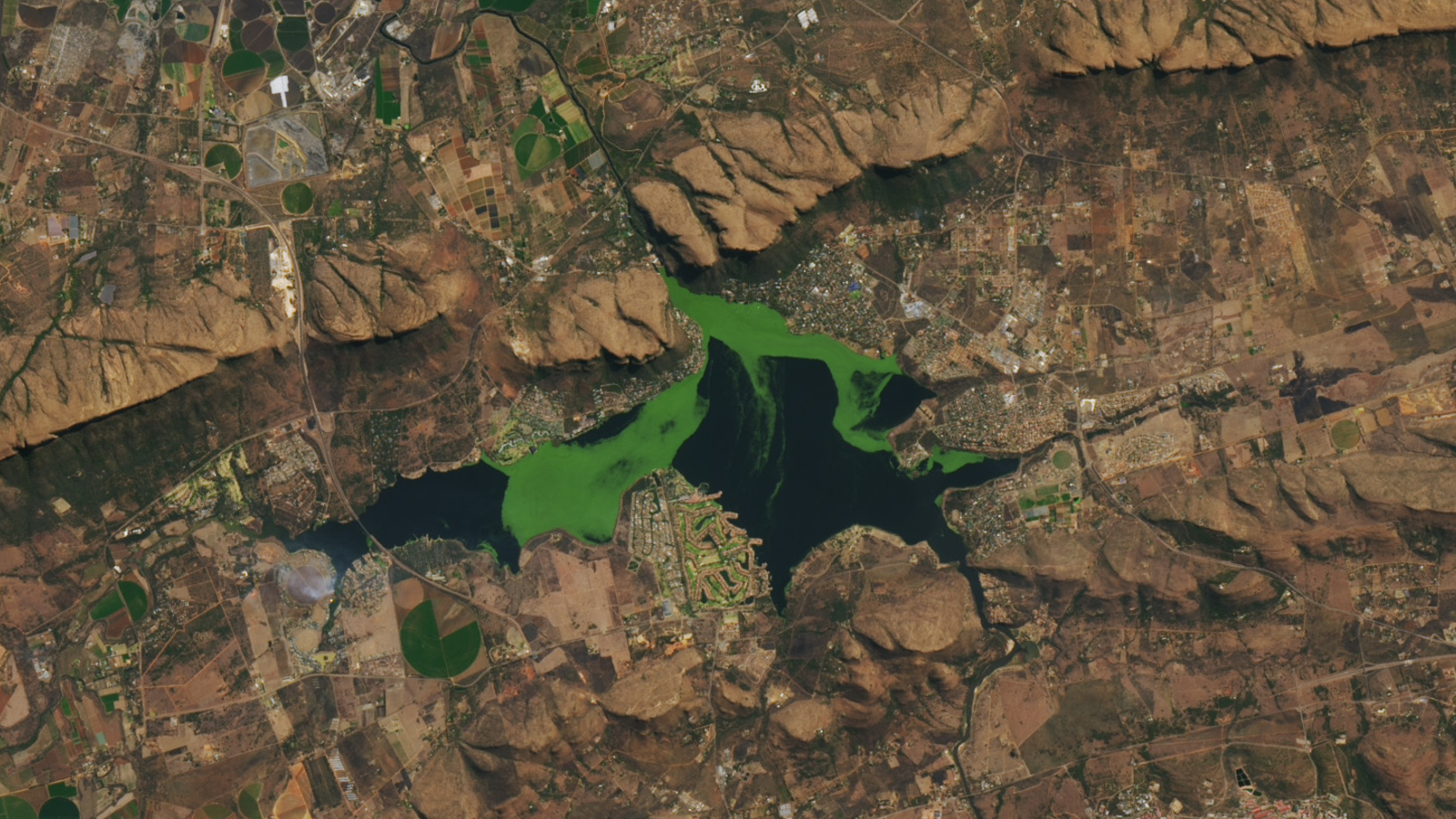
 Vibrant, verdant masses of algae and invasive aquatic plants frequently cover the surface of the reservoir at South Africa's Hartebeespoort Dam. (Image credit: NASA/Landsat 8) Share this article 0 Join the conversation Follow us Add us as a preferred source on Google Newsletter Sign up for the Live Science daily newsletter now
 Get the world’s most fascinating discoveries delivered straight to your inbox.
Become a Member in Seconds
Unlock instant access to exclusive member features.
Contact me with news and offers from other Future brands Receive email from us on behalf of our trusted partners or sponsors By submitting your information you agree to the Terms & Conditions and Privacy Policy and are aged 16 or over.You are now subscribed
Your newsletter sign-up was successful
Want to add more newsletters?
Join the club
Get full access to premium articles, exclusive features and a growing list of member rewards.
Explore An account already exists for this email address, please log in. Subscribe to our newsletter QUICK FACTSWhere is it? Hartbeespoort Dam, North West province, South Africa [-25.74486936, 27.858152164]
What's in the photo? A vivid-green bloom of toxic algae and planets spreading across a reservoir
Which satellite took the photo? Landsat 8
When was it taken? Aug. 10, 2022
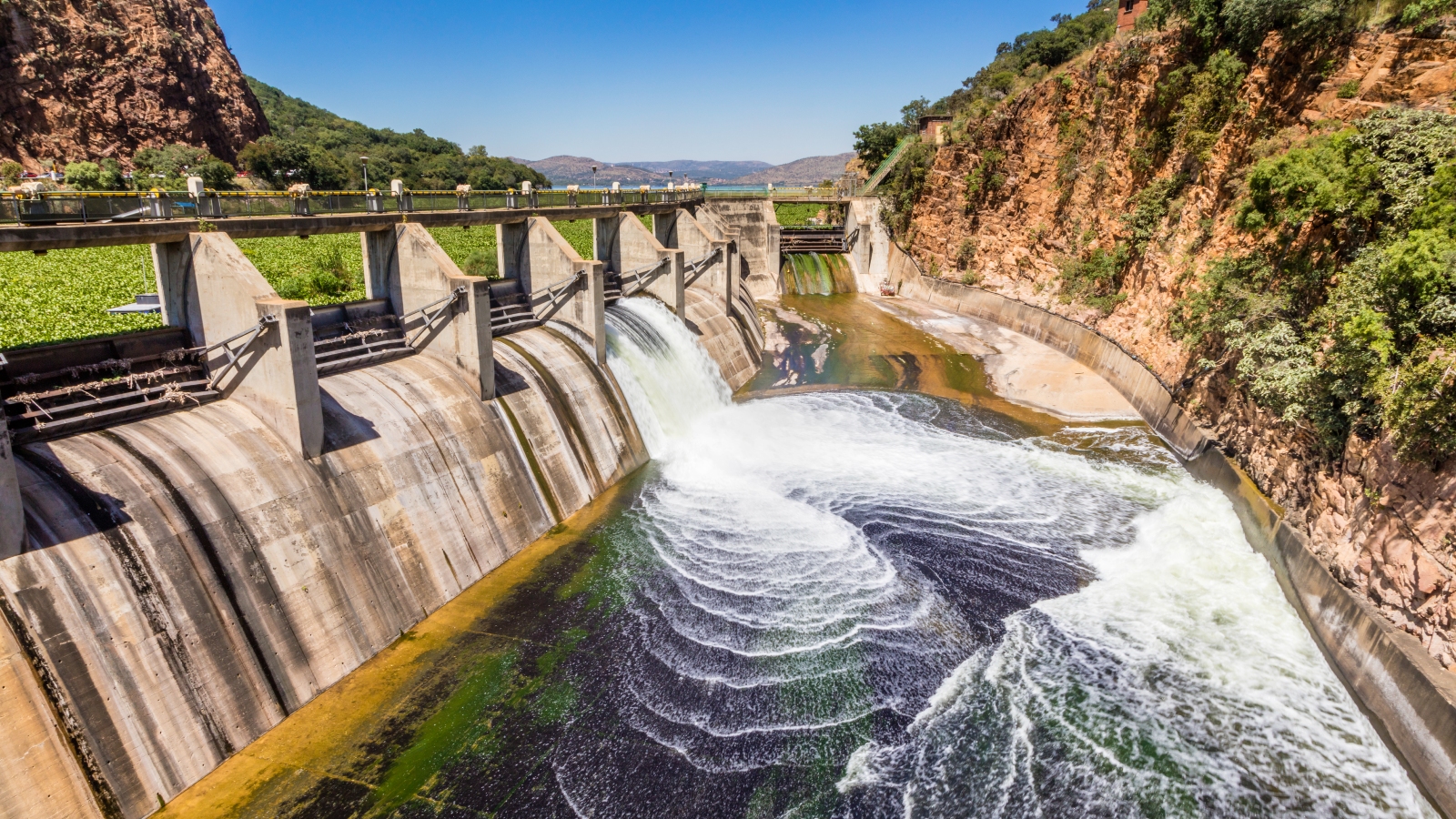
This striking satellite snap shows a verdant mass of algae and other aquatic plants sprawling across the surface of a recreational reservoir in South Africa. This frequent phenomenon releases toxic chemicals into the water and gives rise to hidden "dead zones" that can cause widespread fish fatalities.
Most large bodies of water experience seasonal blooms, where photosynthetic algae, or cyanobacteria, rapidly multiply and spread across their surfaces due to changes in weather or nutrient inflow. However, the Hartbeespoort reservoir is in a constant state of "hypereutrophication," which means it has an overabundance of nutrients, such as nitrogen and phosphorus. As a result, the blooms there are much more frequent and intense, according to NASA's Earth Observatory.
"On clear days … satellite images often reveal a reservoir with shades of deep blue interrupted by drifting patches of vivid green," Earth Observatory representatives wrote.
However, it is not just algae that bloom across the reservoir's surface. The verdant masses also include aquatic plants, including water hyacinths (Pontederia crassipes) and Salvinia minima, both of which are invasive species and grow across the reservoir's surface in large, intertwined mats.
Eutrophication occurs when too many nutrients are added to a body of water, often due to human influences, and can lead to unnaturally large algal blooms. "It's like having a garden," Bridget Seegers, an oceanographer at Goddard Space Flight Center in Maryland who leads NASA's Cyanobacteria Assessment Network, told the Earth Observatory. "If you add a lot of nutrients, you're going to have a lot of growth." (Hypereutrophication is a more extreme version of this phenomenon.)
However, unlike in a garden, you cannot simply cut back the blooms you don't want, and the consequences of not being able to contain the plant life are much more severe. For example, some of the algae within the Hartbeespoort reservoir can produce toxins that must be filtered out of the water for it to be safe to drink.
Sign up for the Live Science daily newsletter nowContact me with news and offers from other Future brandsReceive email from us on behalf of our trusted partners or sponsorsHowever, the bigger issue is that the excessive growth of plant life on the surface sucks up the oxygen from the water below, making it toxic to fish that need to extract oxygen from water via their gills to breathe. These areas of oxygen-poor water are often dubbed "dead zones," and when the blooms spread widely, there are few safe spaces for the fish to go.
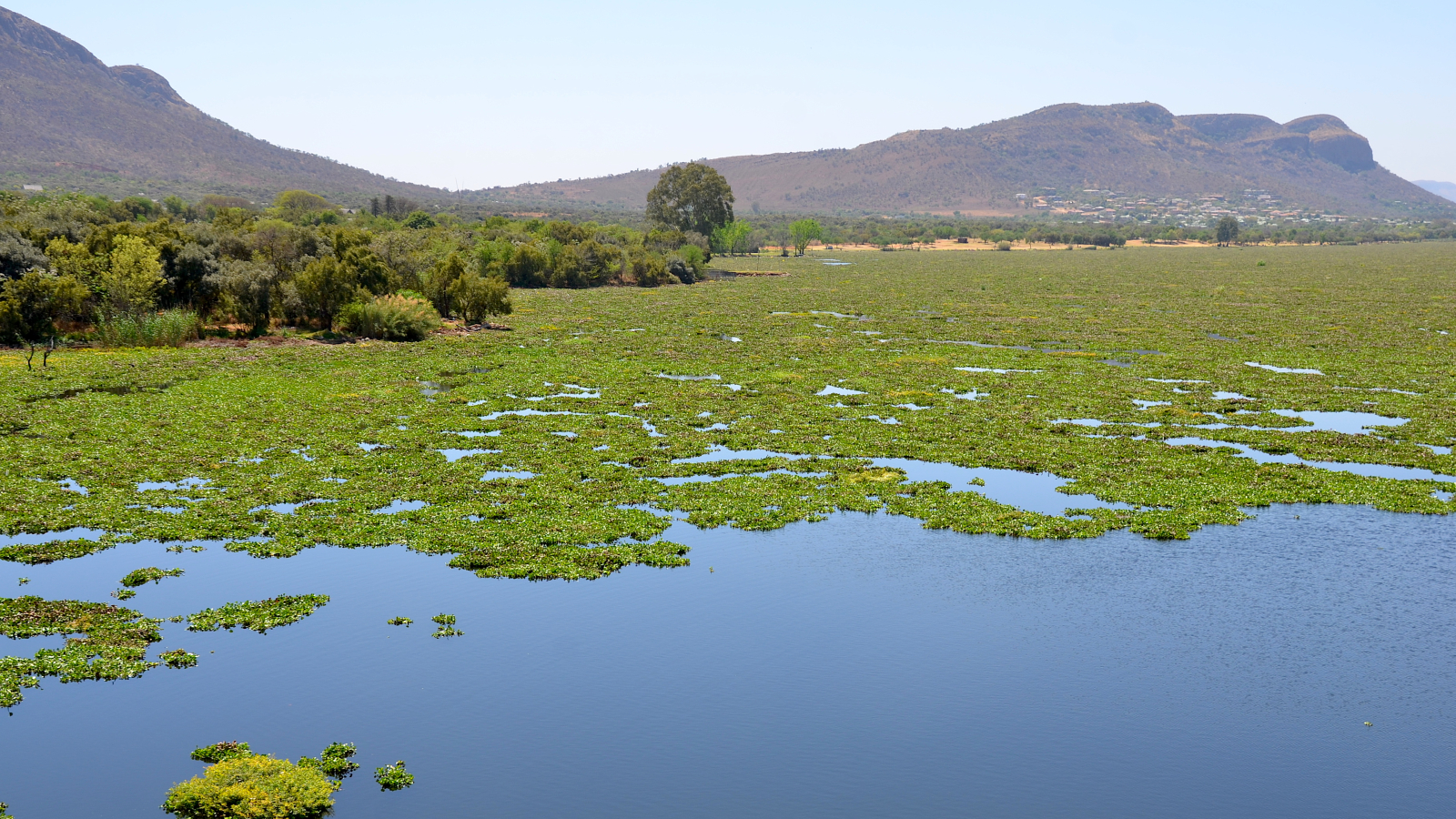
In April 2023, a lack of oxygen in part of the reservoir was linked to a mass die-off of fish, including hundreds of large carp, according to a government report. And in November 2025, another bloom likely triggered a similar die-off and left fish "gasping for air" at the reservoir's surface, according to South Africa-based News 24. These blooms eventually disappear, but the next one is rarely far behind.
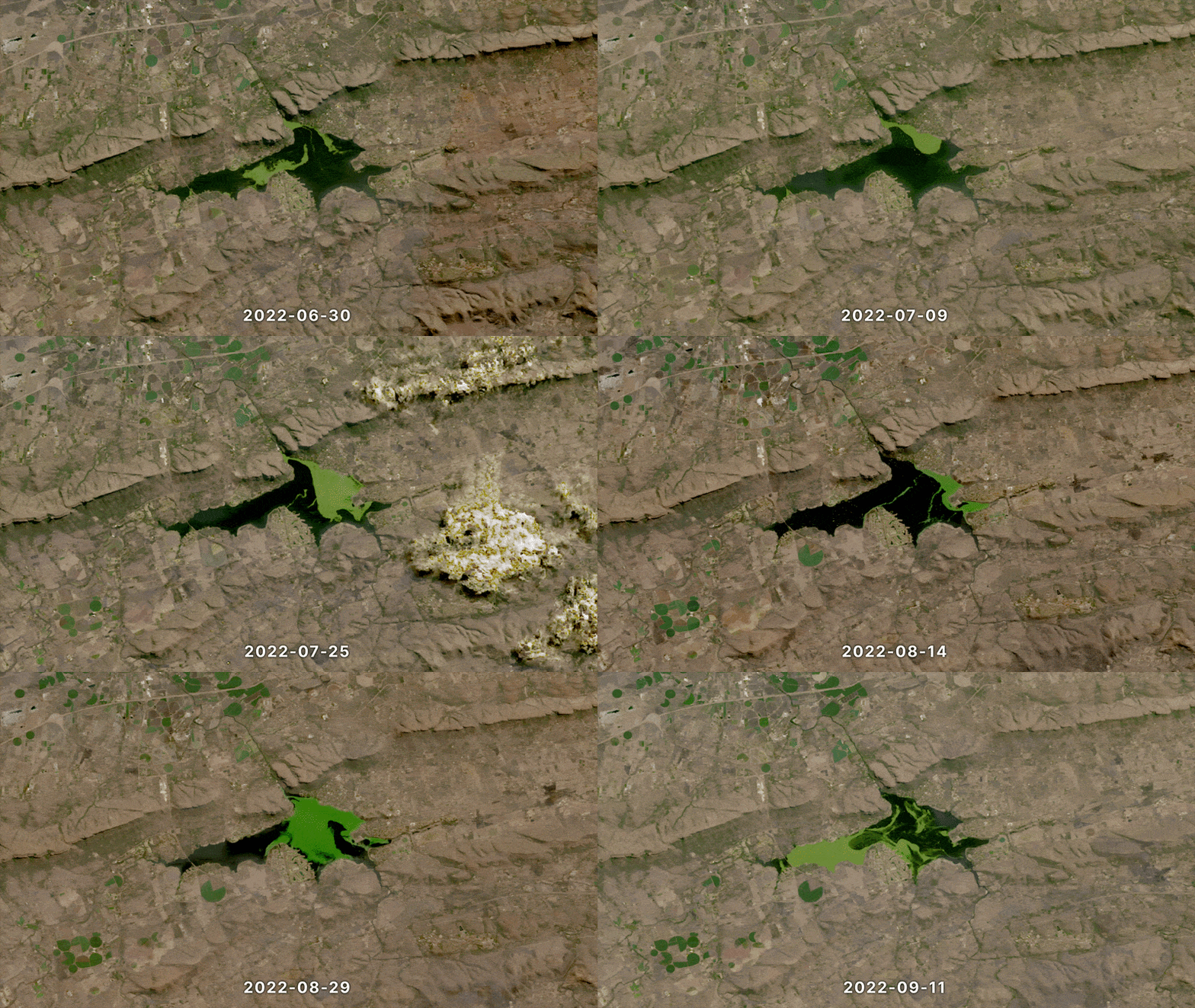
The Hartbeespoort reservoir has experienced near-continuous hypereutrophication since the 1970s, excluding a brief period in the 1990s when a successful bioremediation program was introduced but then was quickly scrapped due to high costs. As a result, algae have been blooming constantly, spreading and dying across the reservoir's surface for decades.
You can see this in the animation below, which was made from aerial images collected by the Landsat 8, Landsat 9 and Sentinel satellites between June 2022 and July 2023.
A 2023 study that analyzed data from the previous four decades found that the main culprit was the Crocodile River, which has become extremely polluted with runoff from farms and golf courses that use nutrient-rich fertilizers.
In addition to threatening wildlife, the toxins in the water have been known to cause rashes on water-sports enthusiasts and sicken dogs.
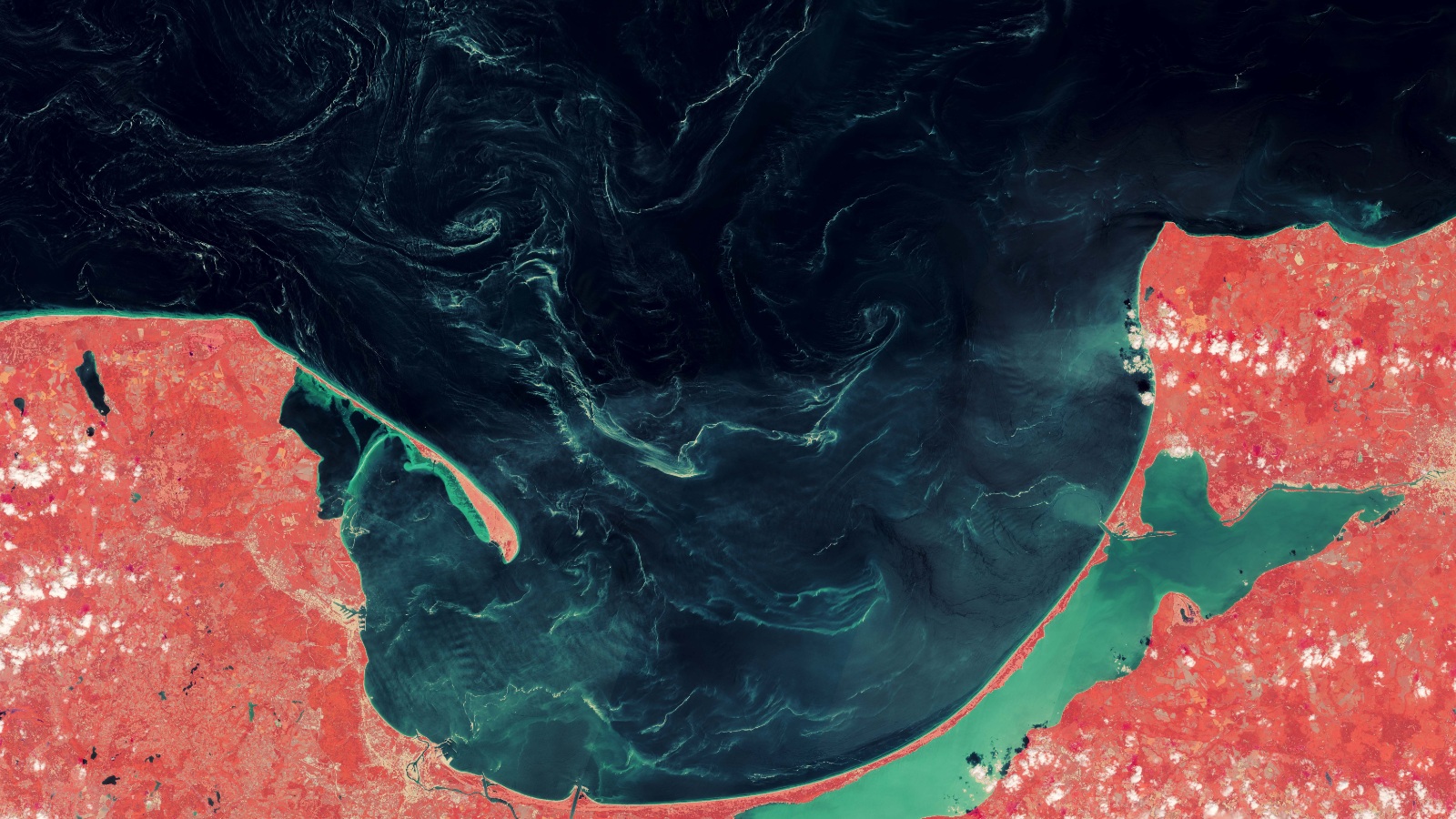 Mystery swirls in the Baltic Sea
A 2018 satellite photo shows an unknown substance swirling across the Gulf of Gdańsk in Poland. Scientists were shocked to discover what it really was.
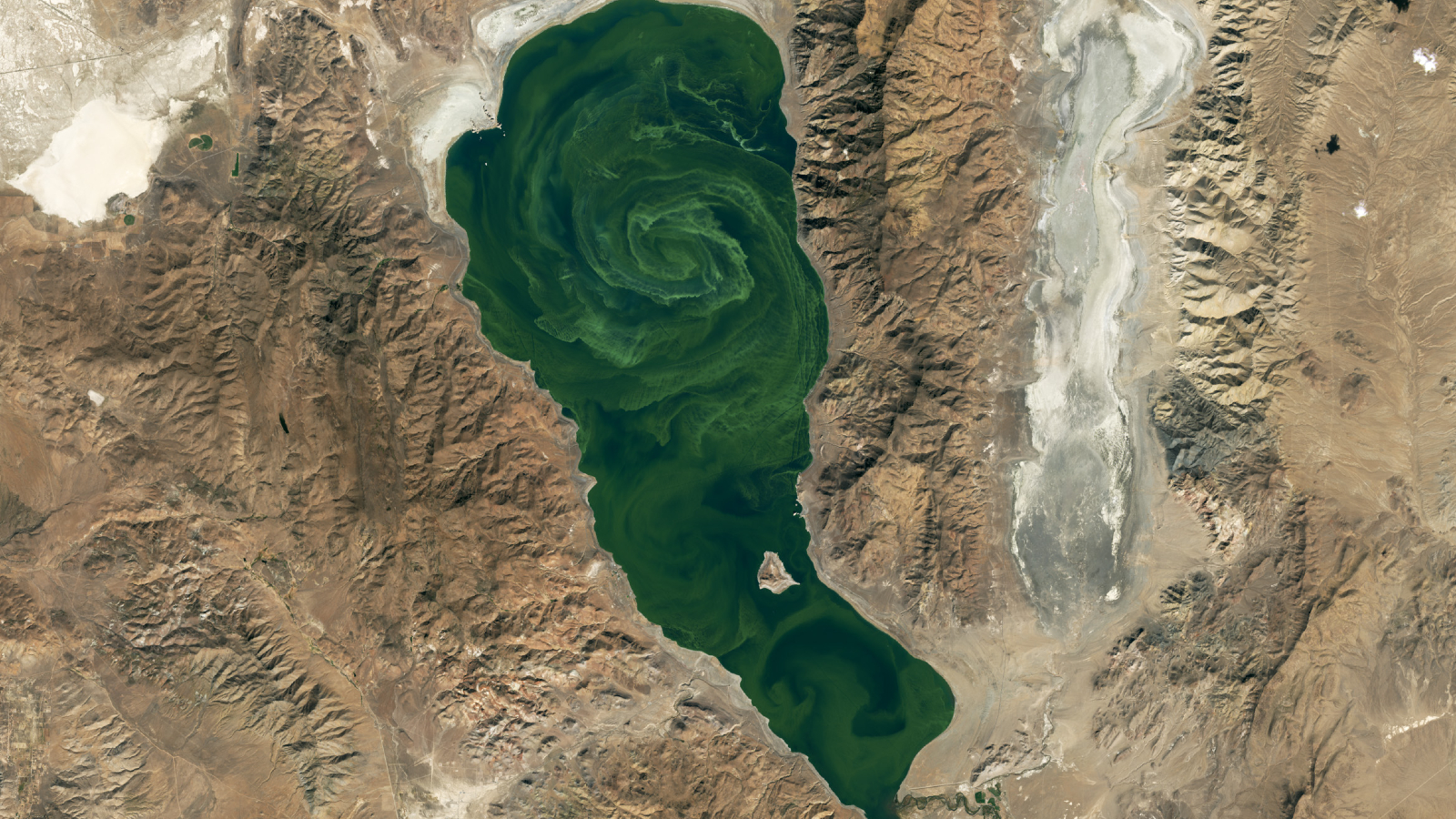 Toxic bloom in Nevada
A 2024 satellite photo shows an unusually active bloom of toxic cyanobacteria swirling in the water of Nevada's Pyramid Lake. Research suggests that the algae has been blooming there for at least 9,000 years.
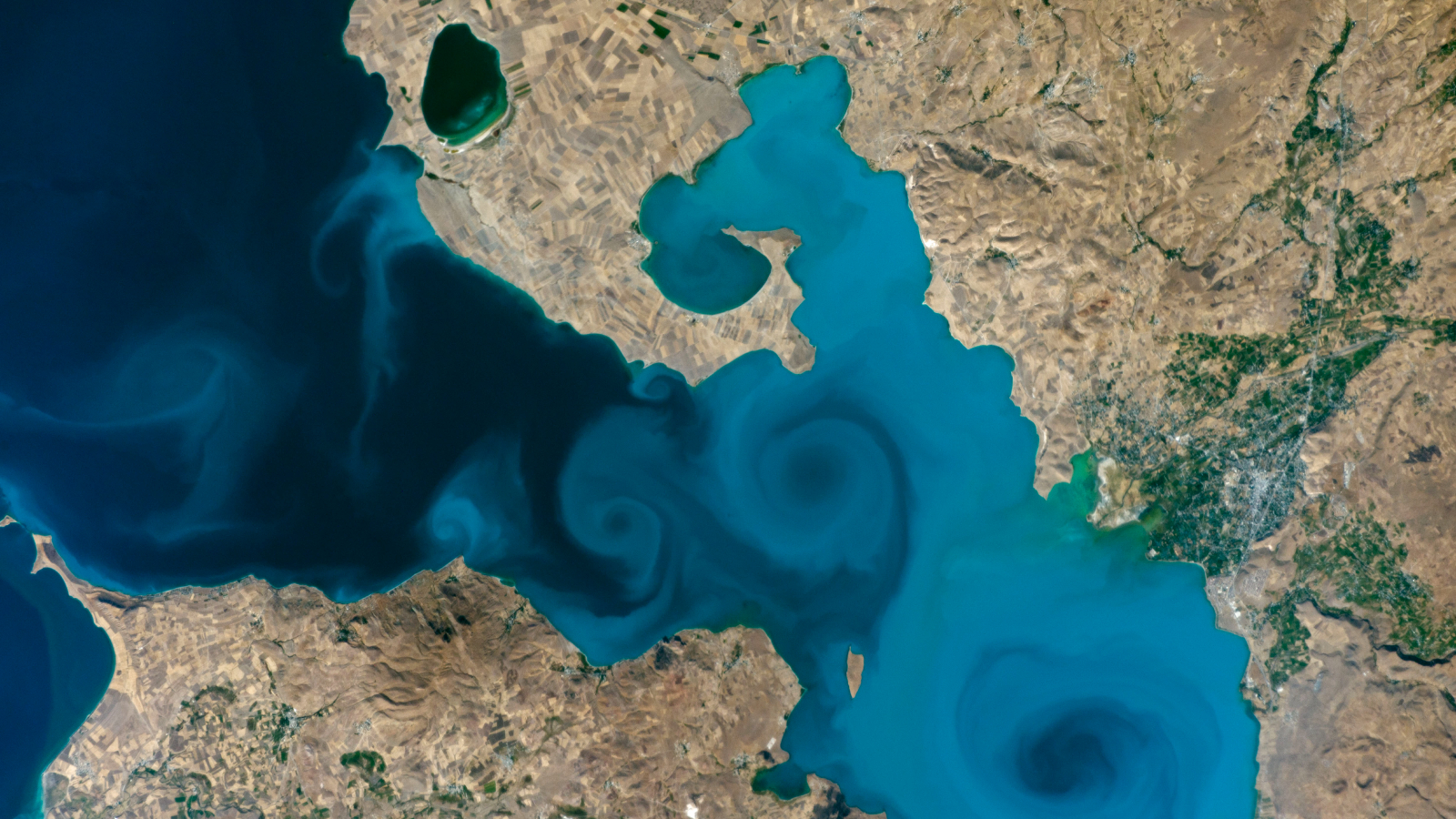 Milky spirals in Turkish lake
A 2016 astronaut photo shows surprising plumes of milky material swirling in the waters of Turkey's Lake Van — the largest alkaline lake on Earth.
TOPICS Harry BakerSenior Staff Writer
Harry is a U.K.-based senior staff writer at Live Science. He studied marine biology at the University of Exeter before training to become a journalist. He covers a wide range of topics including space exploration, planetary science, space weather, climate change, animal behavior and paleontology. His recent work on the solar maximum won "best space submission" at the 2024 Aerospace Media Awards and was shortlisted in the "top scoop" category at the NCTJ Awards for Excellence in 2023. He also writes Live Science's weekly Earth from space series.
View MoreYou must confirm your public display name before commenting
Please logout and then login again, you will then be prompted to enter your display name.
Logout LATEST ARTICLES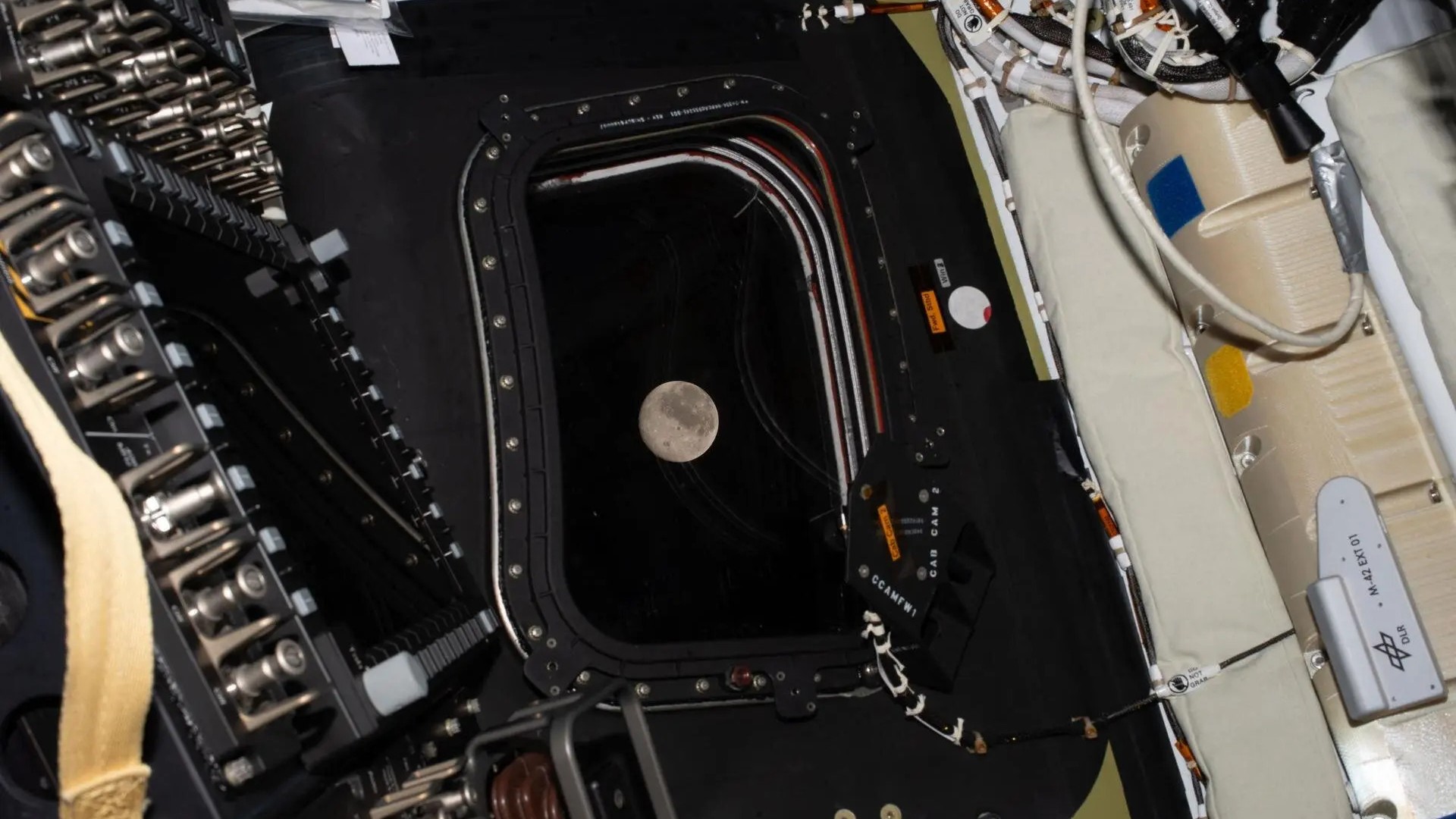 1The Artemis II astronauts have just flown farther from Earth than any humans in history
- 2AI-written code can beat humans at biomedical analysis, some studies find. What does that mean for the field?
- 3Artemis II moon flyby begins: How to watch and what to know
- 4'A cure on the horizon': Are we finally close to ending type 1 diabetes?
- 5'They could spend 4 or 5 hours per day underwater': How humans adapted to the most challenging environments