 Cubs close to extension with Pete Crow-Armstrong: How the All-Star outfielder found his power
 Crow-Armstrong had a tale of two seasons in 2025, but the young outfielder has plenty of raw talent
 By Mike Axisa Mar 24, 2026 at 10:17 am ET • 6 min read
  Getty Images
 Five years ago, the Chicago Cubs stole Pete Crow-Armstrong away from the Mets in a three-player trade that, most notably, sent Javier Báez to New York for two months before free agency. The deal was part of Chicago's deadline sell-off that saw 2016 World Series champions Anthony Rizzo and Kris Bryant traded away in addition to Báez. A difficult time on the North Side, it was.
Now the Cubs are making sure Crow-Armstrong is part of their long-term future. The Cubs and Crow-Armstrong are nearing a long-term contract extension, reports ESPN. Financial terms are unknown, though the deal is expected to keep him in Chicago beyond the typical six years of team control. Crow-Armstrong was scheduled to hit free agency after the 2030 season.
Here are the largest contracts given to players five years away from free agency:
- Jackson Merrill: 9 years and $135 million (signed April 2025)
- Jacob Wilson: 7 years and $70 million (signed January 2026)
- Ke'Bryan Hayes: 8 years and $70 million (signed April 2022)
- Lawrence Butler: 7 years and $65.5 million (signed March 2025)
- Ezequiel Tovar: 7 years and $63.5 million (signed March 2024)
Crow-Armstrong, 24 on Wednesday, played his first full MLB season in 2025 and joined Sammy Sosa as the only 30-30 players in Cubs history while playing Gold Glove-winning defense in center field. He slashed .247/.287/.481 with 31 homers and 35 steals, and ranked fourth among all players with 21 outs above average defensively. It added up to a 5.4 WAR season and MVP votes.
Now that he's made the leap from exciting prospect to All-Star, the Cubs locked up Crow-Armstrong and made him the centerpiece of their roster moving forward. How did he get here? What does he have to do to get better? And what's next for the Cubs? Let's dig into all that now.
How PCA unlocked his power
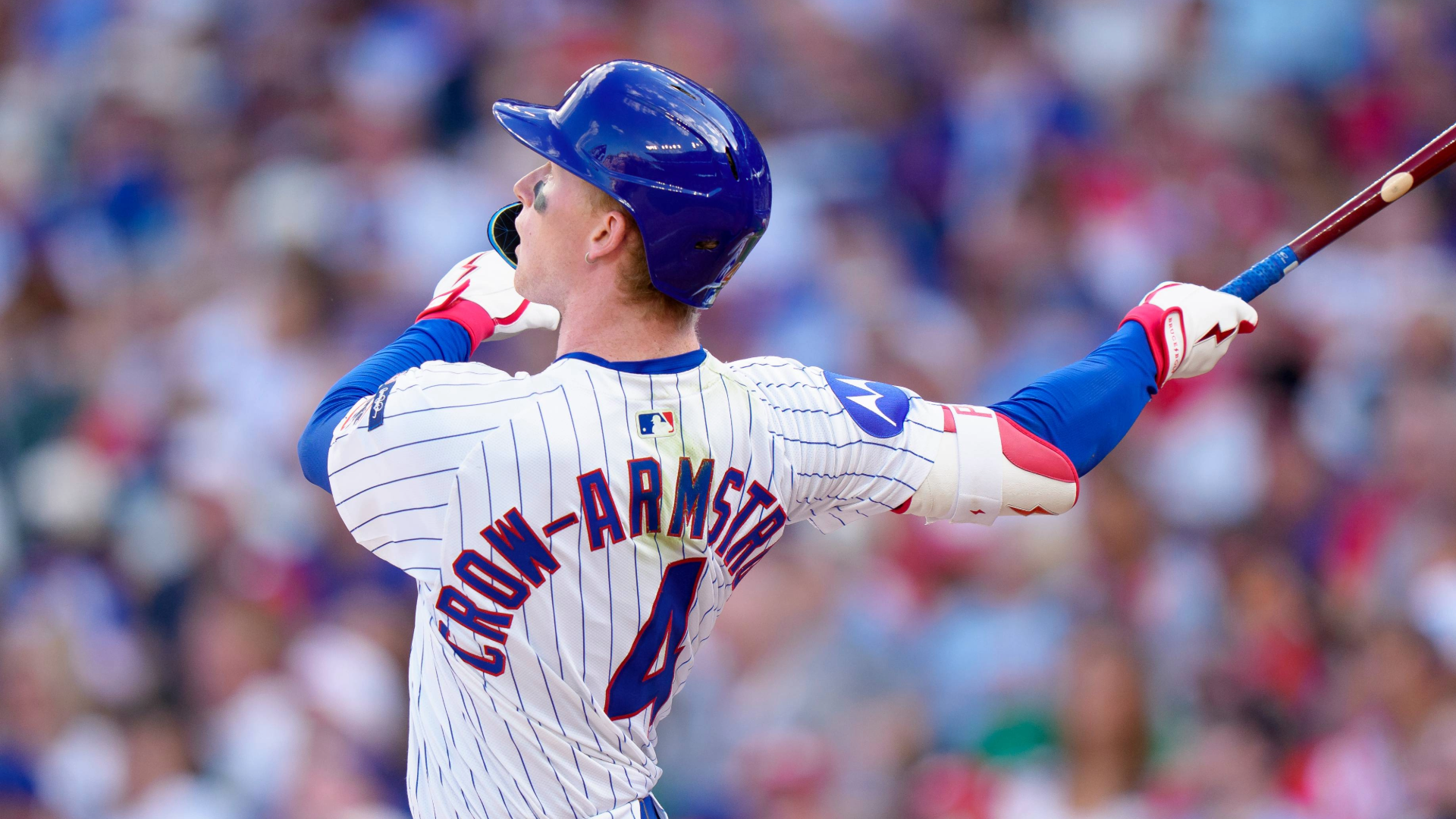
The Gold Glove defense and stolen bases were expected. The power is what took Crow-Armstrong from good role player and No. 9 hitter to legitimate star. He'd never hit more than 20 home runs in a season in the minors before clubbing 31 in the majors last year. He showed off that power with a two-homer game in the World Baseball Classic earlier this month:
To get into his power, Crow-Armstrong adjusted his setup at the plate last season, specifically widening his feet and getting a little deeper into the box. His feet were 28.1 inches apart in 2024, per Statcast. In 2025, it was 33.7 inches, putting him in the top 25% of the league. That helped him move his intercept point (i.e. where the bat makes contact with the ball) up two inches, or about 33%.
OK, great, so what does that mean? In English, Crow-Armstrong is now catching the ball further out in front of the plate, to use an old baseball adage. That has allowed him to pull the ball in the air more -- his pulled fly ball rate went from 19.3% in 2024 (a tick higher than the 16.7% league average) all the way up to 30.2% in 2025. Here are the 2025 pulled fly ball rate leaders:
- Isaac Paredes: 38.5%
- Cal Raleigh: 38.4%
- Spencer Torkelson: 31.8%
- Max Muncy: 31.5%
- Kyle Schwarber: 31.1%
- José Ramírez: 30.9%
- Pete Crow-Armstrong: 30.9%
That's a pretty good list of names there. I know pulling the ball has a bit of a stigma because of the (now banned) infield shift, but it's the best way to hit for power. Last year, balls pulled in the air produced a .612 batting average and 1.329 slugging percentage. Crow-Armstrong began pulling the ball in the air at an elite rate last season and the home runs followed.
Gold Glove defense in center field would have gotten Crow-Armstrong paid no matter what, but without last year's power spike, his earning potential would have been capped. Defense pays only so much. Crow-Armstrong tweaked his setup at the plate, connected with the ball a split second sooner, and became a 31-homer player. That's what earned him this contract extension.
What he needs to do next
The power is there, the stolen bases are there, and the defense is there. The next hurdle for Crow-Armstrong is fine-tuning his plate discipline and being more selective. The man likes to swing, so much so that it's a detriment. Last season, he swung at 41.4% of pitches out of the zone, the fifth-highest rate in baseball and well above the 28.0% league average.
Crow-Armstrong's 2025 was a tale of two seasons. He hit .265/.302/.544 in the first half and only .216/.262/.372 in the second half. It's easy to think that, well, pitchers figured him out, and fed him pitches out of the zone and got him to chase. That's not really what happened though. Crow-Armstrong had a lower chase rate in the second half (37.6%) than he did in the first half (43.7%).
The second-half slump was the product of a mechanical issue, not a chase issue. He was getting too wide with his stance and too long with his stride, assistant hitting coach John Mallee told The Athletic last month. "He was accelerating in his stride, covering too much ground, which kind of made him a little long, and he was mis-hitting balls," Mallee said.
Getting the swing right is a constant battle not unique to Crow-Armstrong. Every hitter goes through it. For him to get to the next level though, Crow-Armstrong has to rein in that chase at least a little bit. It is really, really hard to be a productive hitter with a 40% chase rate. That much chase is something pitchers can exploit, leading to a lot of swings and misses and weak contact.
Realistically, Crow-Armstrong will never be a plate discipline savant with a near-20% chase rate like Cubs teammates Ian Happ and Seiya Suzuki. A realistic goal is pulling that chase rate down into the 35% range. That's where productive hitters like Bo Bichette, Bryce Harper, and Julio Rodríguez reside. You can chase 35% of the time and be a perennial All-Star. At 40%, it's much harder.
The goal is not drawing more walks (though the Cubs would certainly take them). Walks are a byproduct of plate discipline, not the goal. The point of plate discipline is swinging at better pitches and giving yourself the best chance to do damage. That's what's left for Crow-Armstrong to master. If he controls the zone better, it just might turn him into the game's best center fielder.
More extensions ahead for Cubs?
The Cubs have a history of extending their best players. Crow-Armstrong joins Happ and Nico Hoerner as players who broke into the big leagues with the Cubs and signed extensions that delayed free agency. I would guess right-hander Cade Horton is next on the team's extension to-do list. Possibly first baseman Michael Busch and closer Daniel Palencia as well.
The upcoming offseason is an important one for the Cubbies because they have a lot -- A LOT -- of core players coming up on free agency. The list includes Happ, Hoerner, Suzuki, Shota Imanaga, and Jameson Taillon. My guess, and I emphasize this is only a guess, is Hoerner is the top priority among that group because his elite contact/elite defense/elite makeup skill set is so valuable.
Convincing a young player like Crow-Armstrong to take guaranteed millions years before free agency is one thing. Convincing a player who's already made some money in his career to pass up free agency when he's just a few months short of reaching the open market is another. I'm sure the Cubs will try to extend Hoerner and Suzuki at least. Whether they get it done is another matter.
Join the Conversation comments