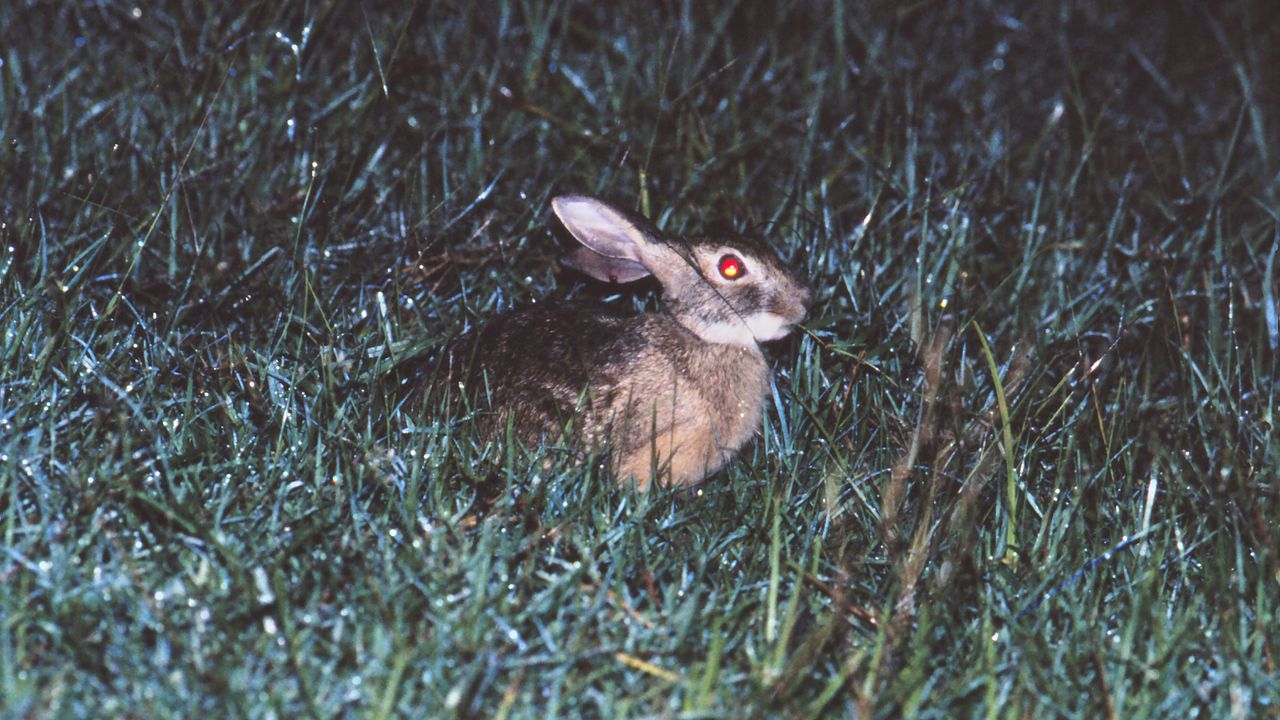
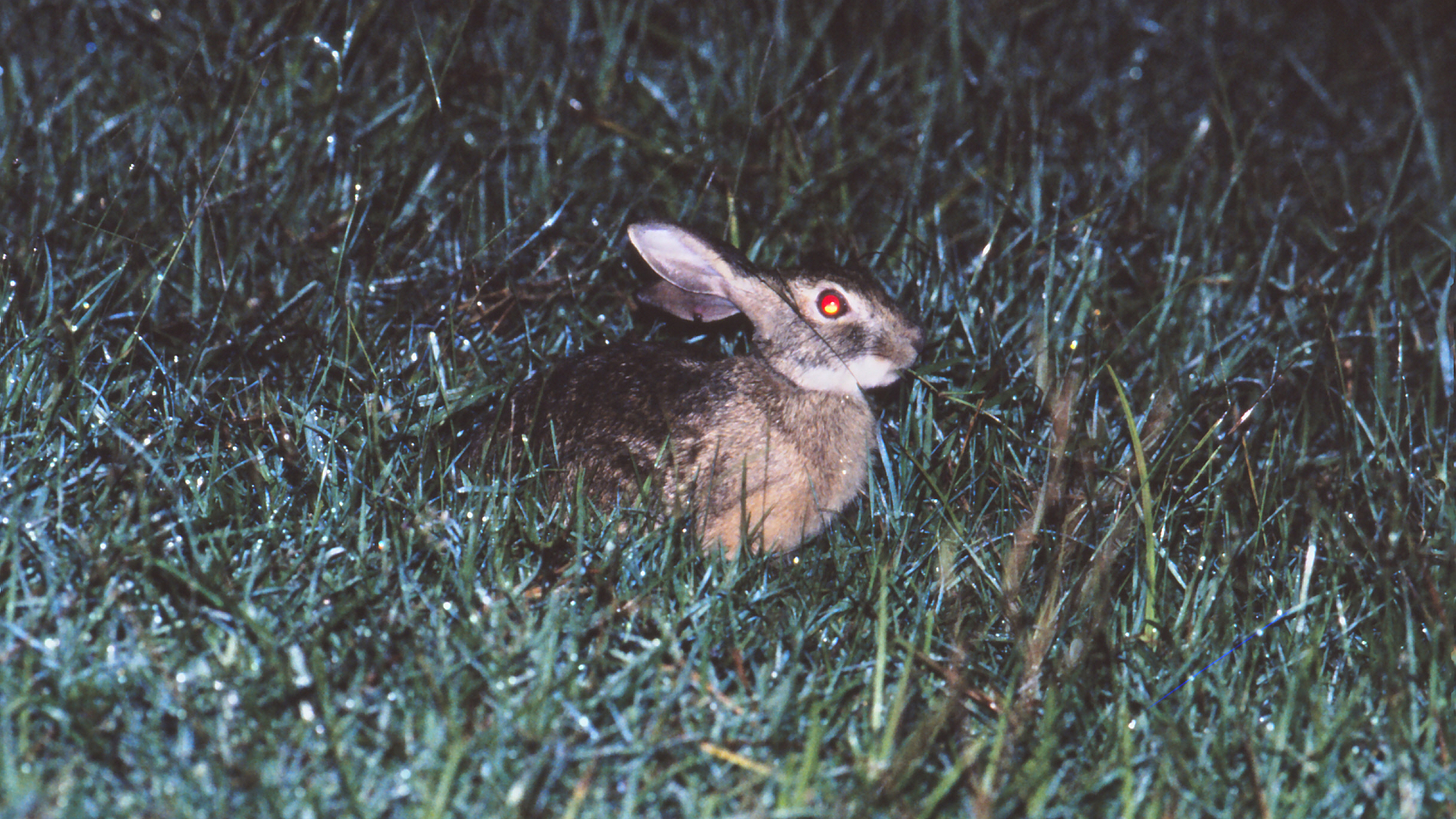
 A Hainan hare spotted in Datian National Nature Reserve on the Chinese island of Hainan in 2001. (Image credit: Kadoorie Farm and Botanic Garden) Share this article 0 Join the conversation Follow us Add us as a preferred source on Google Newsletter Sign up for the Live Science daily newsletter now
 Get the world’s most fascinating discoveries delivered straight to your inbox.
Become a Member in Seconds
Unlock instant access to exclusive member features.
Contact me with news and offers from other Future brands Receive email from us on behalf of our trusted partners or sponsors By submitting your information you agree to the Terms & Conditions and Privacy Policy and are aged 16 or over.You are now subscribed
Your newsletter sign-up was successful
Want to add more newsletters?
Join the club
Get full access to premium articles, exclusive features and a growing list of member rewards.
Explore An account already exists for this email address, please log in. Subscribe to our newsletterFor the first time in four decades, scientists have announced a confirmed sighting of a critically endangered hare in part of its native range, after spotting its completely flattened carcass on a roadside.
Researchers were traveling for fieldwork on Hainan, an island in southern China, when one member spotted the roadkill by chance. Despite the carcass's severely damaged condition, they immediately recognized it as the little-known Hainan hare (Lepus hainanus). The species, which is found only on Hainan, is among the world's most understudied lagomorphs, the mammal group that includes rabbits, hares and pikas.
Article continues below The hare was killed by a vehicle and was found along Pulongxian Highway in northeast Hainan on Dec. 25, 2024. (Image credit: Kadoorie Farm and Botanic Garden)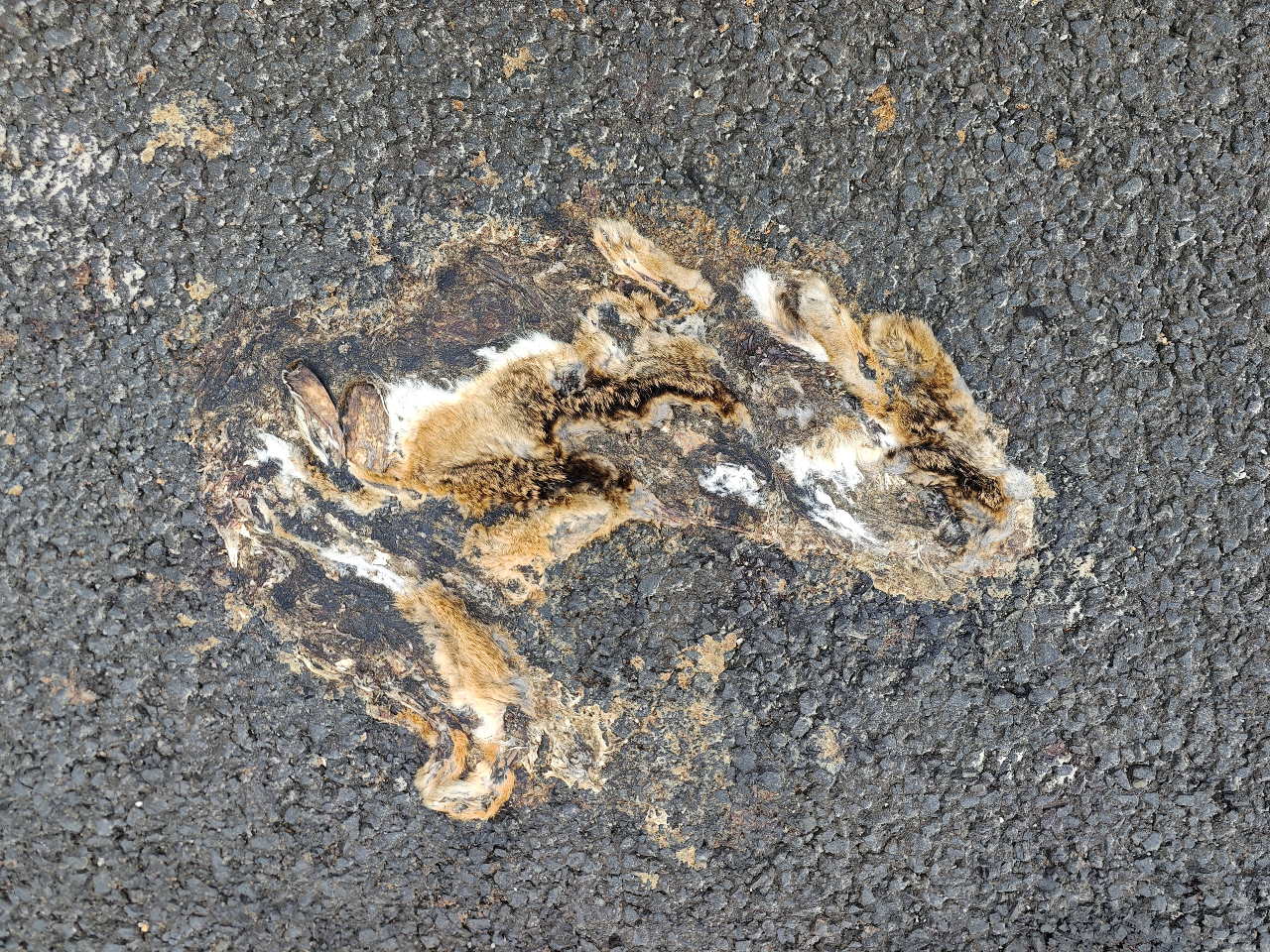
Although the hare is known to survive in some areas of western Hainan, particularly the Datian National Nature Reserve, the roadkill incident represents the first confirmed documentation of this species from northeastern Hainan since 1986, suggesting that an overlooked remnant population still exists in the region, according to the study.
"It provides hope for this nationally critically endangered species as its current range is wider than previously known," study first author Michael Hui, a conservation officer with the Hong Kong-based conservation group Kadoorie Farm and Botanic Garden (KFBG), told Live Science via email. "However, our article also provided updated information regarding the species' stronghold in the western region, which is not as secure as traditionally assumed."
Historically, L. hainanus is thought to have been widespread and abundant across most of Hainan's coastal lowlands, primarily in the northwest, west and south, according to the study.
In the 1950s, the species' population is thought to have been around 10,000 individuals. But a particularly sharp decline was observed in the 1970s and '80s, largely due to habitat loss and excessive hunting for their meat and fur.
Sign up for the Live Science daily newsletter nowContact me with news and offers from other Future brandsReceive email from us on behalf of our trusted partners or sponsorsA 2008 report estimated that there were likely no more than 250 to 500 individuals remaining on the island. Concerns over its status recently led to the Hainan hare being designated as a "critically endangered" species on China's Red List.
Outside Datian National Nature Reserve, the species is rarely reported, and even inside the reserve, everyday sightings are generally infrequent, Hui said. A recent "rapid survey" covering most of the hare's historical range in western and northwestern Hainan documented only one live individual and noted that the species was disappearing unnoticed. But a lack of systematic, island-wide survey data from the past few years means the total population is unknown.
RELATED STORIES—Last of its kind dodo relative spotted in a remote Samoan rainforest
—Critically endangered right whales are shrinking, with drastic consequences for their population
L. hainanus is elusive, in part because it's nocturnal and most of its preferred lowland habitats lie outside protected areas, which have traditionally received little research attention, Hui said.
"We believe that every new record, even single incidental records, can help inform future surveys and proposed conservation actions," the authors wrote in the study.
Much of the hare's habitats are declining because of agricultural expansion and urban development. Therefore, an island-wide survey to understand its current status, distribution and threats is crucial for making informed conservation decisions, the study authors said.
Article SourcesHui, M. K. Y., Yeung, H. Y., Rao, X., Guo, N., Yang, J., & Li, F. (2025). Unexpected recent discovery of the endangered Hainan hare Lepus hainanus from northeastern Hainan Island, China. Mammalia, 90(1), 23–26. https://doi.org/10.1515/mammalia-2025-0095
TOPICS Aristos GeorgiouLive Science Contributor
Aristos is a freelance science reporter who has previously worked for Newsweek, IBTimes UK and The World Weekly. He is particularly focused on archaeology and paleontology, although he has covered a wide variety of topics ranging from astronomy and mental health, to geology and the natural world. He holds a joint bachelor's degree in English and history from the University of Nottingham, and a master's from City St George's, University of London.
View MoreYou must confirm your public display name before commenting
Please logout and then login again, you will then be prompted to enter your display name.
Logout LATEST ARTICLES 1Scientists are racing to save Australia's 'zombie tree' from a fast-spreading fungal disease
- 2Live Science Today: NASA announces $20 billion moonbase as unprecedented wildfires spread
- 3Explore the natural world from the comfort of your own home with this Paramount+ streaming deal
- 4A cross tattoo on a man's neck disappeared — killing his skin as it did so
- 5Mars is hiding a secret clutch of gemstone-like crystals, including rubies and possibly sapphires