 Image source, Getty ImagesImage caption,
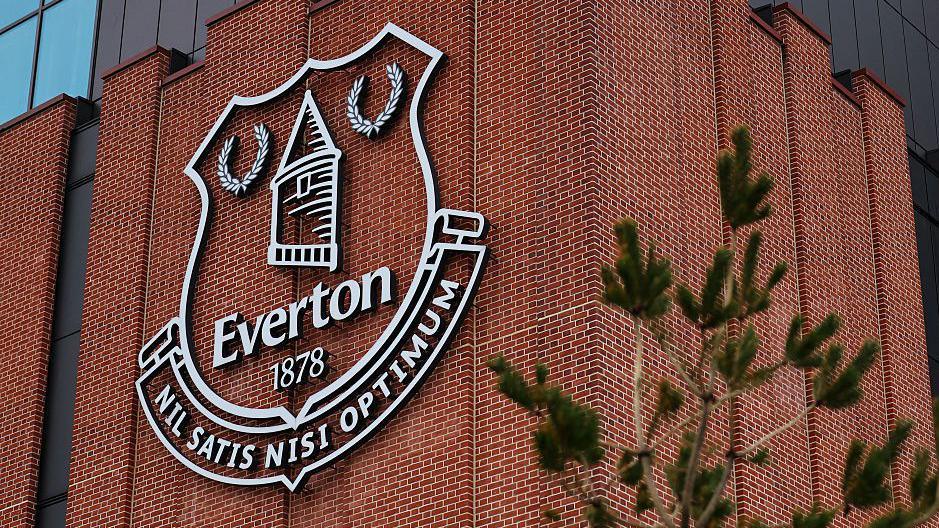
 Everton insist the club have taken the necessary steps to ensure both they and Roma could play in the same European competition
ByDale JohnsonFootball issues correspondent- Published17 minutes ago
- 13 Comments
As the battle for places in Europe hots up in the Premier League, the race to shuffle papers to satisfy Uefa's bureaucrats has been just as intense.
This is because European football's governing body has strict multi-club ownership (MCO) rules.
Those rules could cause a team to be demoted from one competition to another, like Crystal Palace were from the Europa League to the Conference League last season, or miss out on Europe altogether.
Half of the Premier League clubs are now in some form of multi-club arrangement.
Everton, Chelsea and Nottingham Forest all had their lawyers scrambling for a solution before Uefa's 1 March deadline.
Brighton, meanwhile, will hope the action they took three years ago still meets requirements.
Clubs have been locked in talks with Uefa to make sure they have got their house in order.
But have they done enough?
What are Uefa's multi-club ownership rules?
Uefa says sporting integrity is of "fundamental importance" and that it must be "undisputable", and that two teams who are very closely linked should not play in the same competition.
This includes, but is not limited to, the total shareholding and voting rights - 30% generally being the trigger.
Just as important is the test of decisive influence - directors or staff members who are involved in key decisions.
What does this mean in practice?
If Uefa's Club Financial Control Body (CFCB) rules that there is a conflict, then one club must be removed.
Priority is given to the team in the higher-ranked competition - this could apply if one team is in, say, Champions League qualifying and could drop into the Europa League.
Then it is domestic league position.
Finally, Uefa coefficient - which the Premier League sits top of.
After years of allowing clubs to register solutions after they had qualified, last season Uefa brought forward its compliance date to 1 March - and it caught out three teams.
Palace, Irish club Drogheda United and Slovak outfit FC DAC 1904 became the first to face punishment under the MCO regulations.
All three took their cases to the Court of Arbitration for Sport (Cas), and lost.
In December, Uefa sent a fresh circular underlining that 1 March is still "a strict deadline for compliance", citing the rulings made by Cas.
This led to the flurry of activity across several clubs at the end of February.
Everton and Roma
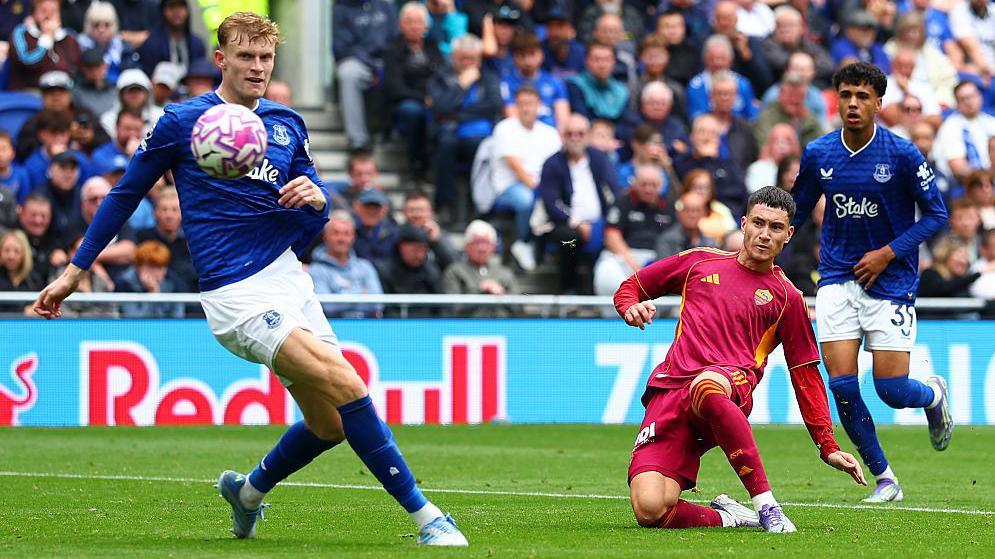 Image source, Getty ImagesImage caption,
 Everton and Roma played each other in a pre-season friendly at Hill Dickinson Stadium last summer
The link between Everton and Roma is not too well known, but it could yet be the most compelling story.
The Toffees are 11th in the Premier League, but only three points off sixth. As it stands, sixth earns Europa League football.
In Serie A, Roma are level on points with fifth-placed Como, which would also come with a spot in the Europa League.
The two clubs are owned by the Friedkin Group through subsidiary entities.
Everton are controlled by Roundhouse Capital Holdings Limited, and Roma under Romulus and Remus Investments.
The two people with significant control in Roundhouse Capital Holdings are Analaura Moreira-Dunkel and Marcus Watts - high-ranking officials in the Friedkin Group.
They are also on the Everton board and were associated with Roma in the years immediately after the takeover but no longer have an identifiable role at the Italian club.
Everton's issue could be that US billionaire Dan Friedkin is both their chairman and president of Roma.
Friedkin is also the 'person of significant control' at Pursuit Sports UK, an umbrella group for sports operations.
Uefa's definition of "control", "decisive influence" and "shared decision-making" is broad.
Everton will have to prove there is no risk or appearance of involvement by Friedkin in both clubs.
Palace argued that John Textor had no such say at Selhurst Park, but Cas agreed with Uefa that he had a role in several transfers and appointments.
Everton are confident that they have a solution, but are not saying what that is.
Whether that is a case of playing their cards close to their chest or not, only time will tell.
The club have ruled out a blind trust, the route Nottingham Forest appear to have chosen.
If the CFCB does need to make a decision, the ownership structure and Friedkin's presence on both boards would be looked at.
Chelsea and Strasbourg
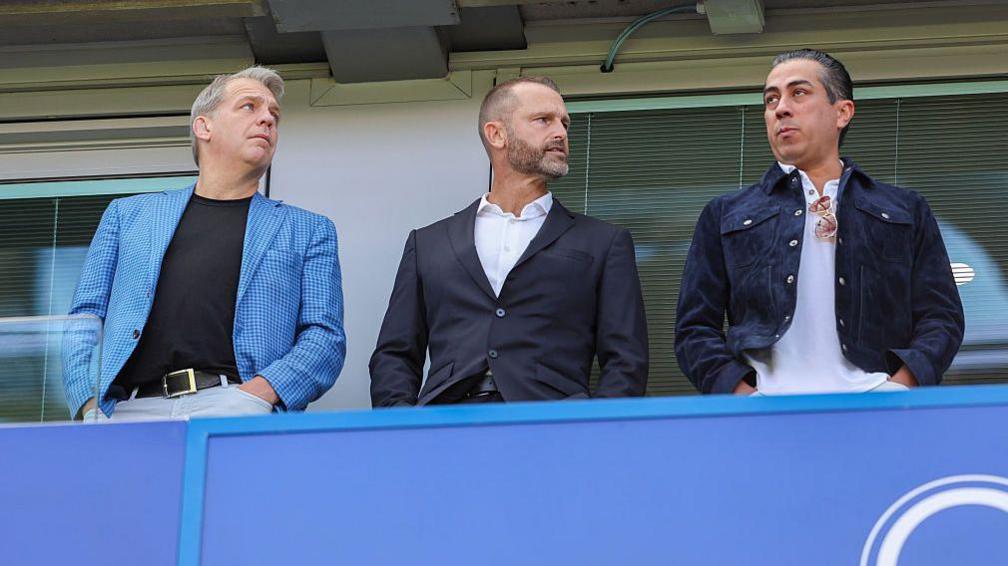 Image source, Getty ImagesImage caption,
 Todd Boehly, Paul Winstanley and Behdad Eghbali have been removed as directors of companies linked to Chelsea and Strasbourg
To many fans, Chelsea and Strasbourg may be the most obvious example of two clubs operating as one entity.
They are both under the BlueCo umbrella and if they do end up in the same competition, it will be a serious tests of Uefa's multi-club ownership policy.
Manager Liam Rosenior left the French outfit for Stamford Bridge in December, while 11 players have moved between the two clubs this season.
BlueCo have made changes - but will it be enough?
On 17 February, four members of the board of BlueCo Alsace, the French club's holding company, stepped down.
They were Paul Winstanley and Laurence Stewart, Chelsea's joint-sporting directors. James Pade and Jeffrey Wilbur, noted as Chelsea directors on the Premier League's public register, were also removed.
At UK Companies House, co-owners Todd Boehly and Behdad Eghbali stood down as directors of BlueCo Data Limited on 28 February. They are still on the west London club's board.
If the two clubs are permitted into the same competition, and following past precedent, it is likely they would not be allowed to trade players until January 2028.
At one stage, it looked as if Chelsea would be in the Champions League, but their form has nosedived to such an extent that they might not make Europe via the league at all.
Strasbourg are eighth in Ligue 1 and have a small chance of qualifying domestically - but if they win the Conference League, they will earn a place in the Europa League.
Uefa says that a European titleholder must get European football, but there is no clause to cover this in the MCO regulations.
Chelsea are in the FA Cup final - and if they win it, that would also result in Europa League football.
There could be a decision for Uefa to make.
Nottingham Forest and Olympiakos
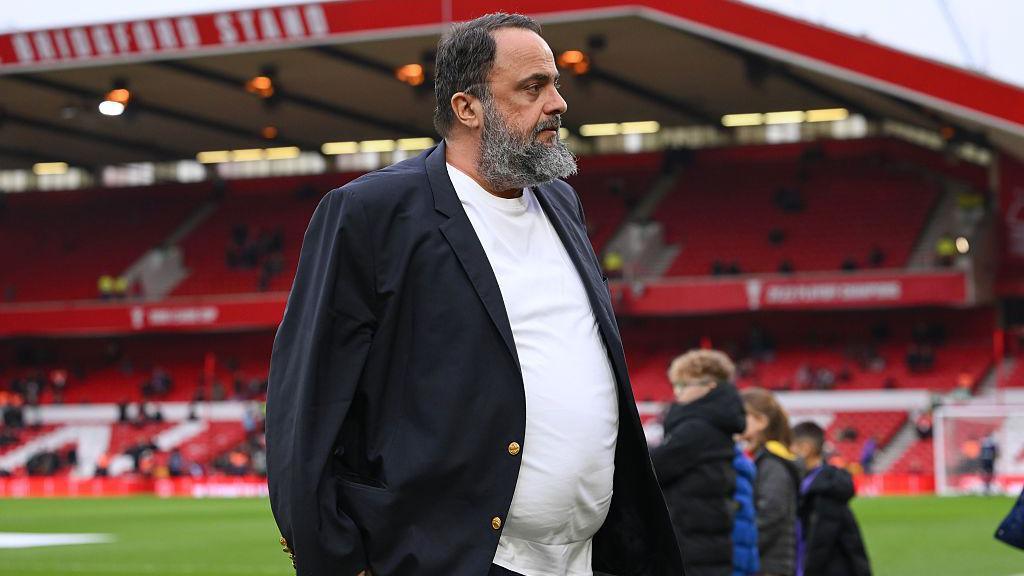 Image source, Getty ImagesImage caption,
 Evangelos Marinakis is no longer registered as a person of significant control at Nottingham Forest
Last year, Nottingham Forest owner Evangelos Marinakis placed the club into a blind trust in case they qualified for the Champions League.
That could have presented a conflict with his other club, Olympiakos.
With Forest in the semi-finals of the Europa League, once again they have a chance of being in the Champions League. And Olympiakos look like being in it too.
In a blind trust, relevant parties transfer their shares to independent trustees, whereby all the decision-making of the club will rest solely under the control of the third party.
The club are controlled through a company called NF Football Investments.
Until 28 February, Marinakis was the only person with significant control.
He was removed and it was passed to another company, Pittville Four Limited, controlled by Janet Lucy Gibson, Henry Peter Hickman and Eleanor Catherine Walsh.
Those three independent trustees were also added to the football club's board, replacing Mighael Dugher, Simon Forster and Jonathan Owen.
Forest's problem could be that the new additions had to pass the Premier League's owners and directors test.
It was not until 17 April that Companies House was updated.
The Premier League's register of directors, last updated on 2 April, still lists Marinakis, Dugher, Forster and Owen.
Will the lodging of the blind trust on 28 February be enough? Or would Uefa consider 17 April to be date the club were compliant?
Forest are adamant that control was officially relinquished by Marinakis on 28 February and they will have no issue with Uefa.
Two years ago, the CFCB accepted a blind trust to admit Manchester City and Girona to the Champions League, and Manchester United and Nice to the Europa League, satisfied that multi-cub ownership issues had been resolved.
However, at the time it stated that it "will not be bound by this alternative in subsequent seasons".
Until the CFCB makes another ruling on a blind trust, there is no absolute certainty it would be accepted.
Brighton, Hearts and Union Saint-Gilloise
Tony Bloom has expanded his football interests after making such a success of Brighton.
Bloom now holds shares in Scottish Premiership leaders Hearts and Belgian club Union Saint-Gilloise.
All three could qualify for the same European competition this season.
Bloom had to reduce his controlling stake in Union Saint-Gilloise below 30% before the 2023-24 Europa League season, as Brighton had also qualified.
When he bought into Hearts last year, Bloom clearly had this conflict in mind by purchasing 29% of the Edinburgh club.
Bloom will hope his house is already in order.
Leeds and Rangers
Leeds' hopes of playing in Europe were ended by Sunday's FA Cup semi-final defeat against Chelsea.
But steps had been taken to resolve a conflict with Rangers if they had lifted the trophy and qualified for the Europa League.
Leeds are 100% owned by 49ers Enterprises, while a consortium including 49ers Enterprises owns 51% of Rangers.
Paraag Marathe is on the board of Leeds and exercises 49ers Enterprises' voting rights. But he was also the vice-chairman of Rangers.
On 27 February, Marathe stepped down from his position at Ibrox. As did Gene Schneur, who was on the board of both clubs.
Leeds say they believe this would have cleared any issue with the MCO rules.
Related topics
Get news, insight and fan views on your Premier League team
- Published12 March
All your football quizzes in one place