How teams from outside the Power Four conferences could cause college football madness
 By Chris Hummer Mar 24, 2026 at 1:02 pm ET • 7 min read
  Imagn Images
 The Sweet 16 in the NCAA Tournament starts Thursday, and Cinderella is unusually absent.
Usually, a few double-digit seeds dance their way into the second weekend, captivating the nation with their penchant for chaos. This year, only a single double-digit seed reached the second weekend. And 11th-seeded Texas is far too resourced to ever be considered an underdog.
At least teams like Utah State and High Point had their moments.
But in college football's annual bracket … Cinderella doesn't dance. She gets run off the field.
A non-autonomy team has reached the College Football Playoff four times. They're 0-4 in those games, losing by an average of three touchdowns. It hasn't mattered whether it was a proven Group of Five powerhouse loaded with NFL talent like Cincinnati in 2021 or a feel-good story like James Madison this past season. The result is the same: A rout.
Way-too-early College Football Playoff projection for 2026 season: Miami, Notre Dame, Texas, Indiana on top Brad Crawford
Results like those likely led Nick Saban to say this back in December:
"Look, would we allow the winner of the Triple-A baseball league … in the World Series playoffs? That's the equivalent of what we do when JMU gets into the College Football Playoff and Notre Dame doesn't. I mean, I don't want to start any s*** here, but it is what it is."
Crass? Yes. Wrong -- not when it comes to the resource gap.
Contending rosters in college football next season will clear the $40 million mark, per sources. In the G6, only a few programs even approach $10 million, and most are lucky to have rosters that cost even half that number.
And yet, upsets are possible.
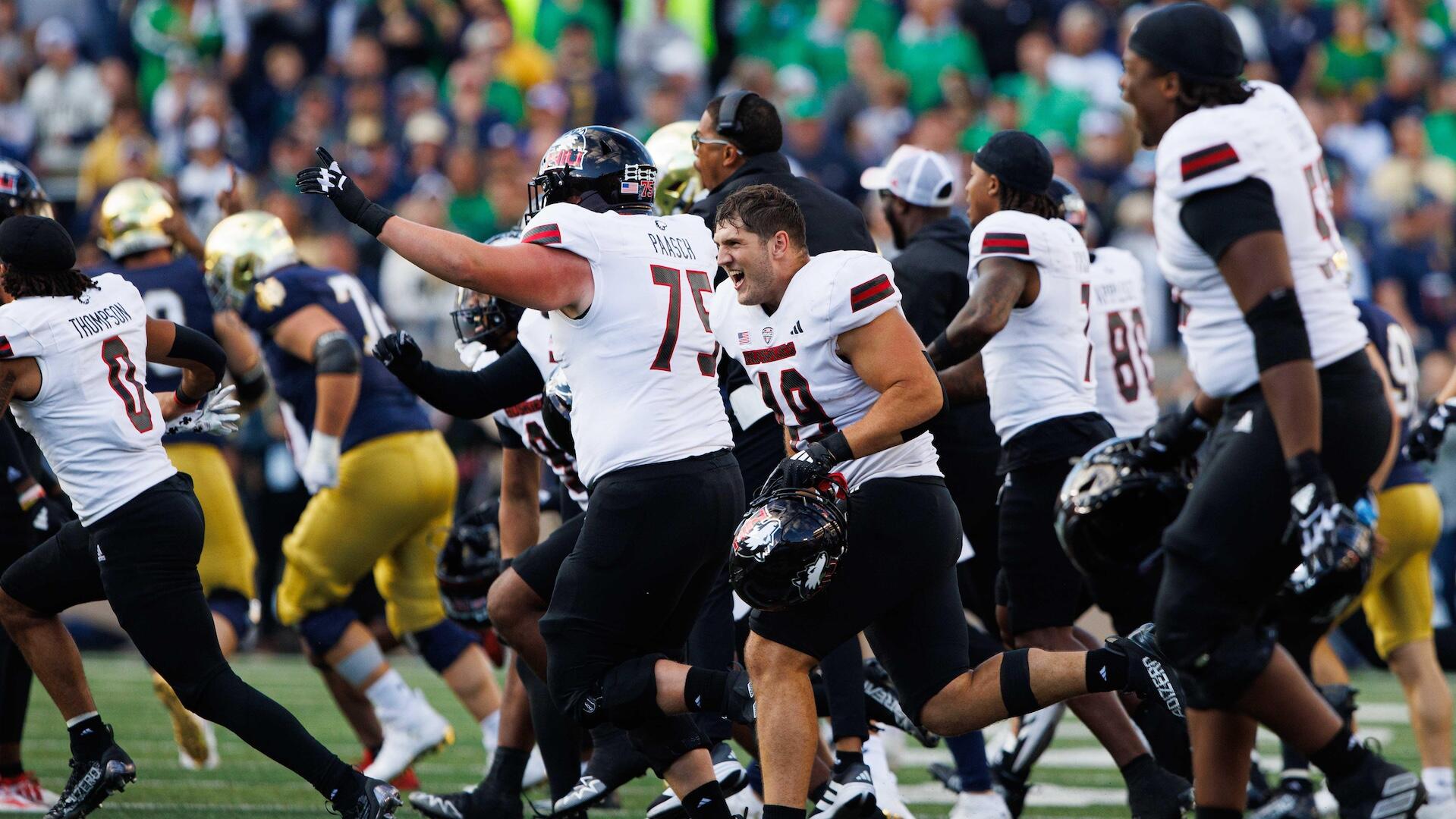
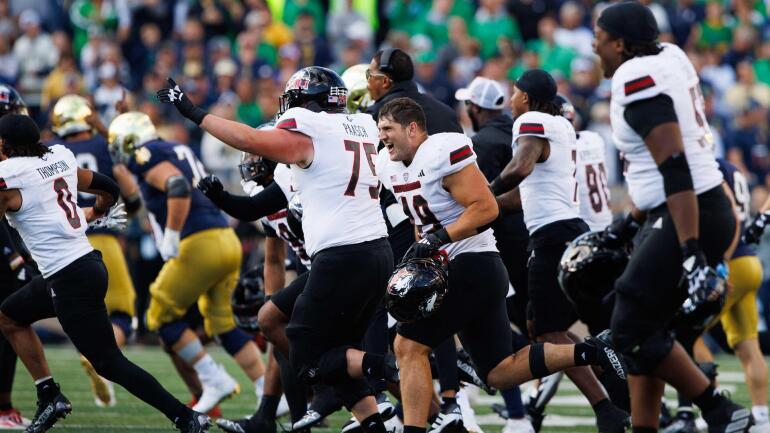
They're rare, but they happen. We're only two seasons removed from Northern Illinois upending Notre Dame in non-conference play. That same Notre Dame team played for a national title a few months later.
There have been nine instances in the last decade where a G5 team has beaten a top-10 Power Four opponent (counting Notre Dame among the P4 teams):
- 2016 No. 15 Houston 33, No. 3 Oklahoma 23
- 2016: Houston 36, No. 5 Louisville 10
- 2017: No. 10 UCF 34, No. 7 Auburn 27
- 2018: BYU 24, No. 6 Wisconsin 21
- 2021: No. 7 Cincinnati 24, No. 9 Notre Dame 13
- 2022: Marshall 26, No. 8 Notre Dame 21
- 2022: Appalachian State 17, No. 6 Texas A&M 14
- 2022: No. 14 Tulane 46, No. 8 USC 45
- 2024: Northern Illinois 16, No. 5 Notre Dame 14
So, what would it take for a non-autonomy team to show up in the playoff and win? History and common sense provide a clear formula.
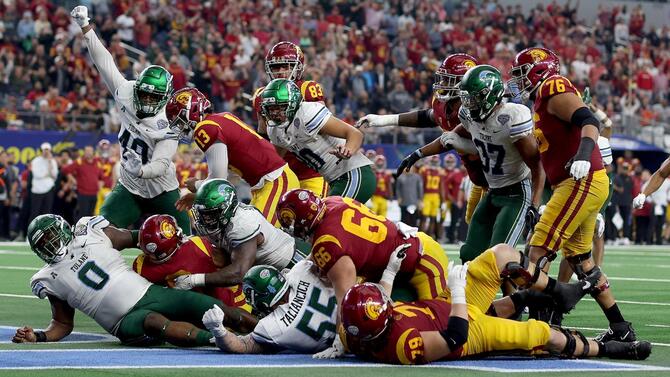 Tulane stunned USC in the Cotton Bowl after the 2022 season, one of college football's biggest upsets of the last decade. Getty Images
 1. Win the turnover battle
Basketball upsets happen far more frequently than football because of variance. Fewer players, the 3-point line, changing tempos and shot diets can all swing a game in favor of the less talented team.
Football is far more static. Teams need to manufacture variance.
Turnovers are the fastest way to do it.
Nothing swings a game more than an ill-timed turnover. In the nine instances a G5 team pulled an upset over the last decade, those teams won the turnover margin by a combined 20-4.
That's 16 extra possessions -- nearly two per game.
It's not a guarantee of victory, but it's close to a requirement in order to compete.
James Madison won it 2-0 over Oregon this past year in the playoff and still lost by 17. Boise State actually outgained Penn State in the 2024 playoff. It didn't matter as four turnovers and a pair of missed field goals erased the edge.
Great teams can afford to make mistakes against inferior talent. Underdogs need to take care of the ball and get a little lucky.
2. Good (to great) experienced quarterback play
Elite, experienced quarterback play is non-negotiable.
Tulane (Michael Pratt) and Cincinnati (Desmond Ridder) had draft picks in their top-10 upsets. UCF started McKenzie Milton, a two-time AAC Offensive Player of the Year. Houston had Greg Ward, a two-time all-conference selection and a dynamic enough athlete that he went on to an extended NFL career as a wide receiver.
When Marshall upset Notre Dame, it started Henry Colombi, a fifth-year senior who was Texas Tech's starter for long stretches during the 2020 and 2021 seasons. App State started Chase Brice, who made starts at both Clemson and Duke before his time with the Mountaineers. Brice would go on to throw for nearly 9,500 yards in his career.
Northern Illinois started fourth-year junior Ethan Hampton, who would finish his career at Illinois. BYU was led by three-year starter Tanner Mangum.
Those were all above-average college QBs, and their play ranged from solid to spectacular in those upsets.
As a group, they combined to throw 13 touchdowns against zero interceptions.
Ward actually outdueled Baker Mayfield and Lamar Jackson in his wins. Pratt, Ridder and Milton each accounted for 300-plus yards of offense, including major rushing contributions. The other four were aided by strong run games -- 180-plus yards each -- and didn't give the game away.
Ranking the 10 best coaching combos in college football and basketball for the 2025-26 season Brad Crawford
3. Stop the run, protect the QB
Games involving teams that are even in talent are often decided by skill-position mismatches. Explosive plays happen, and it's usually star skill players who create that chunk yardage.
That's OK in G6 vs. P4 matchups. A few explosive plays by the favorite won't kill the underdog.
What they can't do is get bullied on the ground.
Running the ball well opens up so much for an offense, especially playoff-caliber teams. In the four times a Group of Five team reached the playoff, it allowed 217 rushing yards per game on 5.9 yards per carry.
That's easy offense for the favorite, and it sets up the downfield passing game as the G5 team is forced to load up the box with defenders.
Conversely, in those top-10 upsets, the top-10 team averages just 113 yards per game on 3.4 yards per carry.
That's the blueprint on defense. You have to control the line of scrimmage.
Stop the run, or you're going to get run over.
On the other side of the ball, you don't necessarily need to run the ball efficiently to win. You just can't abandon it. Every G5 team that pulled a top-10 upset ran the ball at least 28 times in the win, averaging 38.6 attempts per game. Keeping the threat of the run alive both shortens the game -- a bit of an advantage for the underdog -- and prevents the defense from teeing off in pass rush situations.
The teams that win also tend to protect the QB.
Group of Five teams that have pulled a top-10 upset over the last decade allowed just 1.6 sacks per game in those contests. Running the ball and preventing sacks prevents the underdog from getting off schedule on offense, which makes driving the ball so much easier.
4. Get off the field
It sounds obvious, but the underdog has to take advantage of its chances to get stops.
You can give up chunk plays. You can't survive extended drives, which tire out defenses and expose their depth.
The more cracks the favorite has, the more likely it'll score. In those nine upsets, the favorite had a combined third-down conversion percentage of just 36.4%.
Getting off the field also means playing clean, and the teams that have managed to pull upsets in these games have largely avoided crippling penalties, committing fewer or the same number of penalties in eight of those nine matchups.
5. Be aggressive on fourth down
When attempting to scale a talent gap, the underdog can create an advantage by using an underutilized avenue: Fourth down.
Most teams punt. The underdog shouldn't. Every possession is precious.
The underdog should treat possessions as Madden players do: Kicking is optional, especially in rare trips to opposing territory.
The teams that pulled the top-10 upsets went a combined 8 of 13 on fourth down. Five of those conversions were part of touchdown drives. Another led to Northern Illinois' game-winning fourth-quarter field goal. None of the turnovers on downs led to points for the other team.
Aggression isn't optional for a heavy underdog. The math matters.
Inside the year-long CFP expansion debate that resulted in no change amid Big Ten-SEC standoff Brandon Marcello
6. Expand the field?
Underdogs get the shine in March. Yet there's an underlying reality that gets lost amid the excitement of the Big Dance: Underdogs rarely make it deep into the second weekend.
Only 19 double-digit seeds since 1985 have reached the Elite Eight. And only 12 of those teams are outside the power conference structure, at least as it's currently constituted.
That's where it's worth noting that the current College Football Playoff structure makes it difficult for G6 teams. They're almost always the lowest-seeded team in the bracket, which means they'll go up against the No. 5 seed. Often, that fifth seed is one of the few true contenders of that season. That's a mismatch.
But if the field were to expand to 16 or 24, the first-round matchup for the G5 might be more favorable.
Over the last decade, G5 teams have had 102 wins over AP Top 25 teams. Some of those are G5 vs. G5 matchups. But that's still about 10 per year.
If the field expands to 24, it increases the chances a G5 team could win an opening-round game. Assuming the top eight seeds are given a bye, you'd have the highest-ranked G5 team matched up against, at worst, the No. 9 team in the country.
The underdog would still be just that. But it makes the chances of an upset go up considerably.
Join the Conversation comments