In a nebula far, far away, colossal clouds of dust and gas tower amongst the stars.
What is it?
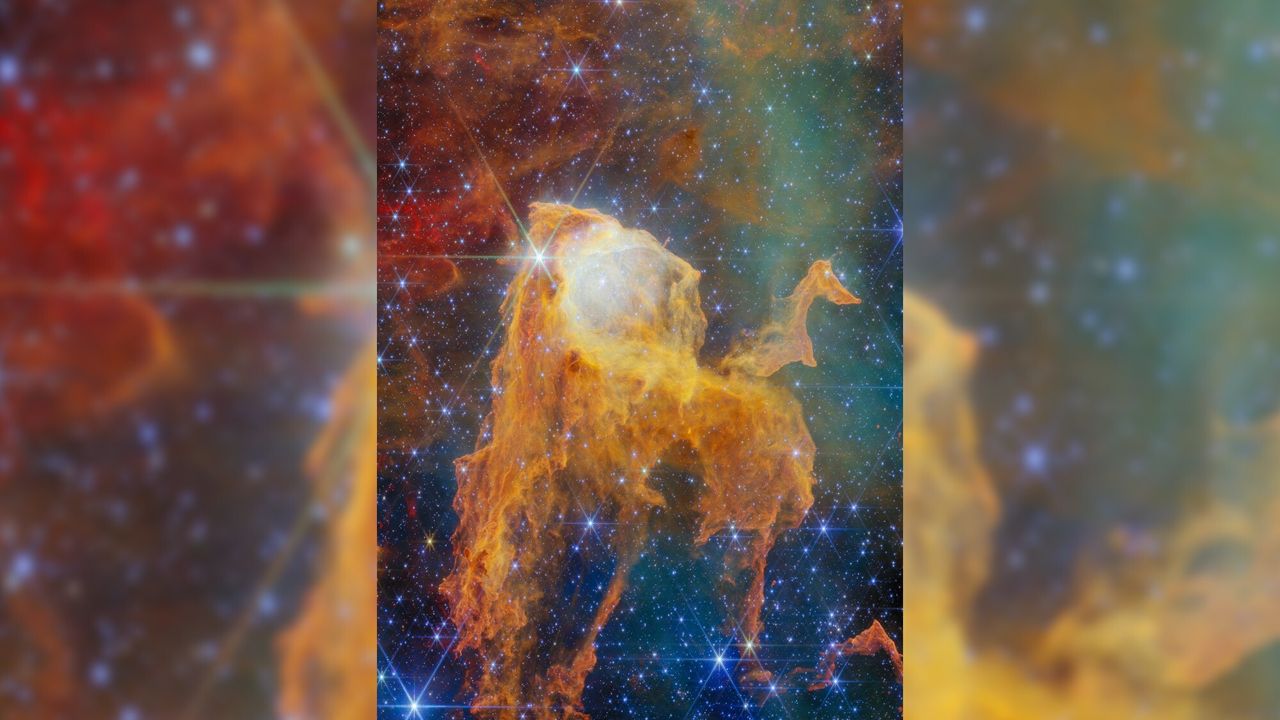
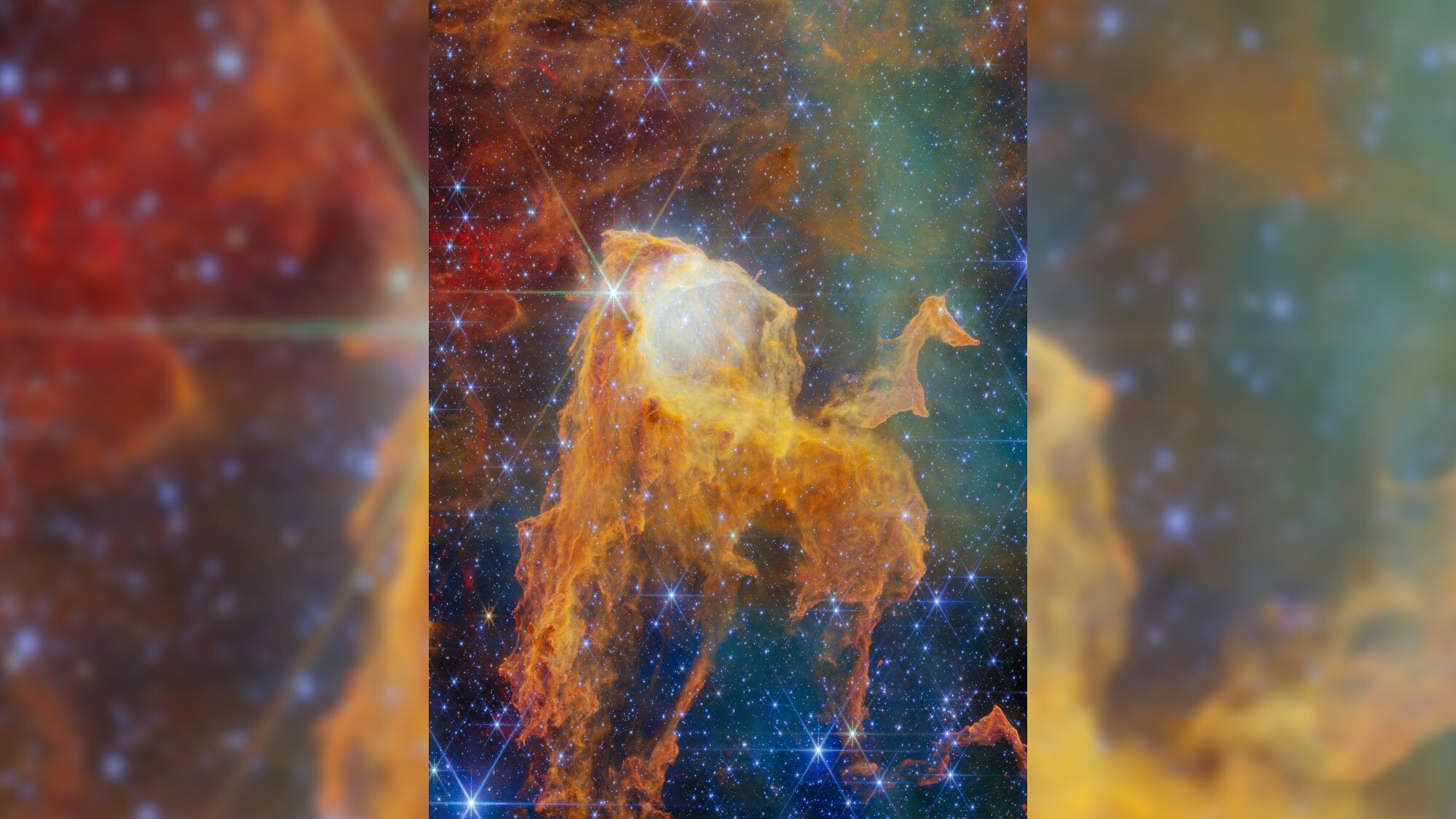
This spectacular new image from the James Webb Space Telescope showcases the brilliant majesty of the Carina Nebula, a giant cloud of dust and gas found 7,500 light-years away in the constellation Carina.
You may have seen the Carina Nebula before — in the first-ever image released from JWST, which has been dubbed "Cosmic Cliffs."
In this new image, captured by JWST's Near-Infrared Camera (NIRCam), you can see the nebula in a whole new light. This snapshot captures a specific feature that is being dubbed the "Treasure Chest," as it vaguely resembles a glowing coffer overflowing with stellar jewels.
This "Treasure Chest" contains a cluster of young stars, approximately 70 stars in total. While these might be young, growing stars, the most massive of the bunch is a whopping 19 times more massive than our sun.
Why is it incredible?
While JWST has looked at the Carina Nebula before, new observations can reveal completely new details and help scientists uncover new information about the nebula and the strange ways in which the universe works.
Right now, scientists think that the star cluster in the "Treasure Chest" is about 1.3 million years old. However, previous estimates thought the grouping could be just 100,000 years old. So, new observations by powerful telescopes like JWST can significantly change our understanding of the cosmos.
With each new observation or data point, the history and context of the universe around us could completely transform. And, as this star cluster grows over time, its stars will become more brilliant. They may therefore illuminate more of this star cluster, potentially revealing details and secrets of this "treasure" that scientists might never have predicted.