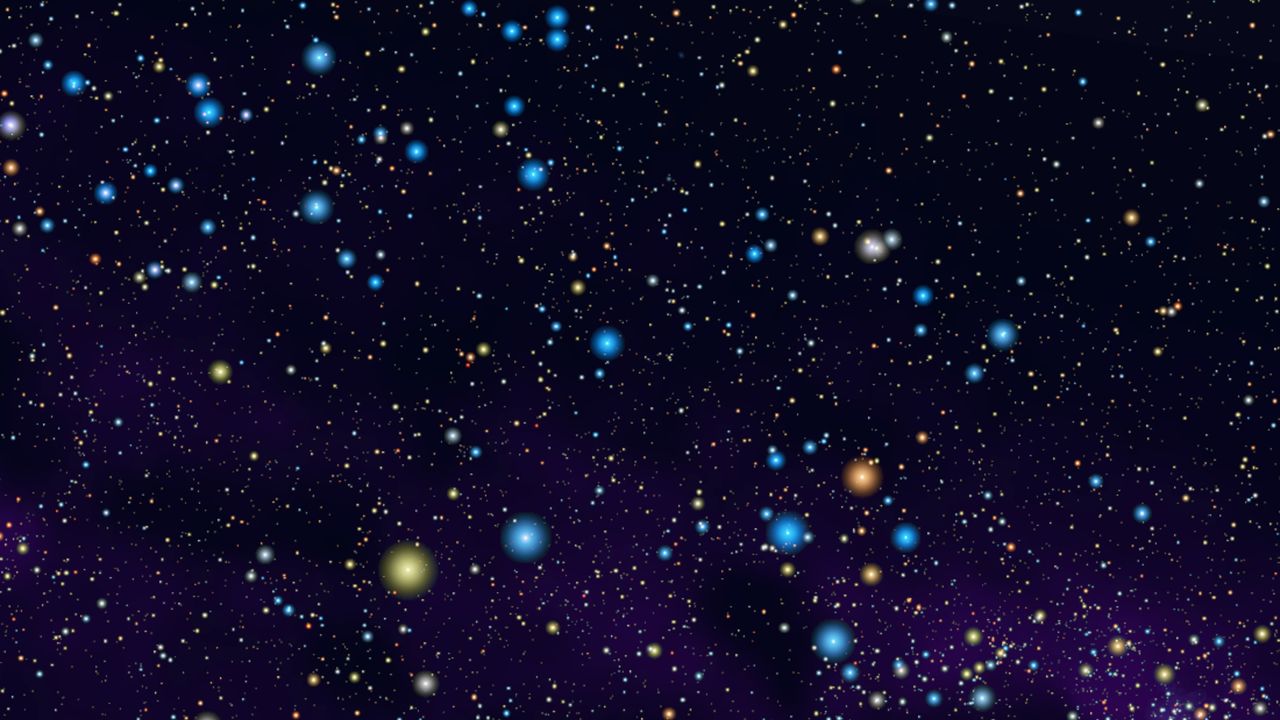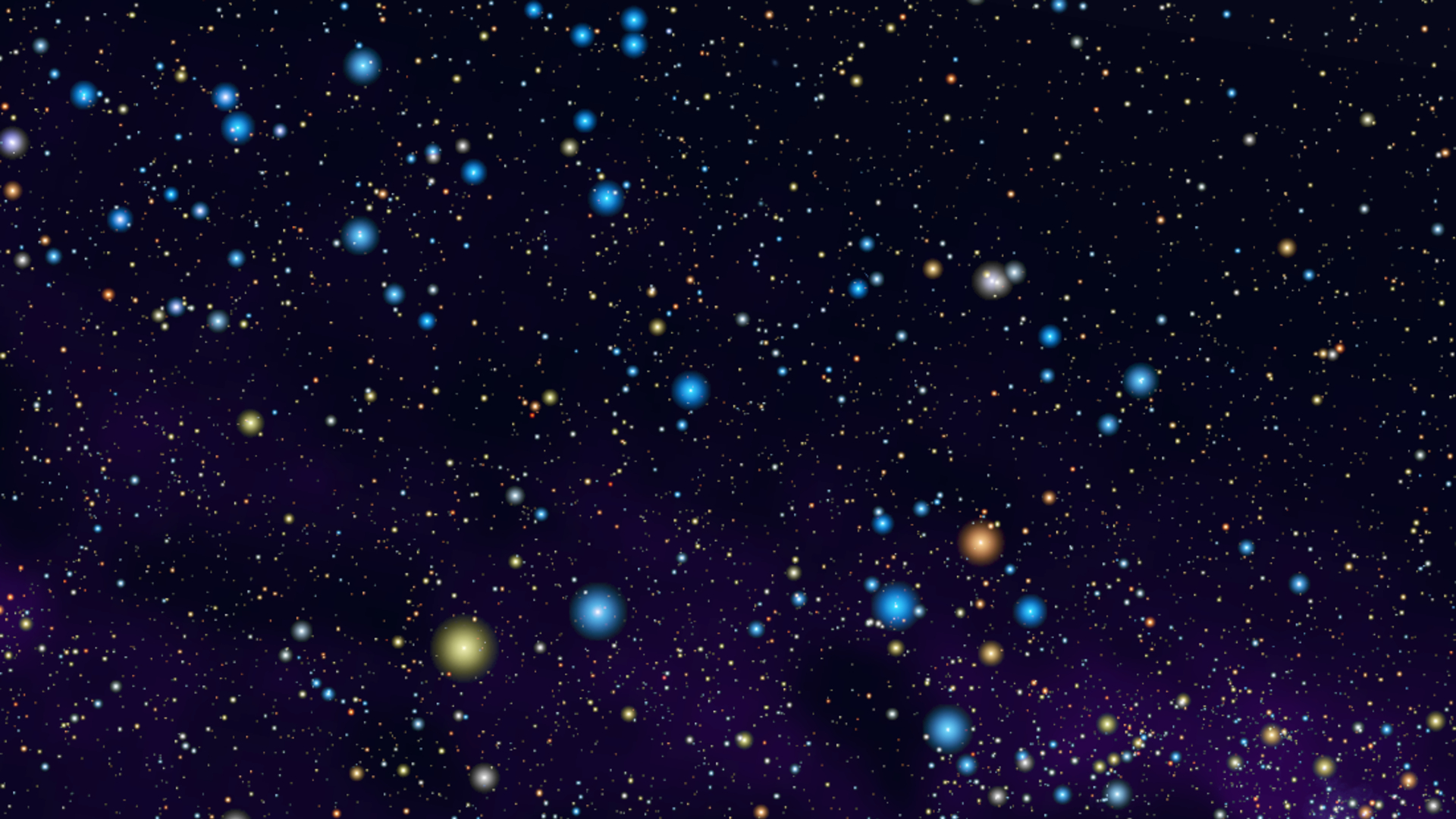
The Lower Centaurus-Crux association, where the new Jupiter-size object pairs dwell. Dominated by blue stars, it lies 385 light-years away from us. (Image credit: Roberto Mura, Public Domain)
Share this article Join the conversation
Follow us Add us as a preferred source on Google Newsletter Subscribe to our newsletter
A mysterious new kind of celestial object discovered by the James Webb telescope just inched closer to reality, a new study reports.
Looking within a large stellar nursery in the southern sky, astronomers found two pairs of "rogue" Jupiter-like objects that are similar to mysteriously paired planets that the James Webb Space Telescope (JWST) previously discovered. The planet pairs — which tumble through space, seemingly untethered to any star — dwell in a different part of the Milky Way than JWST's initial discoveries, suggesting that the enigmatic objects truly are a new kind of object. However, further observations are still necessary for confirmation.
"We were always fascinated by the possibility of finding different kinds of planets," Dante Minniti, a professor of astrophysics at the Universidad Andrés Bello University in Chile and co-author of the new research, told Live Science in an email.
Free-floating planets (FFPs) are "rogue" exoplanets that aren't gravitationally bound to a star. These peculiar objects abound in the cosmos. Surveys by space-based telescopes, especially JWST, have revealed hundreds of FFPs in many star-forming regions, or nebulas. NASA estimates that solitary rogue planets may outnumber stars in the Milky Way 20 to 1.
In contrast, binary FFPs — which comprise two rogue exoplanets that orbit each other — seem much rarer. One subset, in particular, has piqued interest. Called Jupiter-mass binary objects, or "JuMBOs," these binary pairs of widely separated planet-like objects measure 0.7 to 30 times Jupiter's mass.
A jumbo-size mystery
In 2023, JWST unveiled 40-odd JuMBO candidates in the Orion Nebula, a stellar nursery in the constellation Orion. Their discovery raised interest because such planet pairs challenged conventional theories of planet formation. Subsequent research, though, disputed their existence, including a 2024 reanalysis that suggested many of the purported planet pairs were actually just distant stars.
Still, these developments didn't dissuade Minniti from searching for more definitive pairs of exoplanets and low-mass cosmic objects. Also on his search list were brown dwarfs, "failed stars" that are more massive than planets but not big enough to be stably powered by nuclear fusion.
Sign up for the Live Science daily newsletter now
Get the world’s most fascinating discoveries delivered straight to your inbox.
Contact me with news and offers from other Future brandsReceive email from us on behalf of our trusted partners or sponsors
However, rather than scouring the Orion Nebula again, Minniti and his collaborators turned to a different stellar nursery: the Lower Centaurus-Crux (LCC) association, which "spreads hundreds of square degrees across the Southern sky," he said.
It consists of more than 100 young, massive blue stars that move together through space but are not linked by gravity. Objects in the LCC association are, on average, about 15 million years old, said Claudio Cáceres, an associate professor of physical sciences at Andrés Bello University and first author of the new study. Exoplanets this age are still considered young, and at longer wavelengths, "they are more luminous than their older counterparts," he wrote in an email to Live Science.
A new type of object?
First, Cáceres and his collaborators created an enormous database of images of the LCC association by crossmatching two datasets. One comprised archival near-infrared photographs by the Visible and Infrared Survey Telescope for Astronomy at the European Southern Observatory's (ESO) Piranal Observatory in Chile. The second dataset consisted of visible-light snapshots gathered by the European Space Agency's Gaia survey.
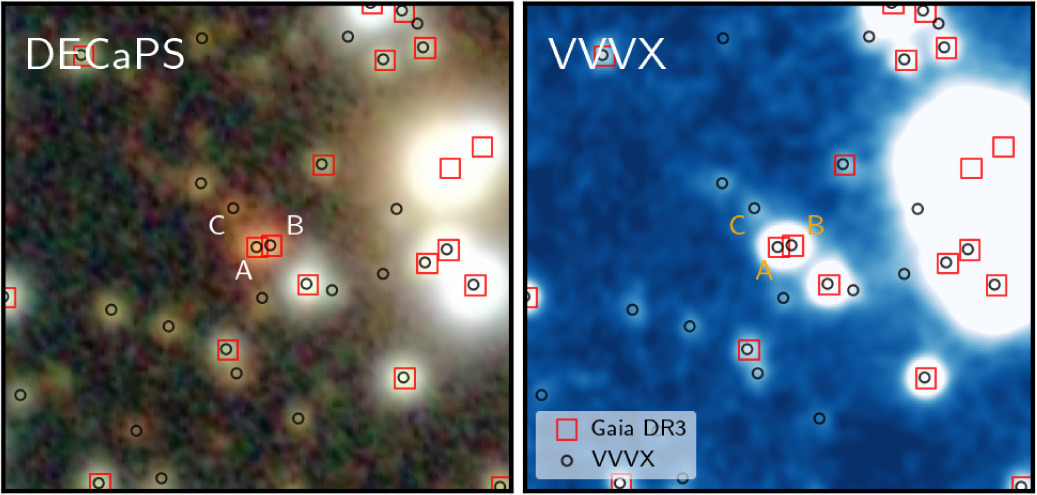
One of the newly discovered Jupiter-size planet-like object pairs, as marked by the letters A and B. (C refers to a possible third member of this group whose membership remains very tentative.) The left panel is from the archival infrared snapshots by the Visible and Infrared Survey Telescope for Astronomy, while the right is from visible-light images by the Gaia telescope.
(Image credit: Cáceres et al. (2026))
The researchers searched the data for faint cosmic objects that might be planets. Of the 9,000-odd low-mass candidates they identified, only about 400 actually belonged to the LCC association, since they showed movement patterns that were mathematically predicted. Minniti said the team then "inspected the candidates one by one carefully in order to find faint companions that could be characterized."
Their analysis, described in a study published April 24 in the journal Astronomy & Astrophysics, revealed 17 object binaries. Only two — named VVVX-FFP-001 and VVVX-FFP-007 — are pairs of planet-size objects, and they share several characteristics with JuMBOs.
Both contain two objects, each of which has a mass less than 13 times Jupiter's — approximately 12 and eight times Jupiter's mass for VVVX-FFP-001 and VVVX-FFP-007, respectively. Additionally, both are widely separated; three and 180 times the distance between the sun and Neptune separate VVVX-FFP-001's and VVVX-FFP-007's members, respectively.
Despite these similarities, Cáceres doesn't call the newly discovered objects JuMBOs, noting that the term hasn't been accepted in the research literature. "I personally prefer free-floating planetary-mass binaries," he said.
Related stories
While the new objects support the existence of JuMBOs, they also suggest that FFP pairs are rare, accounting for just 2% of rogue planets in the LCC association, Cáceres said. Although much smaller than the Orion Nebula JuMBO fraction of 9%, this value agrees with the fraction of paired "cold" objects like brown dwarfs found elsewhere. This suggests the Orion Nebula sample may indeed have falsely identified members.
Additionally, Minniti said, some FFP pairs may be "tight binaries" that orbit each other at narrow separations. He said such planets may retain liquid water because their companions' gravitational tugs heat them up. This could make them habitable, Cáceres said, "even when there is no star. … This is very interesting because these binary planets may transport life through different regions of the Galaxy."
The researchers plan to continue studying the objects using instruments like the ESO's Very Large Telescope. "These observations will help to better characterize the whole sample of low-mass binary objects," Minniti said.
Article Sources
Cáceres, C., Minniti, D., Mejías, A., Gomez, M., Alonso-García, J., Ivanov, V., Pullen, J., Saito, R., Smith, L., Solano, E., Beamín, J., Rojas-Bozza, D., Soto, P. and Zelada, R. (2026). Discovery of Planetary-Mass Binaries in the Lower Centaurus-Crux association. Astronomy & Astrophysics, 708, A378. https://doi.org/10.1051/0004-6361/202347673
TOPICS
 Abha Jain
Live Science contributor
Abha Jain is a freelance science writer. She did a masters degree in biology, specializing in neuroscience, from the Indian Institute of Science, Bengaluru, India, and is almost through with a bachelor's degree in archaeology from the University of Leicester, UK. She's also a self-taught space enthusiast, and so loves writing about topics in astronomy, archaeology and neuroscience.
View More
You must confirm your public display name before commenting
Please logout and then login again, you will then be prompted to enter your display name.
Logout