
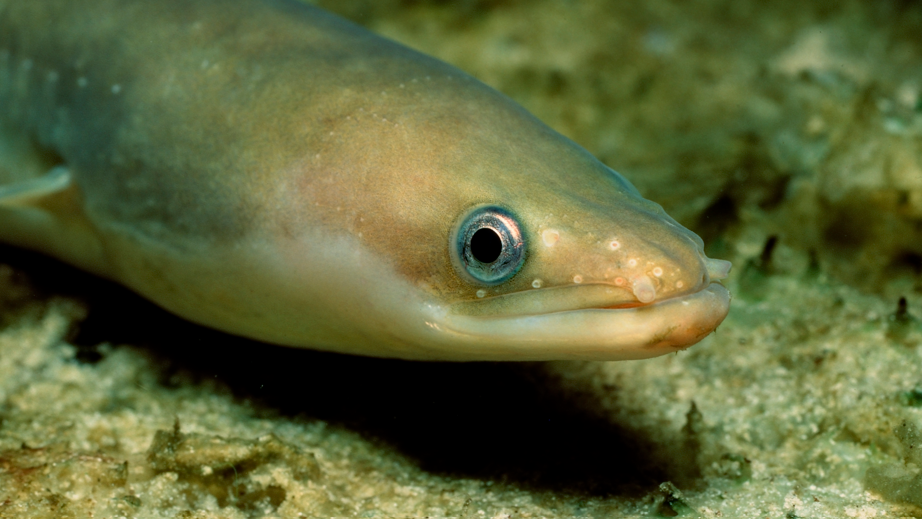
 Image source, Tees Rivers TrustImage caption,
Tees Rivers Trust workers have been tagging eels to track their downstream migration
ByTom BurgessNorth East and Cumbria- Published40 minutes ago
Conservationists have spent summer and autumn searching for critically endangered eels to tag as they begin their downstream migration.
The Tees Rivers Trust have found 12 large eels by fyke netting, a method of catching eels with a cylindrical net, around the River Tees catchment.
The team managed to electronically tag 10 of them and the largest was 60cm (23ins) in length and weighted 435g (0.9lbs).
Project manager Ellie Ward said the eels caught this year were not as large as usual and were "harder to catch".
The team has been searching for "silver" eels which have finished maturing and are preparing to head back out to the Sargasso Sea near Bermuda.
Ward said: "European eels start to migrate downstream during autumn and winter, when river discharges increase.
"We suspect that low flows in summer that have continued into autumn have contributed to low catch rates so far this year."
'Mystery' species
The Eels of Steel project is funded by Natural England and the Tees Rivers Trust has been conducting the research alongside Hull University.
Each eel has a tag which emits a unique ping, which provides information about their movements while migrating.
The project aims to discover if the critically endangered animal is successfully leaving the river and making it through river barriers such as sluices and weirs.
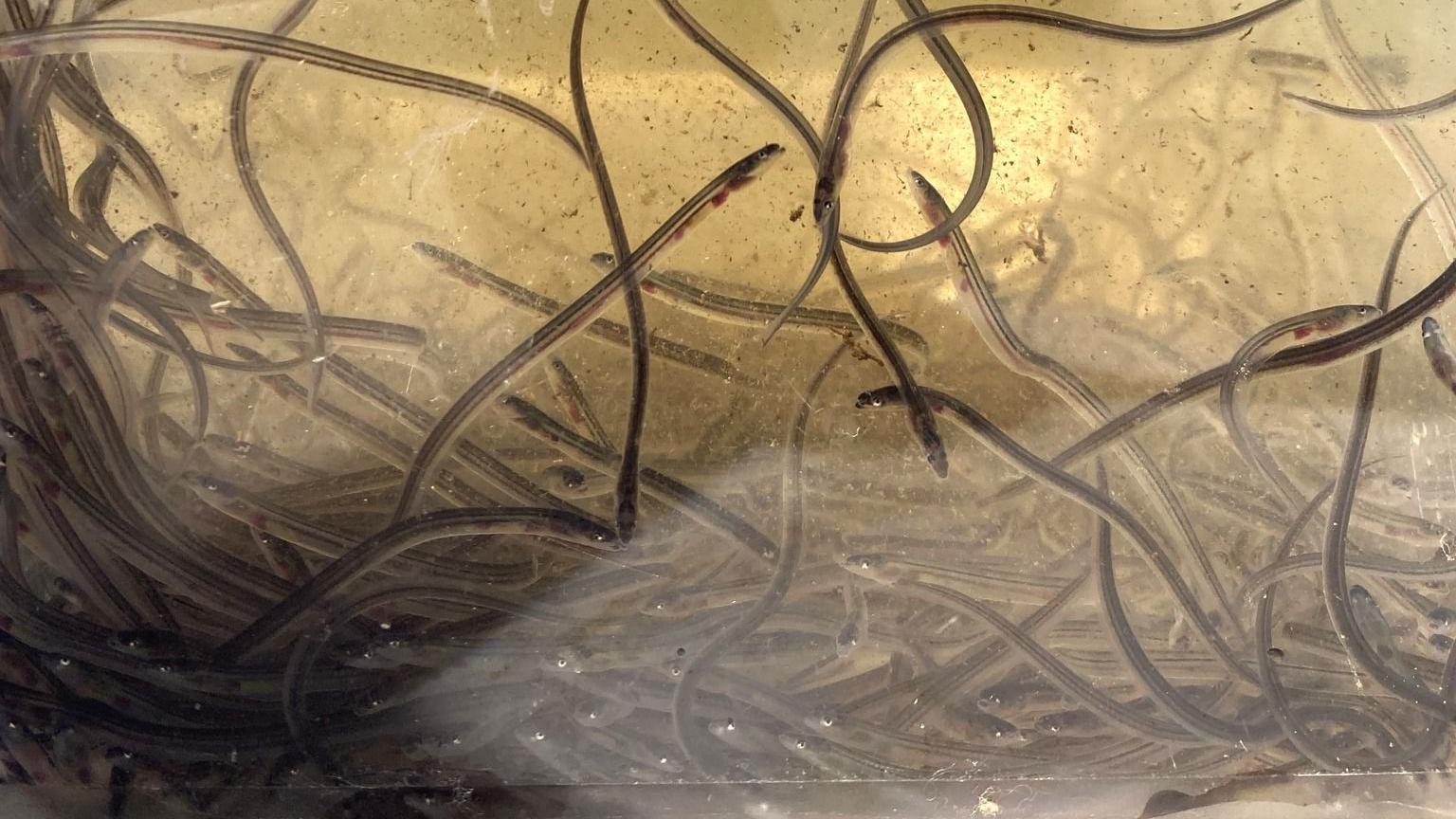
 Image source, Tees Rivers TrustImage caption,
Conservationists say it has been harder than usual to find the eels
Since 2008, European eels have been listed as critically endangered by the International Union for Conservation of Nature.
Numbers have declined by between 90-95% since the 1980s due to a range of factors including habitat loss, climate change and overfishing.
Ward said: "It is incredible to think about the journey these eels are embarking on, back to their spawning grounds in the Sargasso Sea.
"No-one has ever witnessed European eels spawning, they are a species that hold so much mystery."
The team say they are always open to suggestions for netting locations, particularly lakes and ponds, and ask people to contact them.
Follow BBC Tees on X,, external Facebook, external, Nextdoor and Instagram, external and listen to Radio Tees on BBC Sounds.
Get in touch
Do you have a story suggestion for BBC Tees?
Contact formContact formRelated topics
More stories like this
Two-year project to install eel screens begins
- Published9 October
Endangered eel population boost hopes
- Published7 May
Why eels are being reintroduced to British waterways
- Published13 April


