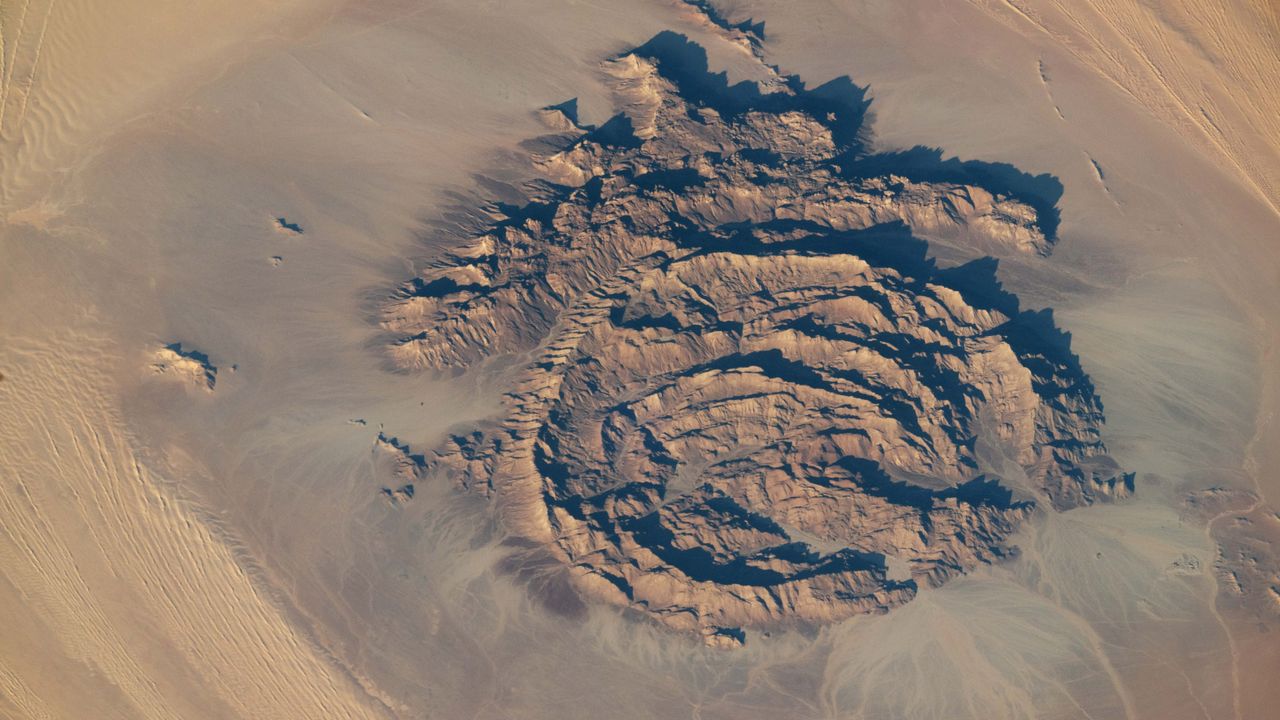
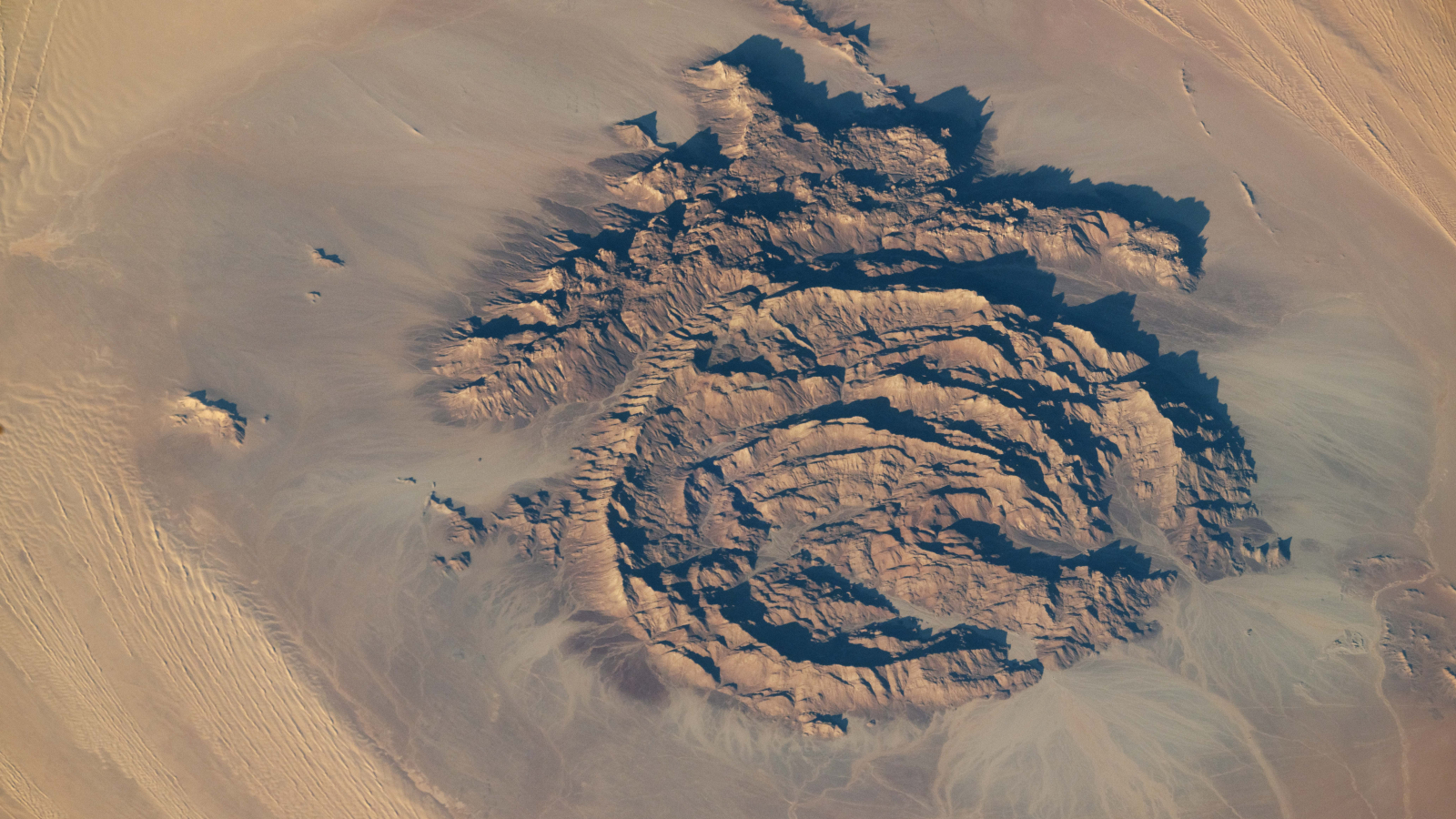
 Mount Arkanu is a massif made up of concentric rocky rings topped with a large hat-like formation. The entire structure is over 15 miles wide. (Image credit: NASA/ISS program) Share this article 0 Join the conversation Follow us Add us as a preferred source on Google Newsletter Sign up for the Live Science daily newsletter now
 Get the world’s most fascinating discoveries delivered straight to your inbox.
Become a Member in Seconds
Unlock instant access to exclusive member features.
Contact me with news and offers from other Future brands Receive email from us on behalf of our trusted partners or sponsors By submitting your information you agree to the Terms & Conditions and Privacy Policy and are aged 16 or over.You are now subscribed
Your newsletter sign-up was successful
Want to add more newsletters?
Join the club
Get full access to premium articles, exclusive features and a growing list of member rewards.
Explore An account already exists for this email address, please log in. Subscribe to our newsletter QUICK FACTSWhere is it? Mount Arkanu, Libya [22.267325754, 24.7226055004]
What's in the photo? A massif of concentric rocky rings in the middle of the Sahara
Who took the photo? An unnamed astronaut on board the International Space Station
When was it taken? Sept. 13, 2025
This intriguing astronaut photo shows a series of rocky rings and their distinctive "hat" towering above a dune sea in the Sahara. The concentric, shadow-filled walls are home to ancient artworks and, occasionally, herds of cattle.
Due to the mountains' shape, scientists previously assumed that the massif was an ancient impact crater that formed when a giant space rock slammed into the northeast Sahara. But more recent research has shown that the rocky rings are not of extraterrestrial origin.
Article continues belowInstead, the mountains were created when "magma [repeatedly] rose toward the surface and intruded into the surrounding rock," according to NASA's Earth Observatory. This formation process likely ended hundreds of millions of years ago but has not been properly dated.
"Repeated intrusion events produced a series of overlapping rings, their centers roughly aligned toward the southwest," Earth Observatory representatives wrote. "The resulting ring complex — composed of igneous basalt and granite — is bordered to the north by a hat-shaped formation made of sandstone, limestone, and quartz layers."
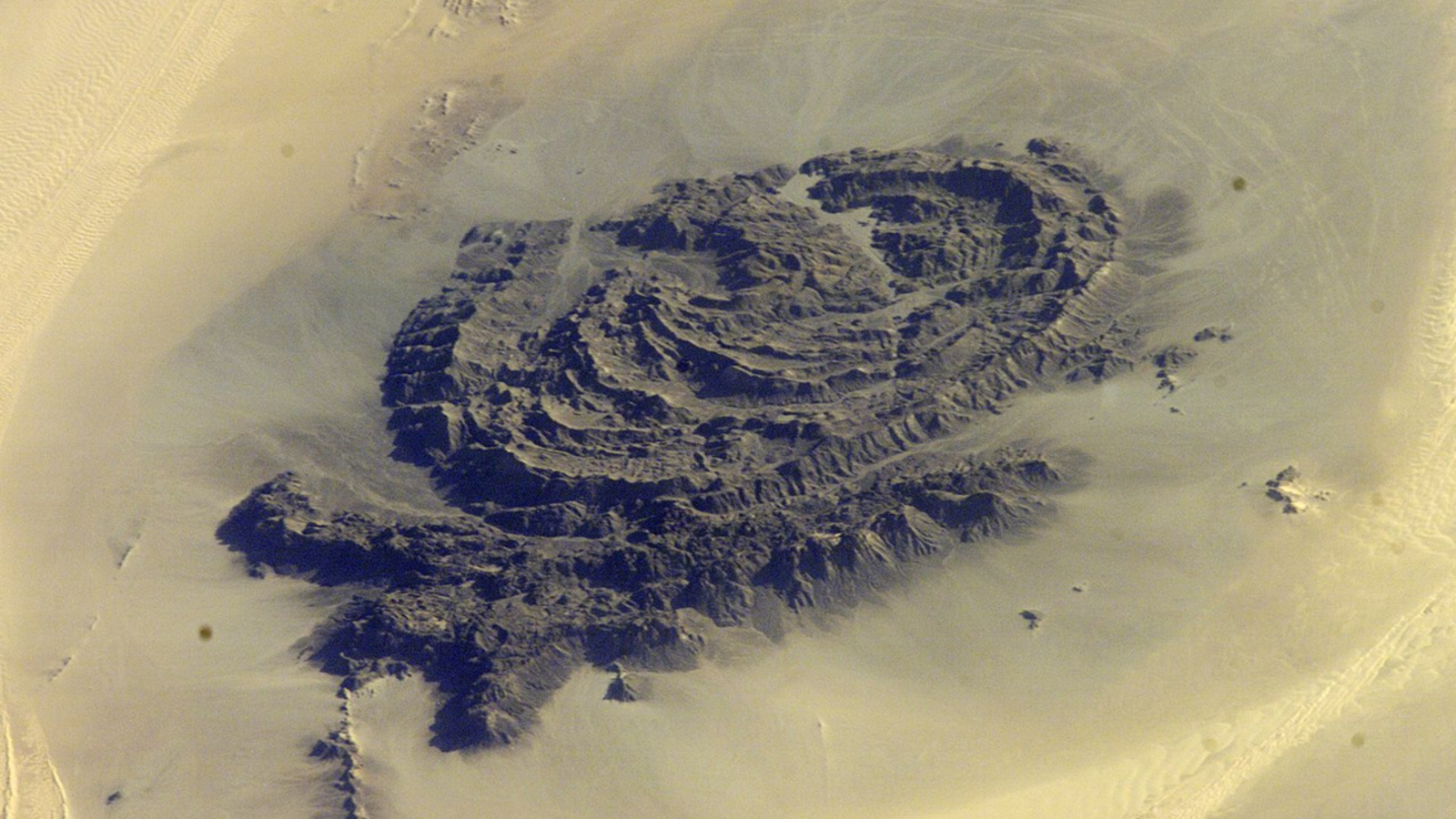
The massif has two large gaps in its outermost southern wall (bottom right in the photo). These have been slowly carved out by a pair of wadis, or ghost rivers, which sporadically fill with water when it rains. The phantom waterways can also be seen snaking through the dark plateau surrounding the complex.
This region of the Sahara is hyperarid; it gets only 1 to 5 millimeters (0.04 to 0.2 inches) of rain each year, according to the Earth Observatory. However, the massif receives between 5 and 10 mm (0.2 to 0.4 inches) of rain annually, due to a phenomenon known as "orographic precipitation," which occurs when clouds form over raised landforms, according to the U.K. Met Office.
Sign up for the Live Science daily newsletter nowContact me with news and offers from other Future brandsReceive email from us on behalf of our trusted partners or sponsorsAs a result of this additional water, the rings are partially filled with grasses, bushes and trees that the shadows from the towering peaks shelter from the desert's scorching temperatures.
Cattle herding
The combination of shade, vegetation and occasional water has historically made the massif a popular destination for nomads traversing the surrounding dune seas.
Another massif, Mount Awaynat (sometimes spelled Uwaynat or Uweinat), is located roughly 12 miles (20 km) southeast and has provided similar benefits to desert wanderers for generations.
Some of the canyon-like walls of both Mount Arkanu and Mount Awaynat are covered with rock carvings, or petroglyphs, that were first discovered in 2003. These ancient artworks depict human fugures, along with cattle and other tethered animals, such as giraffes.
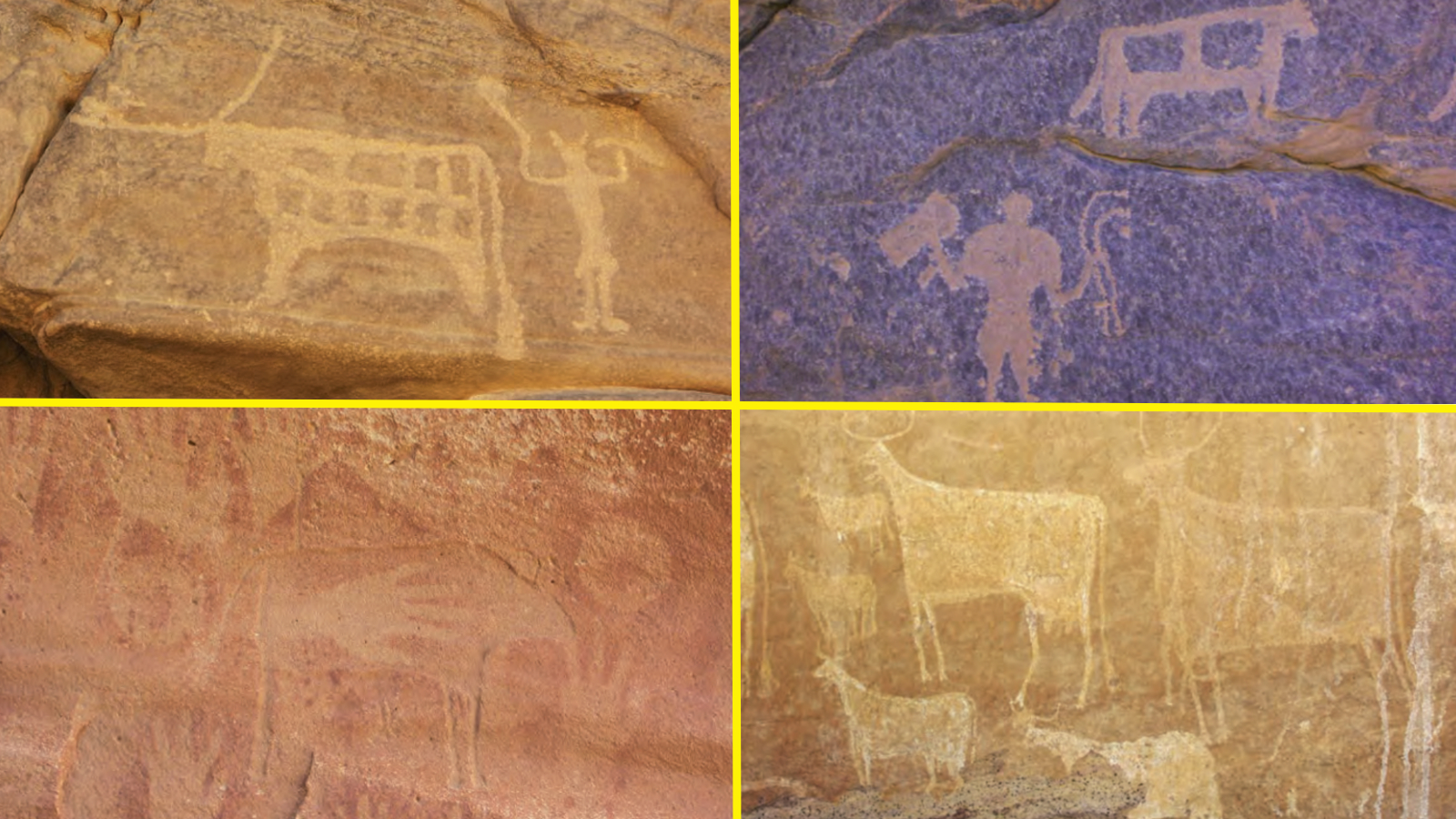
Early-20th-century explorers noted that members of the local bedouin tribe trekked their cattle herds to the massifs and left them inside to graze for up to three months at a time — and blocked up the holes created by the wadis to stop the animals from wandering off.
The cattle carvings within both structures suggest that this practice has been going on for thousands of years.
See more Earth from space
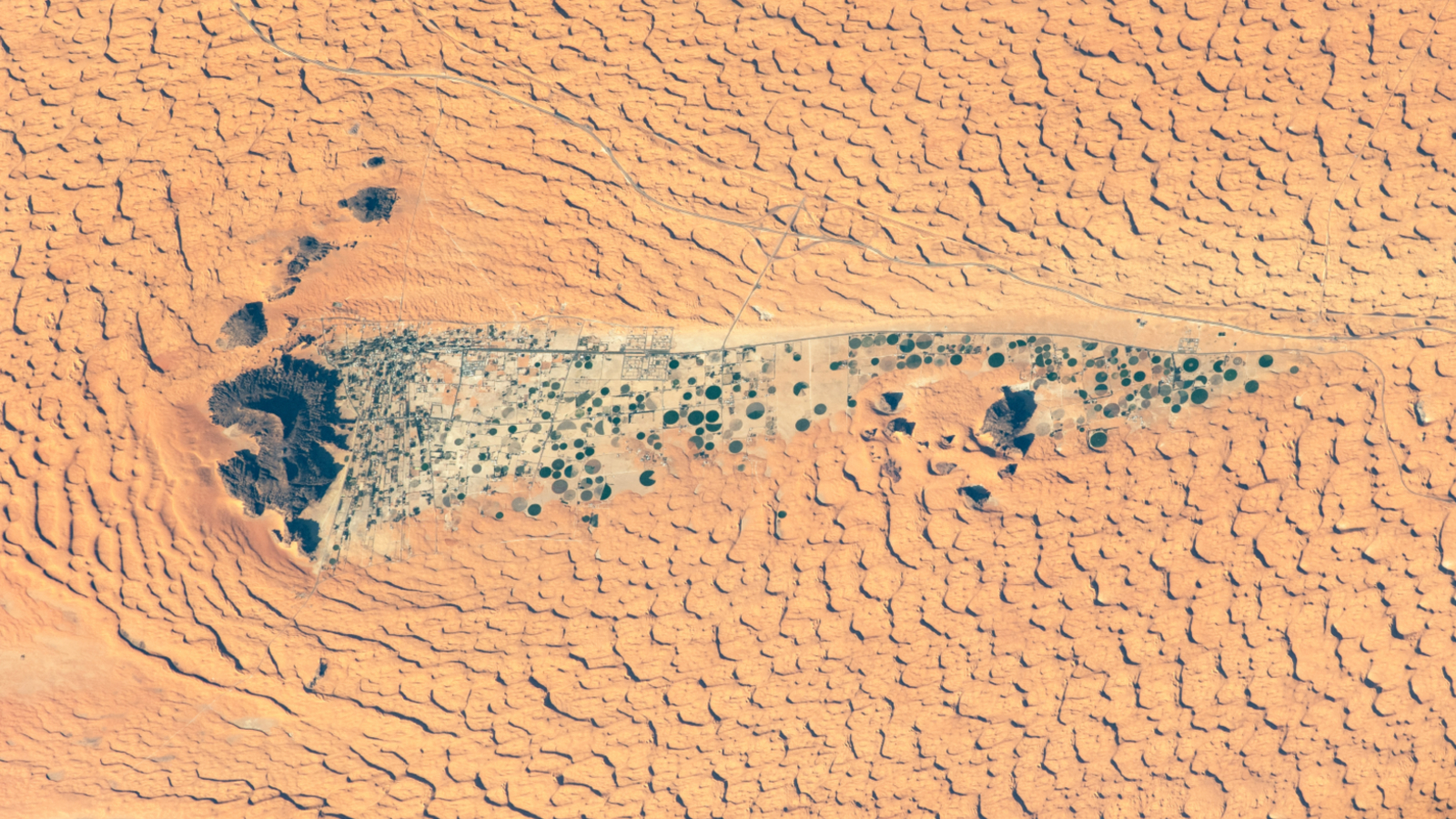 Lake of circles in Saudi Arabia
A 2020 astronaut photo shows the oasis town of Jubbah lurking within a paleolake in the wind shadow of Saudi Arabia's "two camel-hump mountain."
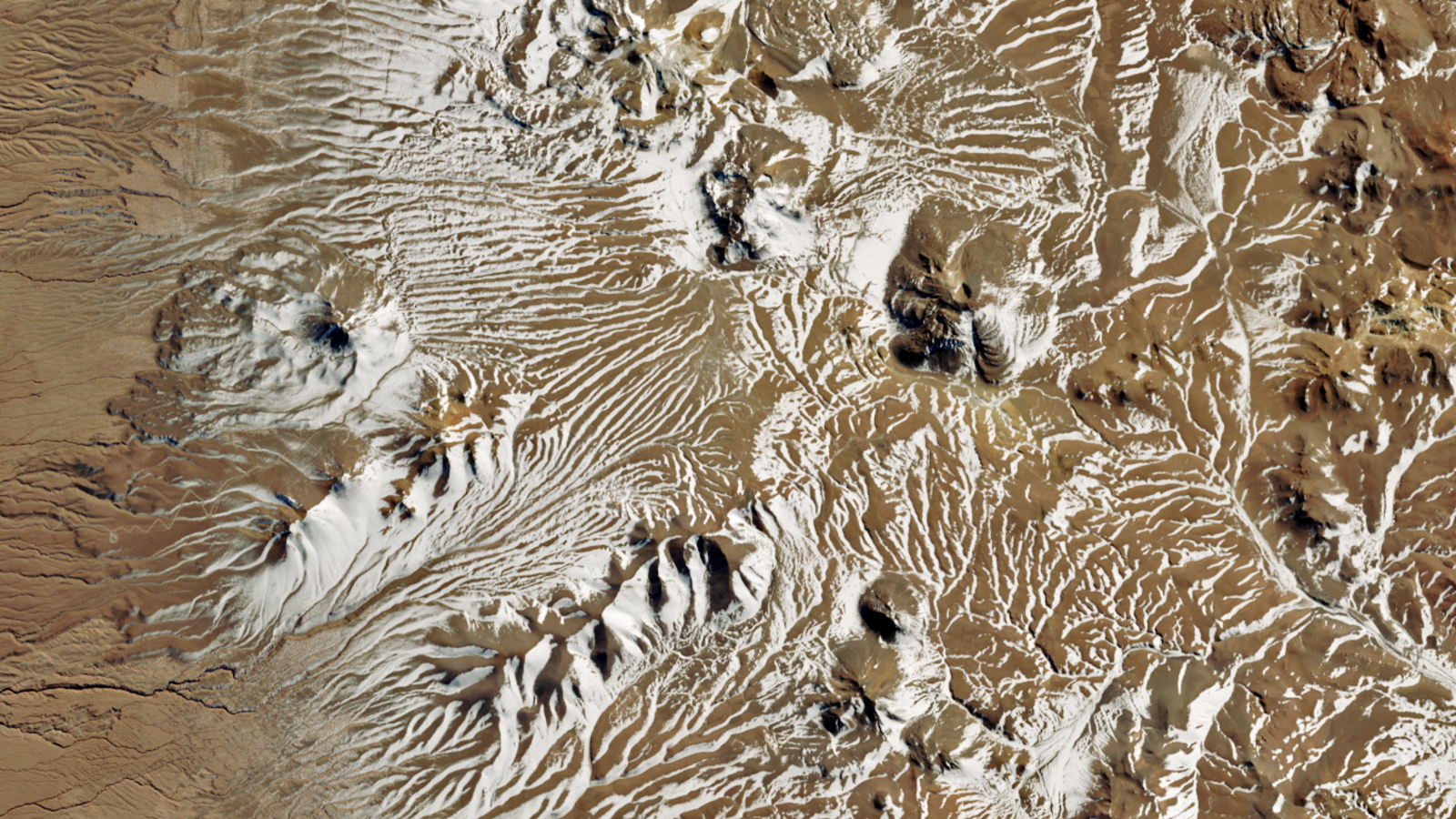 Rare snow in Atacama
A 2025 satellite photo shows intricate snowy stripes painted across the Atacama Desert in Chile. The icy weather temporarily put one of the world's largest telescopes into "survival mode."
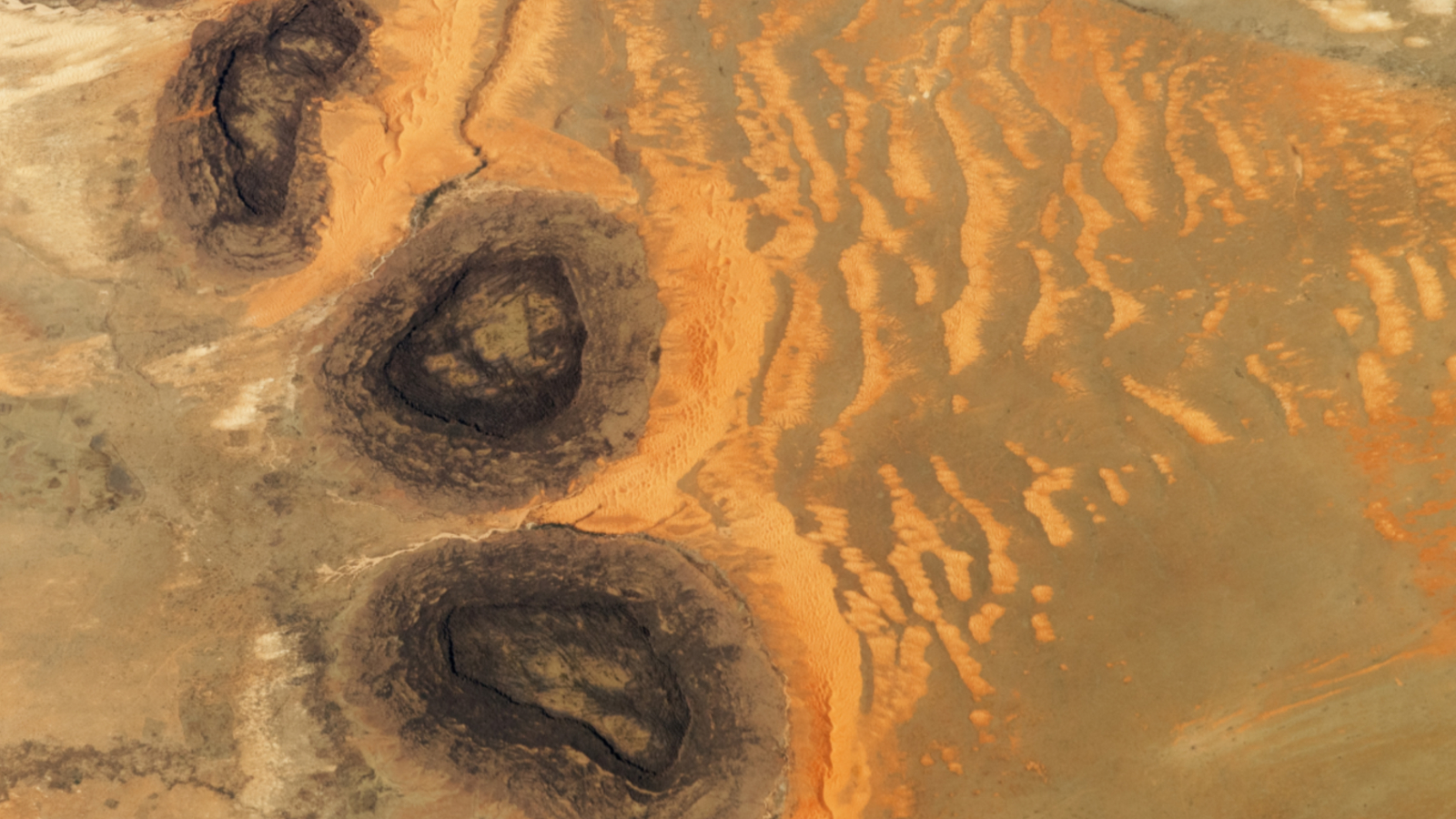 'Black mesas' trio in Sahara
A 2023 astronaut photo shows three dark hills, or mesas, towering above part of the Sahara desert in southern Mauritania. The Paleozoic structures are remnants of a single ancient formation.
TOPICS Harry BakerSenior Staff Writer
Harry is a U.K.-based senior staff writer at Live Science. He studied marine biology at the University of Exeter before training to become a journalist. He covers a wide range of topics including space exploration, planetary science, space weather, climate change, animal behavior and paleontology. His recent work on the solar maximum won "best space submission" at the 2024 Aerospace Media Awards and was shortlisted in the "top scoop" category at the NCTJ Awards for Excellence in 2023. He also writes Live Science's weekly Earth from space series.
View MoreYou must confirm your public display name before commenting
Please logout and then login again, you will then be prompted to enter your display name.
Logout LATEST ARTICLES 1Tasmanian tigers discovered in Indigenous rock art in Australia, suggesting these marsupials lived there much longer than thought
- 2NASA's historic Artemis II mission gets green light for flight as countdown begins
- 3Pig semen molecule could deliver chemotherapy to hard-to-reach eye cancer, mouse study suggests
- 4'We are getting very, very close': NASA makes final Artemis II preparations as expectation grows for Wednesday launch
- 5Farthest, fastest and most diverse: 6 major records the Artemis II astronauts will smash as NASA returns to the moon