Pressure in college football has never been more intense than it is entering the 2026 season. The expanded College Football Playoff was supposed to create more opportunities, but it has also accelerated expectations.
Revenue sharing has pushed roster spending to all-time highs with heavy demand on ROI. In turn, athletic departments are less willing than ever to wait for long-term rebuilds. In today's game, patience is often measured in weeks, not years. Coaches are being judged not only on wins and losses, but also on recruiting results, transfer portal evaluations, roster retention and postseason relevance.
For several prominent coaches, the stakes this fall extend far beyond bowl eligibility or conference standings. Some are trying to prove recent struggles were merely temporary setbacks. Others are attempting to justify massive contracts and administrative support after consecutive disappointing seasons. A few are facing the reality that another underwhelming campaign could trigger a coaching search before Thanksgiving.
College football teams generating buzz ahead of 2026: LSU, Notre Dame, USC offseason hype builds Cody Nagel
What makes pressure unique in 2026 is the shrinking margin for error. Programs with playoff-caliber resources now expect playoff-caliber results. The standard has shifted from building toward contention to delivering it immediately.
That's why this season feels like a defining one for several coaches across the Power Four. For some, a breakthrough year could silence critics and secure long-term stability. For others, every Saturday will serve as another reminder that college football remains a results-driven business where yesterday's success provides little protection against today's expectations.
Interpret this how you want, but it is not a hot-seat ranking.

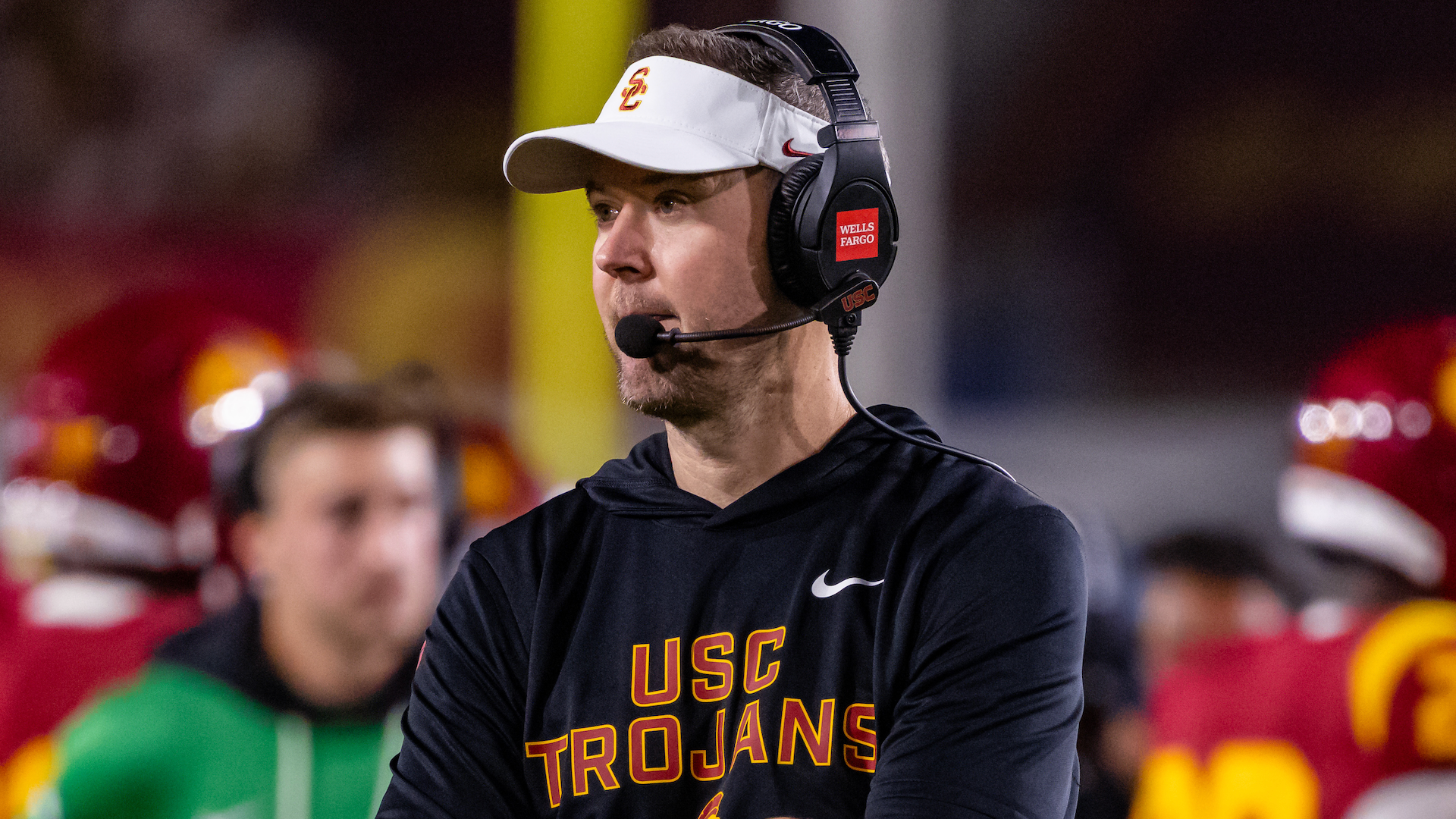
1. Lincoln Riley, USC
Is there a coach nationally with more at stake from a premium perspective than Riley? Given USC's No. 1 signing class, the return of quarterback Jayden Maiava and a schedule that includes several quality matchups, the window for CFP validation is now for the Trojans.
At most programs, a 9-4 season like 2025's finish would generate optimism. At USC, it simply raises the next question: When is the breakthrough coming? That's the reality Riley faces entering his fifth year with the Trojans. He was hired away from Oklahoma to restore one of college football's bluebloods to championship contention, not merely keep USC relevant.
While there have been flashes of excellence -- including a Heisman winner in Caleb Williams and multiple top-tier recruiting classes -- the one accomplishment that matters most remains absent: a playoff appearance.
The pressure surrounding Riley isn't necessarily about job security. It's about expectations finally matching the resources. Everything in Los Angeles that's needed to win big is now in place. Even Riley has acknowledged this roster is built to compete.
What's changed is the margin for excuses. For the first time during Riley's tenure, USC has experience, depth and continuity throughout the program. The Trojans return a large portion of their roster and have invested heavily in fixing longstanding defensive issues. The infrastructure is in place.
Yet the challenge is enormous. USC faces one of the toughest schedules in the country with matchups against Ohio State, Oregon, Penn State and other Big Ten contenders. Navigating that gauntlet will determine whether the Trojans finally become a playoff team or remain stuck in the tier below college football's elite.
That's why Riley has so much to lose. A playoff berth would validate the rebuild and reestablish USC as a national contender. Another season falling short would intensify questions about whether one of the sport's brightest offensive minds can deliver championships in the Big Ten era.
At USC, good is never good enough. And Riley needs to be elite this fall to make it stick.
2. Mike Norvell, Florida State
The uncomfortable truth in Tallahassee is this: Norvell enters the 2026 season needing more than progress. He needs results. That's what makes Florida State's current situation feel untenable.
Just three years removed from an ACC championship and an undefeated regular season in 2023, the Seminoles have crashed back to earth in stunning fashion. A disastrous 2-10 campaign in 2024 was followed by another losing season in 2025, leaving Florida State with a combined 7-16 record over the last two years. University leadership retained Norvell for 2026, but the decision appeared driven as much by financial realities as football confidence, given the enormous buyout attached to his contract.
That's the problem.
When a coach returns because the administration believes he can unquestionably lead the program back to prominence, there's stability. When a coach returns because firing him is financially painful, every Saturday becomes a referendum.
The height of Norvell's tenure, which came initially from the depths of the post-Jimbo Fisher era, was the memorable 2023 finish. College football, however, is a what-have-you-done-lately business, and since that playoff snub, the Seminoles have struggled to maintain momentum, posting one of the ACC's worst conference records while simultaneously watching rivals gain ground.
The pressure extends beyond wins and losses. Recruiting must improve. Player development must be enhanced. Fan confidence must return. Most importantly, Florida State must look like a program moving forward rather than one trying to recapture a fleeting moment from three seasons ago.
In today's college football landscape, a program's seventh season is typically when a coach has either established long-term staying power or when the conversation shifts toward what's next. Norvell's overall record at Florida State sits barely above .500 at 38-34 entering 2026, and patience is running thin.
That's why this fall feels different. For the Seminoles, this isn't simply another season. It's tenure-defining and will determine whether Florida State still believes he's the answer.
3. Lane Kiffin, LSU
Again, this is not a hot seat discussion. However, given the amount of money LSU has shelled out ahead of Kiffin's first season in Baton Rouge, anything short of a CFP berth will be considered a failure, whether the former Ole Miss lead wants to admit it or not.
Most first-year coaches are afforded a grace period, but Kiffin won't get one at LSU. All the positive momentum sustained this offseason through talent acquisition and coaching hires simmers if the Tigers fail to impress. Kiffin wasn't hired to rebuild the Tigers. Instead, he was hired to win immediately, and LSU's administration made a blockbuster move to lure him away from an SEC rival after six successful seasons and multiple double-digit win campaigns, believing he was the coach capable of returning the program to championship contention.
The problem? At LSU, expectations begin where most programs hope to finish. The Tigers won national championships under their last three long-term head coaches. Nobody associated with LSU is interested in hearing about a multi-year process. The schedule only adds to the pressure.
His debut comes against Clemson before LSU opens SEC play with a road trip to Ole Miss, the very program he left behind. Those games will immediately shape the national perception of his tenure. A fast start could launch LSU into playoff conversations. A stumble out of the gate would intensify scrutiny surrounding one of college football's most polarizing coaches.
What Kiffin has most to lose is his reputation as an elite coach capable of winning at the highest level. He spent six years proving he could elevate Ole Miss into a perennial contender. LSU is supposed to be the place where good seasons become championship runs. Anything short of playoff contention will leave critics wondering whether Kiffin's success has a ceiling.
Fair or not, that's the standard.
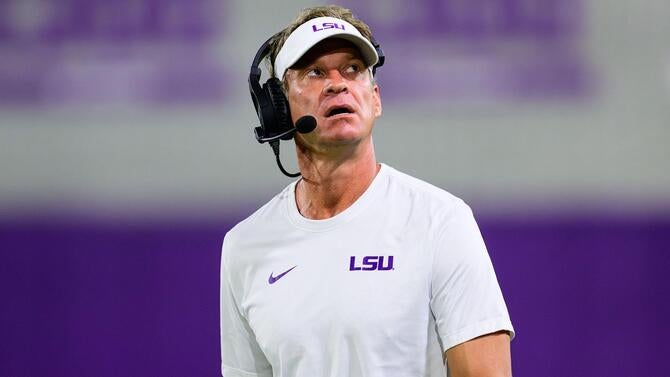 Lane Kiffin faces immediate pressure to win at LSU in 2026. Getty Images
4. Luke Fickell, Wisconsin
Fickell's value has torpedoed since the Badgers hired him away from Cincinnati. Everyone within the sport raved about the move, as close to a sure thing as Wisconsin could get, considering Fickell's multiple conference titles and the Group of Five's first playoff appearance with the Bearcats.
Fickell carried a reputation as one of the sport's premier program-builders, but none of that has shown up in Madison. Three seasons later, the results haven't matched the billing, a 17-21 overall record that includes an ugly 10-17 mark in the Big Ten.
The biggest reason Fickell's tenure has never taken off is simple: Wisconsin has lost its identity. For decades, the Badgers won with a formula that was easy to understand through a physicality-first mindset. They developed offensive linemen, dominated the line of scrimmage, ran the football and played hard-nosed defensively.
Under Fickell, Wisconsin attempted a dramatic philosophical shift toward a more modern spread attack, but the transition has produced more confusion than progress. The Badgers have struggled offensively, quarterback play has been inconsistent, and the program has often looked caught between two different visions of football.
The results have been alarming. After a modest 7-6 debut season in 2023, Wisconsin regressed to 5-7 in 2024 and then bottomed out at 4-8 in 2025. It forced Wisconsin athletic director Chris McIntosh's hand in November, after he committed to increased investment and said the athletic department was evaluating the program and would stick with Fickell for at least one more year.
What's perhaps most concerning is that player development -- a cornerstone of Wisconsin's historical success -- has not been evident. Critics inside and outside the program have pointed to transfer portal misses, roster attrition and a lack of improvement at key positions. The Badgers' 2026 portal haul includes 33 transfers, newcomers who will ultimately decide Fickell's fate based on their play and execution.
There are signs of hope that Wisconsin's recruiting momentum has improved dramatically in recent months. The Badgers' current 2027 group of commits rank 13th nationally, but will those pledges back off if the 2026 season goes south? That remains undecided.
Wisconsin didn't hire Fickell to finish near the bottom of the Big Ten while talking about future recruiting classes. They hired him to elevate the program into a playoff contender. Until the wins start coming, however, Fickell's tenure will be remembered less for what was promised than for what never materialized.
5. Mike Locksley, Maryland
Unachievable expectations aren't the issue for Locksley with the Terrapins. No decision-maker or high-end booster is expecting Maryland to compete for a Big Ten Championship.
The program's current state of stagnation, however, is unacceptable. At some point, every college football coach reaches a crossroads where past accomplishments no longer buy future patience. That's where Maryland finds itself with Locksley heading into Year 8, coming off consecutive 4-8 campaigns and its last bowl appearance in 2023.
Locksley deserves significant credit for raising the program's floor. He delivered three consecutive bowl victories from 2021-23 and helped Maryland achieve a level of consistency the Terrapins had not enjoyed in years. But those accomplishments feel increasingly distant with only two conference victories over their last 18 games.
The expectation now is tangible improvement. Patience becomes a finite resource when first-year athletic director Jim Smith got behind Locksley in November and promised strengthened NIL support this season with a focused effort on roster retention and portal acquisition. The Terrapins did a commendable job keeping their top-end freshmen in the program, but a transfer haul ranked No. 61 nationally by 247Sports leaves much to be desired.
Locksley will have to hit several evaluation home runs there, or Maryland could be a Big Ten vacancy in November.
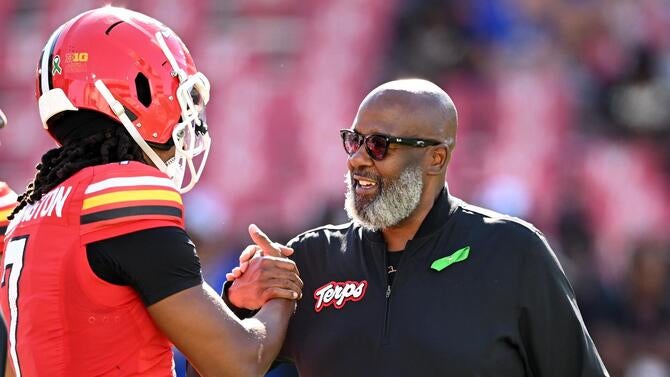 Maryland's Mike Locksley (right) enters his eighth season as coach, coming off consecutive 4-8 campaigns. Getty Images
6. Shane Beamer, South Carolina
For the first time since arriving in Columbia, Beamer enters a season where goodwill alone may not be enough. That's why 2026 feels like a potential make-or-break year for South Carolina's coach, who was a win away from getting the Gamecocks to the CFP in 2024 before last fall's unexpected swoon.
Beamer restored energy to the program after Will Muschamp's ill-fated tenure and pulled off several signature wins to help elevate South Carolina's national profile and recruiting strength. That said, eight losses last fall changed the conversation about his future and led to numerous coaching staff changes.
One win in eight conference games was embarrassing, given the roster strengths with players like LaNorris Sellers and Dylan Stewart coming off impressive seasons. Beamer recruited and developed those two stars, along with Nyck Harbor and others, who give the Gamecocks one of the most talented rosters they've had in a decade at the program this season.
The pressure has now intensified because of what's at stake. Expectations inside the program have been elevated accordingly, with Beamer publicly embracing lofty goals after last season's disappointment.
What's troubling is that South Carolina's struggles have not been isolated to one area. Offensive execution inconsistencies and line issues target player development worries that followed the Gamecocks into the offseason. Even diehards acknowledge that the offensive coordinator hire of Kendal Briles and the need for the running game to improve immediately.
At some point, programs stop evaluating trajectory and start evaluating results. A return to bowl contention and relevance in the SEC race quiets the noise. Another losing season, however, could leave South Carolina's administration facing a difficult question about the program's future direction under Beamer's watch.
Add CBS Sports on Google Join the Conversation comments