To play this video you need to enable JavaScript in your browser.
This video can not be played
Figure caption,Aerial footage shows floods on Nepal-Tibet border
ByTessa Wong- Published1 hour ago
Preliminary investigations have pointed to a collapsed glacier as the cause of the flash flood on the Nepal-Tibet border, highlighting the issue of rapidly melting Himalayan ice, scientists have told the BBC.
Initial reports of an earthquake led many to believe that a tremor had caused a landslide, which in turn caused the flood that has killed at least 177 people.
However, the US Geological Survey then clarified that the disaster was caused by a "glacial collapse", which is when a glacier or part of a glacier disintegrates.
The impact of the collapsed glacier hitting the bottom of a valley was so powerful that it registered a magnitude of 5.2, according to USGS data and scientists who have analysed the event.
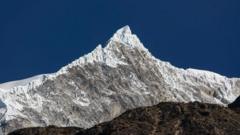
Dr Simon Cook, a glacier expert with the University of Dundee, told the BBC his team had detected that the lower part of a glacier in Nepal near the Langtang Lirung peak - which is approximately 15km (9 miles) west of the site of the floods - had collapsed.
He estimated that the glacier collapsed in a northwesterly direction and then travelled westwards downstream.
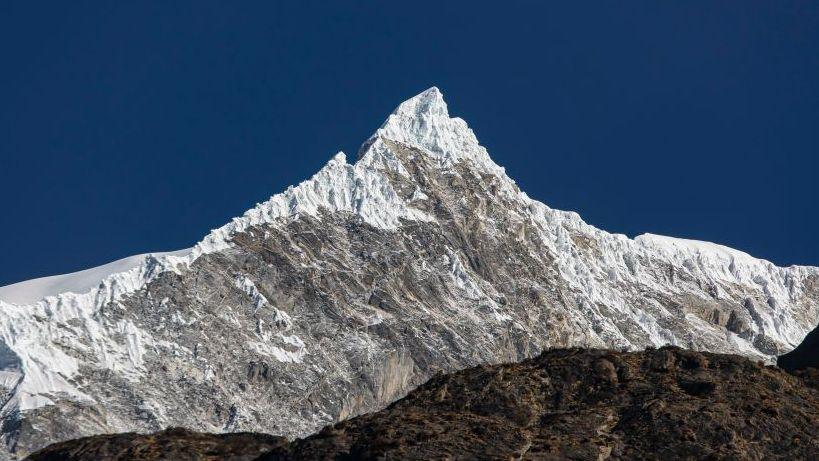 Image source, Getty ImagesImage caption,
 Scientists say a collapsed glacier near the Langtang Lirung peak likely caused the disaster
More than 800 missing in Nepal as authorities say glacial collapse triggered flash flood
People pulled from mud in Nepal after deadly flash floods
- Published3 hours ago
What we know about deadly Nepal-Tibet floods
- Published1 hour ago
Video shows scale of flash flood hitting Nepal-Tibet border
- Published20 hours ago
An analysis , externalby the International Centre for Integrated Mountain Development (ICIMOD), an intergovernmental scientific institution, found there could have been "an ice-rock avalanche originating from a high-altitude area".
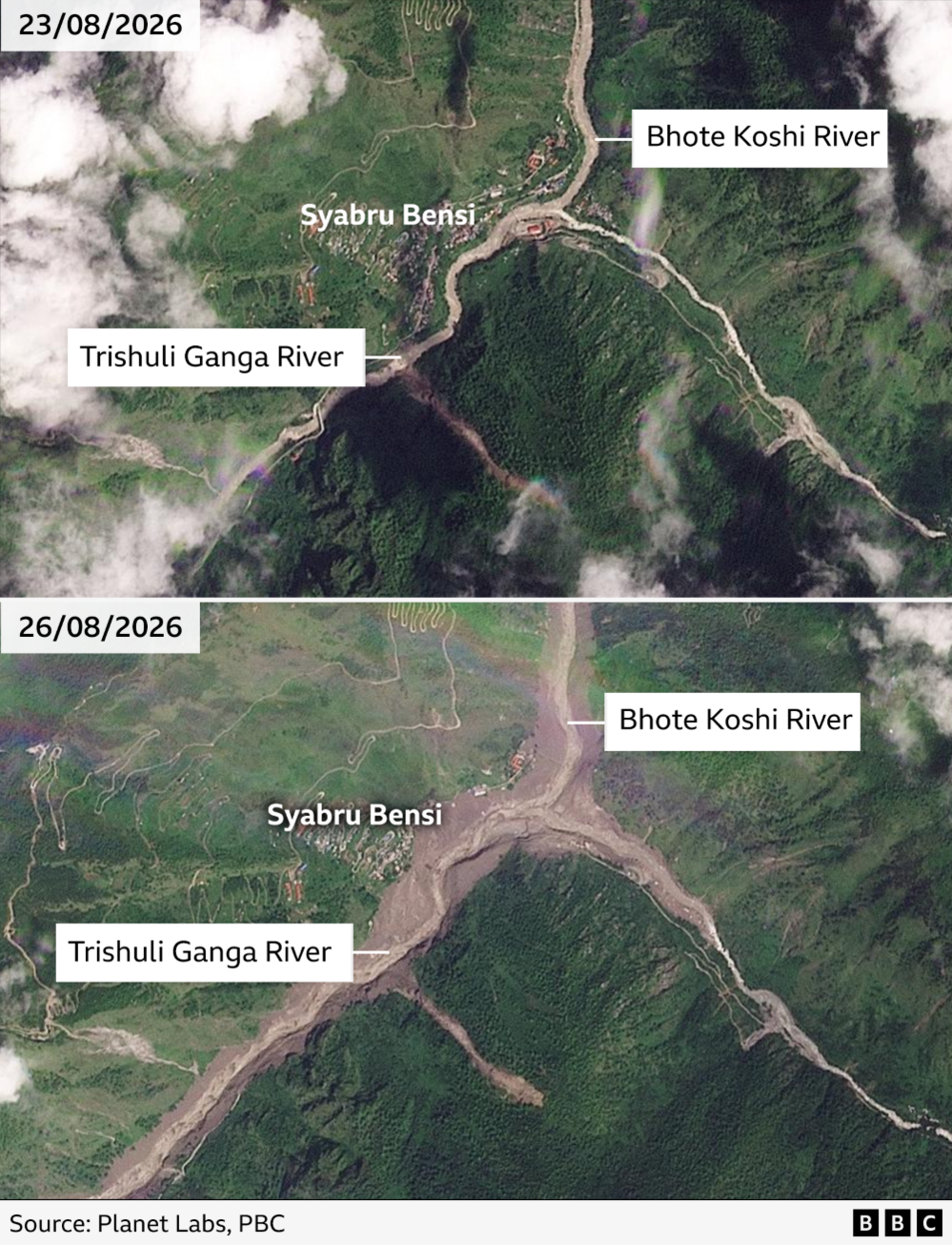
This caused a "large volume of ice and rock debris" to enter the Lende Khola, a tributary of the Bhote Koshi river, which in turn generated a sudden surge in the river carrying water, sediment and large boulders downstream.
The centre found that water levels in rivers downstream rose between seven to nine metres within a span of 30 minutes, and several water monitoring stations were washed away or damaged.
The area is flanked by steep mountains, and videos of the flood show debris and water funnelled down the river at a rapid pace.
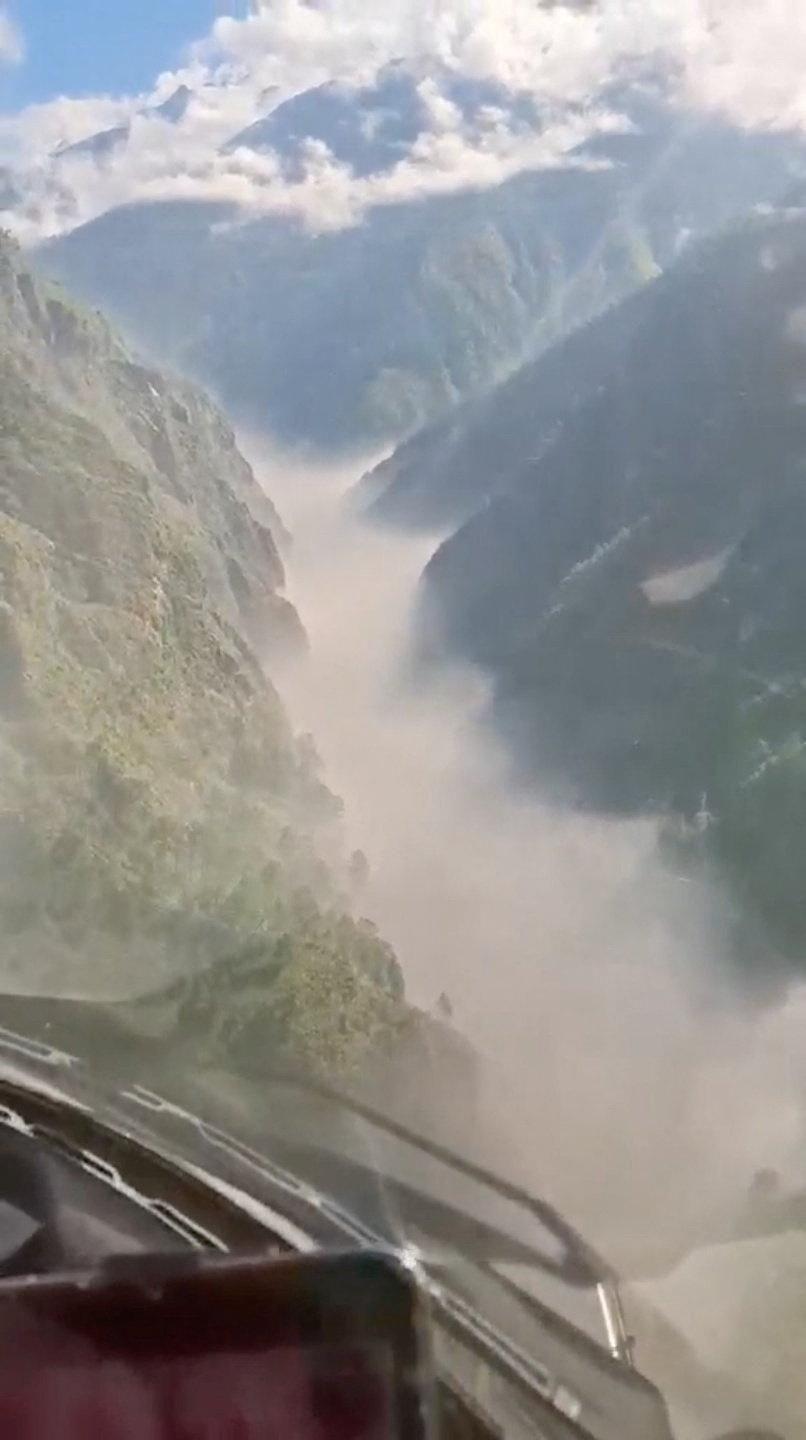 Image source, ReutersImage caption,
 Images from the scene show the steep sides of the affected valley
It is unclear what caused the glacier to collapse on Wednesday.
But scientists for years have warned of melting ice and permafrost in the Himalayas due to warming temperatures and climate change.
One analysis released by ICIMOD, external earlier this year found that the Hindu Kush Himalaya glaciers are now losing ice at double the rate since 2000. This in turn exacerbates dangers such as flooding.
Dr Cook pointed out that there have been similar incidents of floods and landslides caused by glacier collapses in India, Switzerland and Italy in recent years.
In 2021, a large chunk of a Himalayan glacier collapsed in the valley of Chamoli in northern India, sending a cascade of debris and water downstream that killed 200 people. Scientists later estimated that the impact of the collapse was equivalent to 15 atomic bombs.
Even in Nepal, the same region saw flooding last year caused by a glacial lake in Tibet bursting.
Mohd Farooq Azam, a specialist with ICIMOD, said the increasing frequency of hazards in the cryosphere - or the frozen parts of the Earth - "is becoming more visible than ever before. The pace of change is so rapid that current efforts are struggling to keep up."
While it is difficult to say whether any single event is caused by climate change, "when you look at the pattern of these events, you do think climate change could have an impact," said Dr Cook.
"The logic is that with a warming planet, you will see shrinking glaciers, lots of snow melt. The permafrost [centuries-old frozen soil] that is partially holding some mountainsides together is warming and thawing and degrading."
"So you are going to get more landslides, debris flows, glacial meltwater, lake outbursts, glacier collapses, because climate warming ultimately destabilises these high mountain environments."