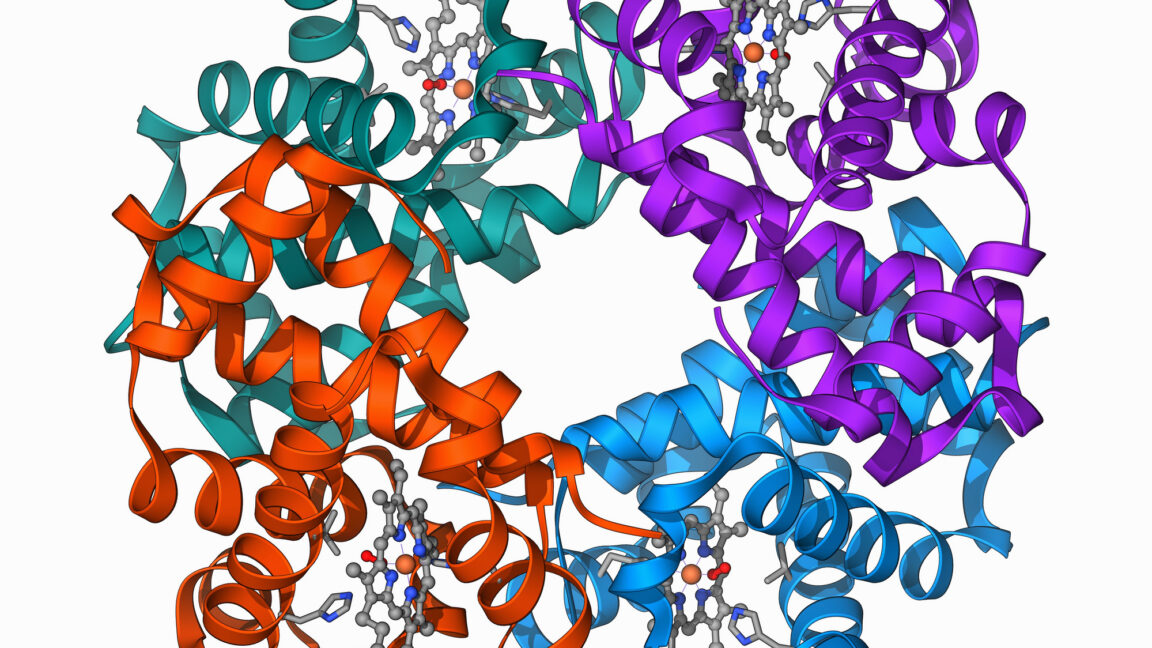
Almost as soon as researchers started exploring the capabilities of the CRISPR/Cas9 system, they recognized its potential use in targeted gene editing. But the intervening decades have seen slow progress as people worked to determine how to do so in a way that would be safe for use in humans. It was only a little over two years ago, decades after CRISPR's discovery, that the FDA approved the first CRISPR-based therapy, for sickle-cell anemia.
Now, following up on that success, a large Chinese collaboration has followed up with a description of an improved gene editing system that produces more focused changes and fewer mistakes. And they've used it to produce a therapy that addresses a disease that's closely related to sickle-cell anemia: β-Thalassaemia.
Gene editing and its limits
The CRISPR/Cas-9 system provides bacteria with a form of immunity. It uses specially structured RNAs (called guide RNAs) that can base-pair with a targeted sequence. The Cas-9 protein then recognizes this structure and cuts the DNA nearby. This is quite effective when the guide RNA can base-pair with a DNA virus, as the resulting cut will inactivate the virus.