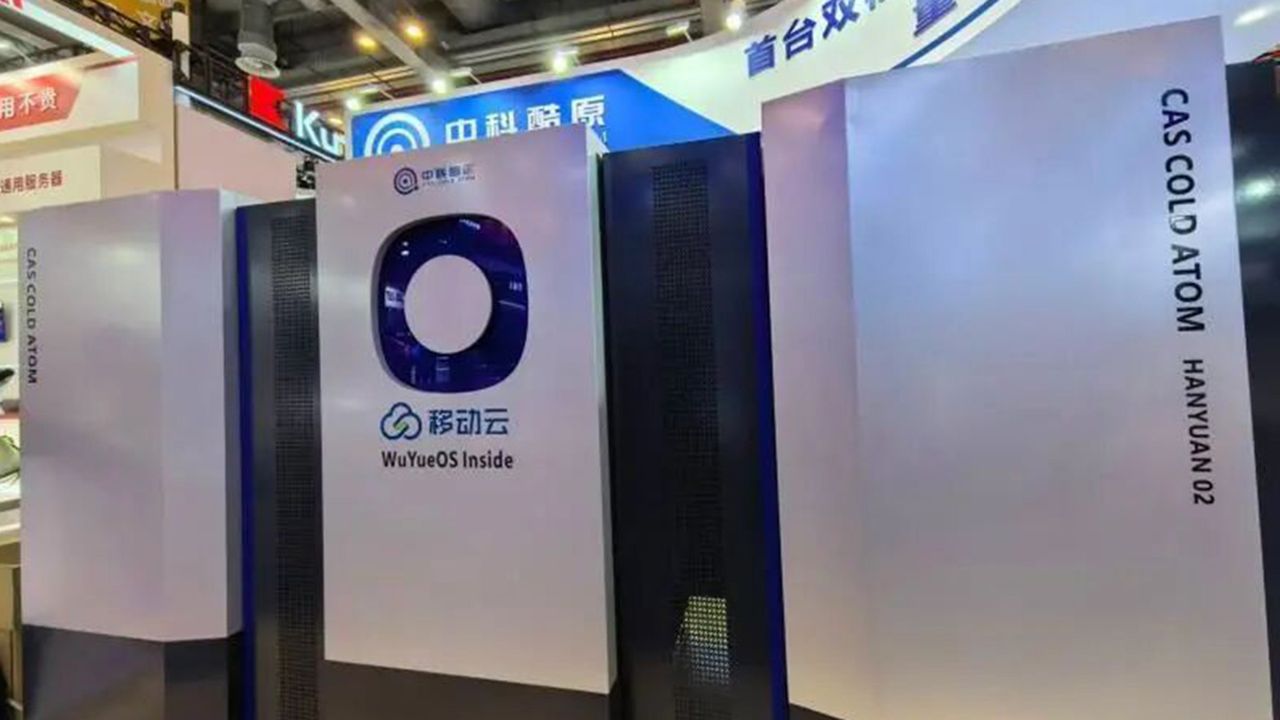
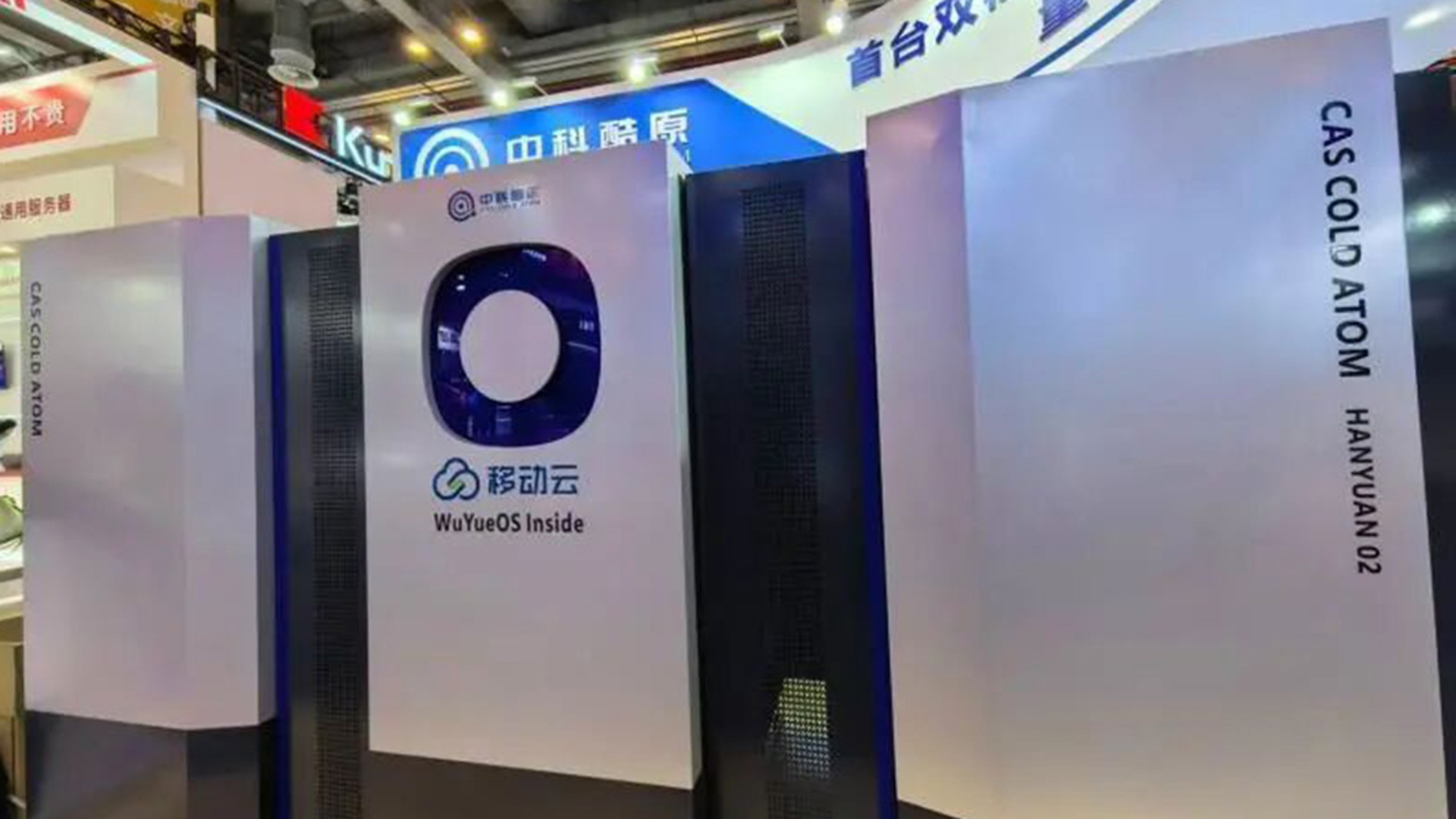
 A close up of the Hanyuan-2 atomic quantum computer developed by the Chinese Academy of Science's Cold Atom Technology. (Image credit: Downloaded from the official WeChat account of the Science and Technology Daily) Share this article 0 Join the conversation Add us as a preferred source on Google Newsletter Subscribe to our newsletter
 A Chinese company has unveiled what its researchers are calling the world’s first "dual-core" quantum computer. It's a neutral-atom system designed to improve stability, efficiency and error correction by pairing two independent qubit arrays in a single machine.
The device, called "Hanyuan-2," is being promoted as a step toward more scalable quantum hardware. The Wuhan-based company CAS Cold Atom Technology announced the new machine in May, according to reports by ST Daily, a Chinese state media outlet, with technical details published on its website.
Related stories- Scientists trained an AI model using an IBM quantum computer — and it answered questions correctly that the base model couldn't
- Breakthrough in experimental light-powered quantum computers could mean scaling them up is now far more viable
- New 'trick' fixes major flaw with lasers in neutral-atom quantum computers — inching us closer to more powerful systems
 In contextKeumars Afifi-Sabet
The announcement leaves many questions unanswered. For one, it's unclear if qubits can be entangled between the two separate "cores" — that is, achieving coherence in qubits between the rubidium-87 array and the rubidium-85 array or within the same cores. It's an important distinction, as two independent 100-qubit arrays aren't capable of solving problems that a single 200-qubit array could.
There's also no mention in the state media press release of benchmarks, including key metrics like coherence time or error rates. How this system compares with neutral-atom quantum computers built by scientists in the U.S. or Europe is unknown. A qubit lifetime of 100 seconds is also practically unheard of — with some notable exceptions.
The announcement is a tantalizing first step and seemingly a first of its kind. However, until the researchers fill in some of these blanks, the true significance of the "dual-core" system in minimizing errors and achieving "below threshold" noise suppression will remain murky.
TOPICS Alan BradleyFreelance contributor
Alan is a freelance tech and entertainment journalist who specializes in computers, laptops, and video games. He's previously written for sites like PC Gamer, GamesRadar, and Rolling Stone. If you need advice on tech, or help finding the best tech deals, Alan is your man.
View MoreYou must confirm your public display name before commenting
Please logout and then login again, you will then be prompted to enter your display name.
Logout