China just completed not one but two space missions, less than a week after a Long March 7A rocket explosion briefly grounded its fleet.
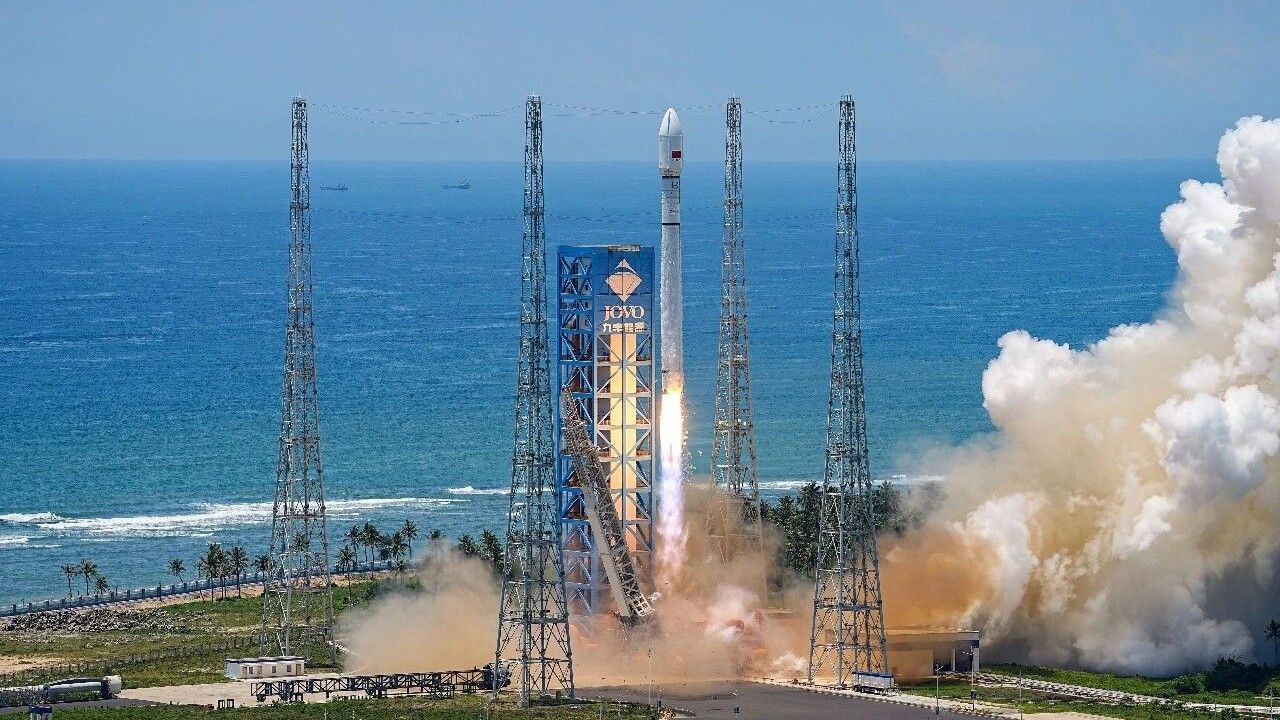
The state-owned China Aerospace Science and Technology Corporation (CASC) returned to flight with the launch of a Long March 12 rocket from the Hainan Commercial Space Launch Site in Wenchang. The rocket lifted off on Aug. 16 at 12:10 a.m. EDT (0410 GMT; 12:10 p.m. local time in China) and delivered a stack of 24 internet-beaming satellites into low Earth orbit (LEO).
It was the first launch since China's Long March 7A exploded mid-flight on Aug. 10. Footage of that mission showed the Long March 7A's fairing section and the upper portion of the launch vehicle bending backward about 85 seconds after liftoff, resulting in the total loss of the rocket and its payload, the Zhongxing-4B communications satellite.
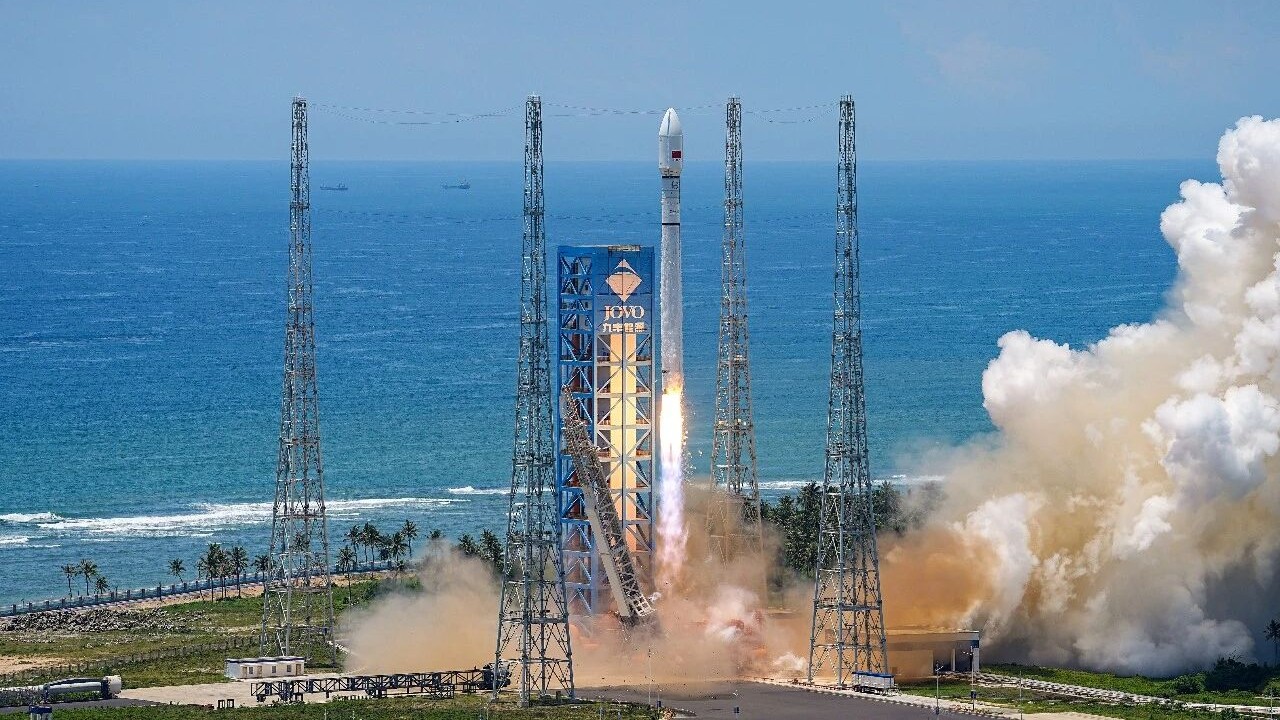
Less than 24 hours after the successful Long March 12 mission, and about 1,300 miles (2,100 kilometers) north of the Wenchang launch site, a Long March 2C rocket lifted off from the Taiyuan Satellite Launch Center, in Shanxi province. The launch occurred on Aug. 16 at 11:02 p.m. EDT (0302 GMT and 11:02 a.m. local time in China on Aug. 17), and delivered the "SEO" satellite for the United Arab Emirates to its planned orbit, according to the China National Space Administration.
Of the pair launched over the weekend, the Long March 12 is much more similar to the Long March 7A; the two stand 203 feet (62 meters) and 197 feet (60 m) tall, respectively. But the two rockets are designed with different purposes. The slightly wider Long March 12 is a two-stage rocket optimized for delivering relatively heavy payloads to LEO and sun-synchronous orbits, while the three-stage Long March 7A is designed for higher-altitude missions to geostationary transfer orbit and beyond.
In contrast, the Long March 2C stands only about 141 feet (43 m) tall. The two-stage rocket is used primarily for smaller payloads to LEO, with a lifting capacity of only about 3.9 tons, and has a long list of launches dating back to 1982. The newest of the three, the Long March 12, was introduced in 2024 and has now launched seven missions — all successful. Last week was the Long March 7A's second failure in a total of 18 launches since the rocket's debut in 2020.
CASC hasn't provided an update on the Long March 7A incident, other than a statement indicating that the cause is under investigation. As that continues, China has more launches on the horizon.
The second flight of the Zhuque-3 rocket, a launch vehicle designed for reusability from Chinese company Landspace, is scheduled to launch Tuesday evening (Aug. 18), and a Long March 5 rocket carrying the Chang'e 7 robotic mission to the moon's South Pole is expected to lift off on Sunday (Aug. 23).