Space Verdict
Celeston's newest smart telescope serves up incredible images of deep sky objects and the moon, but those looking for a more traditional experience might feel limited.
Pros
- +
Clear deep sky photos in seconds
- +
Quick set up
- +
Easy-to-use, helpful app
- +
Stacks and processes images automatically
- +
Can be operated from a distance, allowing you to remain inside
Cons
- -
Planetary viewing can be underwhelming
- -
Large and heavy
- -
Connecting to devices can be tricky at times
Why you can trust Space.com Our expert reviewers spend hours testing and comparing products and services so you can choose the best for you. Find out more about how we test and review products.
Jump To:For those looking to capture images of distant nebulas and galaxies, the Celestron Origin Mark II Intelligent Home Observatory makes the experience easier than ever. Within minutes of taking the telescope out of the box and pairing it with a device, users will be capturing images of deep space with ease. A built-in camera and easy-to-navigate app make the Celestron Origin Mark II one of the smoothest astrophotography experiences we've tried.
That's not to say the telescope is for everyone. Priced at $4,299 (£3,211 GBP), the Celestron Origin Mark II has somewhat of a steep barrier to entry that might turn some beginners off who aren't sure if they want to get serious about an astrophotography hobby. The Celestron Origin Mark II also isn't going to before most users; the Origin series excels at taking crisp images of deep sky objects but isn't going to be your go-to for viewing the moon or the planets of the solar system.
But if you can swing the price tag and are looking for a no-frills, all-in-one astrophotography solution that's ready to use within minutes of unboxing, the Origin Mark II might be what you're looking for. It's a bit larger, heavier and more expensive than some of the smart telescopes we've reviewed, but it offers the image and optics quality you'd expect from a trusted brand like Celestron.
Like many smart telescopes on the market today, the Origin Mark II does not feature an eyepiece. All of the images you'll capture will be sent straight to a smartphone or tablet, making this less of a true telescope experience and more of a photographic rig.
Celestron Origin Mark II review
Celestron Origin Mark II: Design
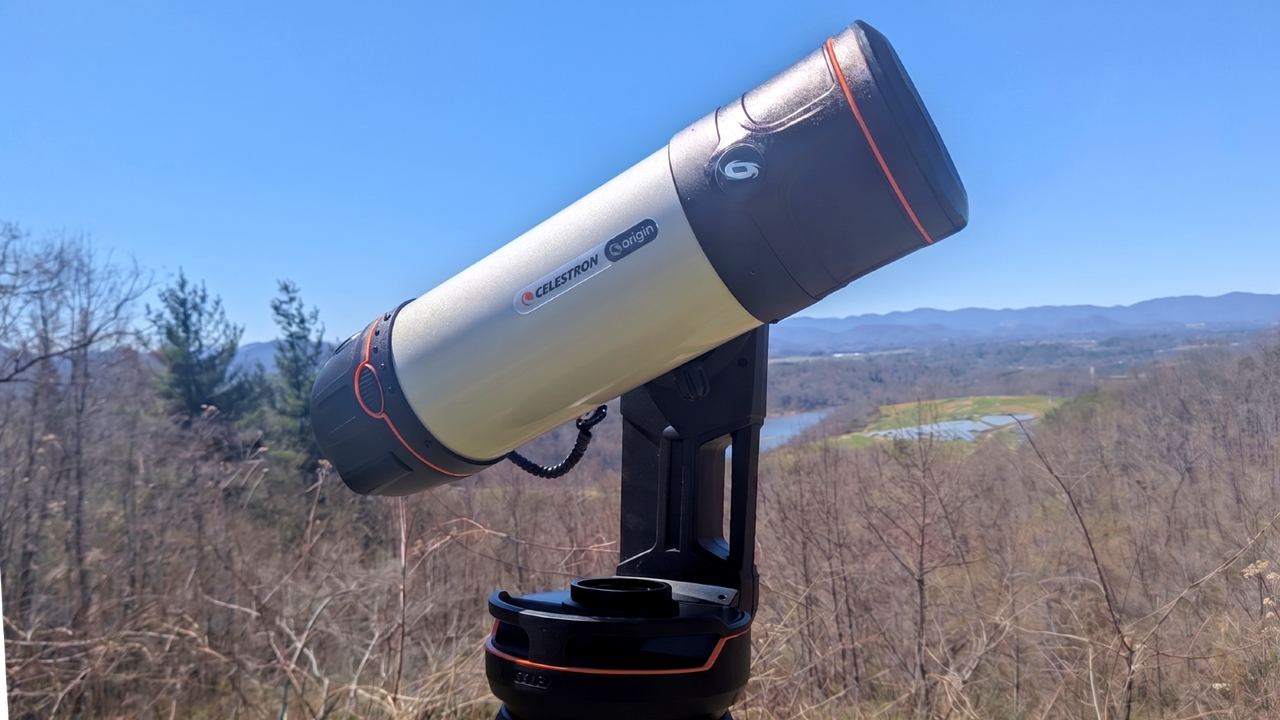
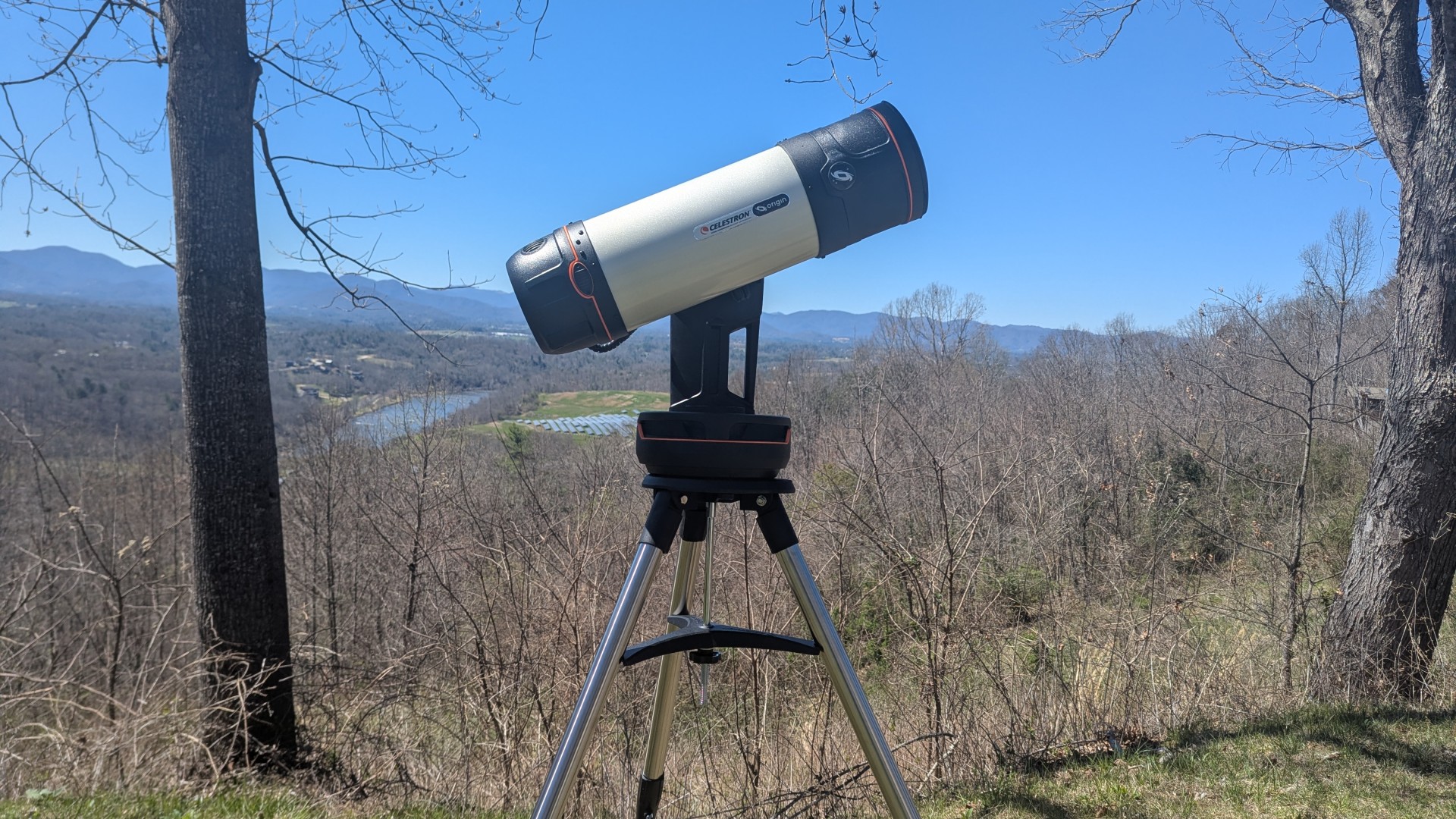
The Celestron Origin Mark II has a clean, classic look and high build quality. (Image credit: Future/Brett Tingley)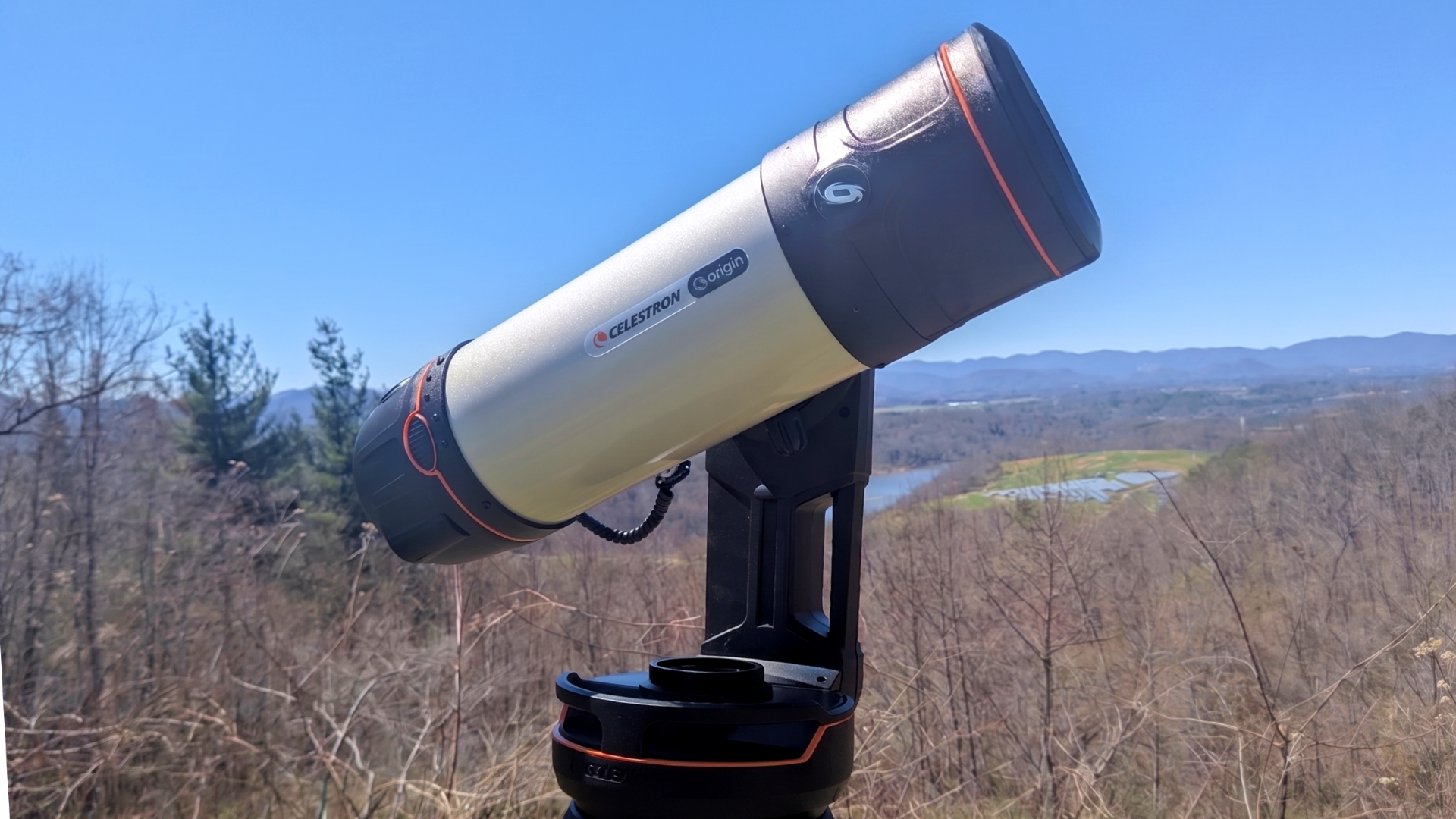
- Looks more like a standard telescope than some smart observatories
- Easy, fast set up
- Larger and heavier than some smart telescope models
The Origin Mark II is loaded with user-friendly features. The motorized mount has a perfectly placed handle to help users move the telescope around once set up, and its tripod is incredibly sturdy. Just note that the entire unit weighs 41.6 lb (18.6 kg) when assembled; this isn't a telescope you'll want to carry around and move from location to location once it's put together.
Celestron makes several carrying bags for tripods and a padded carrying bag for the Origin optical tube, but we did not try one during this review. We previously reviewed the Celestron Origin Mk I that included a carrying bag, and found the bag very comfortable to carry and well-padded for keeping your investment safe.
The mount also has a red LED that shines down onto a tray with a rail, making this area handy for holding filters or other accessories temporarily while you swap them out. The mount also features a bubble level to help users accurately level the unit during setup. We found this feature especially useful when using the Origin Mk II in mountainous outdoor terrain. The tripod also includes extendable spikes to help it balance on loose or uneven surfaces.
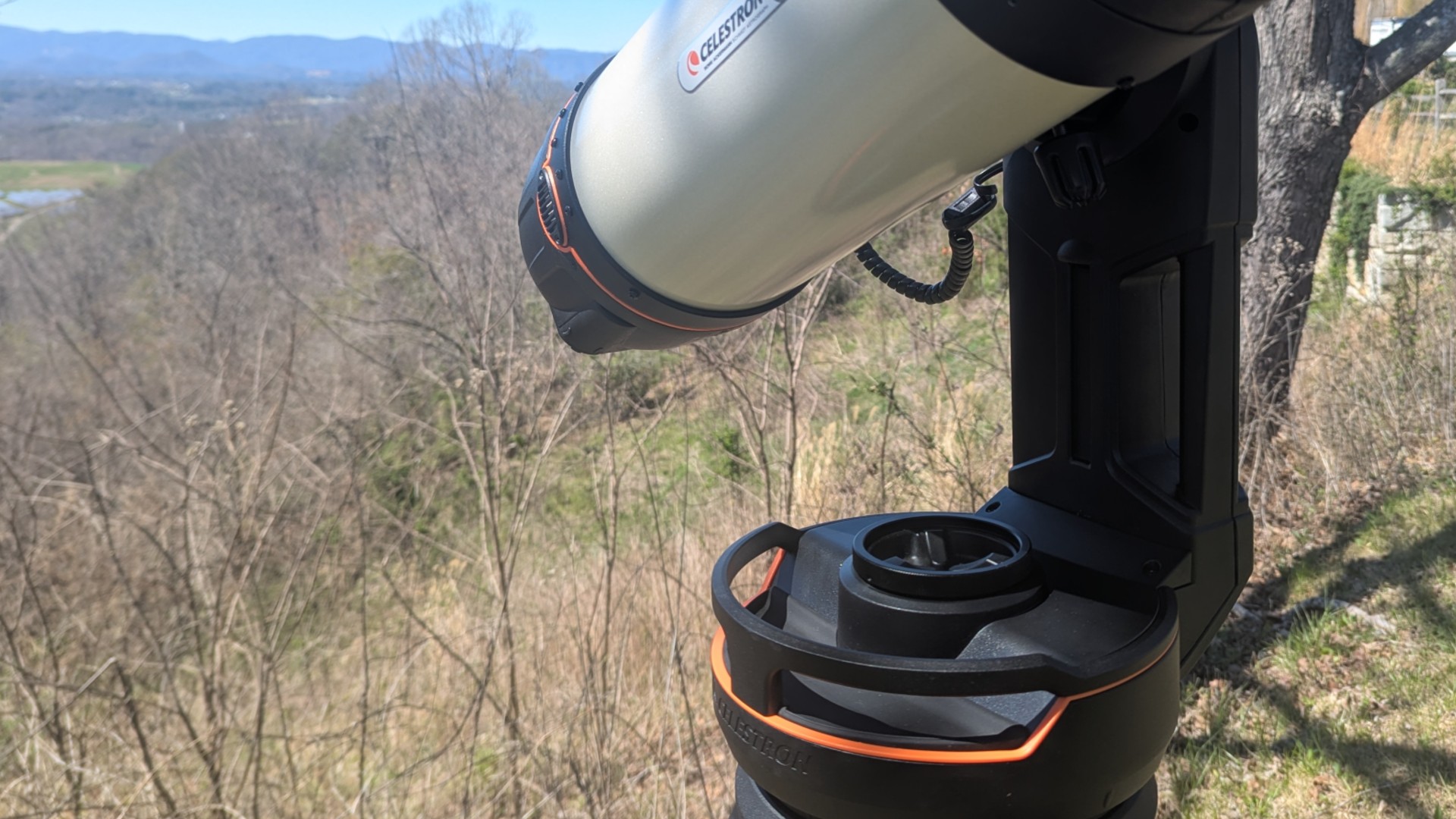
Aesthetically, the Origin Mk II looks nearly identical to its predecessor the Mark I with classic Celestron styling. The white optical tube, which separates from the mount for storage and carrying, resembles many of the traditional tubes in Celestron's long history.
(Image credit: Future/Brett Tingley)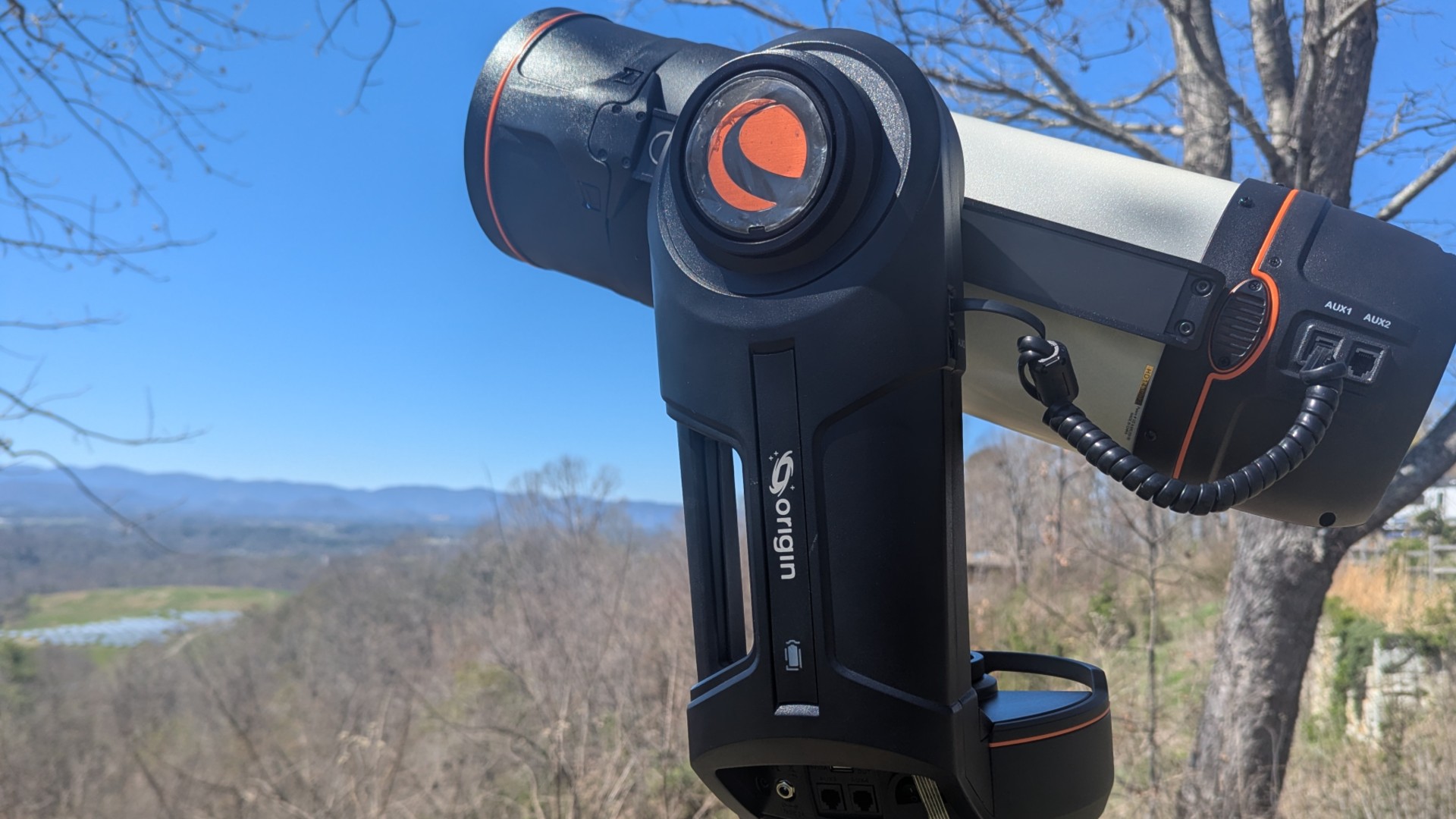
Note that the Origin series makes a good deal of noise when it's powered on and slewing between targets. There are cooling fans inside the optical tube that run while in operation, but they aren't loud enough to be heard from more than a few feet away. The mount's motors, meanwhile, could be heard from inside our house while we were testing the unit in our driveway. It's not a dealbreaker by any means, but just be aware that if you bring this to a star party with other skywatchers, the noise could be an issue in some settings.
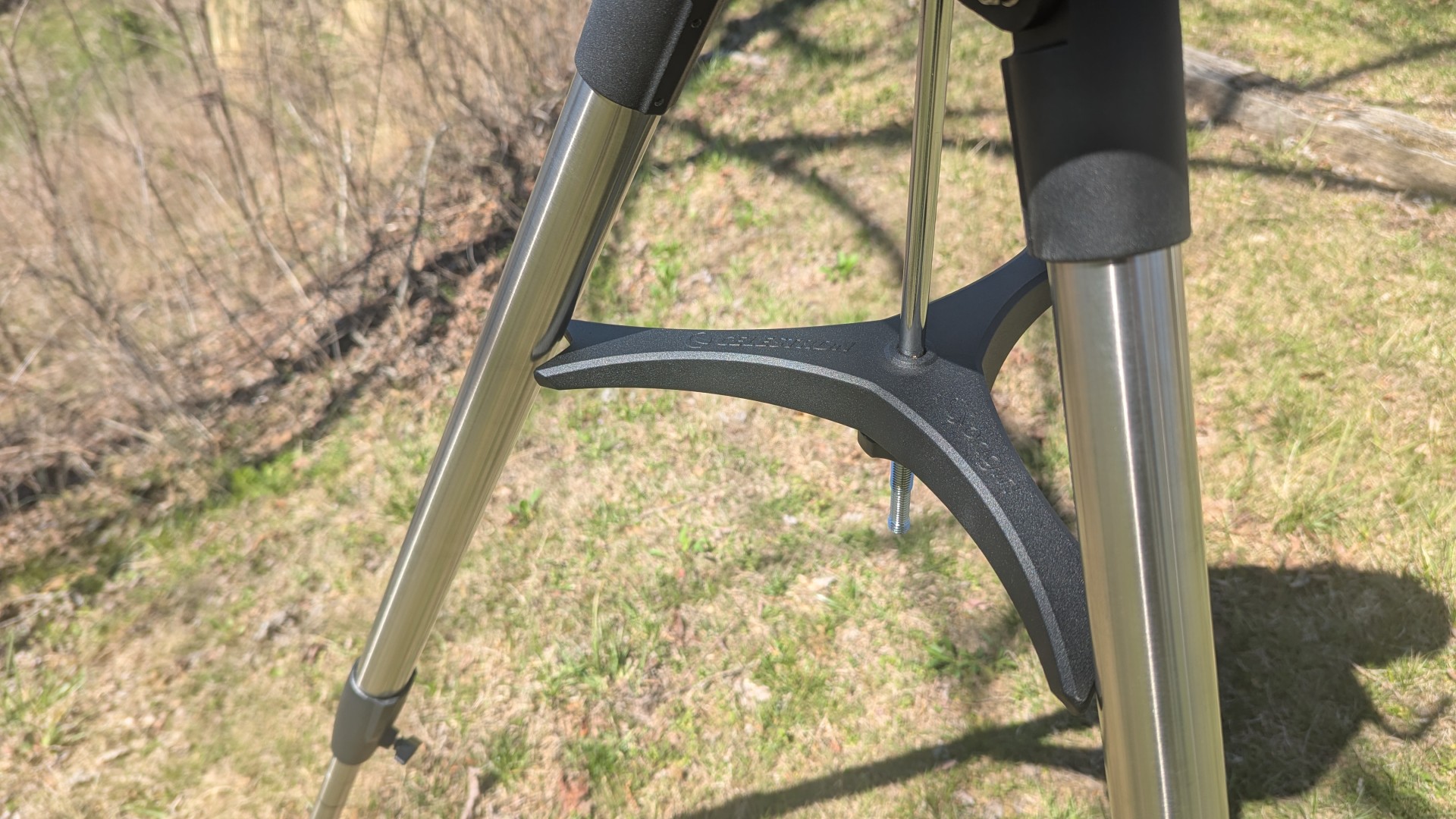
Image resolution: 8.4 MP
Focal length: 335mm
Storage: Based on paired mobile device
Field of view: 1.32 x 0.75 degrees
Mount: Motorized Alt-azimuth
Limiting magnitude: 13.60 to 14.0
Battery: 6+ hrs
Mirror diameter: 152mm
Weight: 41.6 lb (18.6 kg)
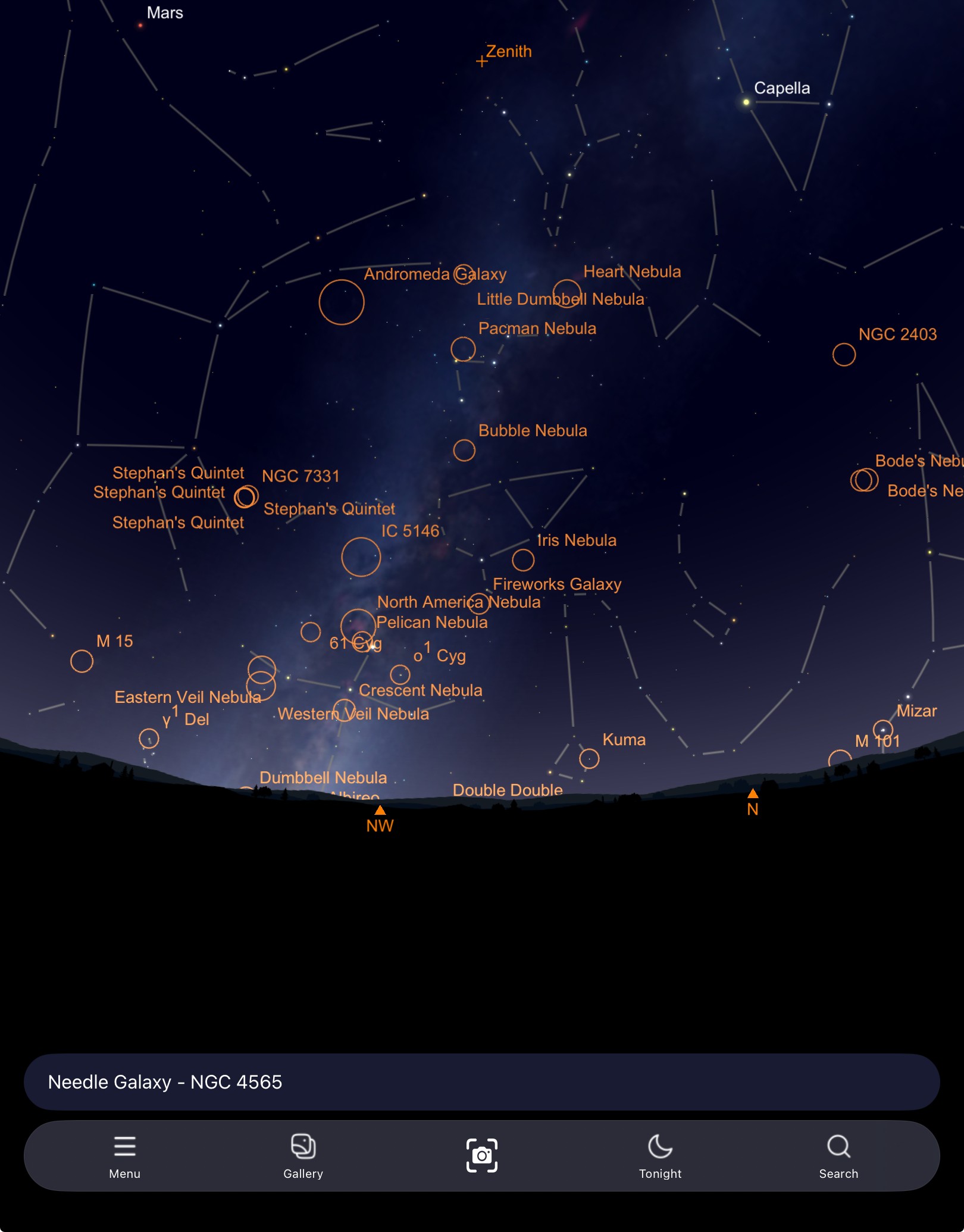
The Origin Mark II is controlled entirely through Celestron's Origin app. We tested the app on an iOS device and found it fast and well-organized into just a few menus. Users who are used to using an stargazing app will find the Origin app easy to navigate; simply look through the "Tonight" menu for a list of objects that will be visible for your location and select one to have Origin slew towards it automatically.
From there, its as easy as pressing the Camera icon to get the Origin Mark II to start capturing images in seconds. Origin Mark II will focus automatically, although there are options for manual focus and exposure if users feel confident adjusting settings on their own.
The app will automatically stack and align the images it takes, removing (or at least reducing) the need for post-processing images in other software. In our review, we used the Origin Mark II's automatic settings, and found our images to be clear and detailed without the need for manual adjustment of settings.
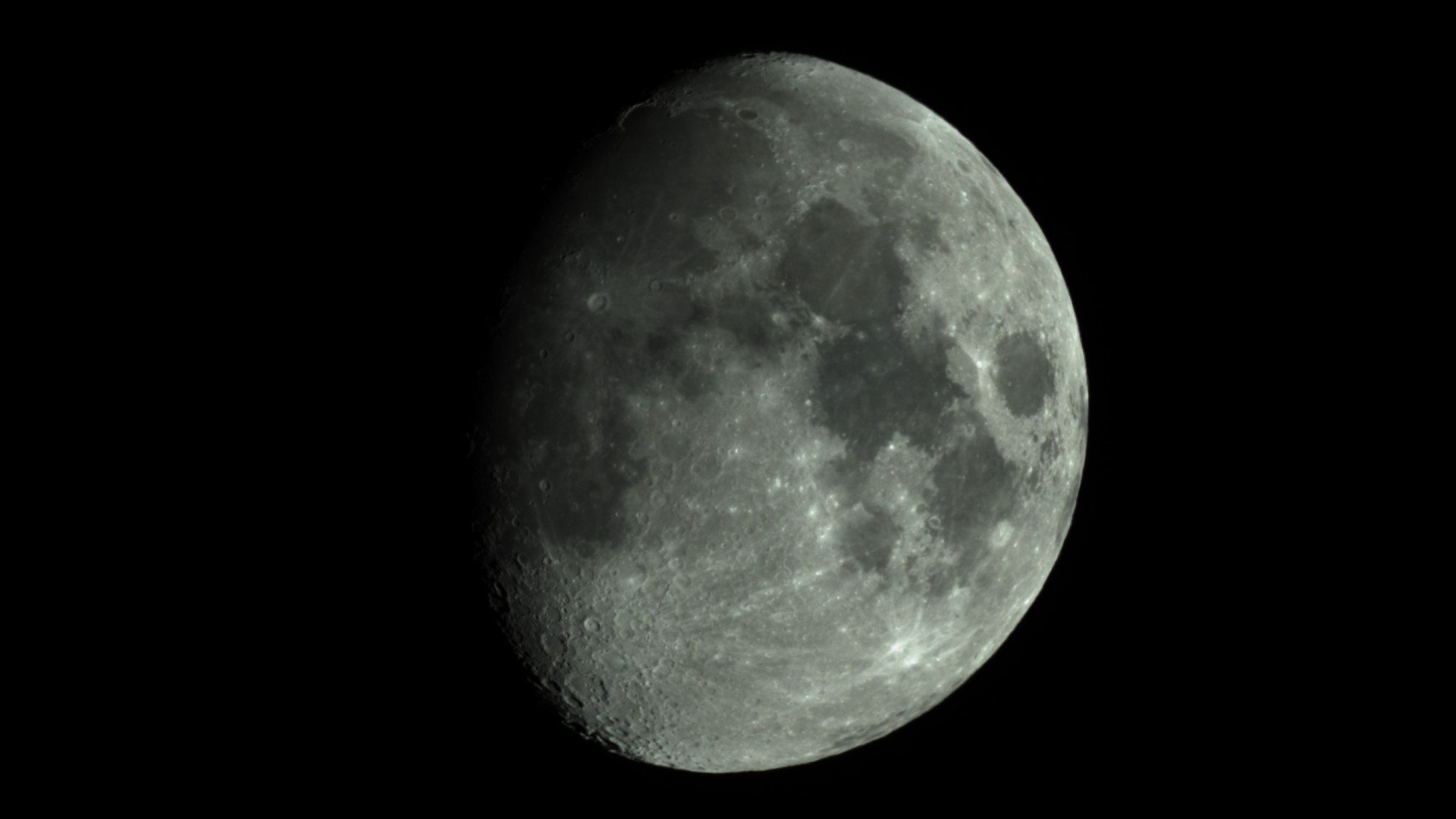
However, the Origin Mark II also features a "Snapshot" mode that allows users to take single-image captures of objects such as the moon. We found the Origin Mark II to be well-suited for taking highly detailed images of the lunar surface.
While the manual controls are easy to use, dialing in the exact focuser position can be tricky at first due to the lag between making an adjustment on the app and the telescope responding to it. The focuser controls are a simple 'up' or 'down' button, with a set amount of adjustment and no fine-tuning option.
Celestron Origin Mark II: Performance
- Deep sky objects are bright and detailed
- Locates and tracks objects effortlessly
- No need for stacking or processing images
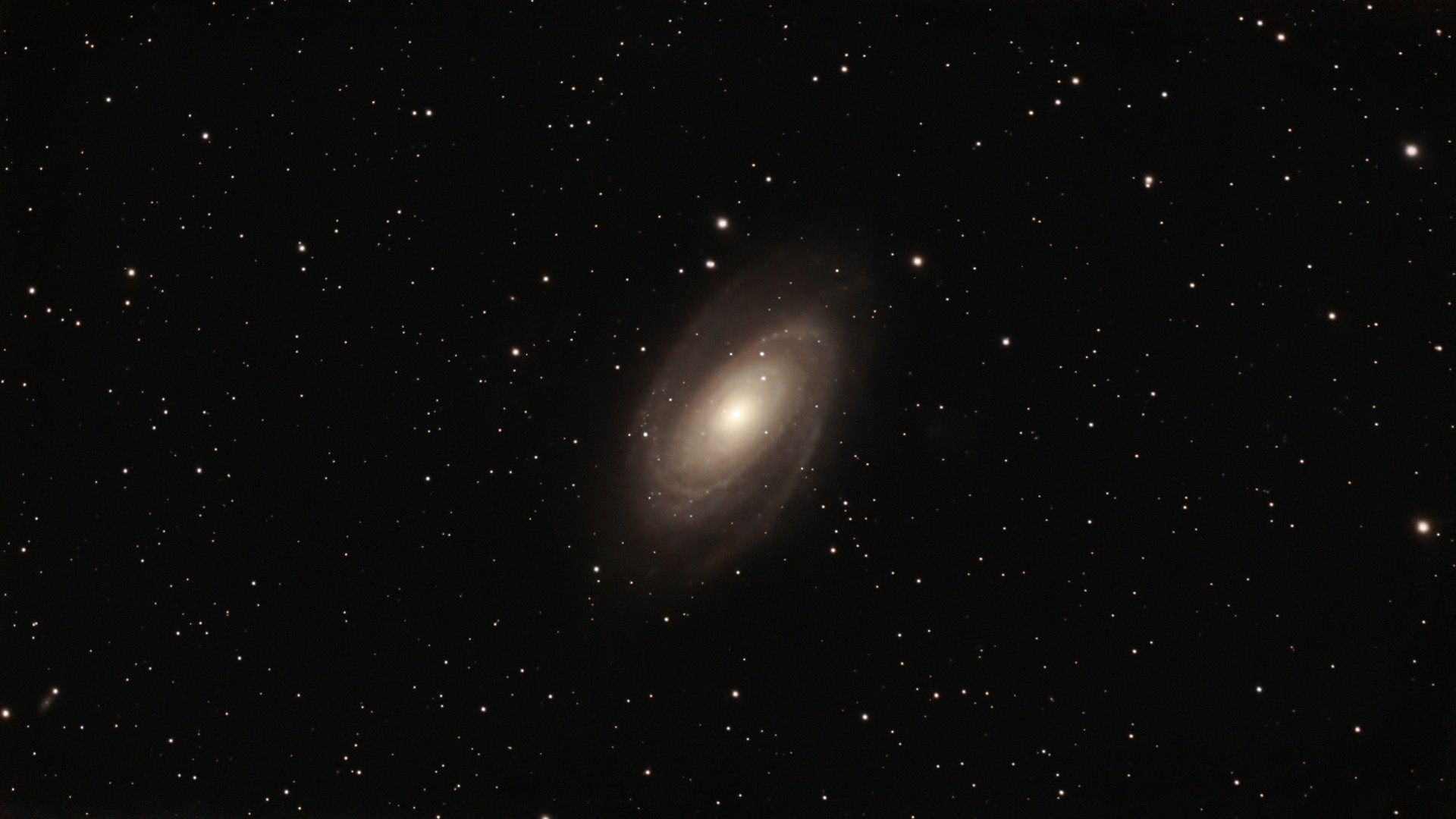
We tested the Origin Mark II under moderately dark skies (Bortle 4.0), with some urban light pollution nearby. The Origin Mark II we tested came with a nebula filter, which was able to filter out some of the light pollution and offer crisp views of galaxies such as Bode's Galaxy and the Whirlpool Galaxy.
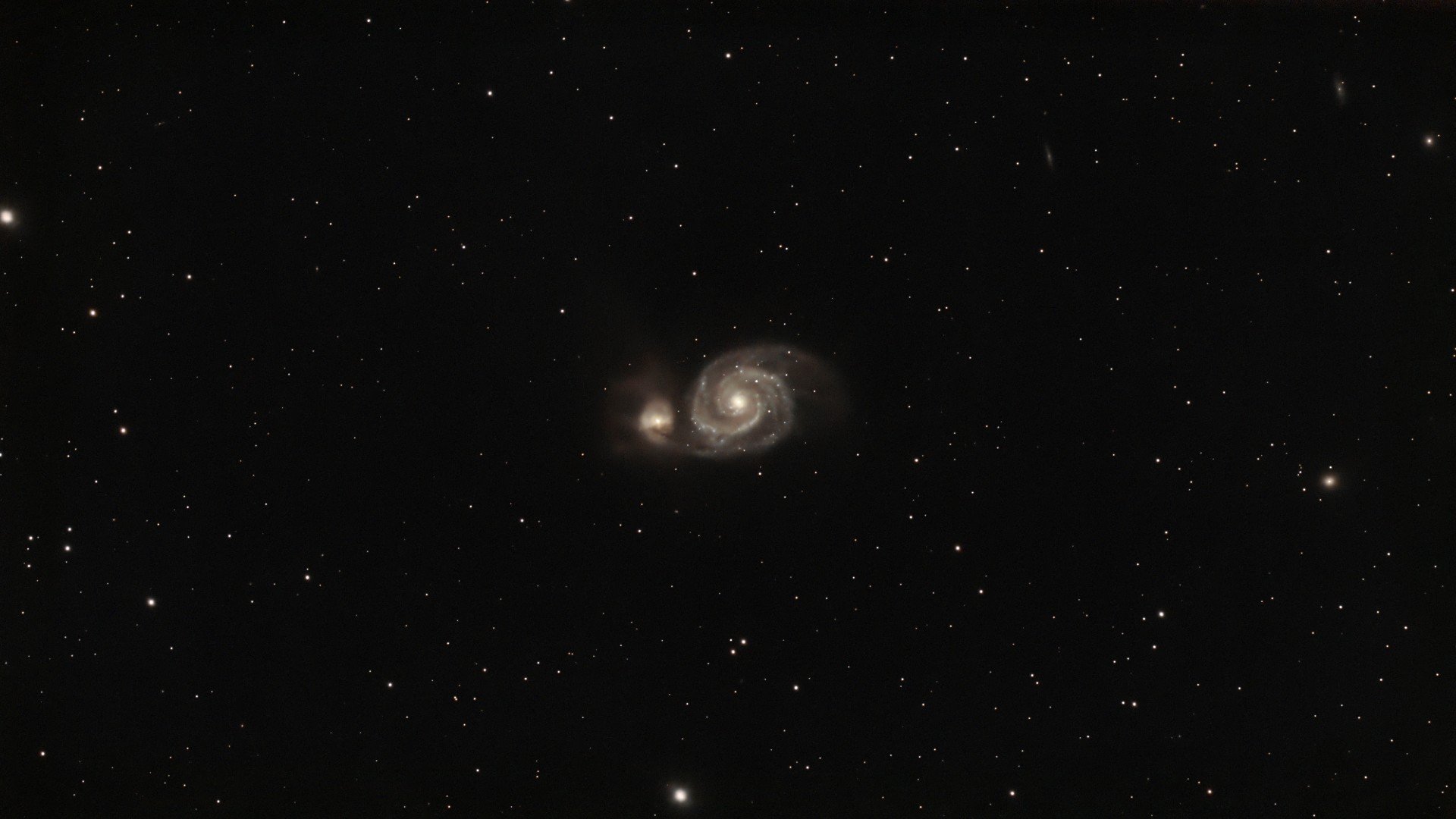
We had a little trouble getting our iOS device to connect to the Origin Mark II's Wi-Fi network; this happened a few times during our review of the Mark I as well. Still, with a little patience, we were able to connect to the scope and begin selecting objects in the app within a few minutes.
Stars appear as bright pinpoints in the images without any color fringes or starburst patterns, and there was virtually no noise in the images.
The Needle Galaxy or NGC 4565 as imaged by the Celestron Origin Mark II (no processing). (Image credit: Future/Brett Tingley)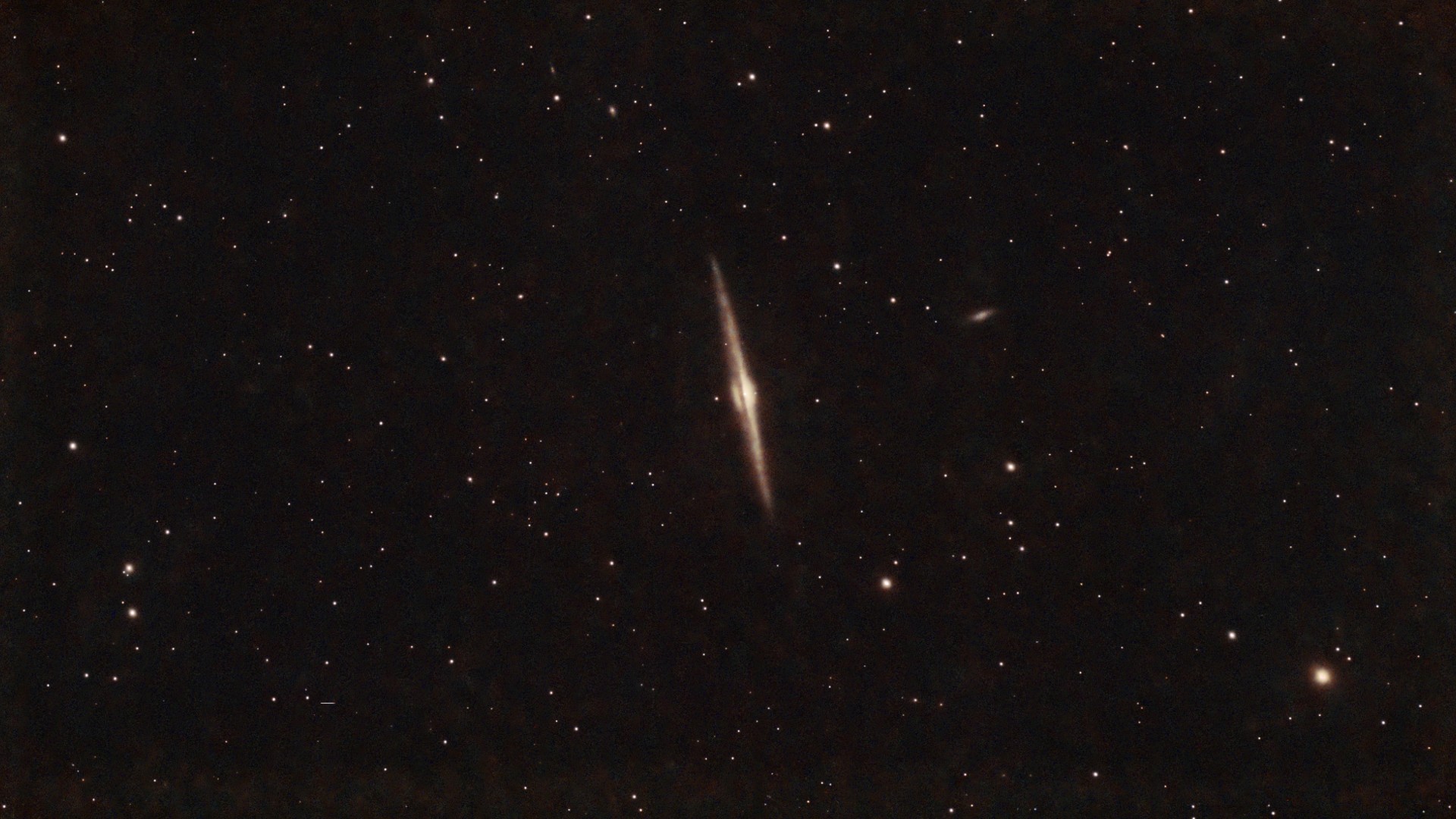
Intermittent clouds overhead during our review prevented us from taking hours-long exposures of these objects, but even exposures of just 5-10 minutes brought out the shapes and details of deep sky objects in crisp detail.
NGC 2403 or Caldwell 7 as imaged by the Celestron Origin Mark II (no processing). (Image credit: Future/Brett Tingley)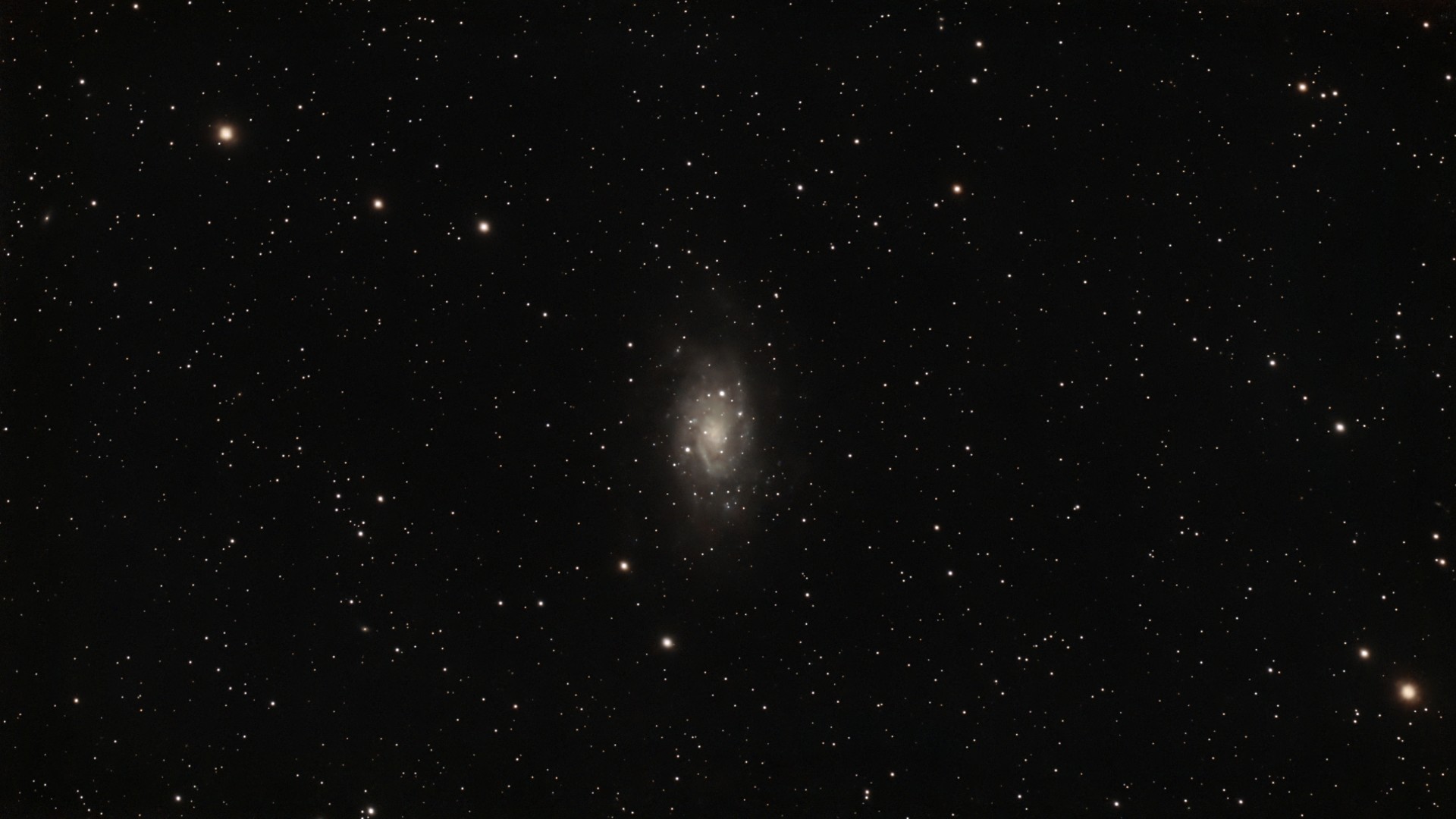
Celestron Origin Mark II: Functionality
- Very limited controls make for an effortless experience
- Celestron's Origin app is a pleasure to use
- Selecting deep space objects each night is quick and easy
The Origin Mark II and Celestron's Origin app make astrophotography an effortless experience. Once the telescope is paired to your device, the app offers easy-to-navigate menus to choose objects either from a virtual planetarium view or from a list of objects that are visible on a given night.
From there, tapping on any object will offer users a "Center Object" option which will slew the Origin directly to it. Taking an image is then as easy as tapping on the camera icon, and the Origin Mark II will do the rest.
Should you buy the Celestron Origin Mark II?
Buy it if:✅ You like automation: The Celestron Origin Mark II tracks targets with ease and stacks multiple processed images automatically.
✅ You want fast, easy deep sky imaging. The Origin Mark II sets up in minutes and can capture detailed images of distant galaxies and nebulas with just a few taps on your device.
Don't buy it if:❌ You like a customized experience: Origin is designed to be an automated experience. Aside from filters, the telescope and app are designed to do much of the work for you. This might appeal to many users, but not to all.
❌ You want something portable: The Origin Mark II is described as a "home observatory" for good reason. This is not a telescope you'll be able to throw over your shoulder and bring with you camping or hiking.
❌ You want a screen-free telescope: Like many smart telescopes, the Origin Mark II does not have an eyepiece. All images are viewed on mobile device.
The Celestron Origin Mark II puts deep space objects right at your fingertips. Within minutes, users can take highly detailed photos even in light-polluted areas. It's a great rig for beginners because it removes the need for multiple pieces of equipment or dedicated software to handle post-processing and stacking of images.
If you're looking for a beginner-friendly all-in-one astrophotography telescope that and the $4,299 (£3,211 GBP) price tag is within your budget, the Origin Mark II might just be what you're looking for. Within minutes of taking it out of the box and installing the app, you'll be able to take your own images of galaxies, nebulas and other deep sky objects.
Maybe I'm just a traditionalist, but without an eyepiece, the Celestron Origin Mark II feels more like an astrophotography rig than it does a telescope; Celestron does call it a "home observatory," after all.
Nevertheless, the Celestron Origin Mark II is one of the easiest-to-use pieces of photographic equipment I've used and would be an absolute joy for someone looking to do beginner-friendly astrophotography at home.
If the Celestron Origin isn't for you
Want to stick with a smart telescope but want something a bit cheaper? We actually think you couldn't do much better than the Vaonis Vespera Pro II. It's astoundingly detailed, smaller and lighter than the Origin and costs less, too.
Related articlesBest telescopes Best telescopes for beginners Best telescopes for deep space Best smart telescopes Best telescopes for seeing planets Best budget telescopes under $500 Best telescopes for kids Best binoculars
There's a lot to love about this fully-featured intelligent "home observatory," but we understand that full automation and limited customization aren't for everyone. If you want something more traditional, we'd recommend either the Celestron NexStar 8SE which is a powerful catadioptric with a wide scope for additional high-end eyepieces and other accessories, or if you have an even larger budget, go for the even better Celestron Advanced VX 8 EdgeHD which we gave 5/5 stars in our review.
View MoreYou must confirm your public display name before commenting
Please logout and then login again, you will then be prompted to enter your display name.
Logout Brett TingleyManaging Editor, Space.com
Brett is curious about emerging aerospace technologies, alternative launch concepts, military space developments and uncrewed aircraft systems. Brett's work has appeared on Scientific American, The War Zone, Popular Science, the History Channel, Science Discovery and more. Brett has degrees from Clemson University and the University of North Carolina at Charlotte. In his free time, Brett enjoys skywatching throughout the dark skies of the Appalachian mountains.