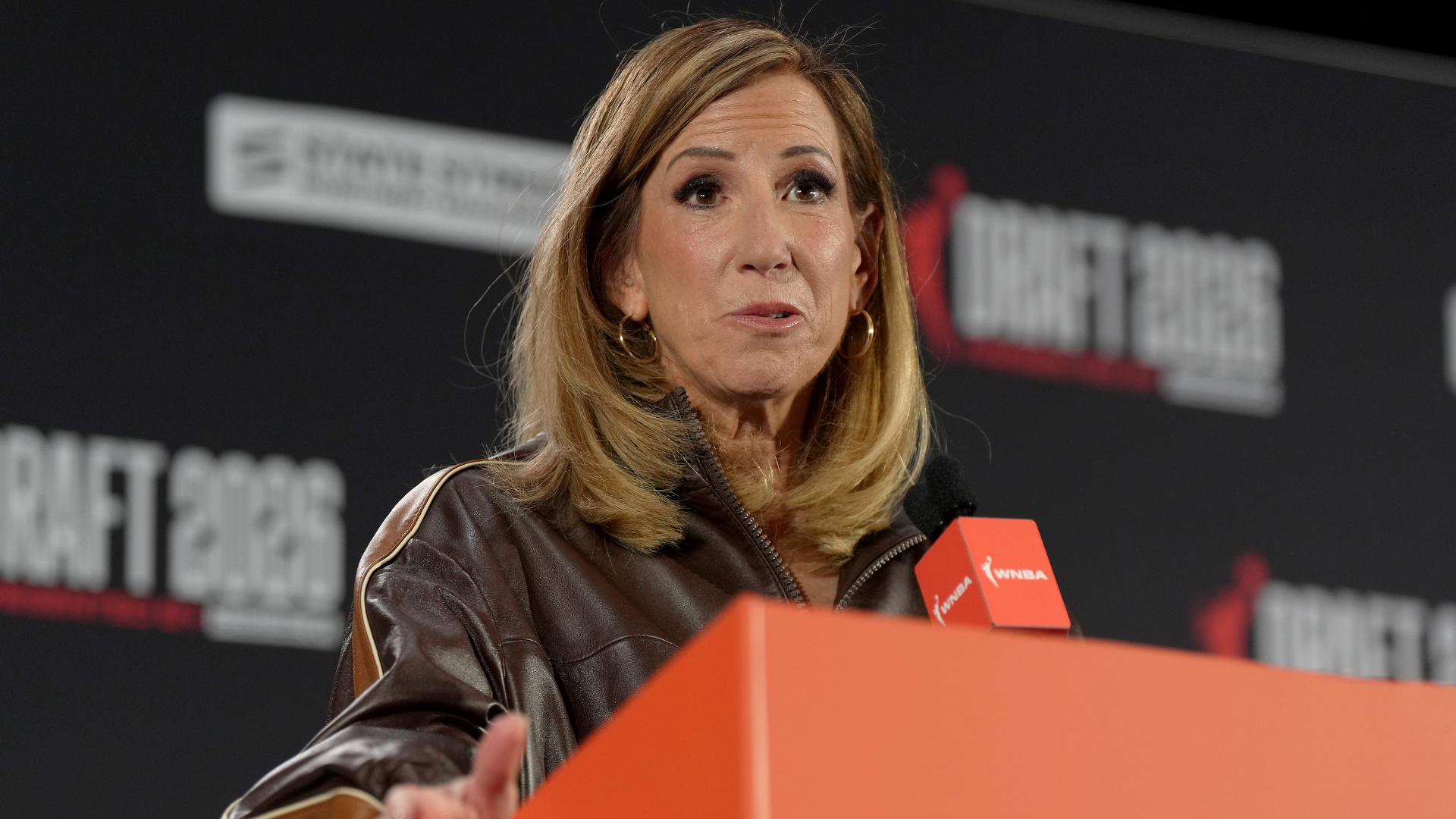
On Friday, it felt like the entire WNBA community let out a collective breath when WNBA commissioner Cathy Engelbert announced that she will retire at the end of this calendar year.
Like most things Engelbert-related, the timing of the news was a bit awkward, coming on a Friday, less than an hour after the United States beat China in the World Cup in Berlin, taking the attention away from a phenomenal Caitlin Clark performance off the bench and Team USA's quest for a fifth straight World Cup gold.
But it was also a welcome announcement. It has been clear for some time that the best thing for both the WNBA and Engelbert herself was a split. Uncertainty about her future with the league hung in the air during every major moment in the WNBA calendar over the past year, from the 2025 WNBA Finals, to this year's draft and especially at WNBA All-Star weekend in Chicago, when tensions were so high between players and the front office that both parties had a virtual meeting the week of the All-Star break to attempt to clear the air.
By announcing this decision before the WNBA returns from FIBA break and the playoffs begin, Engelbert is giving what is shaping up to be a phenomenal postseason a chance to breathe.
The 62-year-old Engelbert, who became the league's first-ever commissioner when she took the job in 2019, has told reporters that this was her decision alone, and that she always planned for her time with the WNBA to be limited.
"I had only intended to do this job for three-and-a-half years," Engelbert told The IX Sports. "I did. It'll be seven-and-a-half by the end of the year, and obviously, I turned 62 in November. [It] was always my goal to retire at 62, and I just feel like we're in a really good place from a variety of perspectives on the league."
Of course, it's natural to have doubts about whether this was, in fact, Engelbert's prerogative and whether the successful businesswoman, who was the first female CEO of Deloitte before coming to the WNBA, will actually be retiring for good at the end of her tenure, or merely taking a pause from the corporate world. But by coming out with this news now, she has the chance to tell her own narrative and leave with grace and purpose. She has earned the right to define the terms of her departure.
But defining a departure is not the same as defining a legacy, and that part of the Engelbert story is a bit more complicated. Her seven years at the helm of the WNBA have unquestionably been a smashing success from a growth standpoint. She ushered the league through two monumental CBA negotiations, with the latest bringing about a 400% increase in player salaries and making dozens of players millionaires overnight. She expanded the league from 12 to 15 teams, with three more set to debut before 2030. She helped land a $3.1 billion television rights deal, $250 million expansion fees and expanded the league office from a skeleton crew of 12 to more than 100 employees.
However, in the past couple of years, her frayed personal realationships with the players and her inability to deftly publicly navigate the league through an explosion of controversies that have enveloped it -- be it racist and homophobic attacks against players, poor officiating, concerns over player safety on and off the court and the recent uproar around the league's lack of a policy about transgender participation -- has severely held back the same league that she helped to grow.
During the playoffs last year, Minnesota Lynx forward Napheesa Collier said the WNBA had the "worst leadership in the world." This season, after her technical foul on Caitlin Clark resulted in her receiving an onslaught of abuse and harassment, Alyssa Thomas criticized the commissioner's leadership.
"We still have yet to hear anything from Cathy," Thomas said at the time. "It's no surprise. You can see what's being said on social media, and I mean it's unfortunate, but as usual, she remains silent, and that's unfortunate when our lives are being threatened."
And at All-Star, when asked their thoughts about Engelbert's future with the league, players stopped short of calling for her to step down, but made it clear they were ready for a change.
"Show us that you hear us, that you're there for us, and then we go from there," A'ja Wilson said. "When it comes from a leadership standpoint, I think I'm big on relationships. I'm big on bonds. I'm big on knowing that I'm seen not as just the athlete, more so as the person."
There will be plenty of questions to answer in the days ahead, and there is absolutely no guarantee that the next commissioner will feel like a step forward a few years into their tenure. But that's a concern for another day.
Engelbert leaves behind a league that is almost unrecognizable from the one she took over, and yet the uncomfortable truth is, most of the WNBA and its fans are not sad to see her go. It was, and is, time.
Add CBS Sports on Google Join the Conversation comments