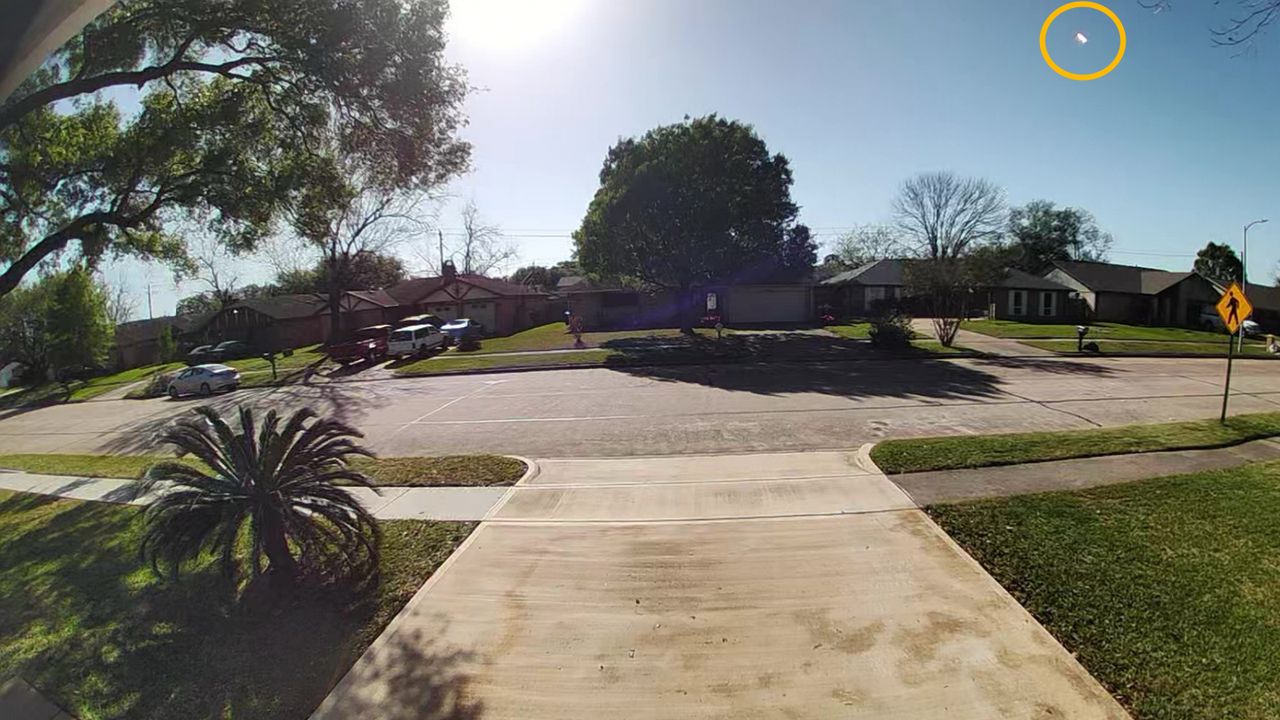
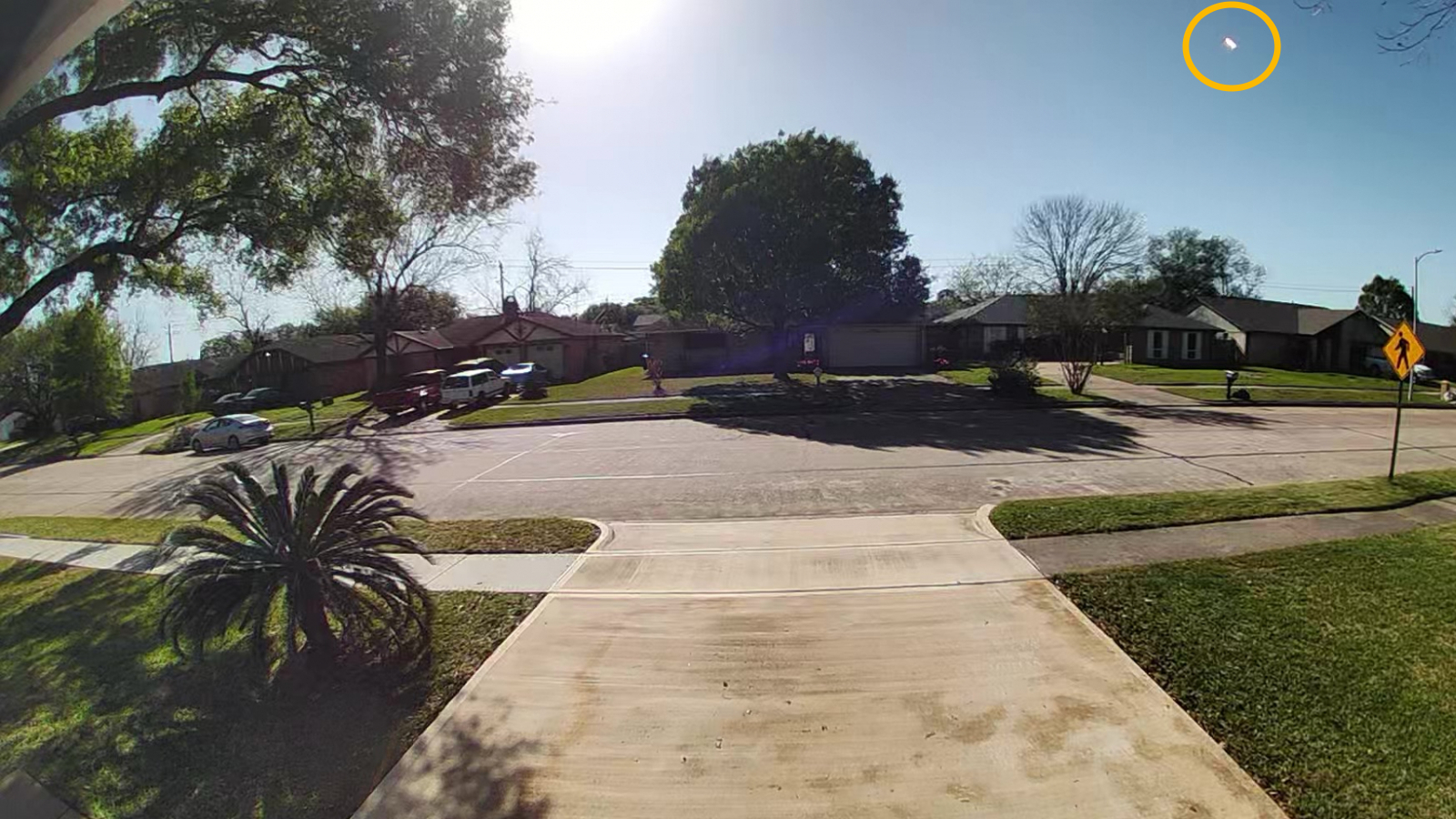
 A fireball meteor that recently streaked across the daytime Texas sky sent fragments to the ground, including a meteorite that smashed through the roof of a house in north Houston. (Image credit: Krystal C. via AMS) Share this article 0 Join the conversation Follow us Add us as a preferred source on Google Newsletter Sign up for the Live Science daily newsletter now
 Get the world’s most fascinating discoveries delivered straight to your inbox.
Become a Member in Seconds
Unlock instant access to exclusive member features.
Contact me with news and offers from other Future brands Receive email from us on behalf of our trusted partners or sponsors By submitting your information you agree to the Terms & Conditions and Privacy Policy and are aged 16 or over.You are now subscribed
Your newsletter sign-up was successful
Want to add more newsletters?
Join the club
Get full access to premium articles, exclusive features and a growing list of member rewards.
Explore An account already exists for this email address, please log in. Subscribe to our newsletterA family in Houston is counting their lucky stars that no one was hurt after a cantaloupe-size meteorite smashed through the roof of their home and ricocheted around an empty bedroom. The space rock is most likely a fragment of a meteor that witnesses saw breaking apart with a bang in the bright-blue Texas sky.
The exploding space rock is one of several other "fireballs" that have been spotted streaking across the U.S. over the past few days. These unusually frequent light shows are the result of a peculiar trend that scientists still don't fully understand.
Article continues belowAt least 180 people reported seeing the streaking light, which occurred roughly 29 miles (47 kilometers) above Houston, or hearing the explosion, which had the equivalent force of around 26 tons of TNT, according to the American Meteor Society. Simulations later revealed that multiple meteor fragments likely reached the ground in the northern part of the city.
Local news stations later reported that one of these fragments had crashed into a house in the Spring area of Ohio. Photos and video show that the space rock smashed through the roof and bounced off the floor and back onto the ceiling, before finally coming to rest next to a TV. Homeowner Sherrie James reported it to the local fire department, which initially told her it may be a piece of an airplane (before the fireball had become widely known). But upon closer inspection, it became clear that it was a rock.

James told KHOU 11 that she initially heard a "loud bang" from the adjoining room and, after finding the hole, was convinced that it "looked like a meteor piece." She was initially angry about the damage but was then "very excited … but also a little scared," she added.
James joked that she was a big sci-fi fan and would definitely be keeping the meteorite. However, scientists will likely want to borrow and study the space rock to see what it can tell them about the wider solar system.
Sign up for the Live Science daily newsletter nowContact me with news and offers from other Future brandsReceive email from us on behalf of our trusted partners or sponsorsThis story is reminiscent of a near-identical incident that occurred in Europe earlier this month, when the fragment of a bright fireball punched a football-size hole through the roof and into the bedroom of a house in a small German town. Several other buildings are also believed to have been impacted by the debris from that fireball.
Great balls of fire!
Fireballs — which occur when hefty meteorites break apart in the atmosphere due to intense friction with the air and burn up, releasing energy in the form of bright light — have been unusually frequent over the past week.
The barrage began last Tuesday (March 17), when a car-size meteor spectacularly broke apart in the daytime sky over Ohio and emitted a powerful sonic boom that shattered some windows on the ground near Cleveland. Meteorites also made it to the ground after this aerial explosion, and several potential fragments have since been recovered. (Daytime fireballs are often associated with sonic booms because only the most powerful explosions can be seen while the sun is still up.)

Then, on Sunday evening (March 22), a day after the Texas fireball, another burning meteor was spotted streaking above California. This space rock, which was seen by more than 200 people, was also glimpsed in parts of Arizona and Nevada, according to another NASA report.
And finally, on Monday night (March 23), locals reported a second, smaller fireball over Ohio. This event, the fourth fireball in seven days, has been documented by the American Meteor Society but has not yet been reported by NASA.
In an X post, NASA representatives commented on the unusual frequency of the fireballs but did not offer an explanation. There are no ongoing meteor showers or known asteroid groups that could explain this recent activity.
However, other experts have pointed out that fireballs are almost always more common between February and April, with some years seeing up to a 30% increase in sightings during these months, according to EarthSky.com. This phenomenon, dubbed the "spring fireballs," is likely the result of Earth's position relative to the sun and the rest of the solar system. However, researchers are not entirely sure how or why it occurs.
Since the start of February, at least nine major fireballs have been seen above the U.S., according to NASA's Space Alerts page.
Watch out below
It is extremely rare for meteorites to land in populated areas. But the recent incidents in Houston and Germany are an important reminder that these space rocks do pose a slim risk to people and their property.
Another warning came in June 2025, when a meteorite punched a hole through the roof of a home in Georgia — and was later discovered to be older than Earth.
Meteorites have also crashed into people's bedrooms in New Jersey in 2023 and British Columbia in 2021. And in 2022, a house in California burned down after being hit by a suspected fireball fragment (although it remains unclear if this was the true cause of the fire).
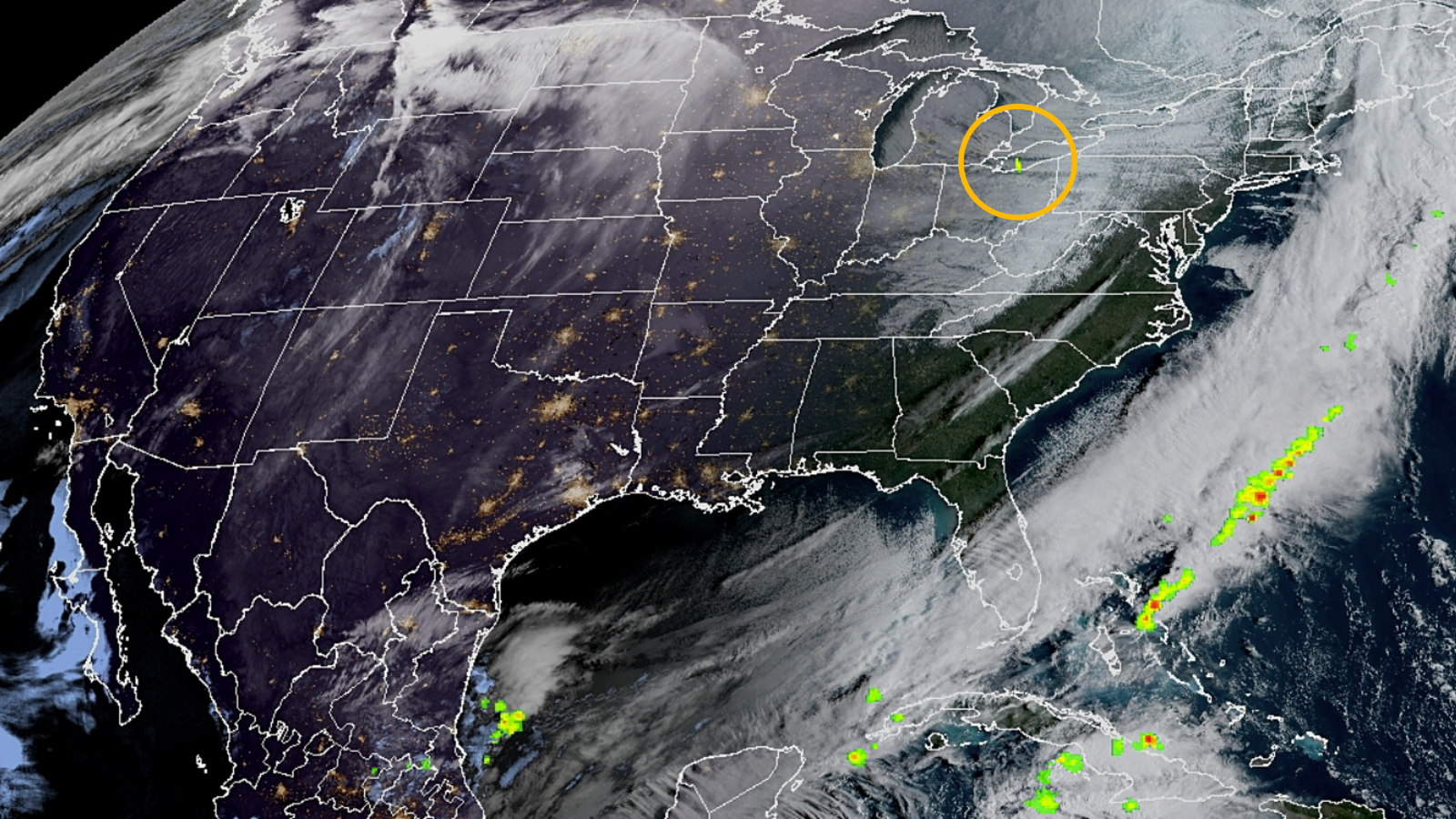
RELATED STORIES—100,000 mph 'comet fragment' explodes in green fireball over Great Lakes, eerie videos show
—Eerie green fireball detected hours before smashing into Lake Ontario in the dead of night
A tiny space rock also landed on and scorched a driveway in southwest England in 2021, while a similar encounter was filmed on a doorbell camera at a Canadian house in January 2025.
And in 2023, a French woman is believed to have been directly hit by a pebble-size meteorite while drinking coffee on her front porch. This is thought to be only the second confirmed case of a direct human-meteorite impact, after an Alabama woman was hit and injured by a hefty rock that crashed through her roof as she slept in 1954.
 Harry BakerSenior Staff Writer
Harry is a U.K.-based senior staff writer at Live Science. He studied marine biology at the University of Exeter before training to become a journalist. He covers a wide range of topics including space exploration, planetary science, space weather, climate change, animal behavior and paleontology. His recent work on the solar maximum won "best space submission" at the 2024 Aerospace Media Awards and was shortlisted in the "top scoop" category at the NCTJ Awards for Excellence in 2023. He also writes Live Science's weekly Earth from space series.
View MoreYou must confirm your public display name before commenting
Please logout and then login again, you will then be prompted to enter your display name.
Logout LATEST ARTICLES 1Iran war has already released a staggering amount of CO2 — and the destruction of schools, homes and buildings is the biggest source
- 2A rare active volcano on Mars may be causing the whole planet to spin faster
- 3AI compressed billions of years of evolution into seconds to create 'Lego-like robots' that can recover even when they lose limbs
- 4Colorado River negotiations have stalled among 7 states and water is scarce. What happens next?
- 5Live Science Today: Jensen Huang AGI claim and major leap to reanimation after death