
 Can viruses, bacteria, fungi, or other microorganisms that cause disease in plants also infect humans? (Image credit: Sumala Chidchoi/Getty Images) Share this article 0 Join the conversation Add us as a preferred source on Google Newsletter Subscribe to our newsletter
 It's a plotline that has haunted science fiction for decades: Humans become infected by plant pathogens, causing illness, death or a zombie-like state. But is there any truth to this idea? Can plant germs really cross over to people?
The short, disturbing answer is yes, experts told Live Science, but it's incredibly rare.
Sign up for our newsletter! 
Sign up for our weekly Life's Little Mysteries newsletter to get the latest mysteries before they appear online.
Much of what we know about how the human body functions makes it seem unlikely that these pathogens could invade our bodies, too. "It is extremely rare for a pathogen to jump from a plant to a human or vice versa because our biological architectures are fundamentally different," Dr. Soma Dutta, a physician and medical microbiologist at Apollo Multispeciality Hospitals in Kolkata, India, told Live Science over email.
Plant pathogens have evolved to breach the thick, rigid walls of cellulose or hemicellulose inside plants. By contrast, human cells are protected by lipid membranes, which are lined with receptor proteins that can initiate an immune response. Plant pathogens generally don't have the tools to break through these membranes, Dutta explained.
Besides, for most plant-specific fungi and bacteria, which typically survive in temperatures of up to 77 degrees Fahrenheit (25 degrees Celsius), our much higher bodily average is uncomfortably hot. "The human body is essentially a furnace," Dutta said. "The heat denatures their proteins and prevents them from causing infection."
Deadly pathogens
But there are exceptions. In 2023, Dutta and colleague Ujjwayini Ray, a consultant microbiologist at Apollo Multispeciality Hospitals, Kolkata, published a case report abouta patient who had developed a persistent cough and sore throat, was struggling to swallow, and was not eating, with seemingly no cause. When doctors examined him, they found a pus-filled abscess developing beside his windpipe. An exam revealed spores from Chondrostereum purpureum, a fungus that causes silver leaf disease in plants.
The researchers discovered that the 61-year-old was a plant mycologist, someone who studies the relationship between fungi and plants. "For years, his professional work involved direct, intense contact with decaying wood, mushrooms, and various plant fungi. This provided a clear pathway for inhalation of spores," Dutta explained. She and her colleague hypothesized that the spores had somehow managed to "hide from or resist" phagocytosis, a crucial phase of the human immune response, allowing them to establish a colony and spread. But to Dutta, the fungal infection remains a puzzle, because despite being a cool-weather fungus, it had managed to survive the higher temperatures of the human body.
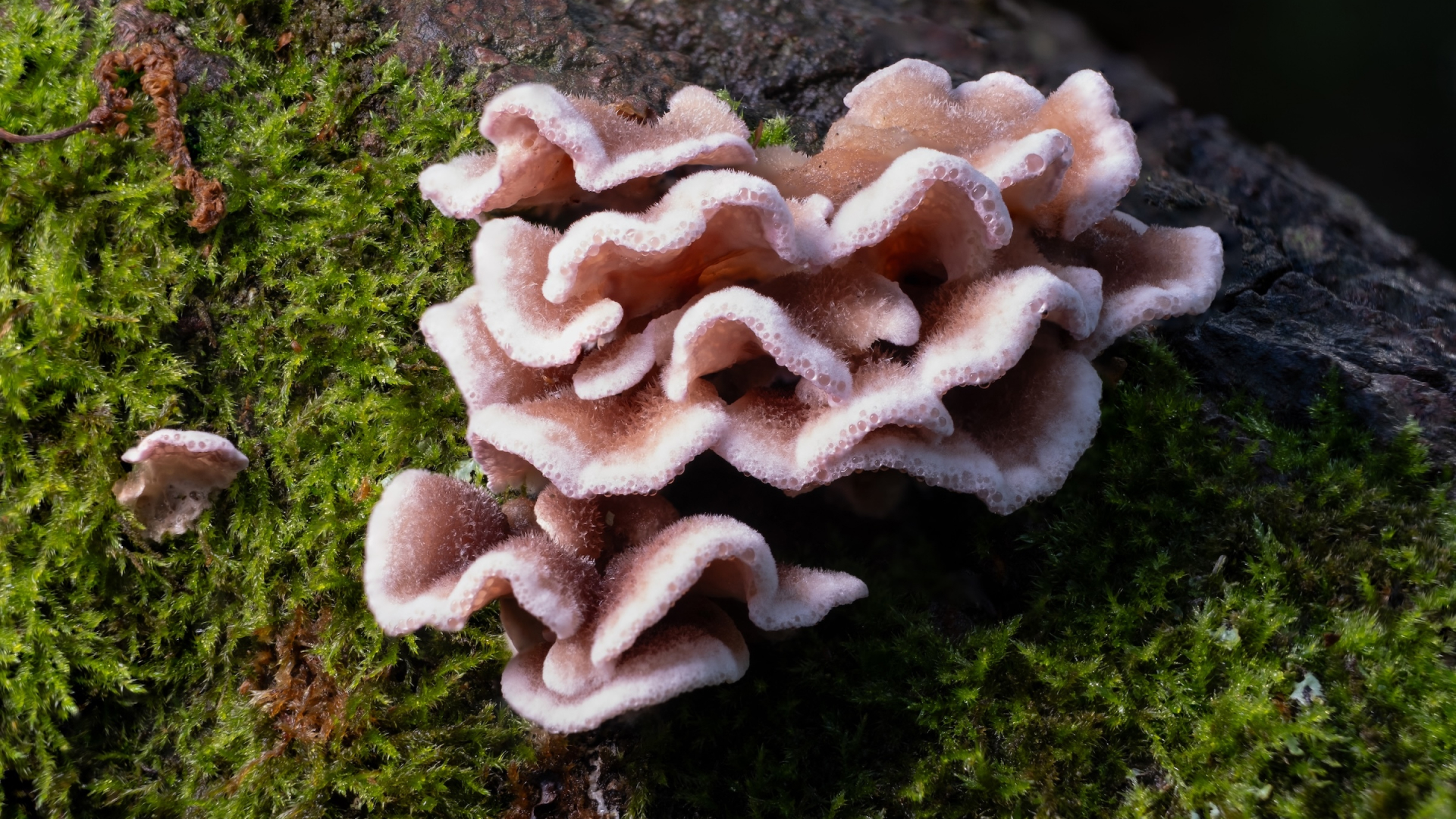
Silver leaf fungus (Chondrostereum purpureum), which typically harms plants, infected a man in India.
(Image credit: Adrian Crook/Getty Images)With a course of antifungal tablets, that patient recovered fully. But that's not always the case; in the rare situations where plant pathogens cross over into humans, they typically affect those with weakened immune systems, which can result in death. Many of these pathogens thrive in warm, moist, stable environments, and they have been detected in catheters and breathing equipment in hospitals, which is how vulnerable patients can become exposed.
For example, the bacterium Pantoea agglomerans causes disease in a range of food crops — like rice, maize and sorghum — and if it gets into the human bloodstream, it can be deadly. Another type of bacteria, Burkholderia, causes rot in onion and rice, and research has documented cases where this germ has infected cystic fibrosis patients, causing pneumonia, blood poisoning and death. An investigation into several strains of B. cepacica, found that the microorganisms could surpass the defensive cilia and mucous lining the airways and get into and spread within the lungs.
Another bacterium, Pseudomonas aeruginosa, causes soft rot in plants like lettuce and potatoes. But it has also been found in hospitals, where it has passed to immunocompromised patients with severe burn wounds, cancer or AIDS, causing infections in their urinary tracts, blood and lungs.
Plant viruses
Plant viruses are generally believed not to pose a risk to humans because of the unique mechanisms they use to infect plants, but scientists have unearthed some compelling clues that we might be vulnerable to the diseases they can trigger. In 2014, Philippe Colson, a professor of medical virology at Aix-Marseille University in France, delved into the strange case of pepper mild mottle virus, a highly contagious plant pathogen that causes pepper plants to shrivel up. Peppers are widely consumed, so Colson and colleagues studied the stool samples of over 400 people and found the RNA of the virus.
Individuals who had the virus in their stools were significantly more likely to have symptoms of disease. "We were able to find a correlation between the presence of this virus in human stools and the symptoms of fever and pruritus [itchy skin]," Colson told Live Science. Although they didn't show a definite causal link — the symptoms may have been triggered by something else in the food — "it made us question whether there could be an interaction with our body, and whether or not it could be pathogenic in some cases," he said.
The study also showed that the affected patients' stools contained antibodies specific to the pepper virus. The virus's ability to withstand the human gut suggests it is highly resilient; in fact, pepper mild mottle virus is so robust that it's been considered for use as an indicator of human fecal pollution in waterways.
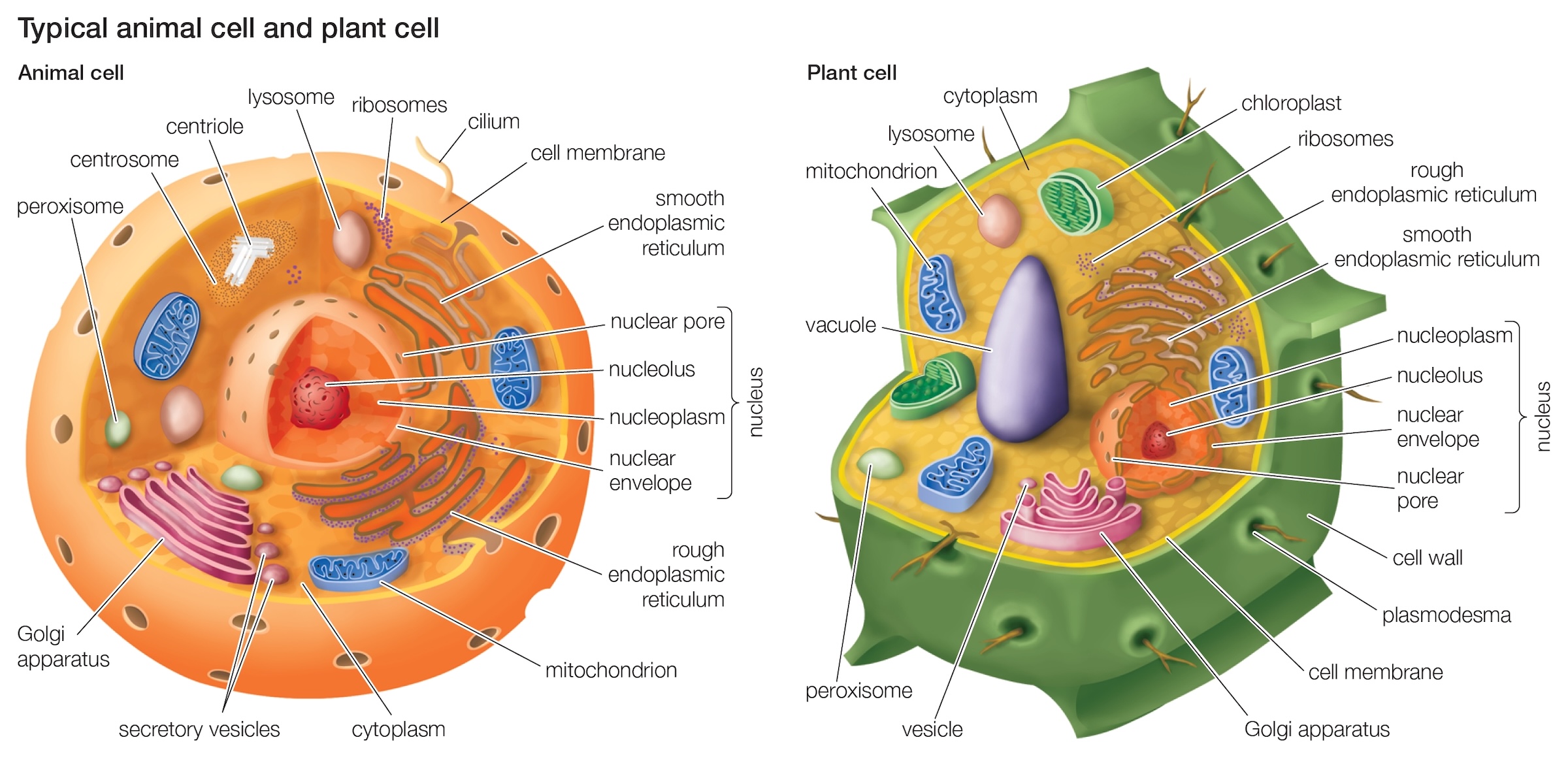
Plant pathogens have evolved to breach the thick, rigid walls of cellulose or hemicellulose inside plants cells (right). Meanwhile, human cells (left) are protected by lipid membranes, which plant pathogens generally don't have the tools to break through.
(Image credit: Photo By Encyclopaedia Britannica/UIG Via Getty Images)Colson is also intrigued by tobacco mosaic virus, which leaves a distinctive pattern on tobacco leaves that causes shriveling, affects their ability to photosynthesize, and stunts their growth. Strikingly, previous research into this virus had "looked at people that had lung cancer, and they found the virus in their biopsies," Colson said. Colson's own research has detected tobacco mosaic virus in several cigarette brands and in the saliva of people who smoked them. This raises tentative questions about whether the virus can travel into human bodies through cigarettes and possibly play a role in smoking-related cancers, Colson said.
For now, research on viral plant pathogen crossover into humans is limited, with the central puzzle being how they might infect humans if they do; plant viruses typically enter plant cells through a hole in the cellulose wall, whereas viruses in humans have to interact with a series of receptors around the cell before they can break in, Colson explained. Yet the important implications of potential plant virus infection in humans makes him "quite confident that this is a field that will expand in the near future."
RELATED MYSTERIES- How do plants with seedless fruit reproduce?
- Do figs really have dead wasps in them?
- Why do we develop lifelong immunity to some diseases, but not others?
The research so far shows that it's highly unusual for any plant diseases — fungal, bacterial or viral — to seriously, or fatally, develop in people who don't already have severely compromised immune systems. Crossovers are "extremely rare," Dutta noted, but she believes that our changing planet means plant pathogens deserve continued attention and research.
"The most significant barrier of the human body is temperature, which is being eroded by climate change and global warming," Dutta said. As global temperatures rise, plant pathogens may be finding ways to adapt to these warmer conditions, equipping them to survive in our bodies.
"The final message regarding plant-to-human crossovers is one of evolving vigilance," Dutta said. "While the biological barriers between plant and animal cells remain very strong and not easily breakable, the case of the Chondrostereum purpureum infection serves as a vital reminder that 'rare' does not mean 'impossible.'"
TOPICS Emma BryceLive Science Contributor
Emma Bryce is a London-based freelance journalist who writes primarily about the environment, conservation and climate change. She has written for The Guardian, Wired Magazine, TED Ed, Anthropocene, China Dialogue, and Yale e360 among others, and has masters degree in science, health, and environmental reporting from New York University. Emma has been awarded reporting grants from the European Journalism Centre, and in 2016 received an International Reporting Project fellowship to attend the COP22 climate conference in Morocco.
View MoreYou must confirm your public display name before commenting
Please logout and then login again, you will then be prompted to enter your display name.
Logout