
 Image source, Getty ImagesByHelen WillettsLead Weather Presenter
- Published12 August 2026, 00:30 BST
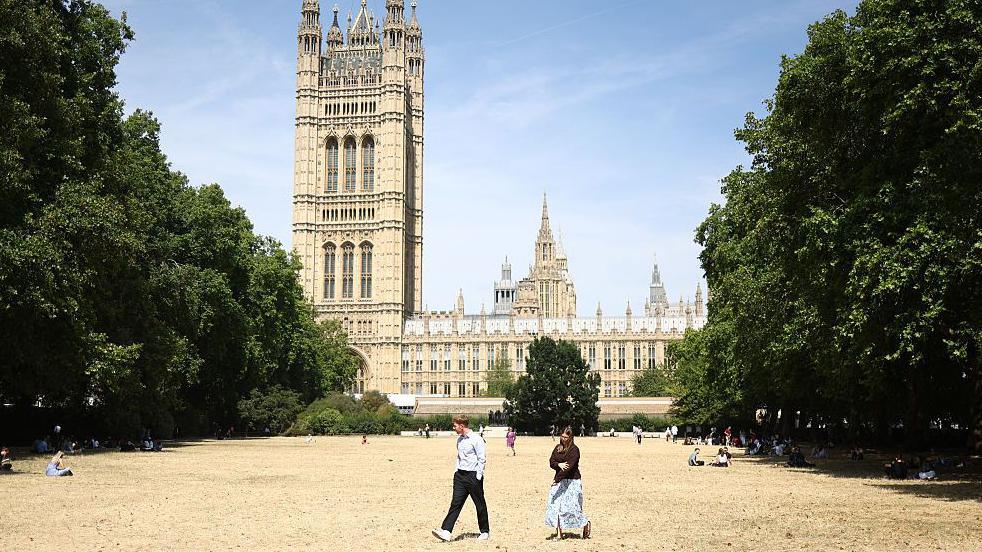
Prime Minister Andy Burnham will chair a meeting of the government's emergency Cobra committee on Wednesday to discuss the UK's response to the extreme heat, as temperatures are set to soar again.
A No 10 spokesperson said the government understood firefighters, farmers and NHS staff were all facing challenges connected to the weather.
It comes as the record for the number of days reaching 30C in any year in the UK has been broken, according to the Met Office.
After several locations exceeded 30C on Sunday, there have now been a total of 35 days where the maximum daily temperature has exceeded this threshold - beating the 34 days set in 1995.
This tally is expected to be topped again on Wednesday and Thursday with temperatures peaking in the mid-to-high 30s across the Midlands and south-east of England - and the Met Office has issued a rare amber extreme heat warning, external for Thursday, when 38C is possible.
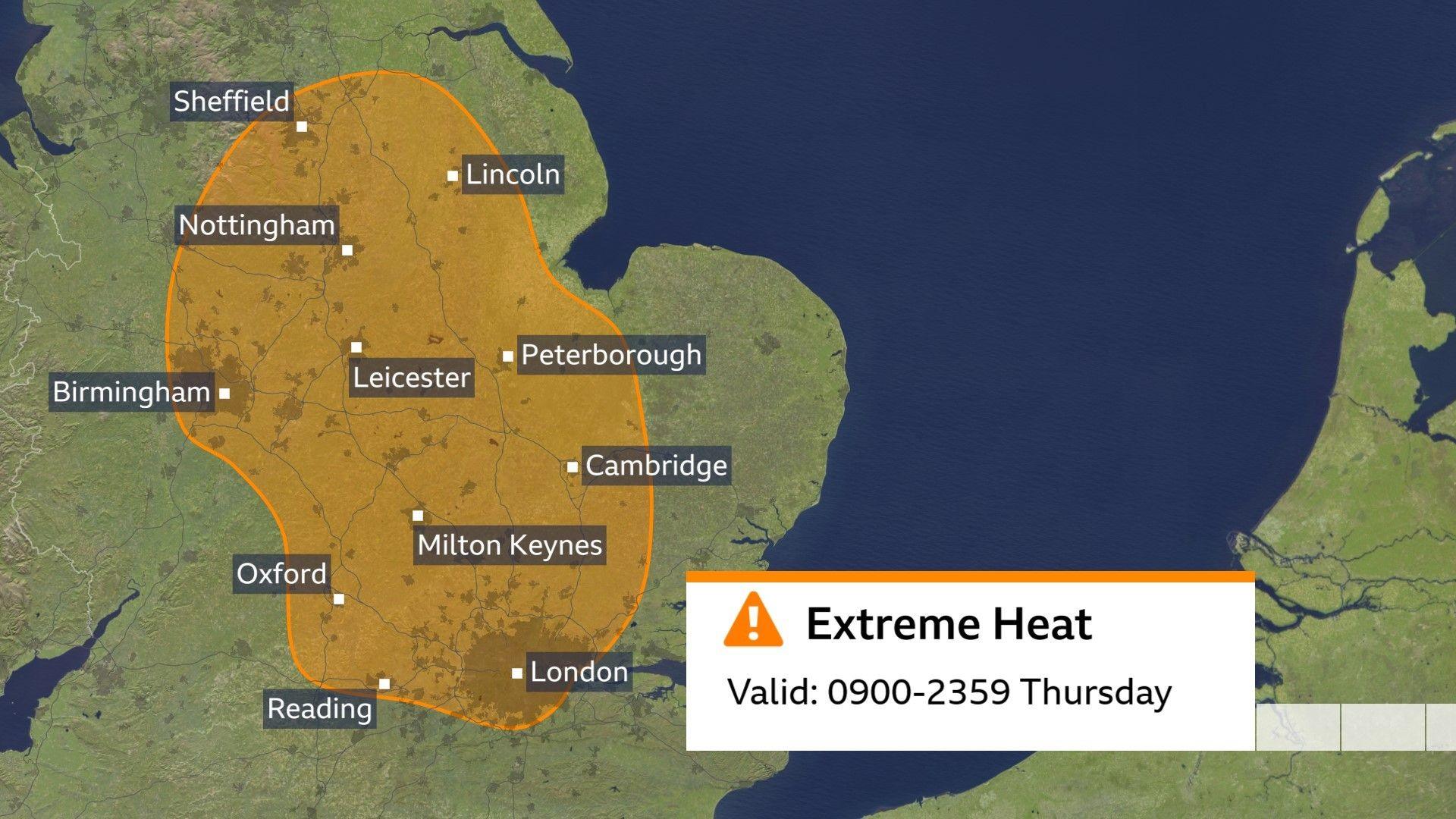 Image caption,
 The Met Office's amber heat warning covers a large swathe of England
The Cobra meeting will be attended by ministers from the Department for Environment, Food and Rural Affairs, Home Office, and Department for Health, as well as the Environment Agency.
It will be the second Cobra meeting this year on heatwaves, after one took place amid high temperatures in June.
A spokesperson for No 10 said this summer was proving "challenging" in the UK, particularly for "firefighters tackling wildfires, farmers working in drought conditions, and NHS staff in busy A&E units".
"We will continue to take the action needed to keep communities safe, protect water supplies and safeguard the environment," they said.
The hottest weather this week is expected on Thursday across the Midlands, Eastern England, London and south-east England, Yorkshire and Humber.
Temperatures could potentially reach 38C which would equal the highest temperature of the summer so far recorded at Lingwood in Norfolk on 26 June.
This would be the hottest August day since 2003, when 38.5C was recorded.
It is also likely to be the fourth calendar month this year to record 35C or more, which is unprecedented.
Summer 2026 on course to be UK's hottest on record, says Met Office
- Published16 hours ago
Solar eclipse 2026 weather forecast – where and when will the best view be?
- Published15 hours ago
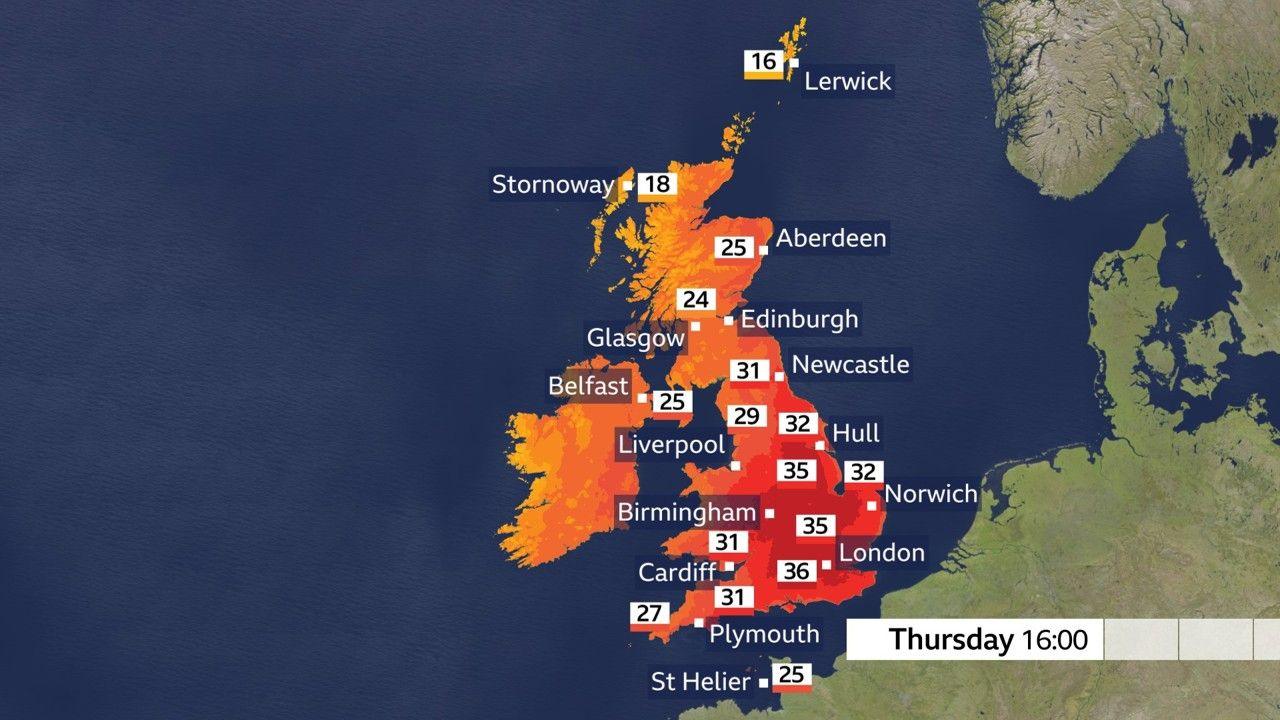 Image caption,
 Forecast temperatures for the peak of heat on Thursday
Amber heat health alerts also in force
The UK's Health Security Agency has also issued amber heat health alerts, which cover the whole of England.
Heat health alerts warn the public and medical professionals when periods of hot or cold weather pose a threat to health.
They warn that significant impacts are likely across social and health care, including a rise in deaths.
The alerts are in place until Friday evening.
What does hot weather do to the body?
- Published22 June
What are the signs of heatstroke in dogs?
- Published22 June
When will the heatwave end?
This heatwave should be shorter lived than others so far this summer with temperatures starting to feel noticeably cooler over the weekend.
Scotland and Northern Ireland will not experience the same extreme heat as southern England, although eastern parts of Northern Ireland, southern and eastern Scotland will still see temperatures well above the heatwave threshold.
They will be notably above average for mid-August and the humidity is likely to intensify on Wednesday night into Thursday.
Some places could reach the mid to high 20s Celsius on Wednesday - when a typical August daytime temperature would generally be in the high teens to low 20s.
Western Scotland and western parts of Northern Ireland are likely to remain somewhat cooler due to cloud and occasional rain moving in from the Atlantic.
While confidence in the details remains low, this could open the door for showers and perhaps some prolonged spells of rain.
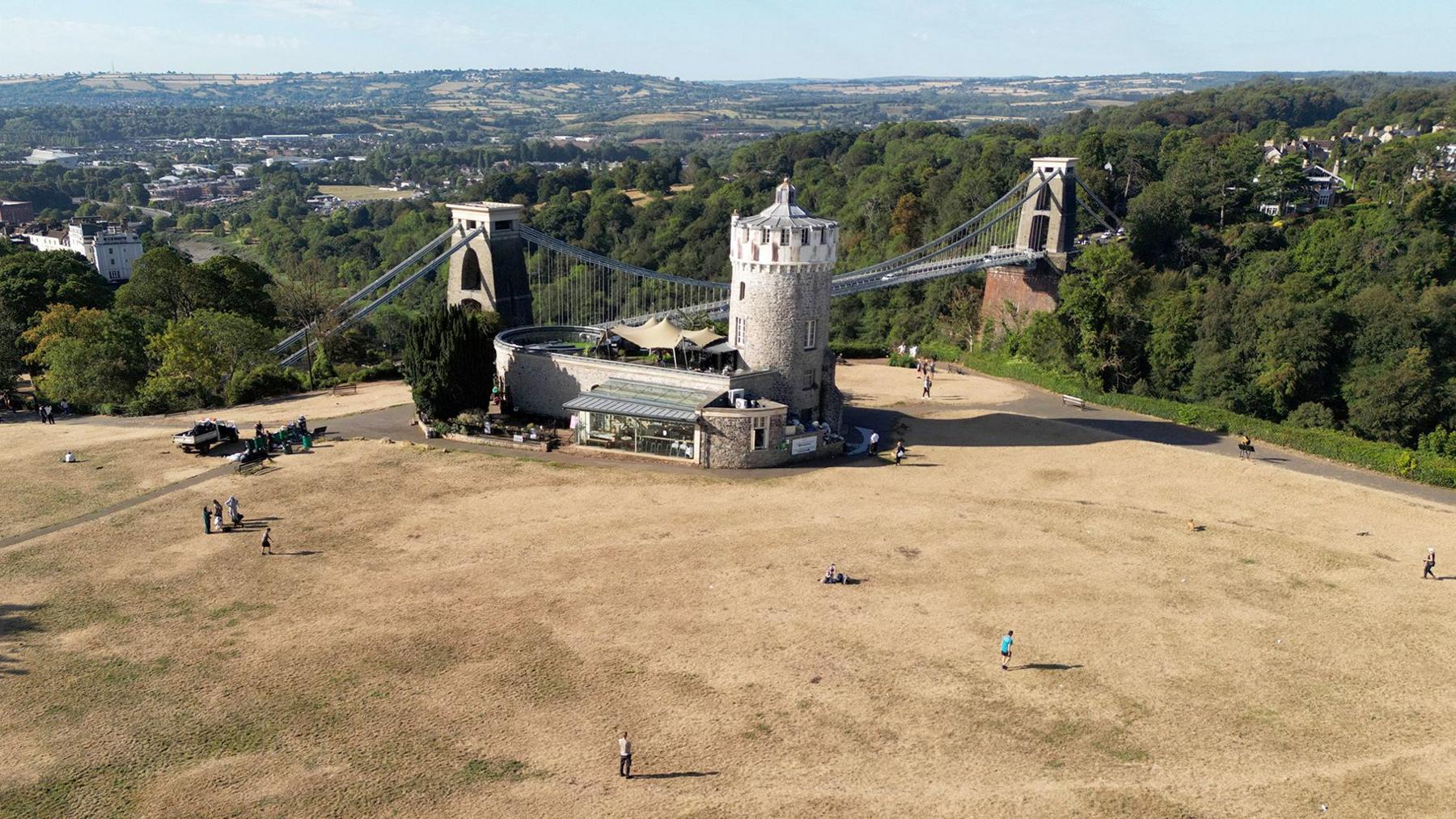
To alleviate drought though, months of above-average rainfall is needed.
More than two-thirds of England now in drought
- Published1 day ago
Monthly Outlook
- Published16 hours ago