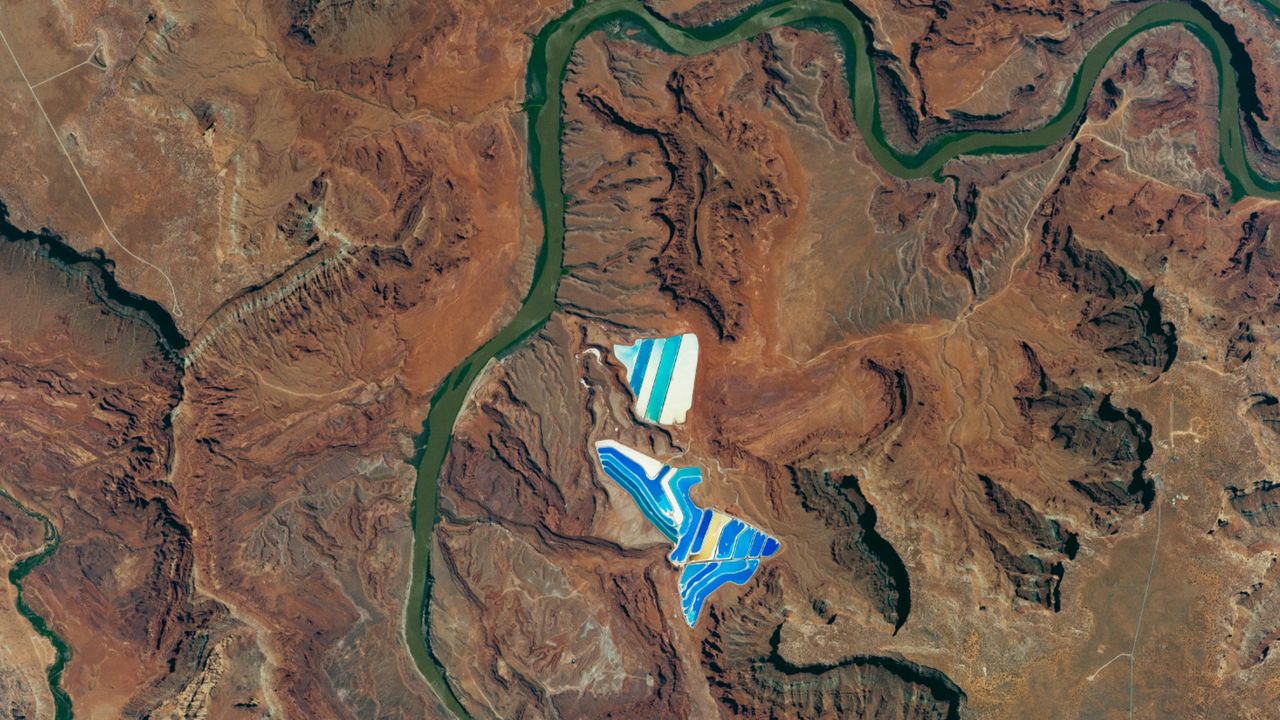
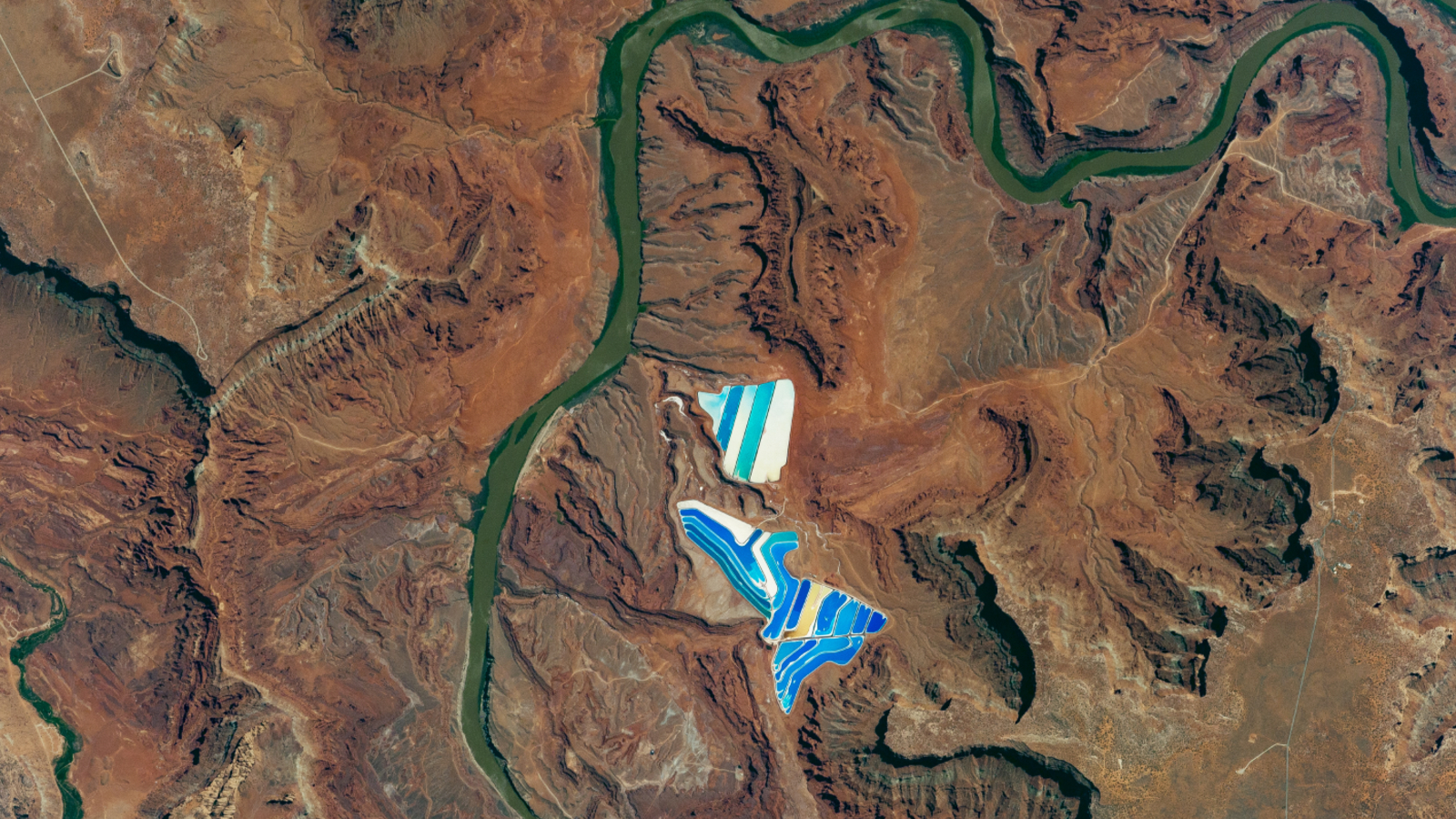
 An unnamed astronaut snapped this photo in 2017. It shows a series of vibrant solar evaporation ponds, which are used to help produce potassium chloride, also known as "potash," which can have impacts on nearby waterways, such as the Colorado River (also photographed). (Image credit: NASA/ISS program) Share this article 0 Join the conversation Add us as a preferred source on Google Newsletter Subscribe to our newsletter QUICK FACTS
Where is it? Moab, Utah [38.47920940, -109.68412599]
What's in the photo? Dozens of vibrant solar evaporation ponds along the Colorado River
Who took the photo? An unnamed astronaut on board the International Space Station
When was it taken? June 26, 2017
This eye-catching astronaut photo shows a series of bright-blue "potash ponds" near the dark-green bends of the Colorado River as the waterway winds through the rocky plateaus of southeast Utah.
The multicolored stripes are solar evaporation ponds, which are located around 8 miles (13 kilometers) southwest of the town of Moab in the heart of the Colorado Plateau — a roughly 130,000-square-mile (340,000 square kilometers) elevated region spanning parts of Colorado, Utah, New Mexico and Arizona.
The photo shows 23 ponds, grouped into two larger structures, which cover a total area of around 400 acres (160 hectares), according to NASA's Earth Observatory. The ponds are used to refine potassium chloride, also known as potash, which is mined at a site just out of view (below the ponds in the image).
The potash is mined by pumping boiling water into the ground to create a mineral-rich brine that is extracted and transported to solar evaporation ponds, where it is reduced into tiny, brown crystals. The distinct colors of the ponds signify that they are at different points in the evaporation process.
When the ponds are initially filled, workers add a dark-blue dye to the water to help it absorb more sunlight, thereby speeding up the rate of evaporation. However, this dye also evaporates, so as the water level drops, the intensity of the blue decreases. Eventually, the ponds turn white and then tan when a dried layer of potash is all that remains.
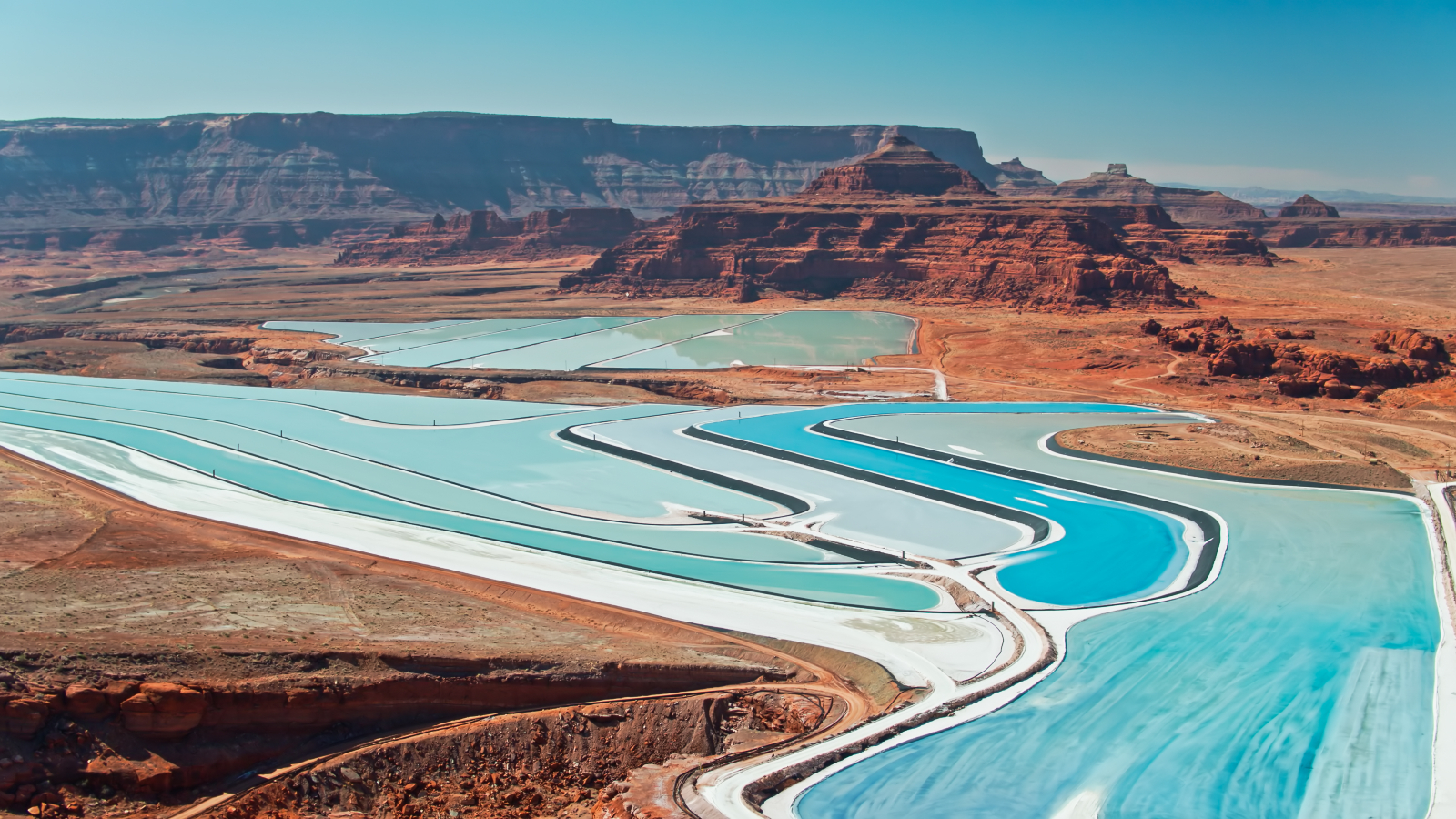
The solar evaporation ponds near Moab change color depending on how much water, and subsequently dye, if left in them.
(Image credit: halbergman via Getty Images)Potassium sulfide is mainly used as an agricultural fertilizer but has a variety of other industrial applications, including in the production of medicines, cement, fire extinguishers, textiles and beer.
The term "potash" is derived from "pot ash," which is the name of a preindustrial fertilizer made by combining wood ash with water and evaporating the mixture in a pot. The element potassium was subsequently named after pot ash when it was discovered to be the secret main ingredient in this mixture.
Sign up for the Live Science daily newsletter nowContact me with news and offers from other Future brandsReceive email from us on behalf of our trusted partners or sponsorsIn addition to the usual environmental effects of mining, which include habitat destruction and noise pollution, potash mining produces high levels of waste products, such as sodium chloride and clay, which can cause damage to the environment.
This salty sludge is often piled into large mounds or dumped into tailing pools. A 2017 study found that the sludge is sometimes washed into nearby waterways. This can "significantly alter biological communities" and trigger harmful algal blooms. However, it is currently unclear what, if any, effect potash mining is having on the Colorado River.
The Colorado River is the sixth-longest river in the U.S. and stretches around 1,450 miles (2,330 km) from its source in the Rocky Mountains of northern Colorado to the Gulf of California in northern Mexico. The lengthy waterway, which played a role in forming the Grand Canyon, appears green from above due to high levels of suspended sediment, much like in the aptly named Green River — a tributary of the Colorado River that also runs through Utah.
See more Earth from space
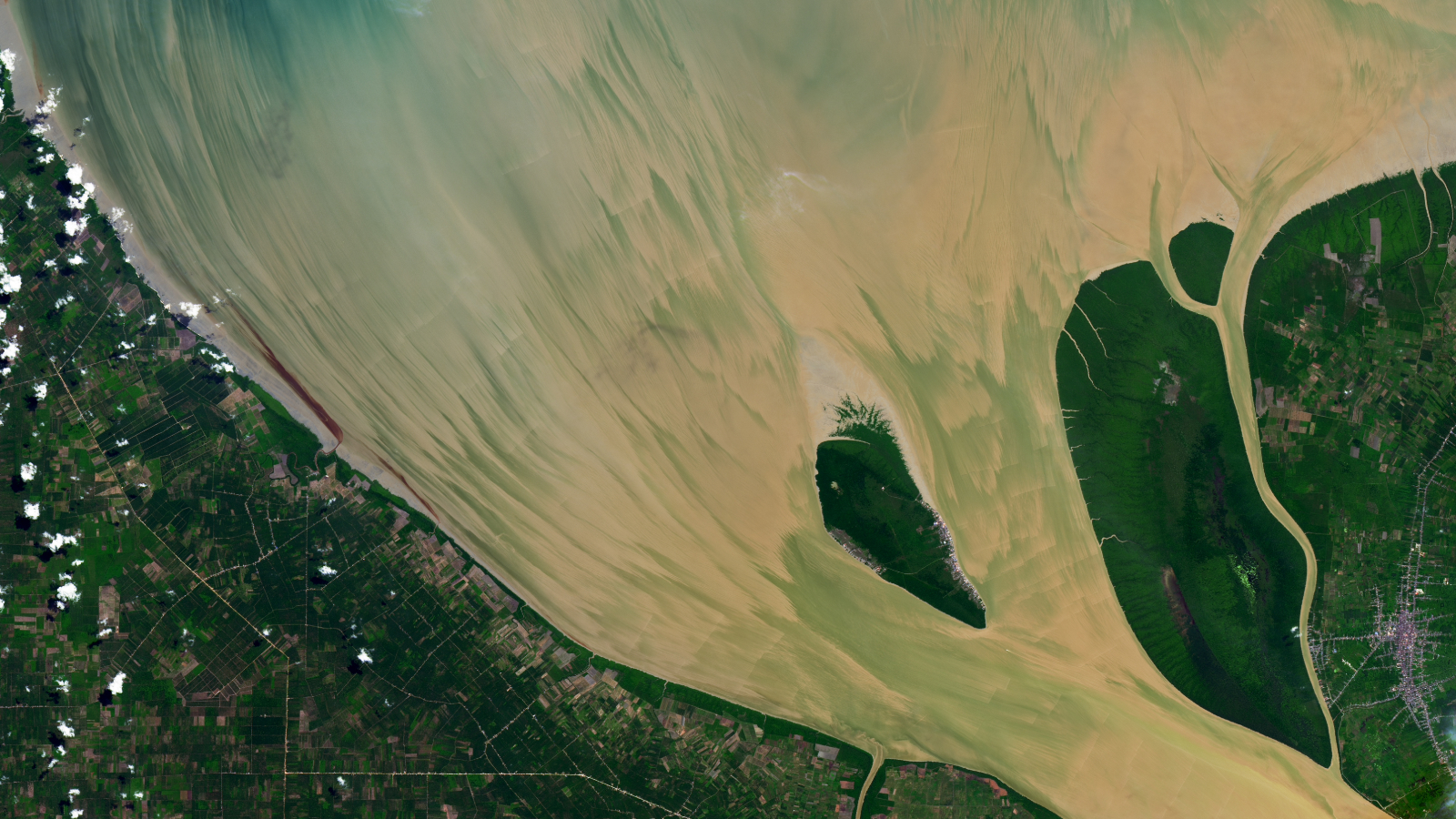 Moon paints tidal 'brushstrokes'
A 2024 satellite snap shows suspended sediments streaking across the mouth of the Rokan River, thanks in part to a particularly high tide caused by a full "Strawberry Moon."
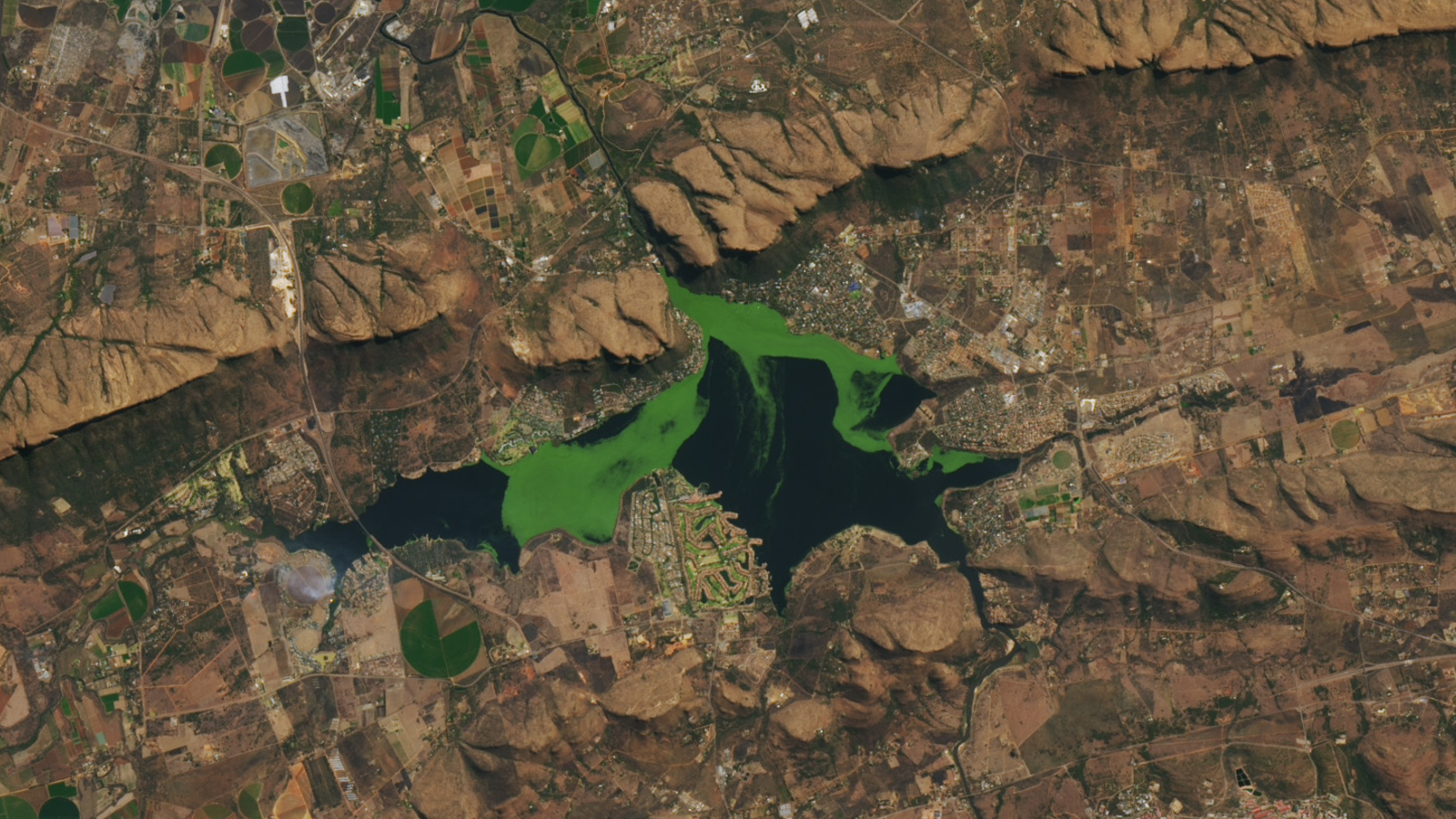 Green mass sprawls across reservoir
A 2022 satellite photo shows a thick mat of blooming algae and invasive aquatic plants spreading across the surface of the reservoir at South Africa's Hartebeespoort Dam.
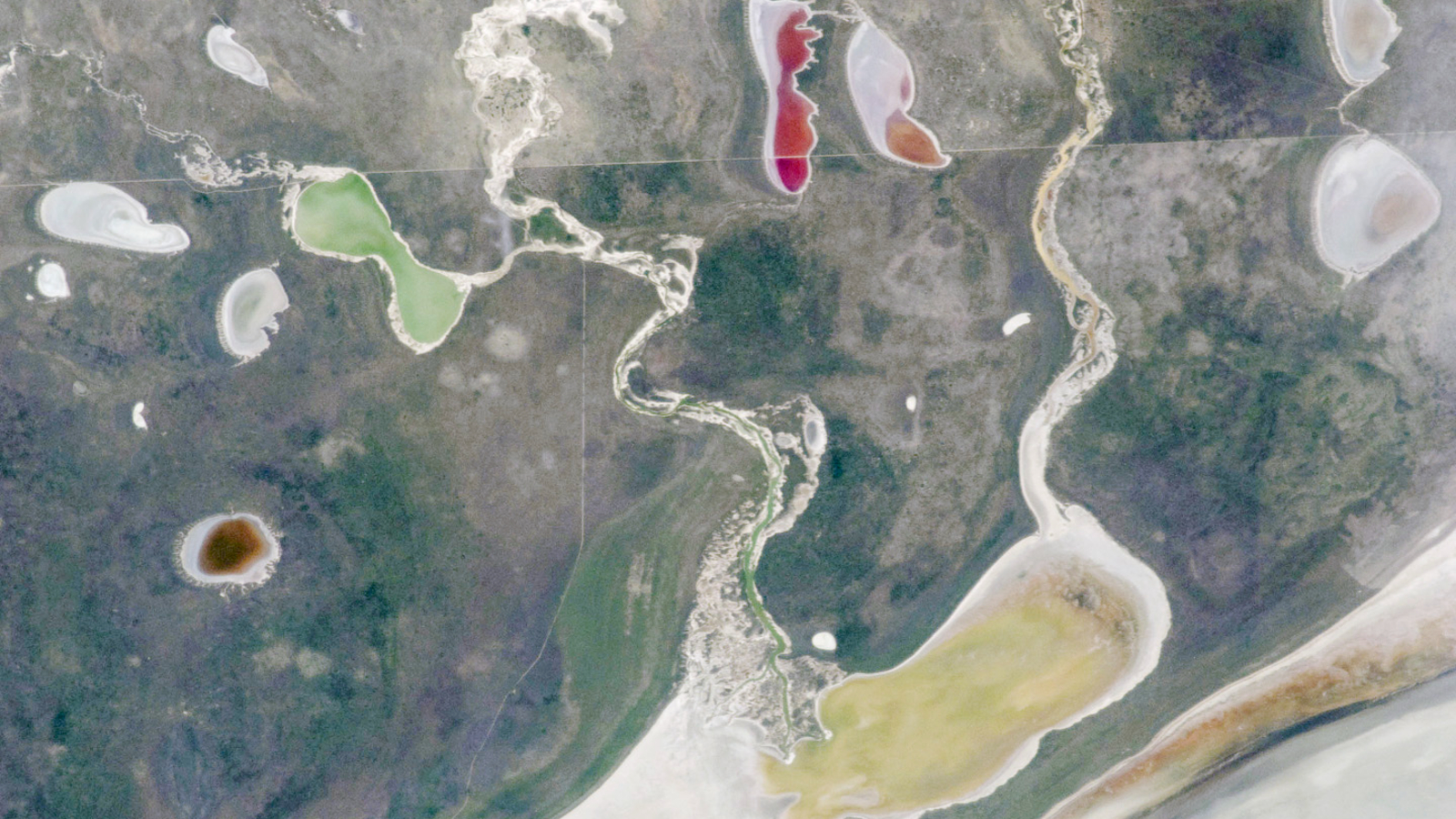 Rainbow 'phantom lakes' bloom
A 2011 astronaut photo shows off a series of colorful mini-lakes that appeared around the edge of a giant salt flat, known as the Etosha Pan, following a major flooding event.
TOPICS Harry BakerSenior Staff Writer
Harry is a U.K.-based senior staff writer at Live Science. He studied marine biology at the University of Exeter before training to become a journalist. He covers a wide range of topics including space exploration, planetary science, space weather, climate change, animal behavior and paleontology. His recent work on the solar maximum won "best space submission" at the 2024 Aerospace Media Awards and was shortlisted in the "top scoop" category at the NCTJ Awards for Excellence in 2023. He also writes Live Science's weekly Earth from space series.
View MoreYou must confirm your public display name before commenting
Please logout and then login again, you will then be prompted to enter your display name.
Logout