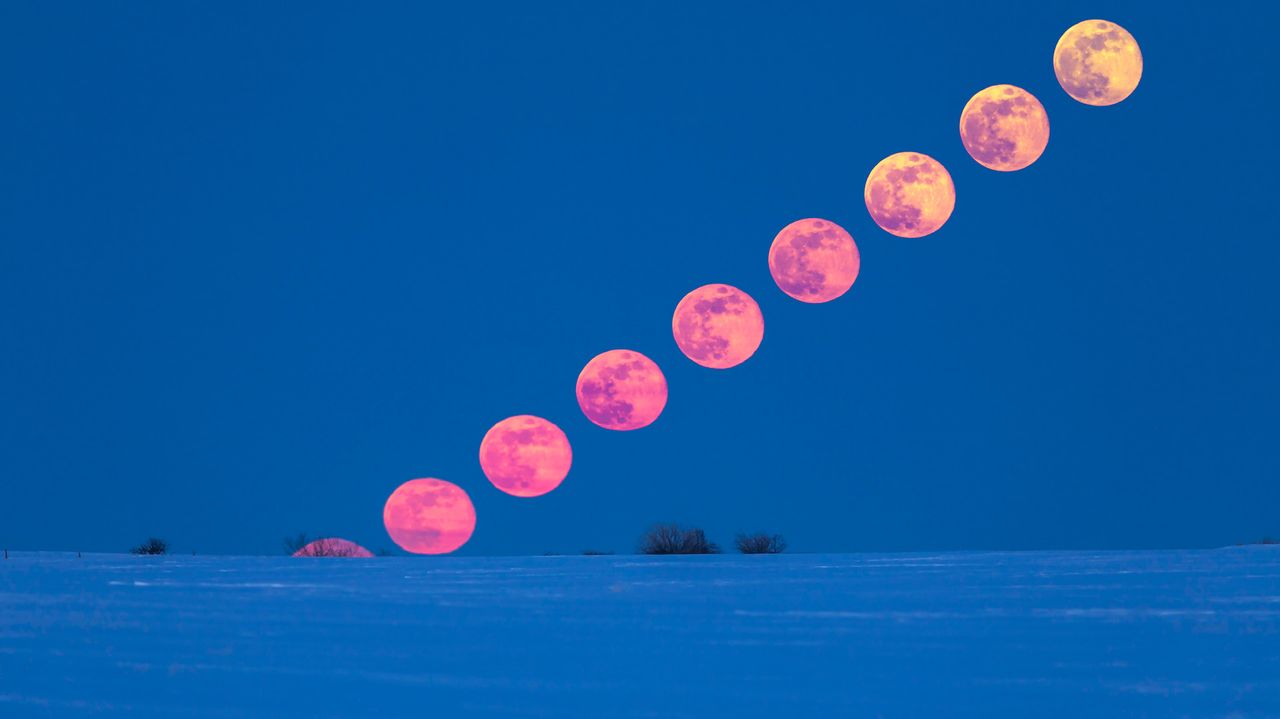
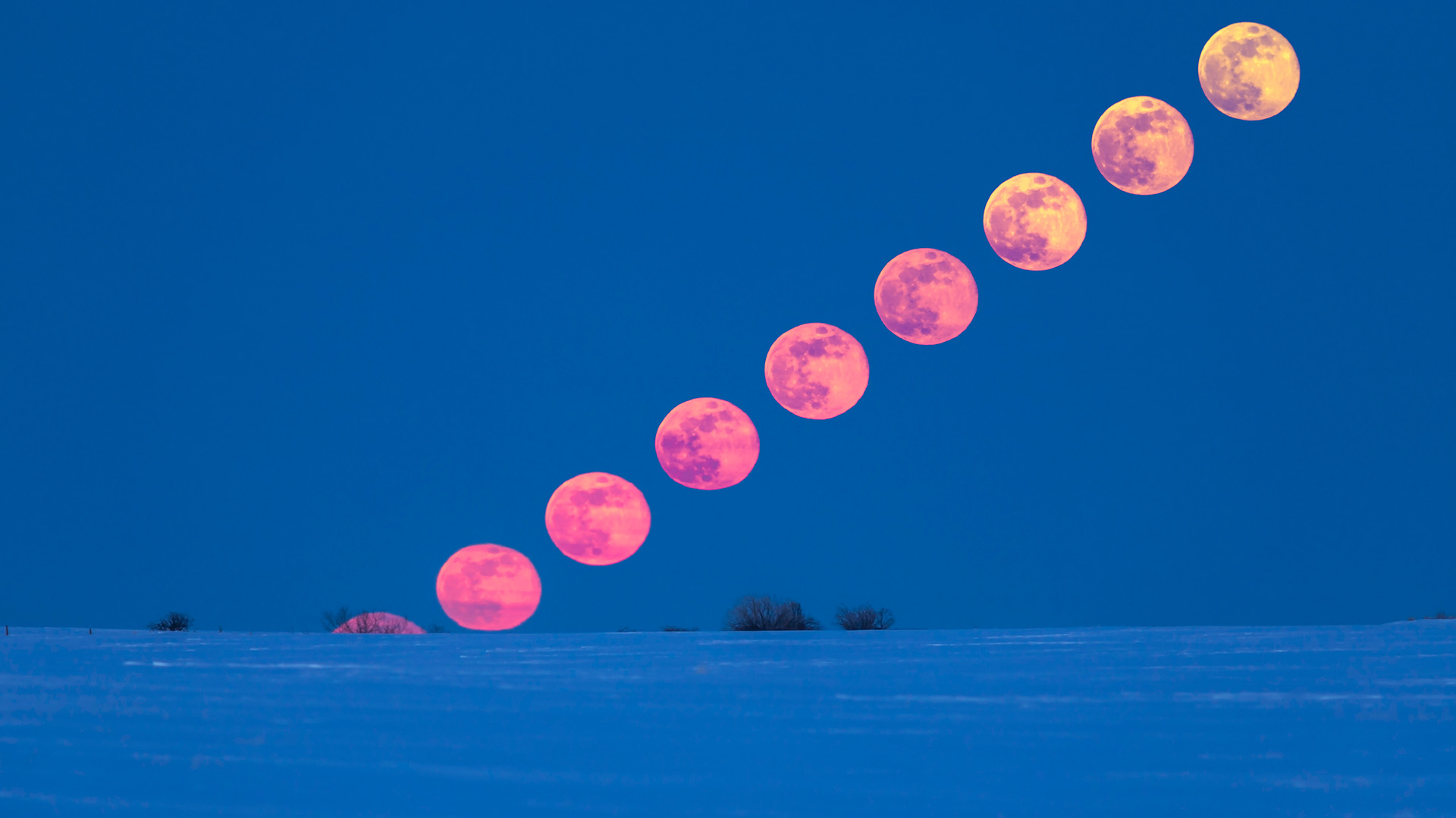
 A Blue Moon, the second full moon of May, will be best seen rising on May 30. (Image credit: Alan Dyer/Stocktrek Images via Getty Images) Share this article 0 Join the conversation Add us as a preferred source on Google Newsletter Subscribe to our newsletter
 Skywatchers will be treated to a rare sight this month: a Blue Moon that is also a "micromoon." It marks the first time since August 2023 that there have been two full moons in the same calendar month. Rising in the early morning hours of May 31, 29.5 days after May 1's full Flower Moon, it will also be the smallest full moon of the year.
May's rare Blue Moon will officially turn full at 4:45 a.m. on May 31. However, the best time to see it rise will be at dusk on May 30. The name has nothing to do with the moon's color; from North America, it will appear in the southeast as a warm orange, not blue, thanks to a phenomenon called Rayleigh scattering.
Sign up for the Live Science daily newsletter nowContact me with news and offers from other Future brandsReceive email from us on behalf of our trusted partners or sponsors Jamie CarterLive Science contributor
Jamie Carter is a Cardiff, U.K.-based freelance science journalist and a regular contributor to Live Science. He is the author of A Stargazing Program For Beginners and co-author of The Eclipse Effect, and leads international stargazing and eclipse-chasing tours. His work appears regularly in Space.com, Forbes, New Scientist, BBC Sky at Night, Sky & Telescope, and other major science and astronomy publications. He is also the editor of WhenIsTheNextEclipse.com.
View MoreYou must confirm your public display name before commenting
Please logout and then login again, you will then be prompted to enter your display name.
Logout