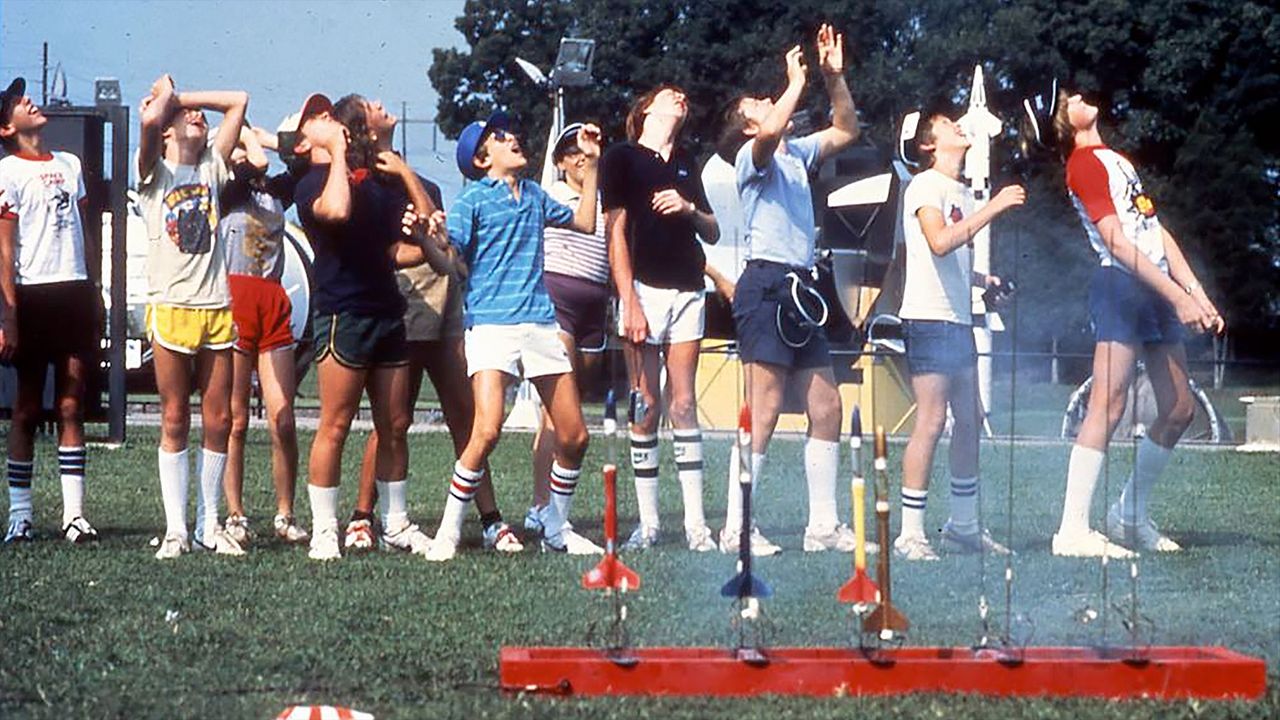
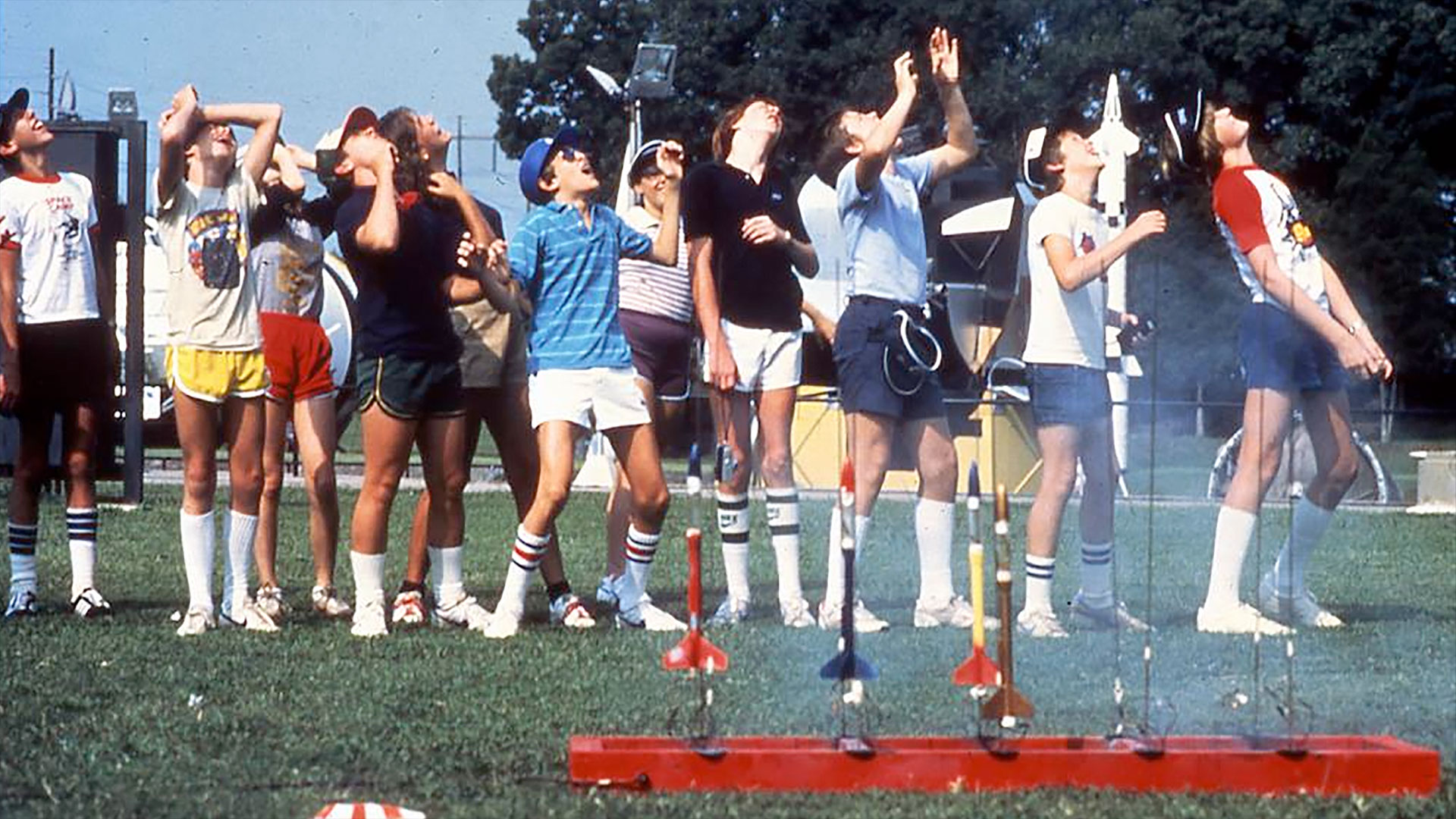
 Model rockets need not be rocket science: You can easily assemble and fly your own rockets with these kits. (Image credit: Space Camp) Jump to:
 - Estes Rockets NASA SLS
- Estes Rockets Alpha III
- Estes Rockets Journey Launch Set
- Estes Rockets Rascal & Hijinks Launch Set
- Stomp Rocket Ultra Rockets
- National Geographic Power Rocket
Breaking space news, the latest updates on rocket launches, skywatching events and more!
Contact me with news and offers from other Future brands Receive email from us on behalf of our trusted partners or sponsors By submitting your information you agree to the Terms & Conditions and Privacy Policy and are aged 16 or over.You are now subscribed
Your newsletter sign-up was successful
Want to add more newsletters?
An account already exists for this email address, please log in. Subscribe to our newsletterSo you want to launch a model rocket but have never done so? It must be difficult, right? It is rocket science, after all…
Fortunately, there are kits today that make it as easy as just opening the box, loading in an engine and finding a safe place from where to fly. Of course, there are also beginner's kits — some of which are profiled below — that include basic, step-by-step assembly instructions, adding to what many find fun and challenging about the model rocketry hobby.
Estes Rockets NASA SLS
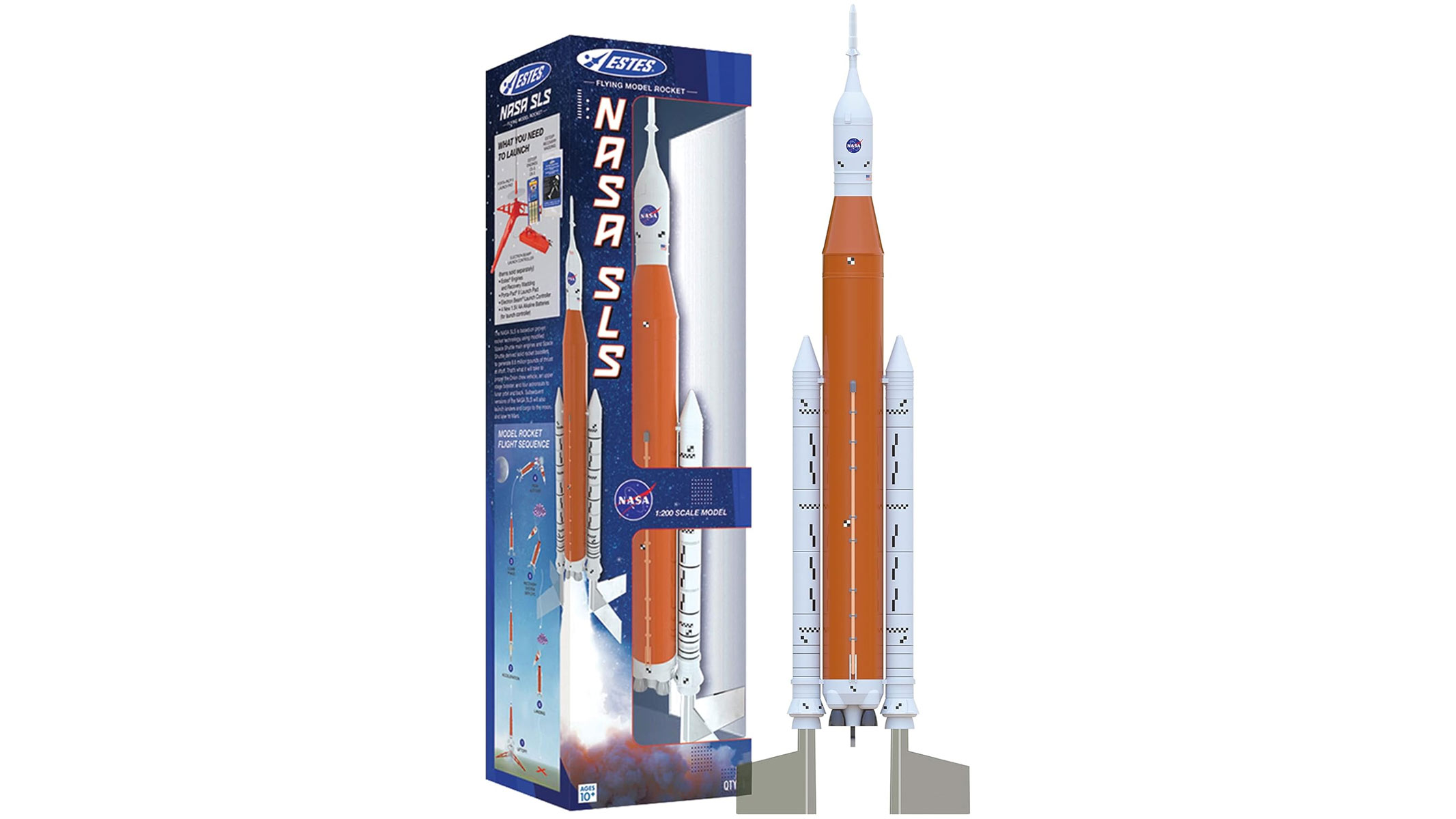
Estes Rockets NASA SLS
It's pre-assembled, pre-painted and it doubles up as a display rocket.Our expert review:
Specifications
Length: 19.4-inches (49.3 cm) Diameter: 1.64-inches (0.42 cm)Weight: 1.19 kgRecommended engines: C5-3, C6-3Launch system: Porta-Pad IIProjected maximum altitude: 350 ft. (107 m)Recovery system: 15-inches (38.1 cm) ParachuteAge: 10+Reasons to buy
+Ready out of the box+Looks awesome+Affordable+Doubles up as a display modelReasons to avoid
-It might be a bit basic for experienced flyers-Engines sold separatelySo you are eager to get started and just want to skip to the launch — well, why not start with NASA's next-generation heavy-lift rocket that will send the next astronauts to the moon?
Estes Industries has taken one of the most complex engineering challenges and simplified it to a scale model that practically anyone can fly. The SLS (Space Launch System) comes out of the box pre-assembled and pre-painted. In fact, it can double as a display model worthy of any office or space enthusiast's room.
Pre-launch preparations are as easy as attaching the included transparent fins and loading the rocket with an Estes C6-3 engine (sold separately). You will also need a launch pad and controller, which can be used with most, if not all, of the rockets you will build and fly.
Estes Rockets Alpha III
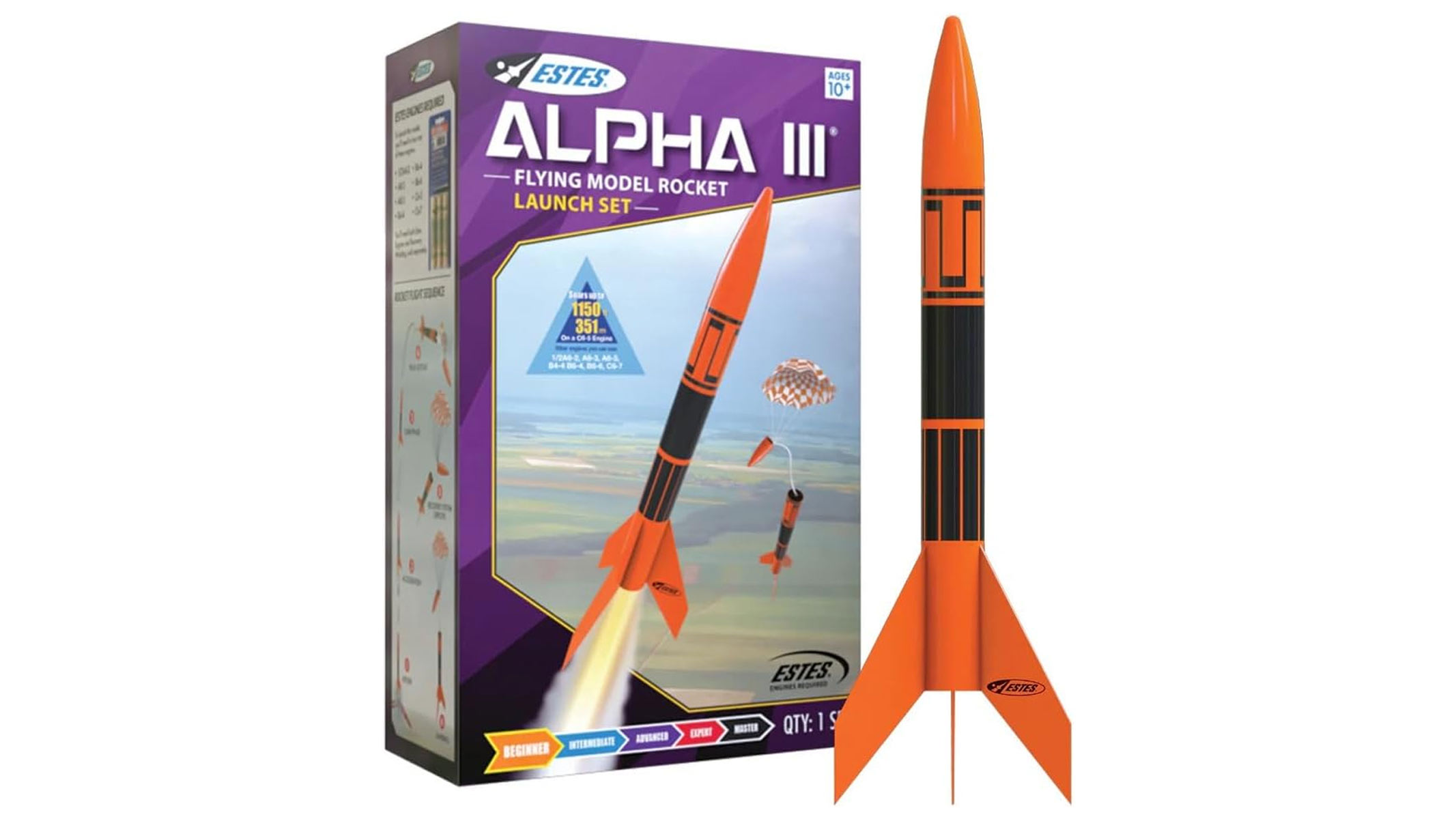
Estes Rockets Alpha III
The Alpha III is the classic rocket, advancing from ready-to-fly to an easy-to-assemble kit.Our expert review:
Specifications
Length: 12.1 in. (30.7 cm) Diameter: 0.98 in. (0.25 cm)Weight: 0.34 kgRecommended engines: 1/2A6-2, A8-3, A8-5, B4-4, B6-4, B6-6, C6-5, C6-7Launch system: Porta-Pad IIProjected maximum altitude: 1150 ft. (351 m)Recovery system: 12 in. (30.5 cm) ParachuteAge: 10+Reasons to buy
+Classic look+High maximum altitude+Almost ready to flyReasons to avoid
-Might be a bit much for younger users-Engines sold separatelyCompatible with A, B and C-class engines, the Alpha III requires only glue and other common household tools (for example, scissors) to create a rocket that flies as high as 1,150 feet (350 meters). The body tube, nose cone and fins come in attractive black and orange colors and the set includes stickers to add to the decorations.
The Alpha III kit also introduces the basic assembly of the engine mount and recovery system (parachute) the will become the basis for many other more advanced rockets.
Estes's Alpha III rocket sports a striking orange aesthetic along with a lightweight and slender design, which helps to create an awesome look as it soars through the air. It's compatible with several Estes engines and would be great fun for any beginner getting into model rocketry.
Estes Rockets Journey Launch Set
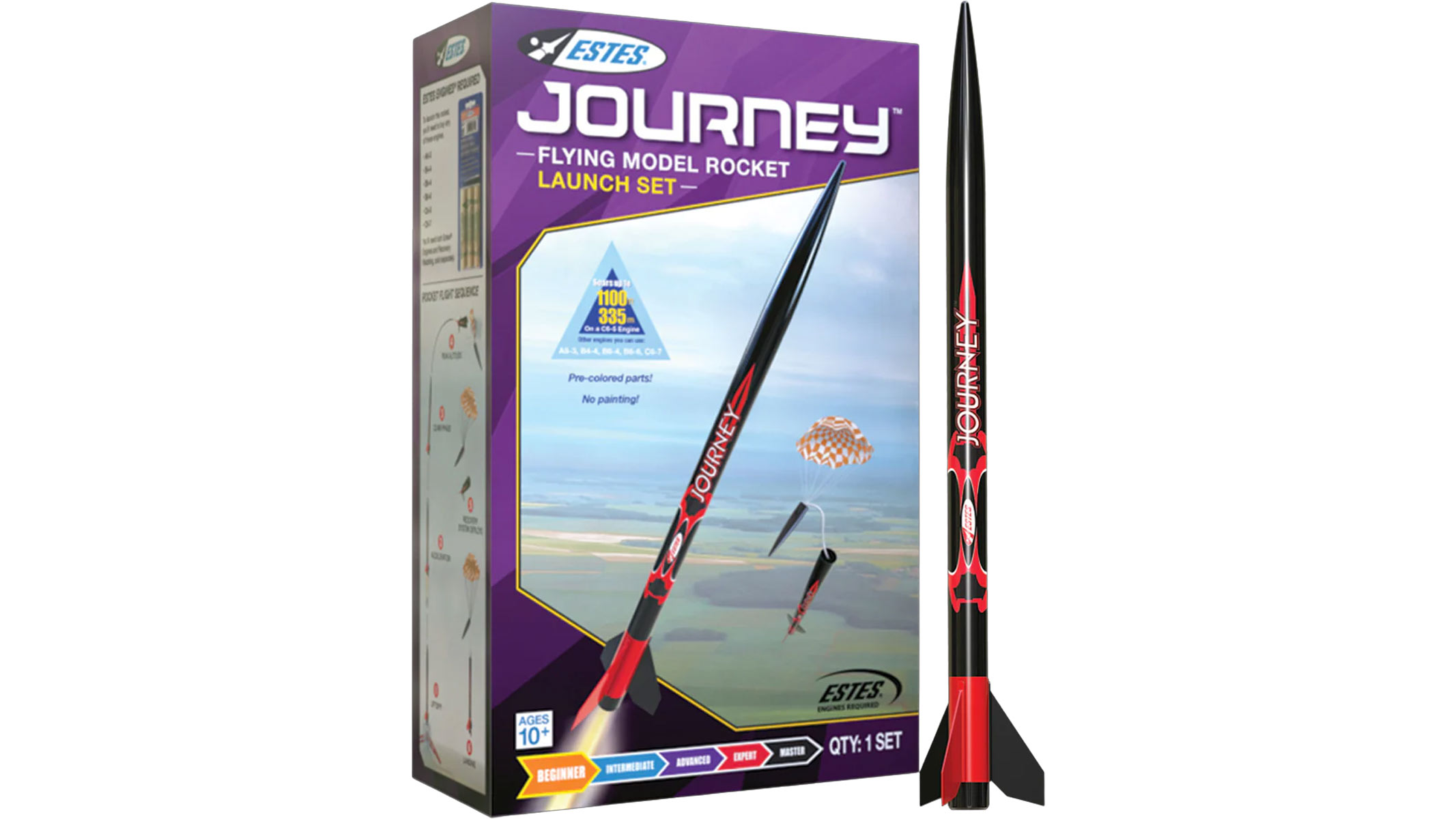
Estes Rockets Journey Launch Set
The Journey Launch Set from Estes Rockets has everything you need to launch, minus an engineOur expert review:
Specifications
Length: 19.3 in. (49 cm) Diameter: 0.98 in. (0.25 cm)Weight: 0.51 kgRecommended engines: A8-3, B4-4, B6-4, C6-5, C6-7Launch system: Porta-Pad IIProjected maximum altitude: 1100 ft. (335 m)Recovery system: 12 in. (30.5 cm) ParachuteAge: 10+Reasons to buy
+Great look+High maximum altitude+Everything needed to launch includedReasons to avoid
-Engines sold separatelyIf you want the simplicity of the Alpha III with an all-in-one out-of-the-box solution, the Journey is the set for you. Its high altitude, low weight and launch set make it a fun and engaging experience for beginners.
The kit not only includes a rocket designed for the beginner, with the same ease to build, but also the Porta-Pad II and Electron Beam Launch Controller, so you can launch as soon as you complete assembly! (Not included, but needed are engines, AA batteries, recovery wadding and starters, sold separately).
There's no reason this wouldn't be a good option for more experienced users, either, but with everything you need to launch, a maximum altitude of over 1000 feet and a striking aesthetic, this rocket is a top choice for beginners.
Estes Rockets Rascal & Hijinks Launch Set
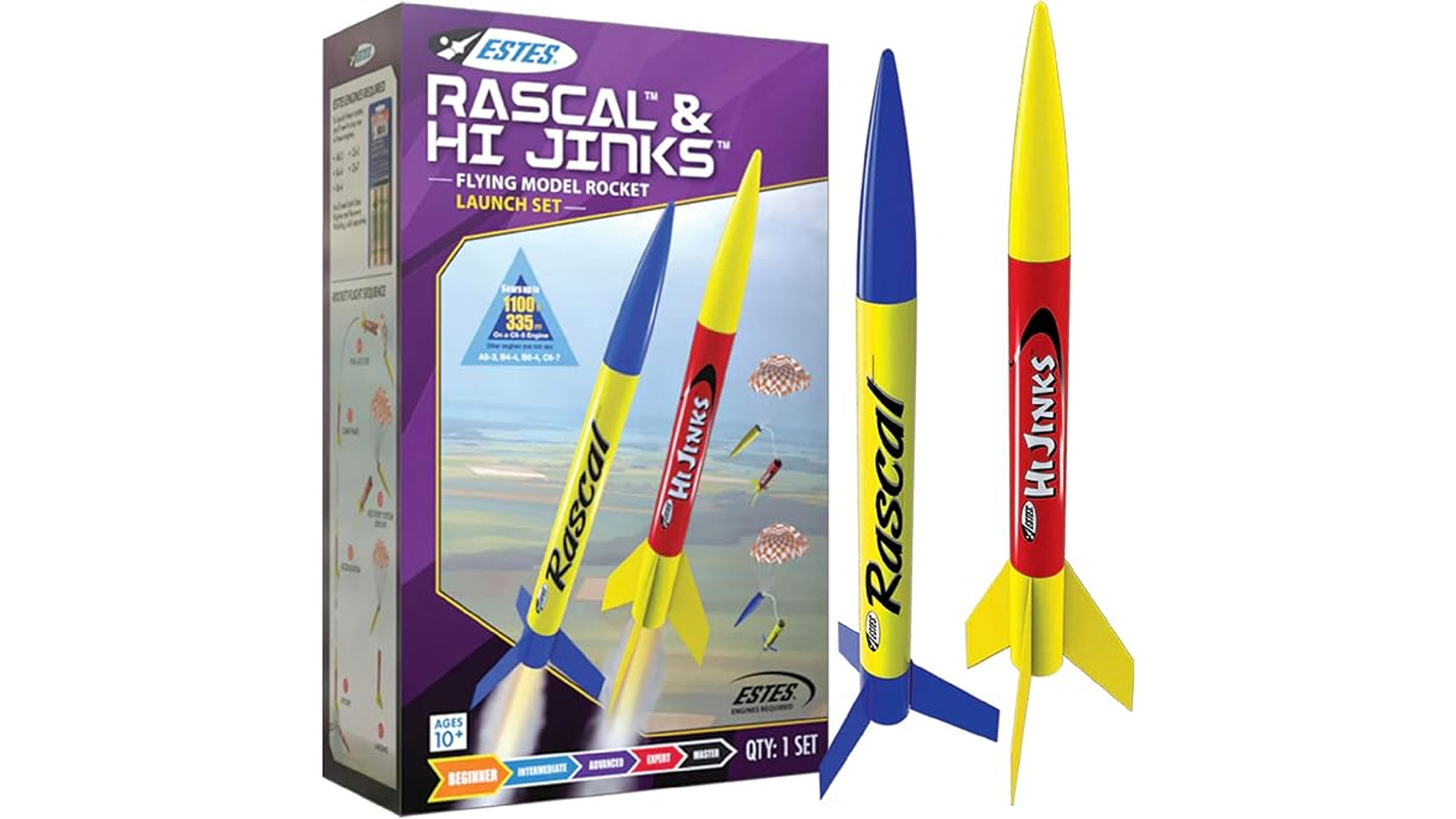
Estes Rockets Rascal & Hijinks set
What's better than one model rocket? Two, of course!Our expert review:
Specifications
Length: 14.5 in. (36.8 cm) Diameter: 0.98 in. (0.25 cm)Weight: 0.42 kgRecommended engines: A8-3, B4-4, B6-4, C6-5, C6-7 w/Engine Adapter (sold separately): A10-3TLaunch system: Porta-Pad IIProjected maximum altitude: 1100 ft. (335 m)Recovery system: 12 in. (30.5 cm) ParachuteAge: 10+Reasons to buy
+2-in-1 set+High maximum altitude+colorful aesthetic, great for kidsReasons to avoid
-Engines sold separately-basic designThis set takes the best of the ready-to-fly kits, doubles it to include two rockets and includes the launch pad from which to set them soaring! Pre-painted and with unique decals, the Rascal & HiJinks are perfect if you and a friend (or two siblings) want to share in the fun, or you just want the quick enjoyment of two launches in succession.
You still need the extras as identified with the Journey Launch Set, like the engines and recovery wadding, but there is no assembly required.
Just like the Journey Launch set, the Rascal and Hijinks set from Estes wouldn't go amiss for more experienced flyers. But, you get a 2-in-1, it's ready to launch, minus a couple of extras, and with a low weight and a cool look, it's great fun and a top choice for beginners.
Stomp Rocket Ultra Rockets
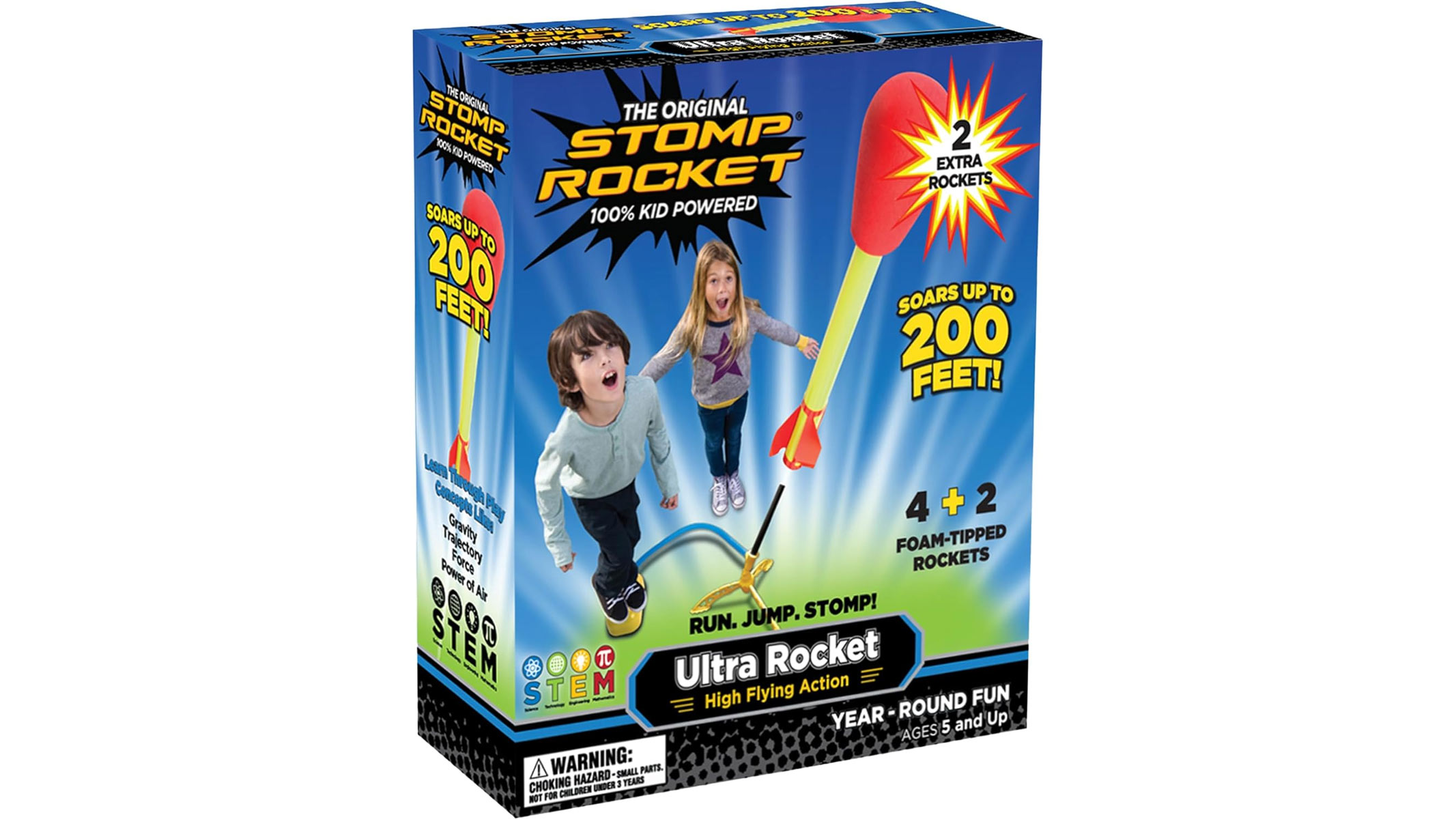
Stomp Rocket Ultra Rockets
Fun for kids, safe for kidsOur expert review:
Specifications
Length: 11.46 in. (36.8 cm) Diameter: 3.5 in. (0.25 cm)Weight: 0.39 kgRecommended engines: N/ALaunch system: Air poweredProjected maximum altitude: 200 ft. (61 m)Recovery system: N/AAge: 5+Reasons to buy
+6 total rockets included+Safe materials for children+Easy entry point to model rockets for kidsReasons to avoid
-Not suitable for older users-Very basic designNaturally, beginners include young kids and Stomp Rockets are ideal for little ones as they're a great entry point into what model rockets can do.
Made of plastic and foam, and without the need for electronics, engines, explosives and any cords and sharp parts, kids can get their hands on and launch a colorful rocket up to 200 feet in the air.
It's a great STEM kit and all it takes is for someone to stomp (or jump) on the pad, which will send a jet of air through a tube into the launch stand and propel the rocket up into the air. Of course, it's aimed at younger kids and an adult looking to launch a model rocket would become bored with this fairly quickly, but it's a great starting point for young ones and it's safe for them to use.
National Geographic Power Rocket
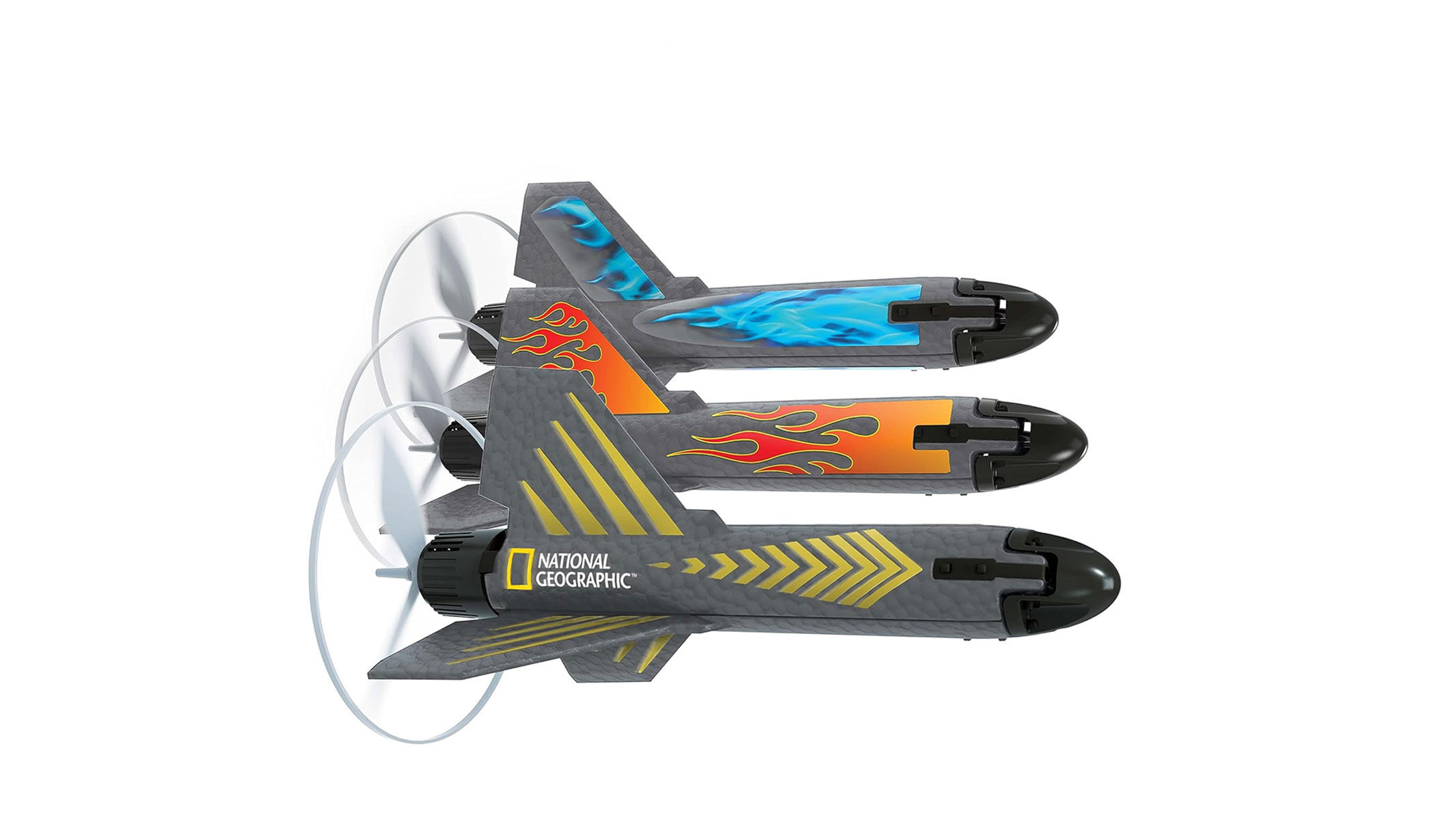
National Geographic Power Rocket
Safe for kids, this rocket uses a propeller to achieve heights of 200 feet.Our expert review:
Specifications
Length: 12 in. (30.5 cm) Diameter: 5.2 in. (13.2 cm)Weight: 0.26 kgRecommended engines: N/ALaunch system: Propeller poweredProjected maximum altitude: 200 ft. (61 m)Recovery system: N/AAge: 8+Reasons to buy
+Electric motor simulates launch+Safe for kids+Inexpensive and ready to launchReasons to avoid
-Not suitable for older users-Low maximum altitudeAnother top, safe-for-kids option, the National Geographic Power Rocket uses a motorized propeller to take off and simulate a launch, without the need for ignition or explosives.
There's no hiding that this is better suited to kids rather than adults looking to take their first steps into model rocketry, but with three different modes, a maximum altitude of 200 feet and a rechargeable battery that will power 20 flights on a single charge, it's hard to look past this rocket as a top option.
The real plus side of this rocket is that it simulates the excitement of a launch thanks to its motor; it's made of safe materials, so kids can get hands-on and you don't need recovery wadding as a secondary rotor extends out on descent, which allows it to return to the ground safely. It's an inexpensive, safe and engaging way to get kids excited about model rocketry.
Get the Space.com NewsletterContact me with news and offers from other Future brandsReceive email from us on behalf of our trusted partners or sponsors Robert Z. PearlmancollectSPACE.com Editor, Space.com Contributor
Robert Pearlman is a space historian, journalist and the founder and editor of collectSPACE.com, a daily news publication and community devoted to space history with a particular focus on how and where space exploration intersects with pop culture. Pearlman is also a contributing writer for Space.com and co-author of "Space Stations: The Art, Science, and Reality of Working in Space” published by Smithsonian Books in 2018.
In 2009, he was inducted into the U.S. Space Camp Hall of Fame in Huntsville, Alabama. In 2021, he was honored by the American Astronautical Society with the Ordway Award for Sustained Excellence in Spaceflight History. In 2023, the National Space Club Florida Committee recognized Pearlman with the Kolcum News and Communications Award for excellence in telling the space story along the Space Coast and throughout the world.
 1Can't wait for Artemis 2 to make history? Get up to 20% off these awesome Lego NASA Artemis rocket sets
- 2Satellite spies an erupting volcano | Space photo of the day for March 13, 2026
- 3NASA begins building nuclear-powered Dragonfly drone for 2028 launch to Saturn moon Titan
- 4Northern lights may be visible in 9 US states tonight
- 5How risky is the Artemis 2 astronaut launch to the moon? NASA would rather not say