MUNICH—It has taken Audi a little longer than its rivals, but with the debut of the 2027 Q9 this evening, the company has joined them in offering a range-topping full-size SUV. No, not the Q7, although a third-generation version of that vehicle broke cover in June. The car was designed first and foremost for Europe, with a third row of seats that's fine for small children or occasional use. But in America, there's a segment one size larger, pioneered by the Cadillac Escalade, and it's here we find the new Audi. With no concrete plans to replace the A8 sedan yet, the Q9 SUV becomes the brand's new flagship.
At 209 inches (5,309 mm) long, 79.2 inches (2,012 mm) wide, and 71.4 inches (1,814 mm) tall, it's definitely not diminutive, although parked next to the aforementioned Caddy, you'll find the American SUV exceeds this one by a few inches here and there. The 123.5-inch wheelbase (3,137 mm) is 5.6 inches (142 mm) longer than the Q7's, much of which translates to more room for the third row.
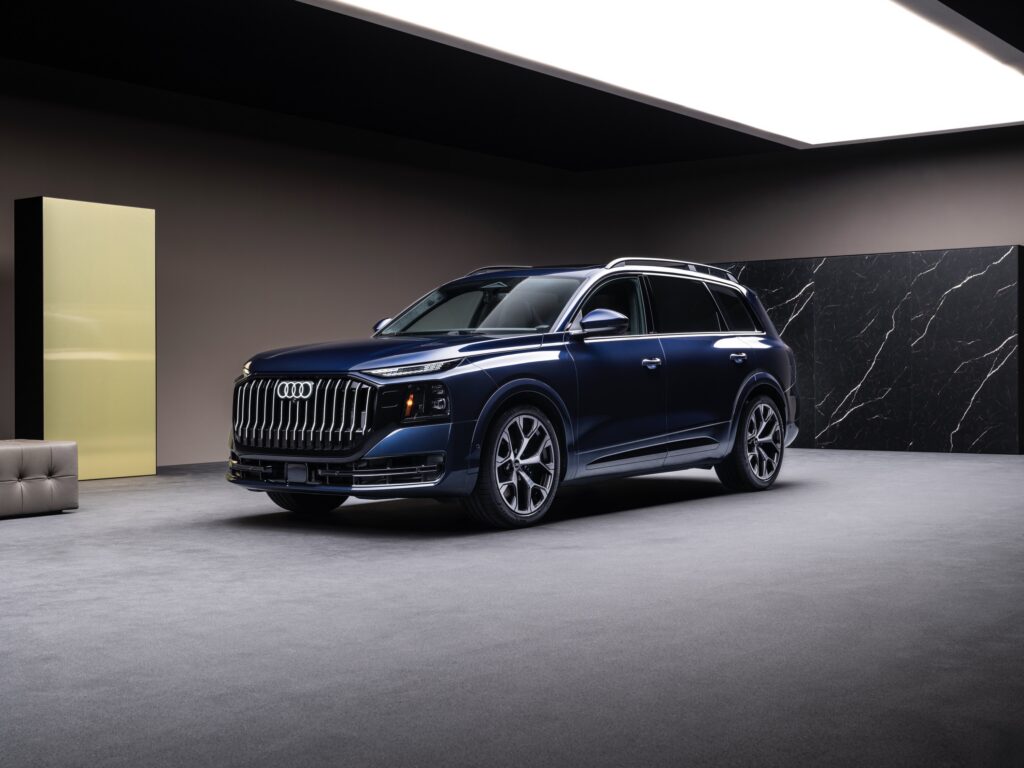 The silhouette is like a station wagon, but scaled up by 1.3x. Credit: Audi
 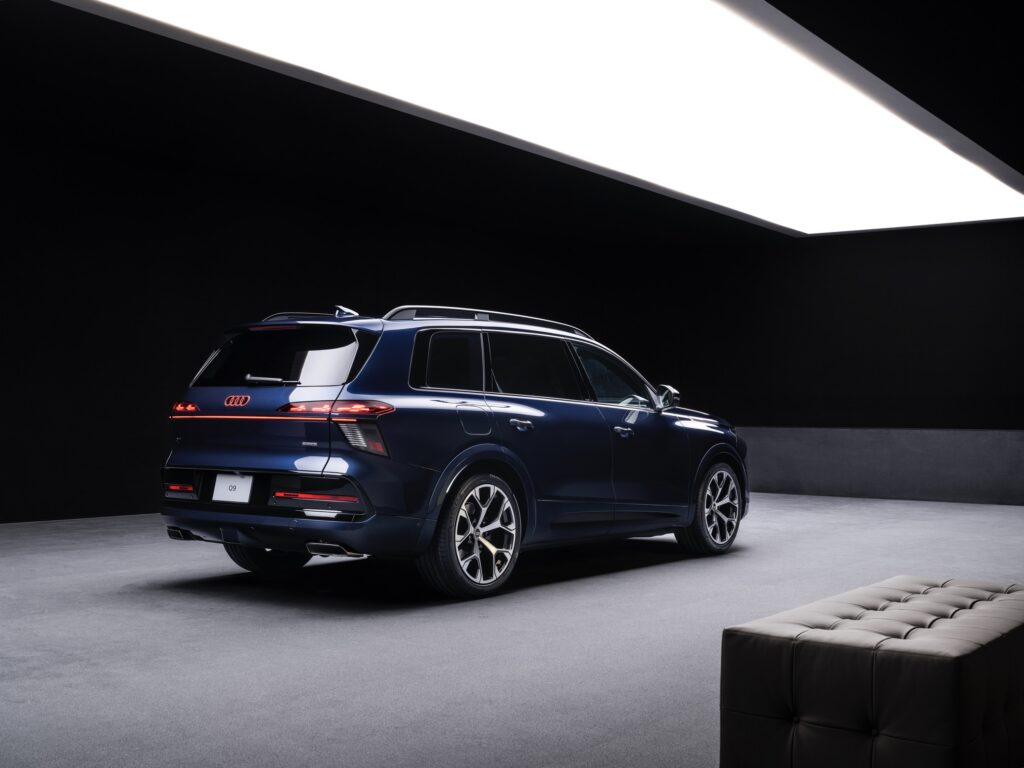 OLED rear lights are an option. Credit: Audi
 The Q9 looked big in the studio, but it was less imposing than a Mercedes-Benz GLS or BMW X7. The body panels feature more curves and more subtle creases than the Audis of a few years ago. And there are definite station wagon vibes, but that’s mostly because its big wheels make it look smaller and closer rather than bigger and farther away (aka, the Father Dougal principle.)