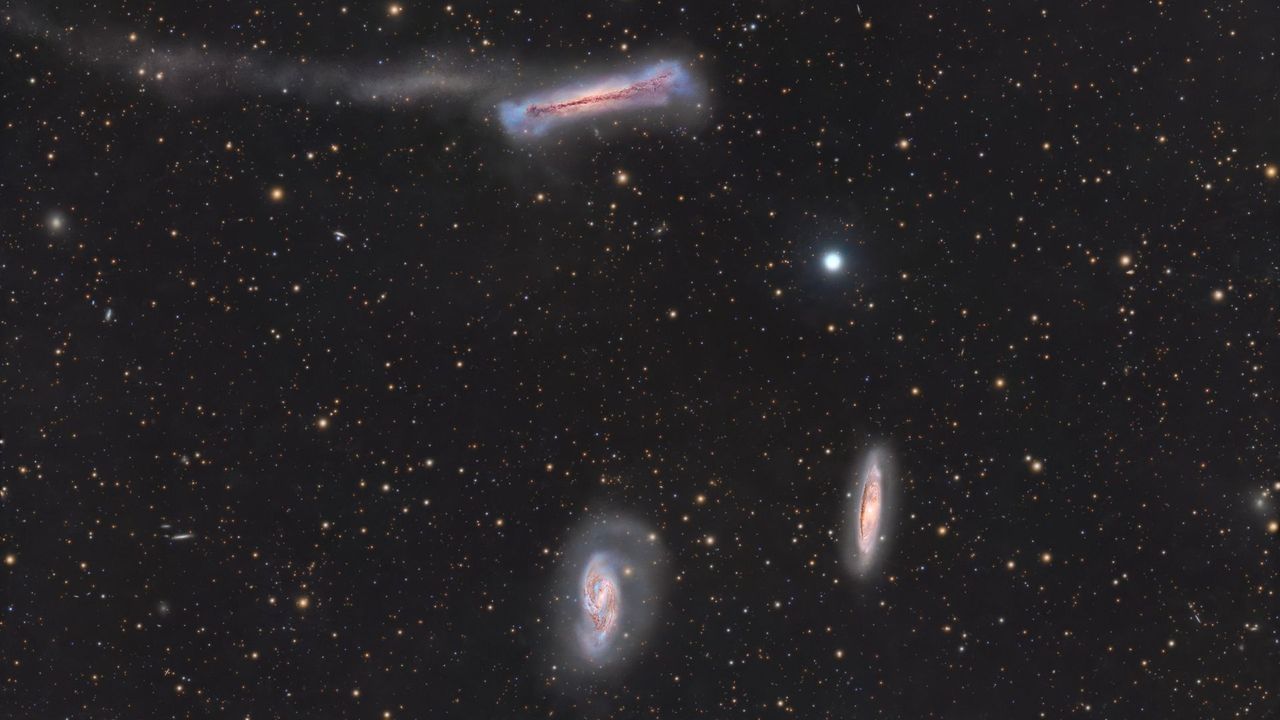
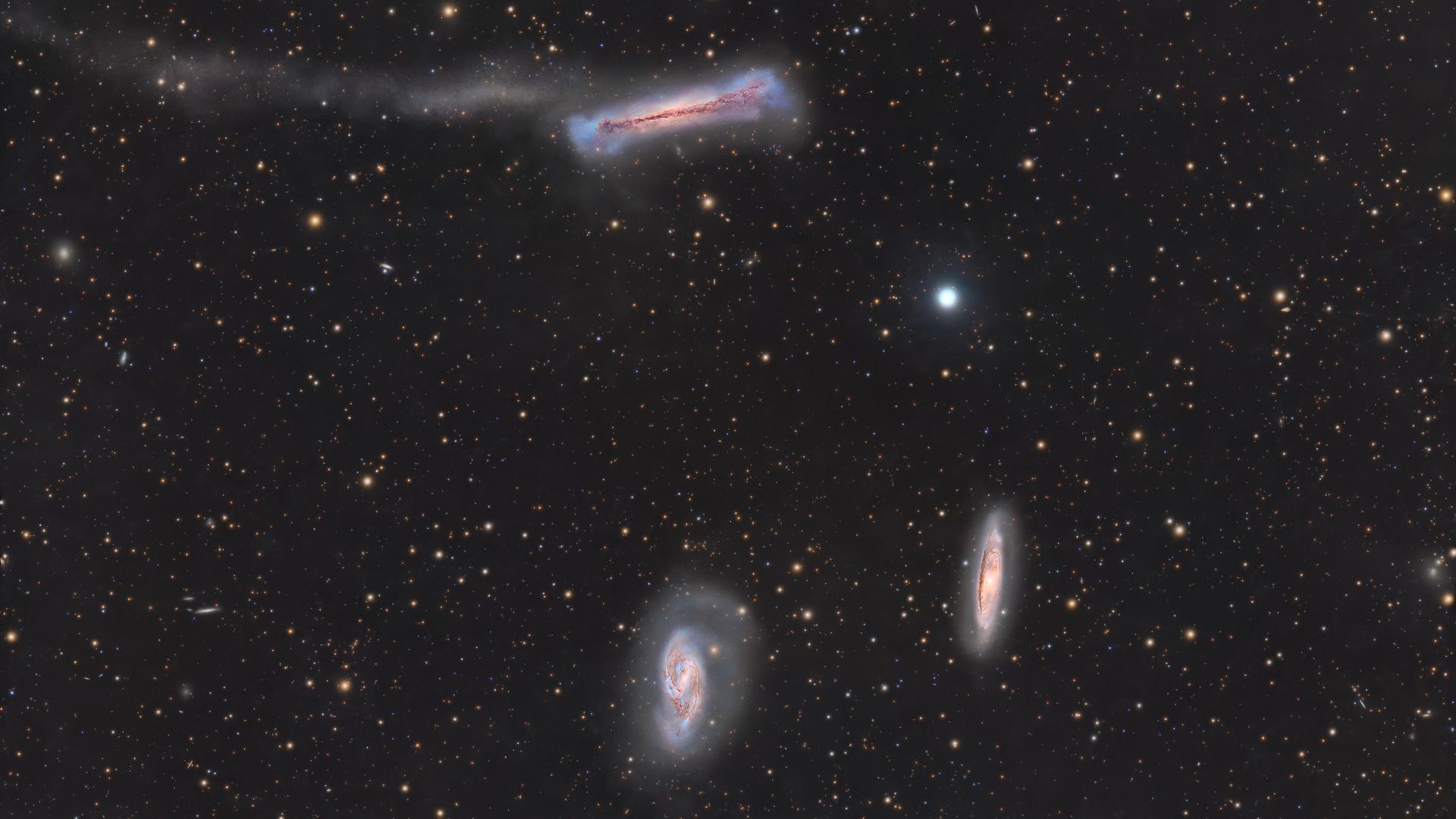
Astrophotographer ing. Cornelis Van Zuilen has shared a staggeringly detailed image of the galaxies known as the "Leo Triplet", after spending 60 hours capturing the light of the cosmic heavyweights from his balcony in the Netherlands.
ZWO ASI533MC Pro 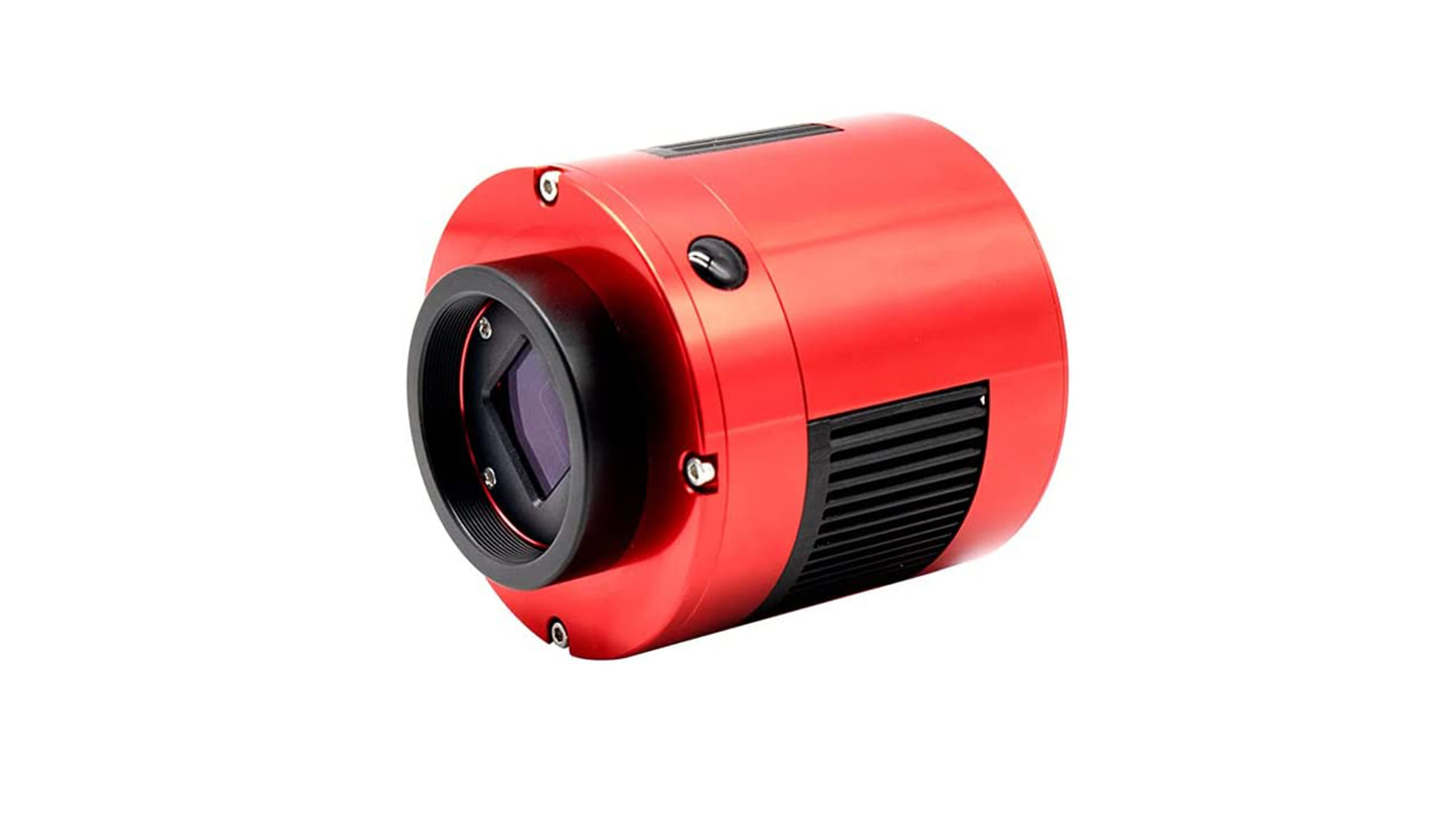
The ZWO ASI533MC Pro camera is the best dedicated astro camera out there, in our opinion. It features zero amp glow, 80% quantum efficiency and a 20FPS frame rate. It also features a 9MP sensor and you can check out our ZWO ASI533MC Pro review for a more in-depth look.
The Leo Triplet is made up of the spiral galaxies M65, M66 and NGC 3628, which are located about 30 million light-years from Earth in the constellation Leo. The group lies close to the bright star Chertan, which forms part of the hind leg of the great lion represented in the stellar formation, according to NASA.
"At the end of 2024, I bought my Askar 103APO telescope, giving me enough focal length to seriously focus on galaxies and begin my long-term project of photographing the entire Messier Catalogue," Van Zuilen told Space.com in an email. "After finishing my first image of the Leo Triplet in 2025, I really wanted to see the gigantic tidal tail of NGC 3628 and decided to return with a much more ambitious goal."
For 2026, Van Zuilen aimed to create a detailed composite shot of the galactic trio created from at least 60 hours of light data. "Beginning on April 6, I photographed the Leo Triplet over 18 clear nights, collecting 85 hours of data, of which exactly 60 hours and 3 minutes met my quality standards," continued Van Zuilen.
Having met his target, Van Zuilen set to work combining and editing the data using the astronomy software PixInsight. The end result was a striking galactic portrait that revealed the intricate spiral structures of M65 and M66, along with the edge-on profile of NGC 3628, which is also colloquially known as the "Hamburger Galaxy" by dint of its distinctive dust lane.
Image 1 of 4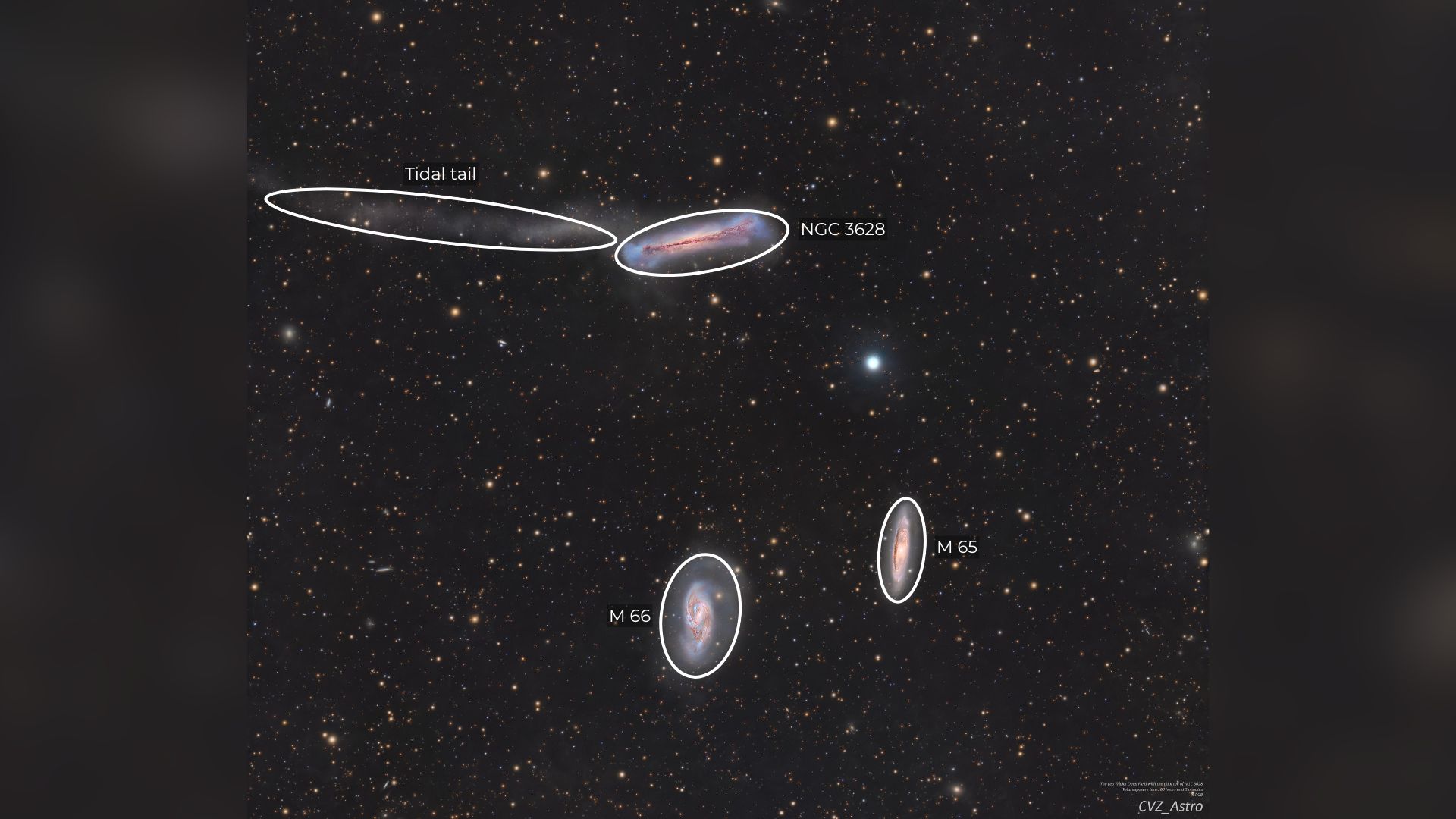 An annotated image of the Leo Triplet (Image credit: ing. Cornelis van Zuilen)
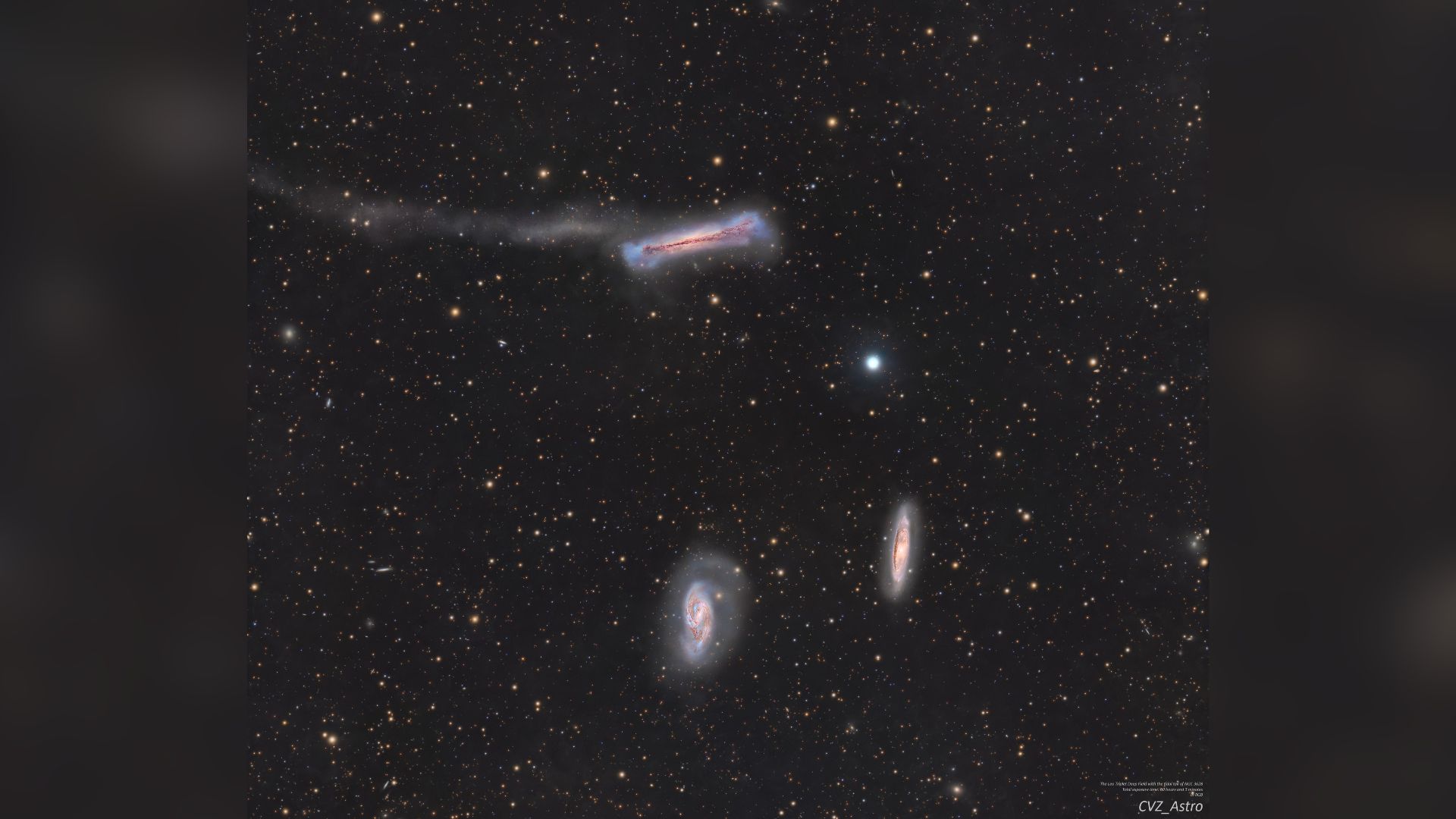 The Leo Triplet shines in deep space.(Image credit: ing. Cornelis van Zuilen)
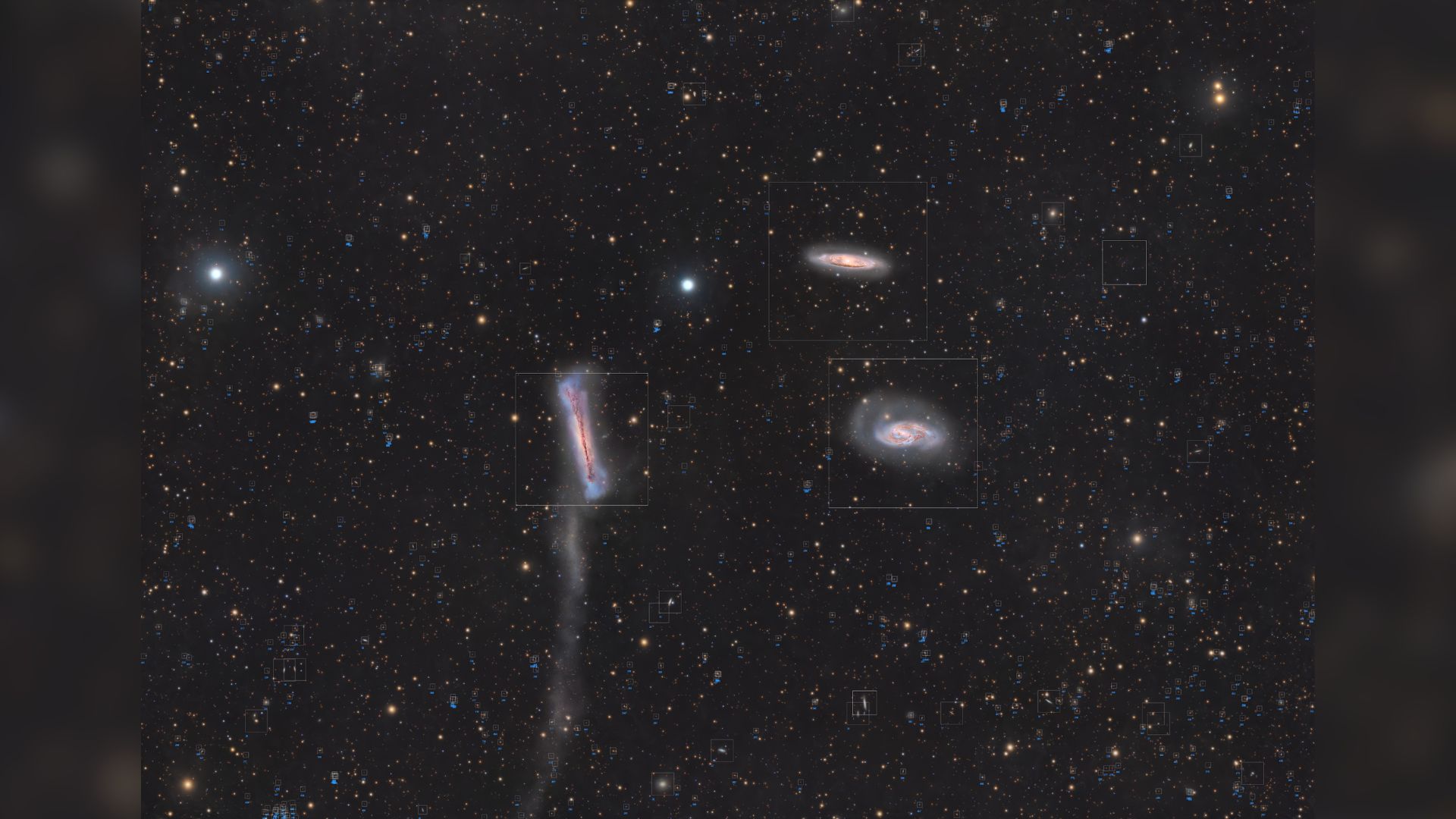 An image of the Leo Triplet annotated with the positions of distant galaxies contained within the field of view.(Image credit: ing. Cornelis van Zuilen)
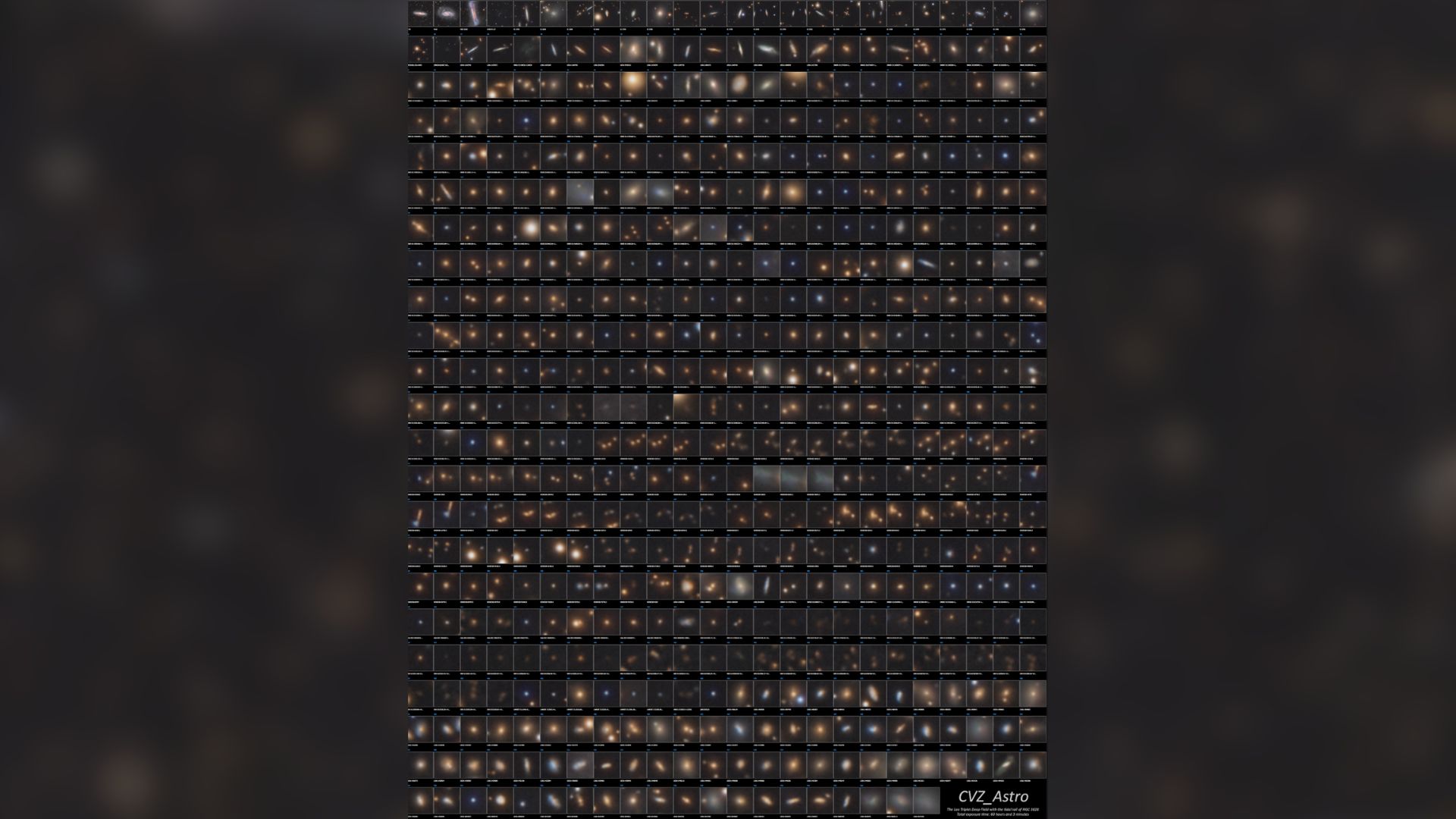 A catalogue of galaxies contained within the Leo Triplet image.(Image credit: ing. Cornelis van Zuilen)
Van Zuilen's image also reveals a 300,000-light-year-long "tidal tail" of stars and galactic material stretching away from NGC 3628. This structure is thought to have formed during a gravitational interaction with a galactic neighbor, according to the National Science Foundation's Noir Lab.
"Using a PixInsight galaxy identification script, no fewer than 548 catalogued galaxies were identified within the image, highlighting the incredible depth achieved through 60 hours of integration time from my balcony here in Heiloo, a village in the Netherlands," concluded Van Zuilen. "I hope you like this final image as much as I do!"
You may also like: Expert advice for new stargazers: How to begin your amateur astronomy journey.
Interested in capturing your own images of the night sky? Then be sure to read our beginner's guide to photographing the Milky Way, along with our picks of the best cameras and lenses for astrophotography.
Editor's Note: If you would like to share your astrophotography with Space.com's readers, then please send your photo(s), comments, and your name and location to [email protected].
View MoreYou must confirm your public display name before commenting
Please logout and then login again, you will then be prompted to enter your display name.
Logout Anthony WoodSkywatching Writer
Anthony Wood joined Space.com in April 2025 after contributing articles to outlets including IGN, New Atlas and Gizmodo. He has a passion for the night sky, science, Hideo Kojima, and human space exploration, and can’t wait for the day when astronauts once again set foot on the moon.