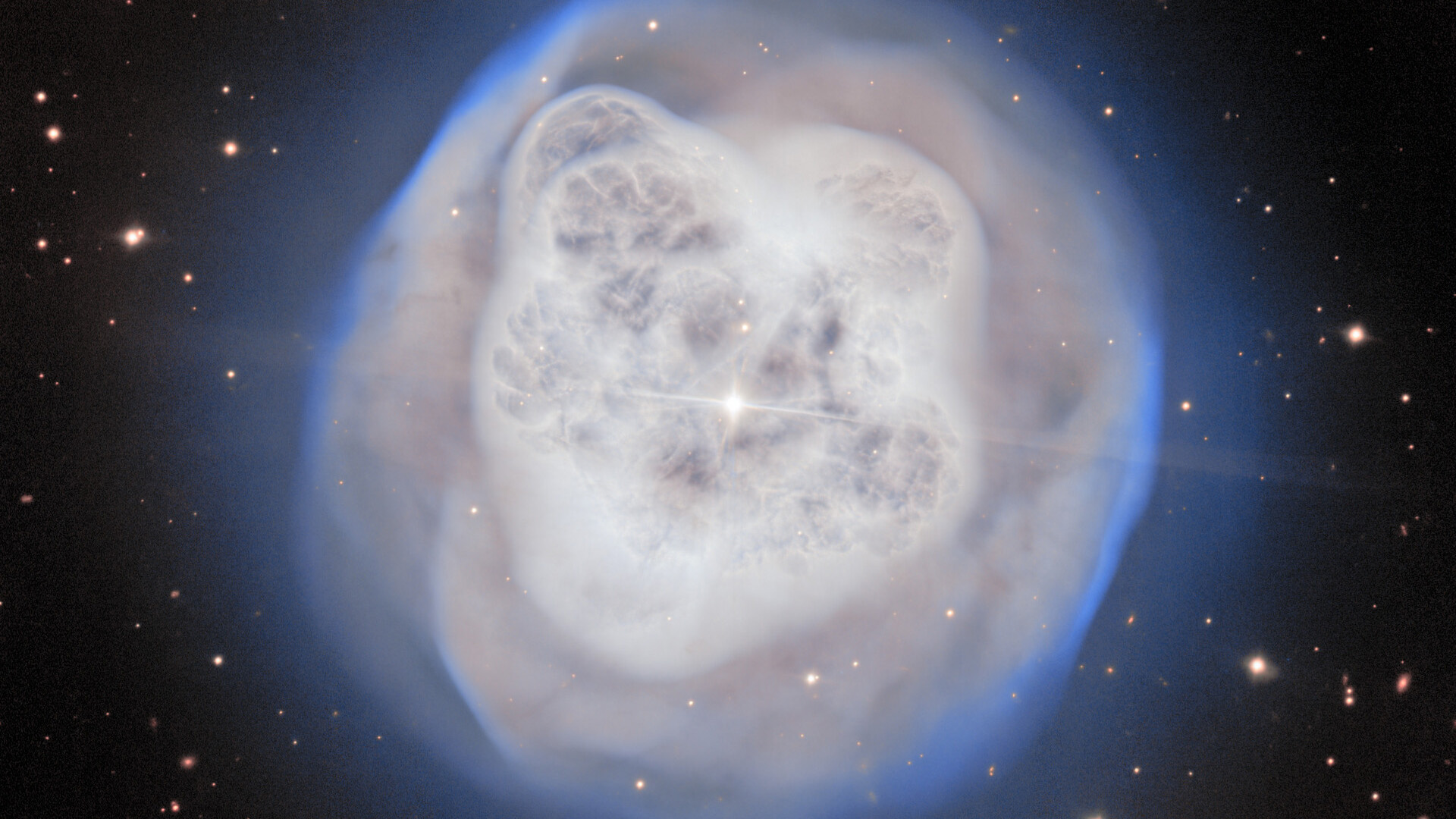
The Crystal Ball Nebula glows in the darkness of space. (Image credit: International Gemini Observatory/NOIRLab/NSF/AURAImage Processing: J. Miller & M. Rodriguez (International Gemini Observatory/NSF NOIRLab), T.A. Rector (University of Alaska Anchorage/NSF NOIRLab), D. de Martin & M. Zamani (NSF NOIRLab))
Share this article Join the conversation
Follow us Add us as a preferred source on Google Newsletter Subscribe to our newsletter Quick facts
What it is: NGC 1514, the Crystal Ball Nebula
Where it is: About 1,500 light-years from Earth, in the constellation Taurus
When it was shared: May 21, 2026
Hidden in the night sky, just above the hump of Taurus, is a giant crystal ball that shows both the past and the future.
This is the Crystal Ball Nebula (NGC 1514). To look at this orb's gauzy, white light is to see 1,500 years into the past, since that's about how long it's taken the nebula's light to reach Earth. But if you peer a bit deeper into the ball's bright center, you'll see the fiery ghost of a dead star system — and a vision of what awaits our stellar neighborhood about 5 billion years from now.
This view, captured with the National Science Foundation's (NSF) Gemini North telescope in Hawaii, is one of the clearest images ever taken of an object known to science for more than 200 years. Astronomer William Herschel (best known for discovering Uranus, as well as infrared radiation) was the first to spot the Crystal Ball Nebula, in 1790.
Herschel called these types of objects "planetary nebulas," because their spherical shapes looked like planets through his early telescopes. In reality, no planets are involved. Nebulas like these form when stars measuring between roughly one and eight times the mass of the sun reach the ends of their lives and shed their outer layers of gas into space, according to the European Space Agency. As the gas blooms outward, the star emits a final burst of radiation, charging the gas and making it glow — with reliably spectacular results.
While Herschel initially thought the Crystal Ball's glow was powered by a distant cluster of stars, modern telescopes show a single, tight-knit binary star system at its center. These doomed siblings swirl around each other once every nine years, according to an NSF statement, making this the longest-period binary system within a planetary nebula. Their slow dance spews stellar wind asymmetrically through the gas cloud, carving the nebula into the lumpy, popcorn-ified shape we see today.
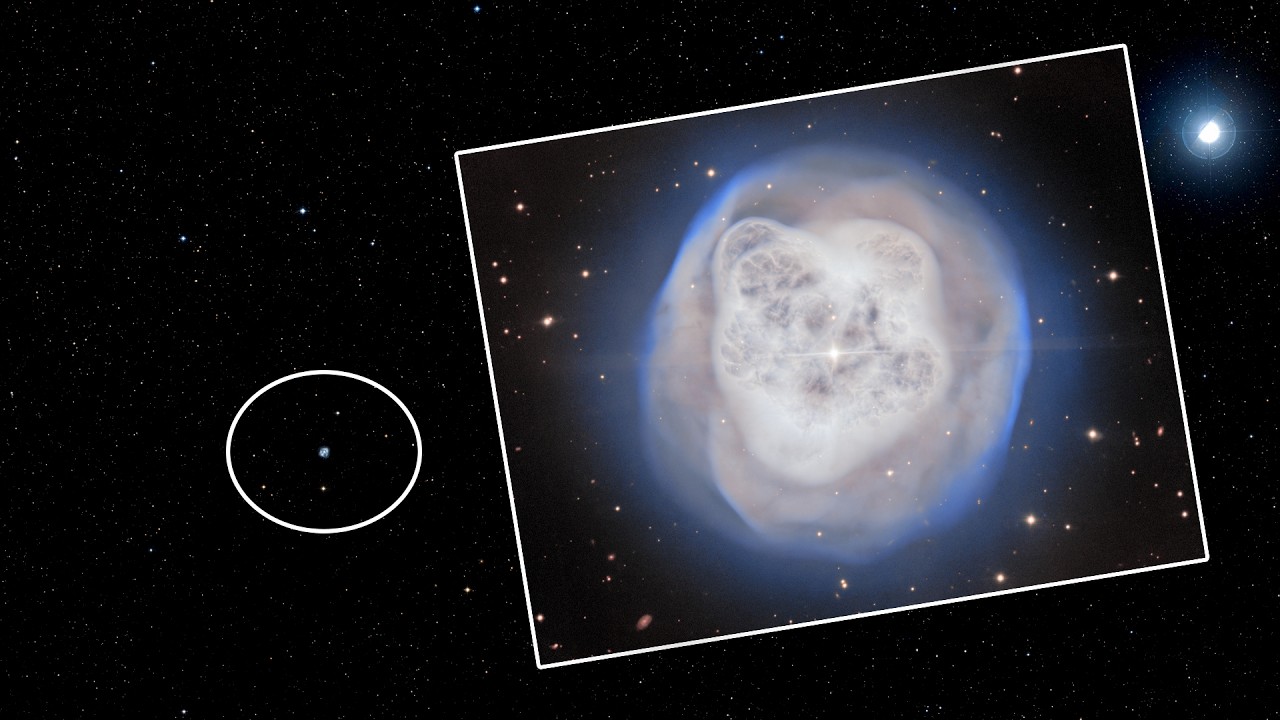
Zooming into NGC 1514 - YouTube
 Watch On
 Long after humanity has likely disappeared, the sun will face a similar fate. As it exhausts its nuclear fuel, our star will swell into a red giant — likely consuming Earth and the other inner planets in the process — before finally ejecting its outer layers into interstellar space.
If any intelligent alien astronomers happen to be watching from across the galaxy, they'll see our solar system disappear inside a glorious planetary nebula and become a new landmark in their sky. Hopefully, they memorialize us with a suitably cool name.
Sign up for the Live Science daily newsletter now
Get the world’s most fascinating discoveries delivered straight to your inbox.
Contact me with news and offers from other Future brandsReceive email from us on behalf of our trusted partners or sponsors
 'Human minds should not go through this'
The Artemis II crew recalls the unreal moment when Earth disappeared
 Hidden structure in 1st Vera Rubin image
First-light images from the Vera C. Rubin Observatory reveal a 163,000-light-year stream of stars emanating from a nearby galaxy.
 JWST peeps the 'Eye of God'
A spectacular James Webb telescope image reveals intricate structures inside the Helix Nebula.
TOPICS
 Brandon Specktor
Editor
Brandon is the space / physics editor at Live Science. With more than 20 years of editorial experience, his writing has appeared in The Washington Post, Reader's Digest, CBS.com, the Richard Dawkins Foundation website and other outlets. He holds a bachelor's degree in creative writing from the University of Arizona, with minors in journalism and media arts. His interests include black holes, asteroids and comets, and the search for extraterrestrial life.
View More
You must confirm your public display name before commenting
Please logout and then login again, you will then be prompted to enter your display name.
Logout