National
As overdose deaths fall, White House makes misleading claims about who deserves credit November 18, 20261:18 PM ET
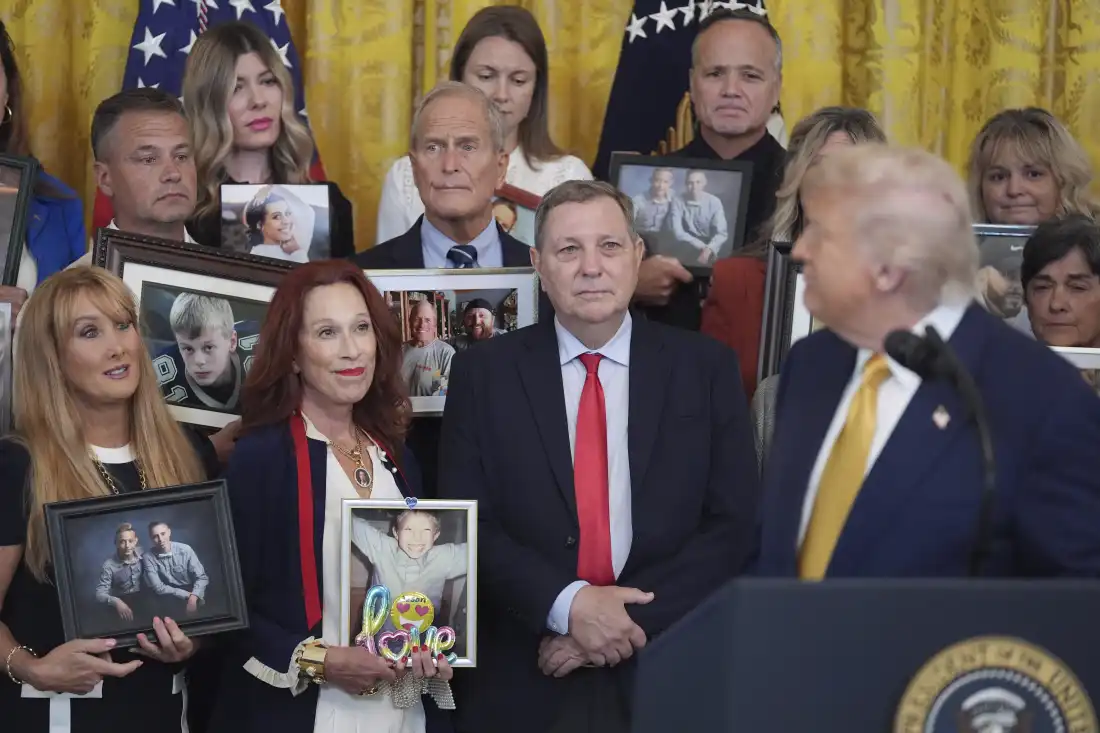
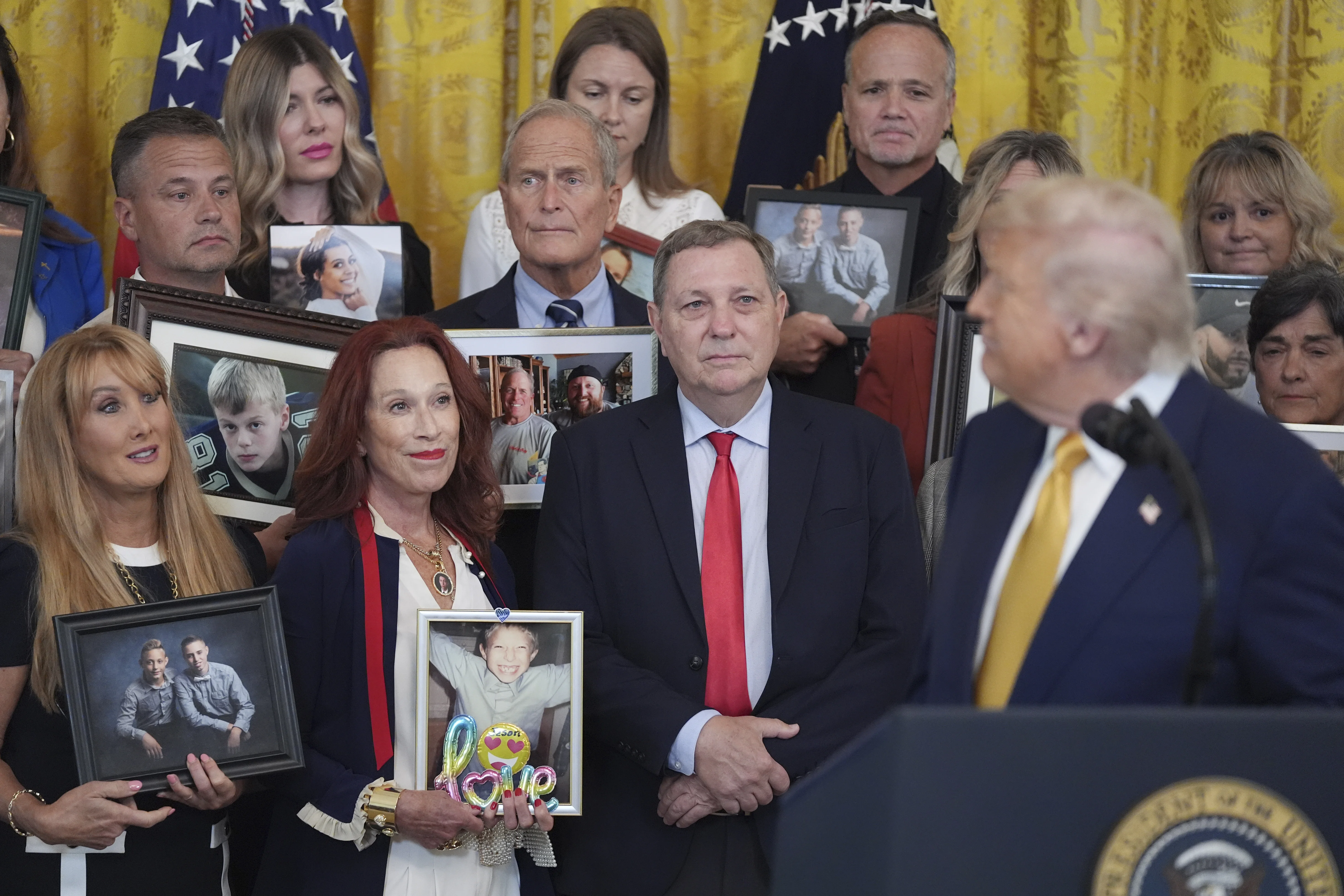
Families look on as President Donald Trump speaks during a ceremony to sign the "Halt All Lethal Trafficking of Fentanyl Act" in the East Room of the White House on July 16, 2025. Evan Vucci/AP hide caption
toggle caption i Evan Vucci/APWhen the White House announced big improvements in the number of people dying from fatal drug overdoses earlier this week, officials pointed to hopeful new data from the Centers for Disease Control and Prevention showing U.S. drug deaths have plunged to their lowest level in roughly a decade, saving nearly 50,000 lives each year.

Health
NPR Exclusive: U.S. overdose deaths plummet, saving thousands of lives
But leading drug policy researchers say the White House statement also made misleading claims about the timing and cause of the remarkable public health success when it said that gains occurred primarily over the last 18 months due to policies enacted under President Trump's leadership.
"The historic decline in drug overdose deaths demonstrates that America is unequivocally winning the fight against illicit drugs," White House Office of National Drug Control Policy director Sara Carter said in a statement.
Carter credited heightened border security under Trump and claims of success dismantling "narco-terrorist" organizations for the recovery. "Critically, this represents a an approximately 41.5% decrease in total drug overdose deaths compared to the peak under the previous administration," the statement said.
What the White House failed to disclose is that declines in overdose fatalities began much earlier, under the Biden administration, with most of the gains occurring before Trump returned to office.
"Since the spring of 2023, we have seen a steady decline in overdose deaths," said Vanda Felbab-Brown, a drug policy expert at the Brookings Institution. "The fact that it has been sustained is very important."
Fentanyl crisis on Biden's watch, then a pivot toward fewer deaths
According to CDC data, reductions in drug deaths began in 2023 and have continued steadily for at least 39 consecutive months — not 18 months as the ONDCP statement said. By the time Biden left office, fatal overdoses had already dropped by roughly one-third, an improvement described by addiction experts at the time as unprecedented.

Only on NPR
Hospital staff said he was faking it and released him. He died from an overdose soon after
Nabarun Dasgupta, a street drug researcher at the University of North Carolina at Chapel Hill, was one of the first scientists to detect the stunning drop in overdose deaths. He said the trend toward fewer deaths began in some regions and among some demographic groups as early as 2021 and rapidly gained momentum nationwide.
"It was really the period early 2024 through spring 2025 where we were seeing the greatest rate of decline that we've ever seen," Dasgupta said.
Deaths from fentanyl smuggled into the U.S. from Mexico first began to rise in 2013 during President Obama's time in office and accelerated during Trump's first term. Fentanyl overdoses spiked sharply the first two years of Biden's presidency, during the COVID-19 pandemic. Despite progress, fentanyl remains the leading cause of drug deaths nationwide.
Dasgupta, Felbab-Brown and other and addiction experts credit the Biden administration for rolling out policy responses that included wider access to healthcare, making the opioid overdose medication naloxone more readily available, and negotiating a deal with China that disrupted the flow of industrial chemicals used to make fentanyl.
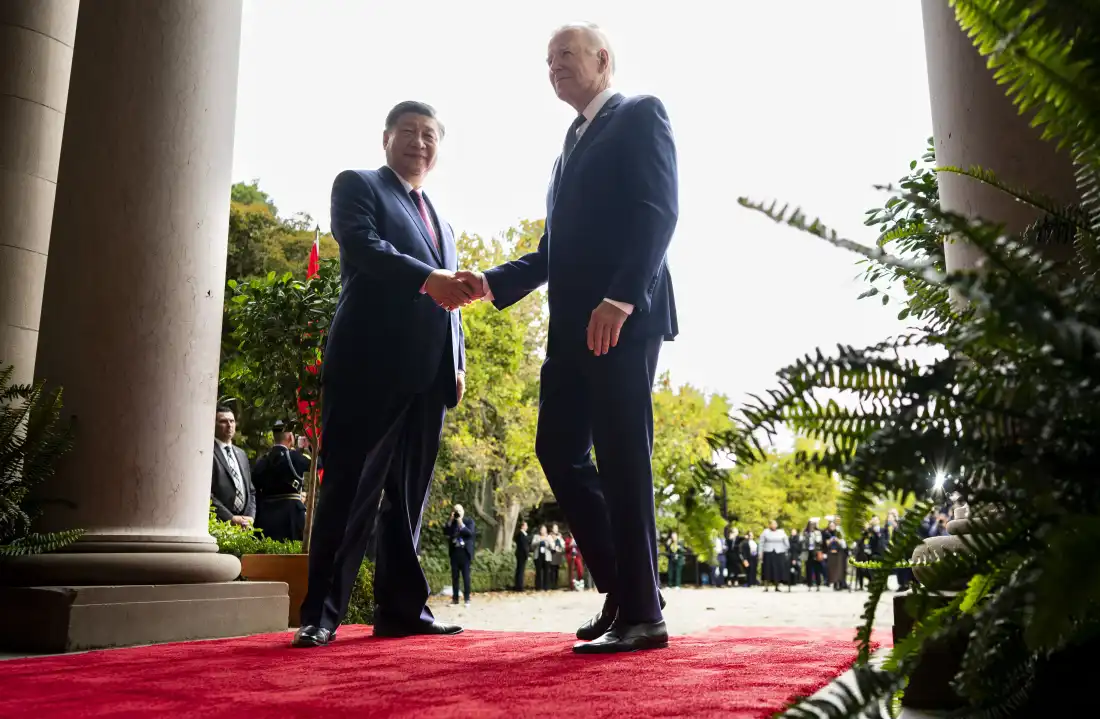
President Joe Biden met China's President President Xi Jinping in Woodside, Calif., in November 2023, on the sidelines of the Asia-Pacific Economic Cooperative conference. China agreed to curtail shipments of the chemicals used to make fentanyl, the drug at the heart of the U.S. overdose epidemic. Doug Mills/Pool/The New York Times hide caption
toggle caption i Doug Mills/Pool/The New York TimesThe Biden team also scored significant drug interdiction wins against the Mexican cartels that smuggle fentanyl. "We have certainly been seeing over many years, going back to the Biden administration, important efforts to crack down against them," said Felbab-Brown.
Dasgupta and Felbab-Brown both said improvements in reducing drug mortality have continued under Trump. They said it's important to have an accurate timeline of the overdose crisis because researchers are still trying to understand why deaths involving fentanyl surged and why so many fewer people are now dying.
White House on Biden role in declines
NPR asked the White House about progress in the fentanyl fight under Biden. In an emailed statement, ONDCP director Carter, a former podcaster, journalist and Fox News contributor, blamed Biden for failing to secure the U.S.-Mexico border and for allowing drug deaths to surge in the first place.
"While drug overdose deaths eventually began to decline following the peak, the Biden Administration doesn't get to take credit for overseeing the highest drug overdose numbers in history, then bringing them down from their own failure," Carter said.
Health
Historic decline in U.S. overdose deaths threatened by changing street drug supply
Responding to CDC data showing drug deaths began to plummet much earlier than stated the White House announcement, Carter said "this could be misinterpreted as progress on a graph, but it was not progress."
According to Carter, the Trump administration is now well-positioned to build on overdose death reductions made over the last three years, in part by maintaining border security and by continuing to "relentlessly attack" drug gangs.
"We are dismantling and eliminating the violent cartels and drug trafficking organizations through coordinated operations," she said.
But Felbab-Brown at Brookings said she doesn't share the Trump administration's confidence that there has been significant progress "dismantling and eliminating" narco-terrorist organizations.

National Security
Will U.S. military strikes slow drug overdose deaths? Experts say no
"I cannot think of one narco-terrorist organization that has been dismantled," she said. "They all continue operating and they are all very strong. They all continue smuggling drugs."
Military experts have also questioned the effectiveness, and legality, of Trump's ongoing strikes against civilian boats in the Caribbean and eastern Pacific, described as smuggling vessels by the Pentagon.
Dasgupta, the addiction researcher at UNC, said he's also concerned about whether progress reducing drug deaths can be sustained next year as the Trump administration implements deep cuts to Medicaid passed by the Republican Congress.
The Congressional Budget Office has estimated the cuts could mean as many as 10 million Americans losing access to health insurance coverage.
"Medicaid is the largest funder of addiction services in the United States," Dasgupta said. "Cutting Medicaid eligibility or making it harder to access forms of effective addiction treatment is guaranteed to leave people out in the cold."
NPR does not offer or accept money for coverage or interviews. Anyone who makes such an offer or request is not an NPR employee and does not represent NPR.


