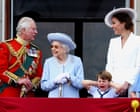
 Buckingham Palace rarely responds to the claims made in books on royalty, adhering to its ‘never complain, never explain’ mantra. Photograph: Hannah McKay/ReutersBuckingham Palace rarely responds to the claims made in books on royalty, adhering to its ‘never complain, never explain’ mantra. Photograph: Hannah McKay/ReutersAs Charles refutes Earl Spencer’s claim about Diana, how royal statements give a glimpse behind palace doors
From ‘there were three of us in this marriage’ to ‘recollections may vary’, a lot can be conveyed with a carefully worded phrase
As denials go, King Charles’s response to Earl Spencer’s allegations that Charles said after Diana’s death “We’ll forget her soon enough” was a masterclass in the diplomatic royal rebuke.
Rarely has Buckingham Palace responded to claims in countless books on royalty. But it was straight out of the block on this one.
Little over an hour after the Daily Mail, which is serialising Spencer’s memoir Swan Song about his sister, the late Diana, Princess of Wales, had published its first extract online, a statement was issued.
Charles, the headline claimed, had told Spencer days after Diana’s death and during a heated row over funeral arrangements: “Rest assured, we’ll forget her soon enough.”
The king’s swift countering, that “the pain of fraternal grief can cloud reason, affect judgment and colour memory in ways others do not recognise, even many years after such a loss”, will enter the canon of carefully constructed regal pushbacks.
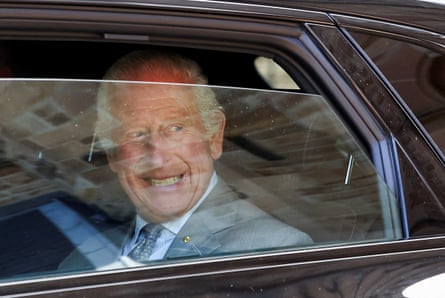 Charles’s swift rebuke suggests the palace acknowledged the damage Spencer’s claim could do and needed to set the record straight. Photograph: Toby Melville/Reuters
As rebukes go, it is up there with the late Queen Elizabeth II’s “some recollections may vary” in response to a torrent of allegations from the Duke and Duchess of Sussex in their Oprah Winfrey interview.
Senior courtiers are often drawn from the diplomatic service and thus highly-skilled in couching the passive-aggressive denial. Deploying delicate language to devastating effect is a stock in trade at the Foreign Office.
But it is a weapon to be used sparingly. The royal mantra is, usually, “never complain, never explain”.
However, Charles’s former communications secretary Julian Payne said: “This is a much more personal situation, given its author, and therefore has a greater ability to do harm.”
That is why the palace “felt the need to set the record straight and deny these remarks have been made”, Payne told the BBC’s Today programme. Given the amount of things the palace don’t comment on, “you can imagine the strength of feeling”, he added.
Payne remains close to the king and was due to be sitting alongside him at Thursday’s AI summit just hours later, so the fact he felt able to speak so freely suggests his robust defence of Charles came with official sanction.
What is said behind palace doors usually remains private. The language may be less sensitive. But a carefully chosen phrase in public pulls back the privacy screen.
When Diana, in her highly controversial Panorama interview, said “there were three of us in this marriage, so it was a bit crowded”, she reaped public revenge on her then husband and Camilla.
In return, Diana found herself on the sharp end of Elizabeth’s ire weeks later. After Diana failed to respond to the queen’s request that the couple divorce, a palace spokesperson issued a statement: “After considering the present situation, the queen wrote to both the prince and princess earlier this week and gave them her view, supported by the Duke of Edinburgh, that an early divorce is desirable.” The matter was now, officially, out of Diana’s hands.
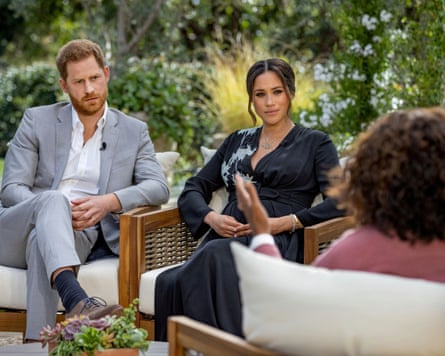 Harry and Meghan during their interview with Oprah in 2021, which led to the late queen’s ‘recollections may vary’ statement. Photograph: Reuters
White fury was behind the Duke and Duchess of Sussex’s statement in February 2021: “We can all live a life of service. Service is universal.” It was read as a succinct and direct challenge to the late queen’s insistence they could not keep their public service roles after stepping down as working royals.
Meghan was less direct in a 2019 interview with ITV’s Tom Bradby in which he asked her if she was OK juggling life as a royal with a newborn, Prince Archie. “Thank you for asking, because not many people have asked if I’m OK,” she replied. Was it directed at the palace and the institution? A huge number of the claims the Sussexes later made, in TV interviews and in Harry’s memoir Spare, were that the duchess had been unsupported throughout her time as a working royal.
One royal famously deficient in the art of the diplomatic royal rebuke, however, was the late Duke of Edinburgh. Philip was renowned for his gaffes. When a BBC journalist politely asked the queen at a banquet at the Elysee Palace if she was enjoying her stay in Paris in 2006, Philip dispensed with tact to snap: “Damn fool question!”
Explore more on these topics- Monarchy
- Diana, Princess of Wales
- King Charles III
- Queen Elizabeth II
- Meghan, the Duchess of Sussex
- Prince Harry
- news