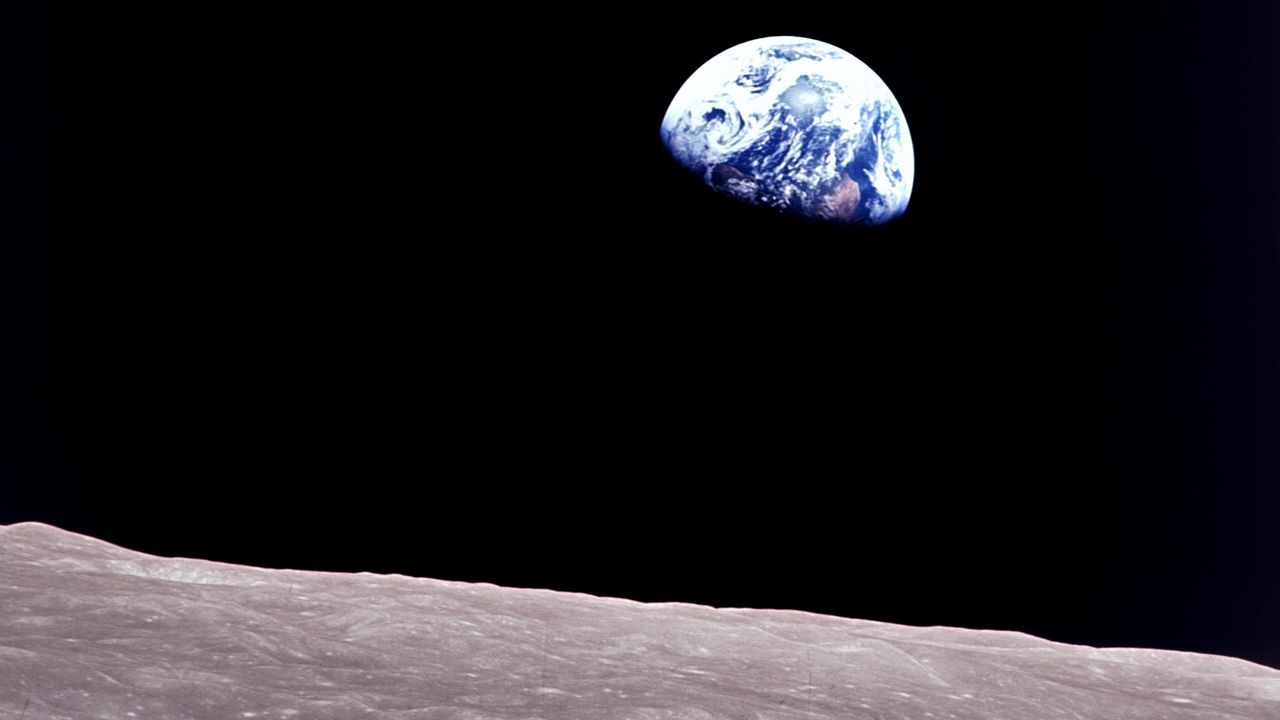
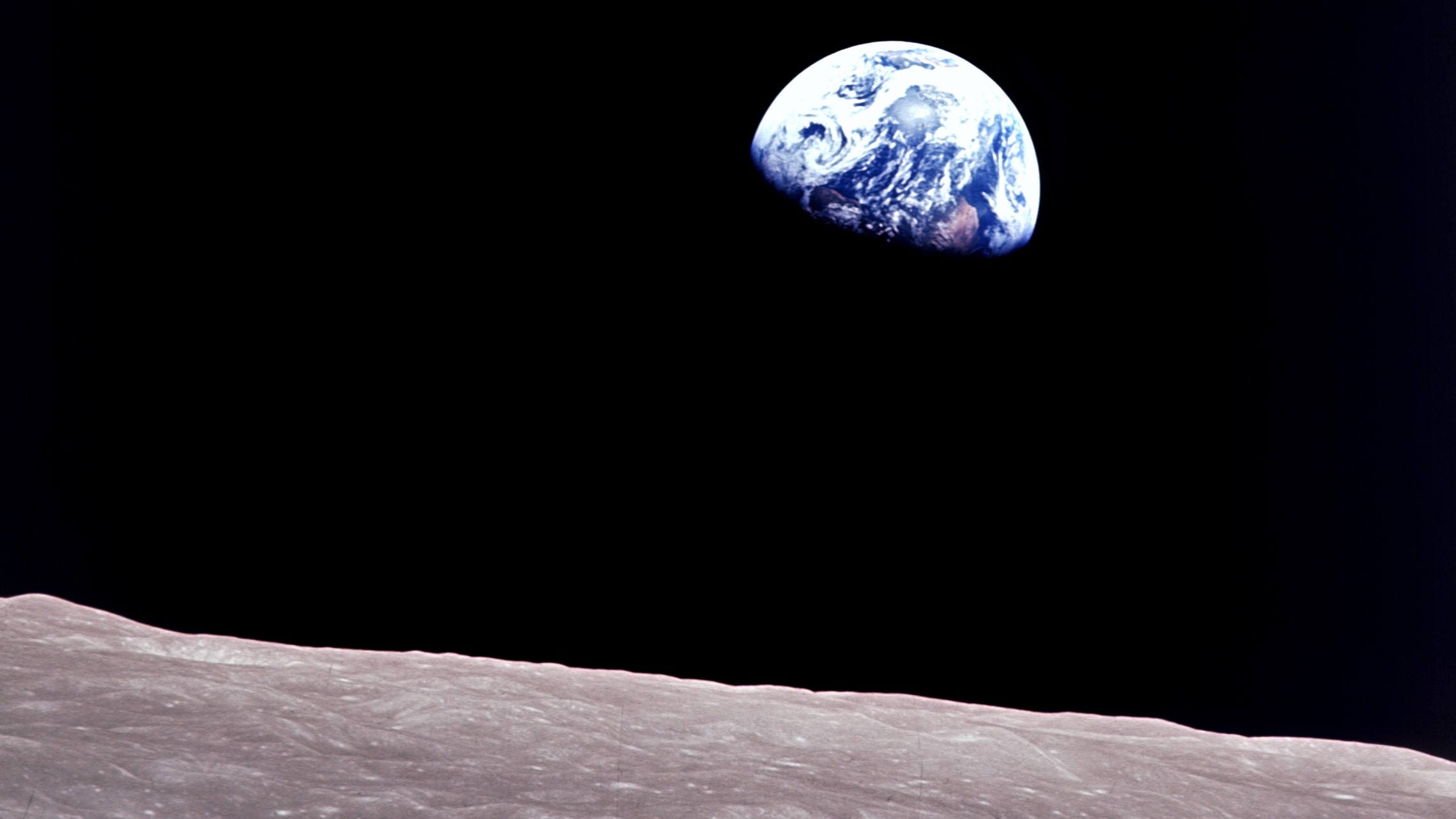
 The original, famous Earthrise image, taken on Dec. 24, 1968 by Apollo 8 astronaut Bill Anders. (Image credit: NASA) Share this article 0 Join the conversation Follow us Add us as a preferred source on Google Newsletter Get the Space.com Newsletter
 Breaking space news, the latest updates on rocket launches, skywatching events and more!
Contact me with news and offers from other Future brands Receive email from us on behalf of our trusted partners or sponsors By submitting your information you agree to the Terms & Conditions and Privacy Policy and are aged 16 or over.You are now subscribed
Your newsletter sign-up was successful
Want to add more newsletters?
An account already exists for this email address, please log in. Subscribe to our newsletterOn Christmas Eve 1968, the crew of NASA's Apollo 8 moon mission captured the "Earthrise" photograph, which is perhaps the most famous image ever taken from space. Soon, the astronauts of Artemis 2 will try to replicate it during their own flight around the moon.
Artemis 2 will perform its flyby around the moon's far side on Monday (April 6), more than 57 years after Apollo 8 became the first mission to take humans around the moon. During their lunar loop, the Artemis 2 astronauts will aim to recreate the Earthrise image, in the hope that the new photo can have the same unifying effect that the original did.
Taken three years into the United States' direct involvement in the Vietnam War, during an era in which environmental concerns were beginning to gain ground, Earthrise became the poster child for anti-war and pro-environment campaigners.
The photograph was unplanned and unexpected. Unlike Artemis 2, which will swing around the far side of the moon just once at an altitude that varies between about 4,000 and 6,000 miles (approximately 6,430 and 9,650 kilometers) without entering lunar orbit, the Apollo 8 spacecraft performed 10 orbits of the moon.
It was during the fourth orbit, as Apollo 8 emerged from the far side of the moon, that Lunar Module Pilot Bill Anders spotted something through the window.
"Oh my god, look at that picture over there!" he exclaimed, as recorded in the mission transcript. "There's Earth coming up. Wow, is that pretty!"
Get the Space.com NewsletterContact me with news and offers from other Future brandsReceive email from us on behalf of our trusted partners or sponsorsIndeed it was. Anders was armed with a Hasselblad camera with a 250mm telephoto lens. He raised it to take a snap.
"Hey, don't take that — it's not scheduled," joked Mission Commander Frank Borman beside Anders. Though Borman was joking, it did indicate how strictly scheduled everything they did on the mission was.
Anders realized he had a roll of black-and-white film in the camera. Quickly he asked Command Module Pilot Jim Lovell for the color film and, switching hatch windows to get a better view, took the photograph that became known as Earthrise.
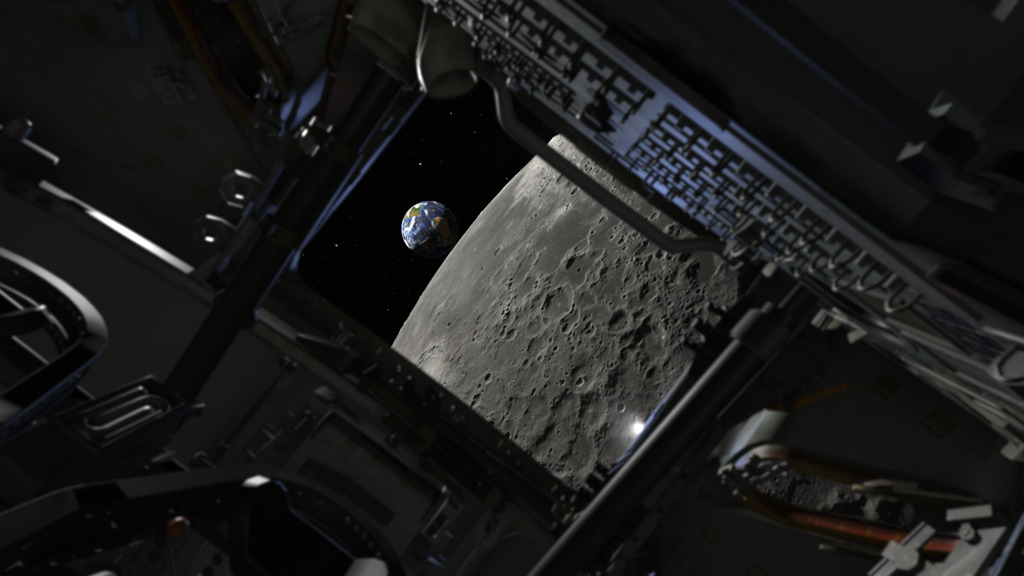
Part of the beauty of the Earthrise photograph is that it was unplanned and unexpected — a perfect moment during humanity's most daring space mission up to that point, and at Christmas too.
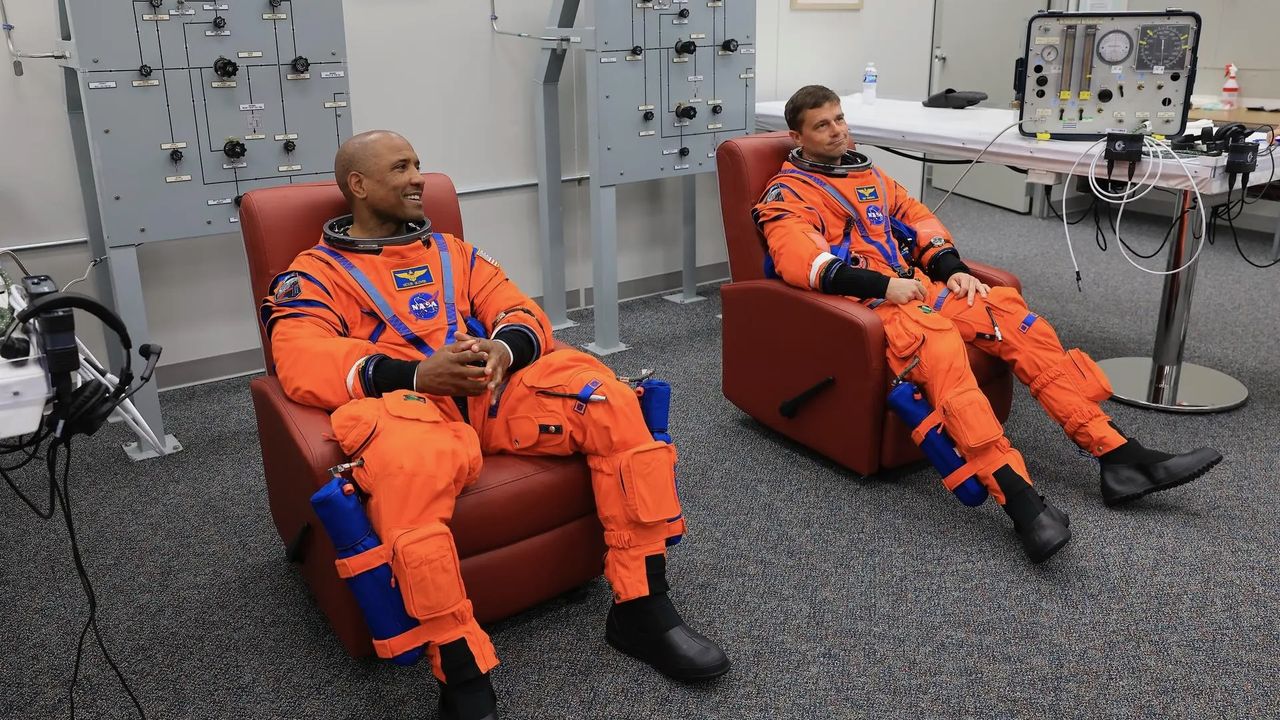
The crew of Artemis 2 — NASA's Reid Wiseman, Victor Glover, Christina Koch, and Jeremy Hansen of the Canadian Space Agency — could also get a chance to see their own Earthrise, and this time imaging it is most definitely on the schedule.
In fact, they won't just be going for Earthrise, but also "Earthset" — capturing Earth close to the lunar horizon just before it slips behind the limb of the moon as Artemis 2 begins its 45-minute journey around the far side. The astronauts will have just minutes, at best, to capture Earthrise and Earthset before our planet either gets too high in the sky or drops below the horizon, respectively.
Even if the crewmates are successful in capturing their images, Artemis 2's Earthrise (and Earthset) images won't look exactly like Apollo 8's. For one thing, Apollo 8 was just 60 miles (97 km) above the lunar surface when Anders took the photograph, while Artemis 2's Orion capsule, named Integrity, will be up to 100 times higher.
They'll also be using very different cameras. Apollo's Hasselblad cameras were state of the art at the time, but Artemis 2's digital Nikon D5 cameras have far greater functionality and control over settings to get the perfect shot.
Another key variable is how the surface of the moon will be illuminated at the time, which depends on exactly when Artemis 2 arrives at the moon. Anders took his image of Earthrise over a lunar surface bathed in sunlight, but that won't be the case for Artemis 2.
"Although the lunar far side will only be partially illuminated during the flyby, the conditions should create shadows that stretch across the surface, enhancing relief and revealing depth, ridges, slopes, and crater rims that are often difficult to detect under full illumination," NASA officials said in a statement on Thursday (April 2).
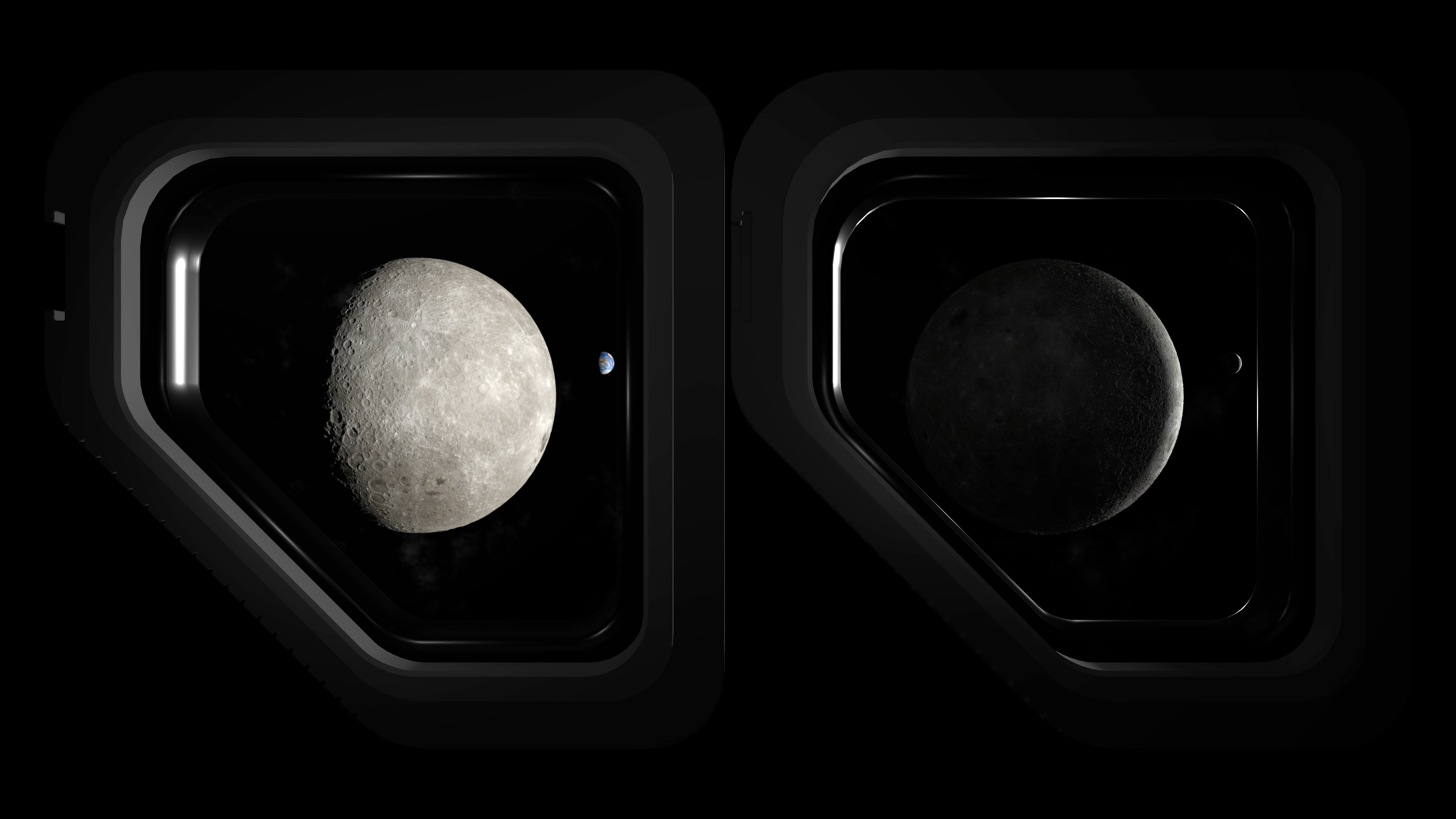
However, NASA has been thinking about this for a long time, and the Artemis 2 Visualization Lead, Ernie Wright of Goddard Space Flight Center in Maryland, has produced artistic depictions of how Earthrise from Artemis 2 might appear under different lighting conditions. Given Integrity's high altitude, rather than looking like they are flying low over the surface as was the case with Apollo 8, the crew of Artemis 2 will see the moon appear about the same size as a basketball at arm's length, providing a truly unique viewpoint.
The original Earthrise image had such influence in part because of the circumstances on Earth at the time it was taken. Artemis 2 is also flying during a time of war and environmental danger, with tensions high across the globe. We can only hope that a new Earthrise image will provide a timely reminder that we all live together on a single fragile planet.
 Keith CooperContributing writer
Keith Cooper is a freelance science journalist and editor in the United Kingdom, and has a degree in physics and astrophysics from the University of Manchester. He's the author of "The Contact Paradox: Challenging Our Assumptions in the Search for Extraterrestrial Intelligence" (Bloomsbury Sigma, 2020) and has written articles on astronomy, space, physics and astrobiology for a multitude of magazines and websites.
View MoreYou must confirm your public display name before commenting
Please logout and then login again, you will then be prompted to enter your display name.
Logout MORE FROM SPACE... 1Artemis 2 astronaut Victor Glover delivers inspiring Easter message on the way to the moon (video)
- 2Dozens of hidden star streams found in the outskirts of our Milky Way galaxy
- 3Lego's educational space sets are a stellar way to teach kids about the basic physics of collisions and impacts
- 4Artemis 2 astronauts — now halfway to the moon — report 'burning smell' from toilet, but everything's fine
- 5This Week In Space podcast: Episode 204 — A New NASA