Breaking space news, the latest updates on rocket launches, skywatching events and more!
Contact me with news and offers from other Future brands Receive email from us on behalf of our trusted partners or sponsors By submitting your information you agree to the Terms & Conditions and Privacy Policy and are aged 16 or over.You are now subscribed
Your newsletter sign-up was successful
Want to add more newsletters?
An account already exists for this email address, please log in. Subscribe to our newsletter 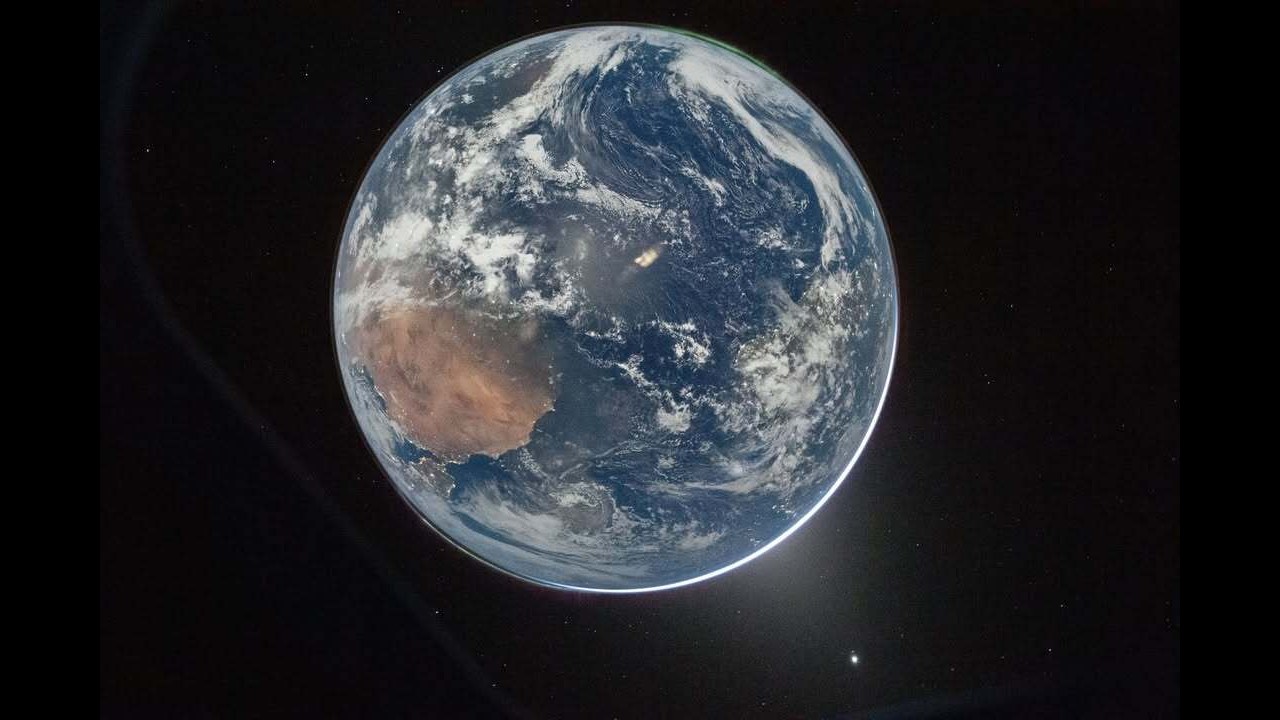
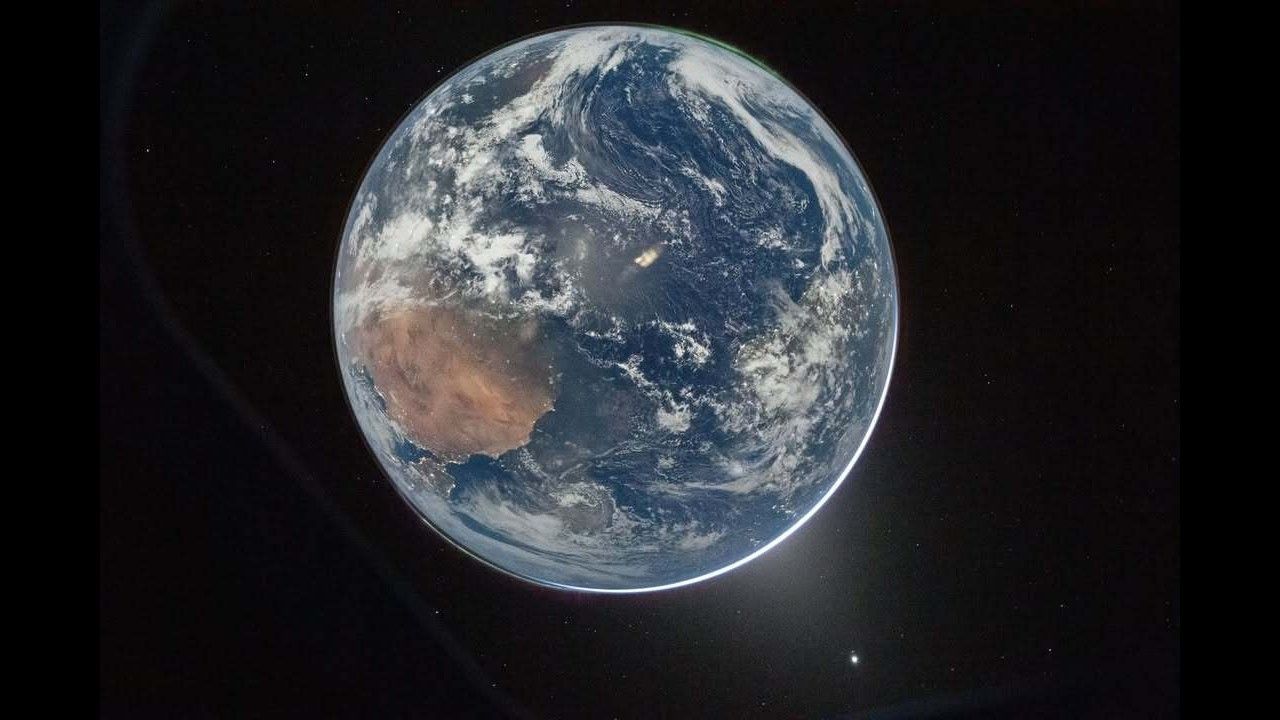
The Artemis 2 astronauts have shared a view that the billions of us stuck on Earth will never get firsthand: a gorgeous shot of our home planet shining like a sapphire in the blackness of space.
What is it?
This photo shows Earth as seen from Artemis 2's Orion spacecraft, which on Thursday evening (April 2) aced a crucial engine burn that took it out of Earth orbit and toward the moon.
The Artemis 2 astronauts — NASA's Reid Wiseman, Victor Glover and Christina Koch, and the Canadian Space Agency's Jeremy Hansen — have since been watching Earth recede into the distance, and NASA shared one of their photos today (April 3) on the social media site X.
"We see our home planet as a whole, lit up in spectacular blues and browns. A green aurora even lights up the atmosphere. That's us, together, watching as our astronauts make their journey to the moon," NASA officials wrote in the X post.
Why is it amazing?
The photo by itself is amazing enough, showing our planet as it truly is — a shimmering, fragile outpost of life in a vast and dark cosmos. But the connection to Artemis 2 makes it even more special.
Artemis 2 is the first crewed moon mission since Apollo 17 back in 1972. If all goes to plan, Wiseman, Glover, Koch and Hansen will loop around the moon on Day 6 of the mission, which lifted off on April 1. They'll come back to Earth for a splashdown on Day 10.
Artemis 2 won't land on the moon or even enter lunar orbit. It's designed to pave the way for those milestones, and in fact even more ambitious ones: NASA's Artemis program aims to build a base near the lunar south pole in the early 2030s.
Get the Space.com NewsletterContact me with news and offers from other Future brandsReceive email from us on behalf of our trusted partners or sponsorsKeep tabs on the mission's latest developments with our Artemis 2 live updates page.
 Mike WallSpaceflight and Tech Editor
Michael Wall is the Spaceflight and Tech Editor for Space.com and joined the team in 2010. He primarily covers human and robotic spaceflight, military space, and exoplanets, but has been known to dabble in the space art beat. His book about the search for alien life, "Out There," was published on Nov. 13, 2018. Before becoming a science writer, Michael worked as a herpetologist and wildlife biologist. He has a Ph.D. in evolutionary biology from the University of Sydney, Australia, a bachelor's degree from the University of Arizona, and a graduate certificate in science writing from the University of California, Santa Cruz. To find out what his latest project is, you can follow Michael on Twitter.
View MoreYou must confirm your public display name before commenting
Please logout and then login again, you will then be prompted to enter your display name.
Logout MORE FROM SPACE... 1NASA is sending astronauts back to the moon. Can you see the Artemis 4 landing sites from Earth?
- 2How to watch the new 'lost' Doctor Who episodes from anywhere in the world
- 3Pulsars to the extreme: Spinning dead stars found blasting radio signals from the 'edge of their magnetic reach'
- 4NASA's Artemis 2 astronauts are cruising to the moon. So why are they doing CPR tests today?
- 5DJI Avata 360 drone review